KUNST
SCHÖNHEIT & WELLNESS
HANDWERK
KULTUR & GESCHICHTE
UNTERHALTUNG
UMFELD
ESSEN & GETRÄNKE
REVERSE ENGINEERING
WISSENSCHAFTEN
SPORT
TECHNOLOGIE
WEARABLES
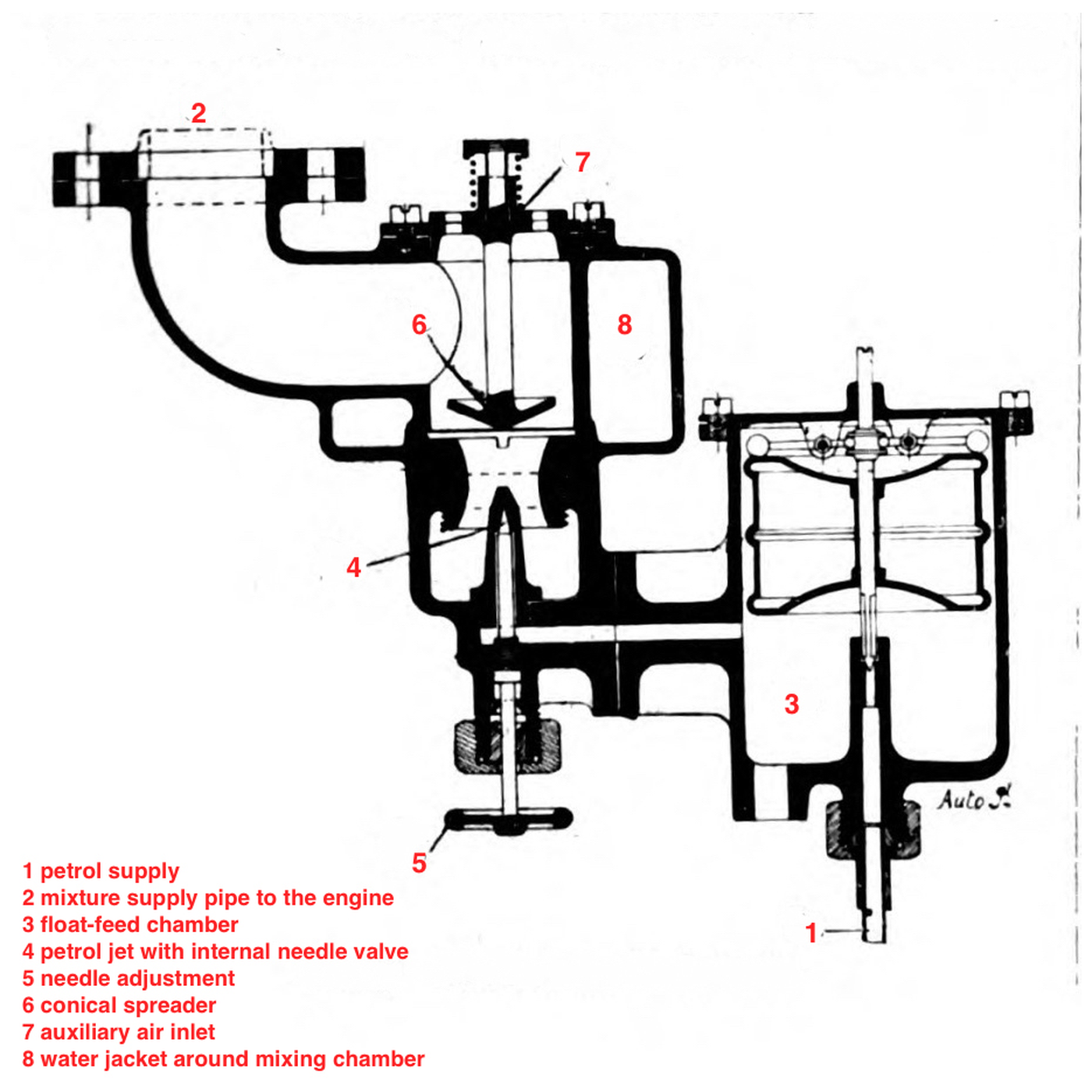


The Carburettor: A Venturi, a Jet and a Float
A petrol engine needs its fuel mixed with air in a nearly fixed ratio, at every speed. Wilhelm Maybach's spray-nozzle carburettor of 1893, for Daimler, did it with three parts and no moving control at all: a **venturi** that speeds the air and lowers its pressure, a **jet** opening into the throat that the low pressure draws fuel through, and a **float bowl** that holds the fuel at a constant level just below the jet.
Because the air flow and the fuel flow both go with the air's speed, the mixture stays right as the engine speeds up and slows down.
This rung works out why, and builds a water-and-air venturi atomiser to see the jet draw and spray — no petrol involved.
Fortgeschritten
About 3 hours
Anweisungen
1
1
Why the mixture stays right
Why the mixture stays right
Jupyter-Notebook wird geladen …
2
2
Build a venturi atomiser — with water
Build a venturi atomiser — with water
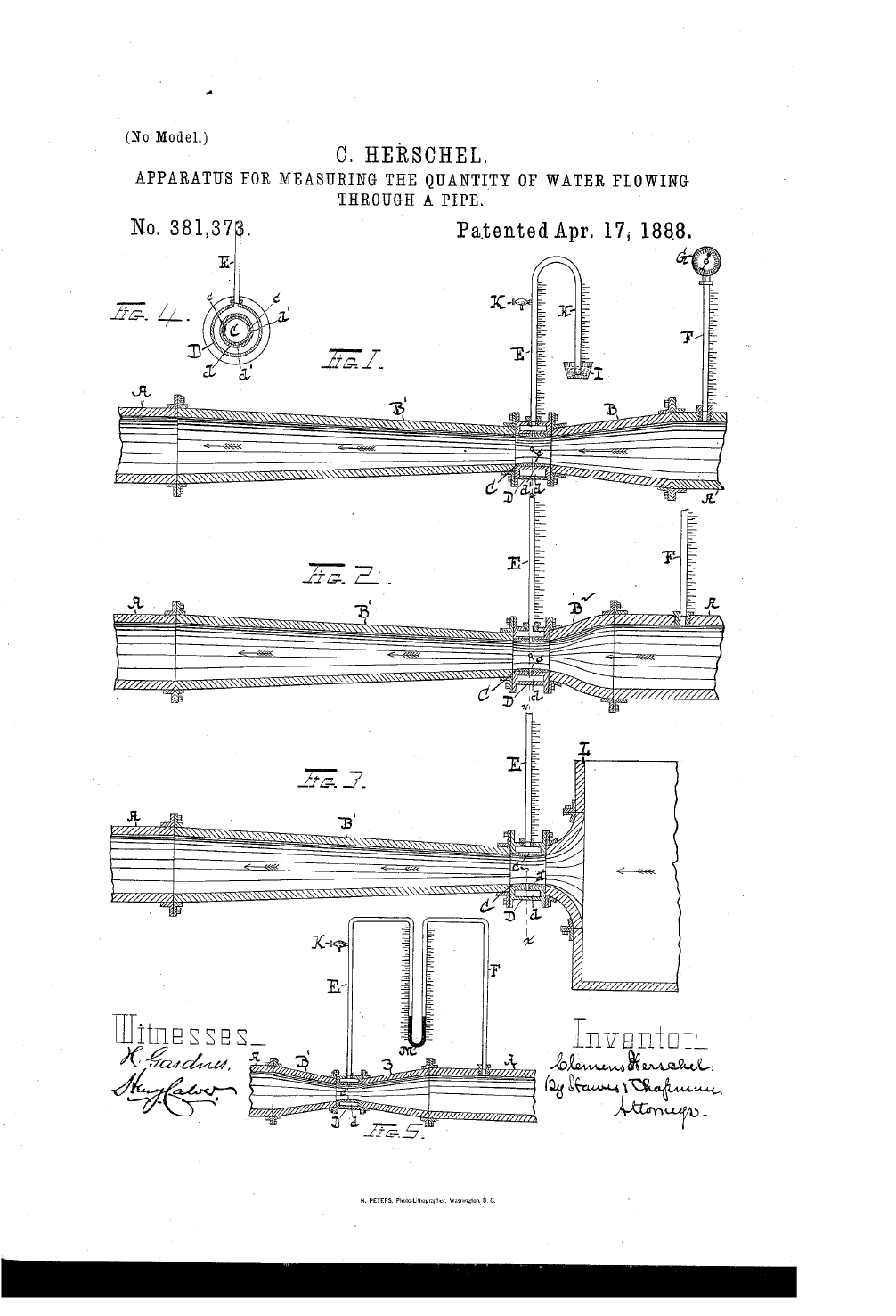
Print a venturi tube: 12 mm bore narrowing smoothly to a 6 mm throat and opening gently back out, with a 2 mm side hole at the throat into which a fine tube is sealed. Lead that tube down into a cup of coloured water 30 mm below the throat — the cup is your float bowl, and the height is the level the float holds.
Blow air through with the air compressor through the regulator, starting very low. At some air speed the water climbs the tube and is torn into a spray at the throat. Raise the cup and it starts at lower air speed; lower it and it needs more. That is why a carburettor needs a float: the fuel level must not change.
**Water only.** Never demonstrate this with petrol: an atomised fuel spray is an explosive mixture.
Materialien für diesen Schritt:
 PETG-Filament30 g
 Klarer Vinylschlauch1 Meter
 Lebensmittelfarbe (Farbstoff zur Strömungssichtbarmachung)1 Tropfen
 Wasser1 Liter
Benötigte Werkzeuge:
 FDM-3D-Drucker
 Luftkompressor
 Druckminderer
 Lineal
 Klare Schutzbrille
3
3
History and context
History and context
**Wilhelm Maybach, 1893** — the spray-nozzle carburettor with a float chamber, developed for Daimler engines, the pattern for carburettors for most of the next century. No patent number is asserted here. Earlier 'surface' and 'wick' carburettors had simply let air pass over or through petrol, and their mixture wandered with temperature and fuel level.
Fuel injection replaced the carburettor in cars from the 1980s, for precise mixture control and emissions; carburettors survive on small engines.
**Honest limits.** The simple venturi law fails at very low airflow (idle) and during sudden throttle opening, so real carburettors carry extra circuits. The mixture shifts with altitude, because air density falls. And petrol vapour is dangerous: carburettors are worked on outdoors, away from flame.
Materialien
4- 30 gPlatzhalter
- 1 MeterPlatzhalter
- Platzhalter
- 1 LiterPlatzhalter
Benötigte Werkzeuge
5- Platzhalter
- 1 vendor sell this, none ship to you yetPlatzhalter
- Platzhalter
- Platzhalter
- Platzhalter
Verwandte Blueprints
Diese Blueprints teilen Wissen — Techniken, Materialien oder Prinzipien


CC0 Gemeinfrei
Dieser Blueprint ist unter CC0 veröffentlicht. Sie dürfen dieses Werk für jeden Zweck frei kopieren, ändern, verbreiten und verwenden, ohne um Erlaubnis zu fragen.
Unterstützen Sie den Maker, indem Sie Produkte über seinen Blueprint kaufen, wo er eine Maker-Provision von Anbietern festgelegt, verdient. Oder erstellen Sie eine neue Iteration dieses Blueprints und verbinden Sie ihn in Ihrem eigenen Blueprint, um Einnahmen zu teilen.