KUNST
SCHÖNHEIT & WELLNESS
HANDWERK
KULTUR & GESCHICHTE
UNTERHALTUNG
UMFELD
ESSEN & GETRÄNKE
REVERSE ENGINEERING
WISSENSCHAFTEN
SPORT
TECHNOLOGIE
WEARABLES

The Clothes Wringer: Two Rollers and a Spring
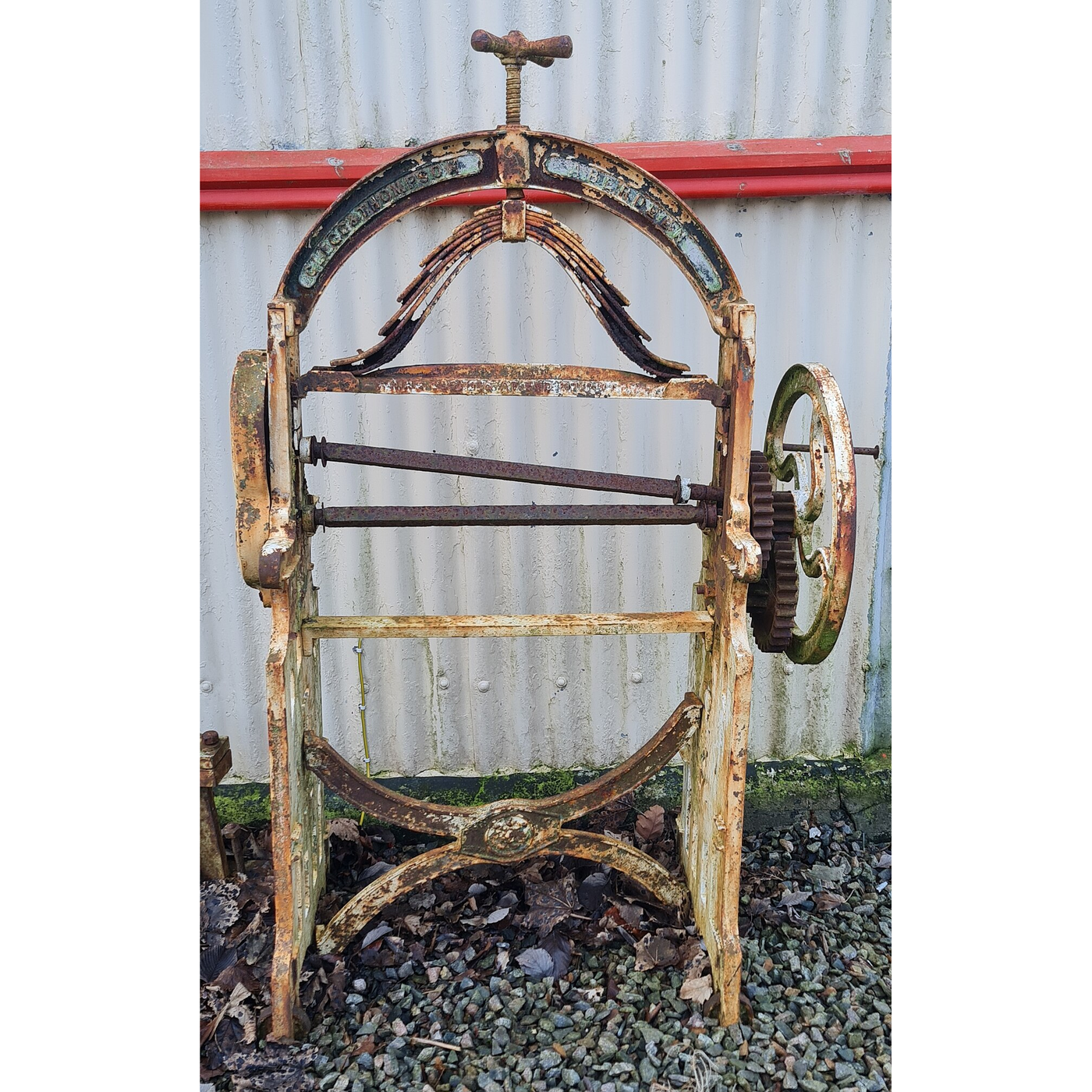
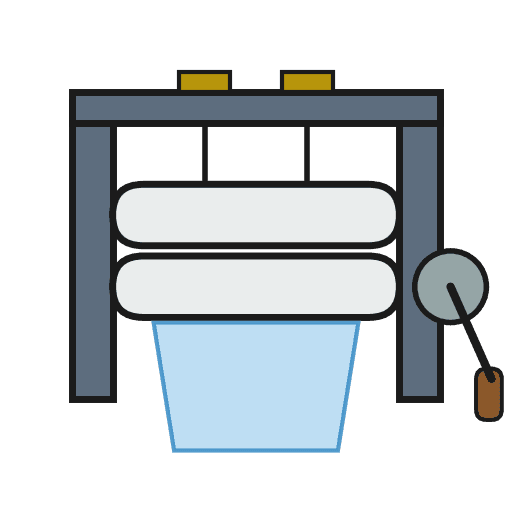
Washing clothes by hand leaves them heavy with water, and wringing a sheet by hand is slow, tiring and hard on the fabric. The wringer — two rubber rollers pressed together by springs and turned by a crank through gears — squeezes the water out as the cloth feeds through. Clamped to a tub or built onto a washing machine, it was in most homes that did their own washing for a century, until spin dryers took its place.
The design is a balance: more spring force takes out more water but needs more effort at the crank, wears the rubber and breaks buttons; the gearing trades speed for effort. And the nip that grips cloth grips fingers too — wringers had a release to spring the rollers apart.
This rung works out the crank effort and gearing and builds a small wringer.
Anfänger
About 4 hours
Anweisungen
1
1
Crank effort, gearing and drying
Crank effort, gearing and drying
Jupyter-Notebook wird geladen …
2
2
Two rollers, a different job
Two rollers, a different job
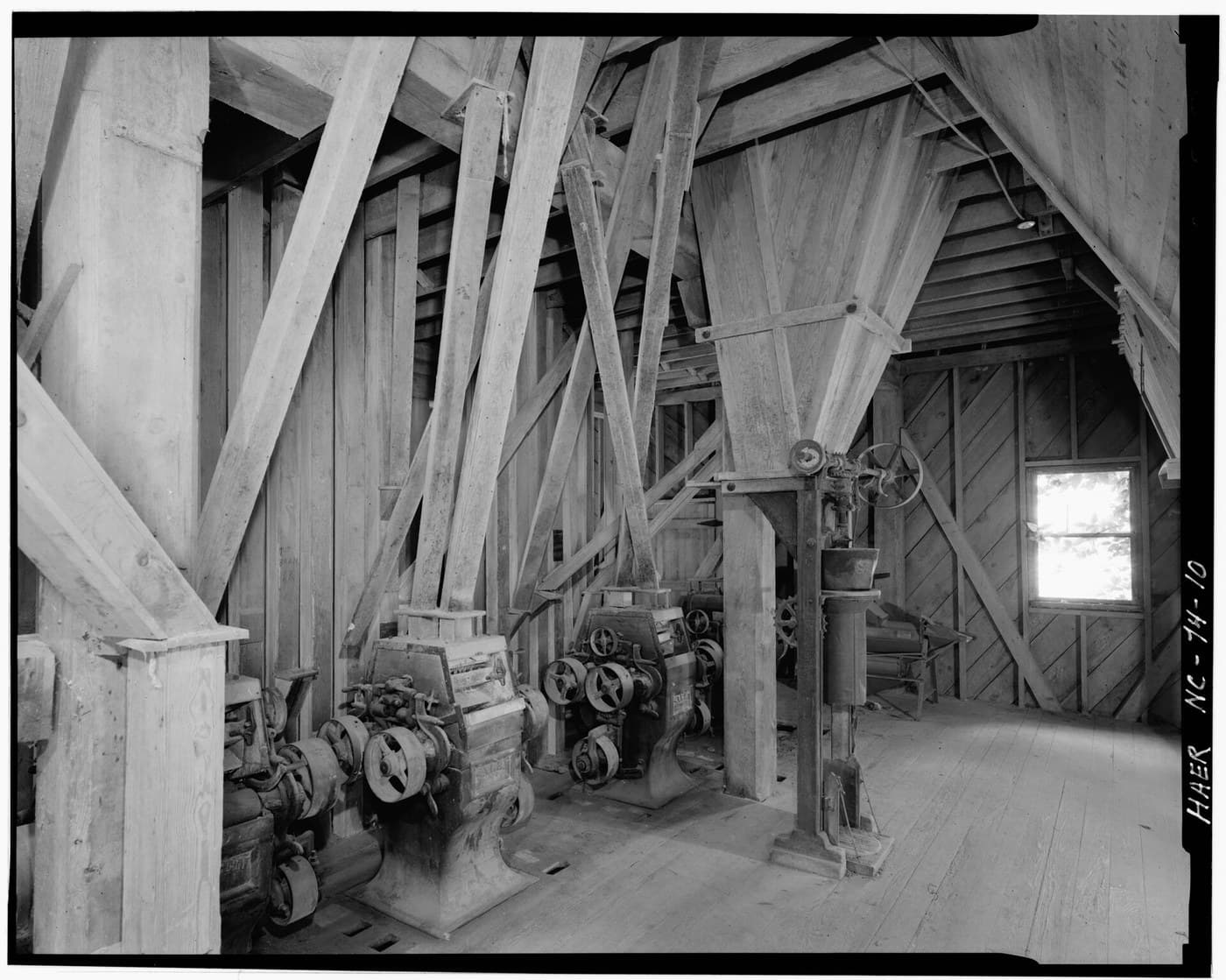
A roller mill crushes grain between rollers set a fixed gap apart; a wringer presses its rollers together with springs. The embedded blueprint shows the mill.
3
3
Build a small wringer
Build a small wringer
Cut two 250 mm lengths of 30 mm PVC pipe and slide each over a length of rubber hose, or wrap it tightly with rubber sheet glued down, to make the rollers. Run each on a steel shaft through holes in two plywood side frames: the bottom roller in fixed holes, the top roller in slots so it can move up.
Press the top shaft down with two compression springs under screw adjusters in the frame tops. Fit a crank to the bottom roller, and drive the top roller by gear or by friction from the bottom one. Add a lever that lifts the top roller's slot blocks against the springs — the safety release.
Soak cotton towels, weigh each wet, pass it through at three spring settings, and weigh again. Keep fingers well back from the nip: it pulls in whatever it grips.
Materialien für diesen Schritt:
 PVC-Rohr1 Meter
 Gummiplatte1 Stück
 Stahl-Stangenmaterial2 Stück
 Sperrholzplatte1 Stück
 Druckfedern-Sortiment1 Stück
 Maschinenschrauben8 StückPVC-Rohr1 Stück
Benötigte Werkzeuge:
 Akkubohrschrauber
 Bohrersatz
 Digitale Küchenwaage
 Rollgabelschlüssel
 Heißklebepistole
4
4
A wringer not wringing
A wringer not wringing
Wringer faults.
Flow
Loading...
5
5
Context and honest limits
Context and honest limits
Hand-cranked wringers and box mangles spread through nineteenth-century homes and laundries; powered wringers sat on top of early electric washing machines until spin drying replaced them in the mid-twentieth century.
**Honest limits.** The notebook's spring force, rolling arm and water contents are illustrative; measure your own. Wringers caused many injuries to hands and hair — keep children away from any wringer, and never reach toward the nip while it turns.
Materialien
6- 1 StückPlatzhalter
- 1 StückPlatzhalter
- 2 StückPlatzhalter
- 1 StückPlatzhalter
- 1 StückPlatzhalter
- 8 StückPlatzhalter
Benötigte Werkzeuge
5- 1 vendor sell this, none ship to you yetPlatzhalter
- Platzhalter
- Platzhalter
- Platzhalter
- Platzhalter
Dieser Bauplan stellt her
Verwandte Blueprints
Diese Blueprints teilen Wissen — Techniken, Materialien oder Prinzipien




CC0 Gemeinfrei
Dieser Blueprint ist unter CC0 veröffentlicht. Sie dürfen dieses Werk für jeden Zweck frei kopieren, ändern, verbreiten und verwenden, ohne um Erlaubnis zu fragen.
Unterstützen Sie den Maker, indem Sie Produkte über seinen Blueprint kaufen, wo er eine Maker-Provision von Anbietern festgelegt, verdient. Oder erstellen Sie eine neue Iteration dieses Blueprints und verbinden Sie ihn in Ihrem eigenen Blueprint, um Einnahmen zu teilen.