KUNST
SCHÖNHEIT & WELLNESS
HANDWERK
KULTUR & GESCHICHTE
UNTERHALTUNG
UMFELD
ESSEN & GETRÄNKE
REVERSE ENGINEERING
WISSENSCHAFTEN
SPORT
TECHNOLOGIE
WEARABLES


The Flexible Shaft: Turning a Tool Round a Corner
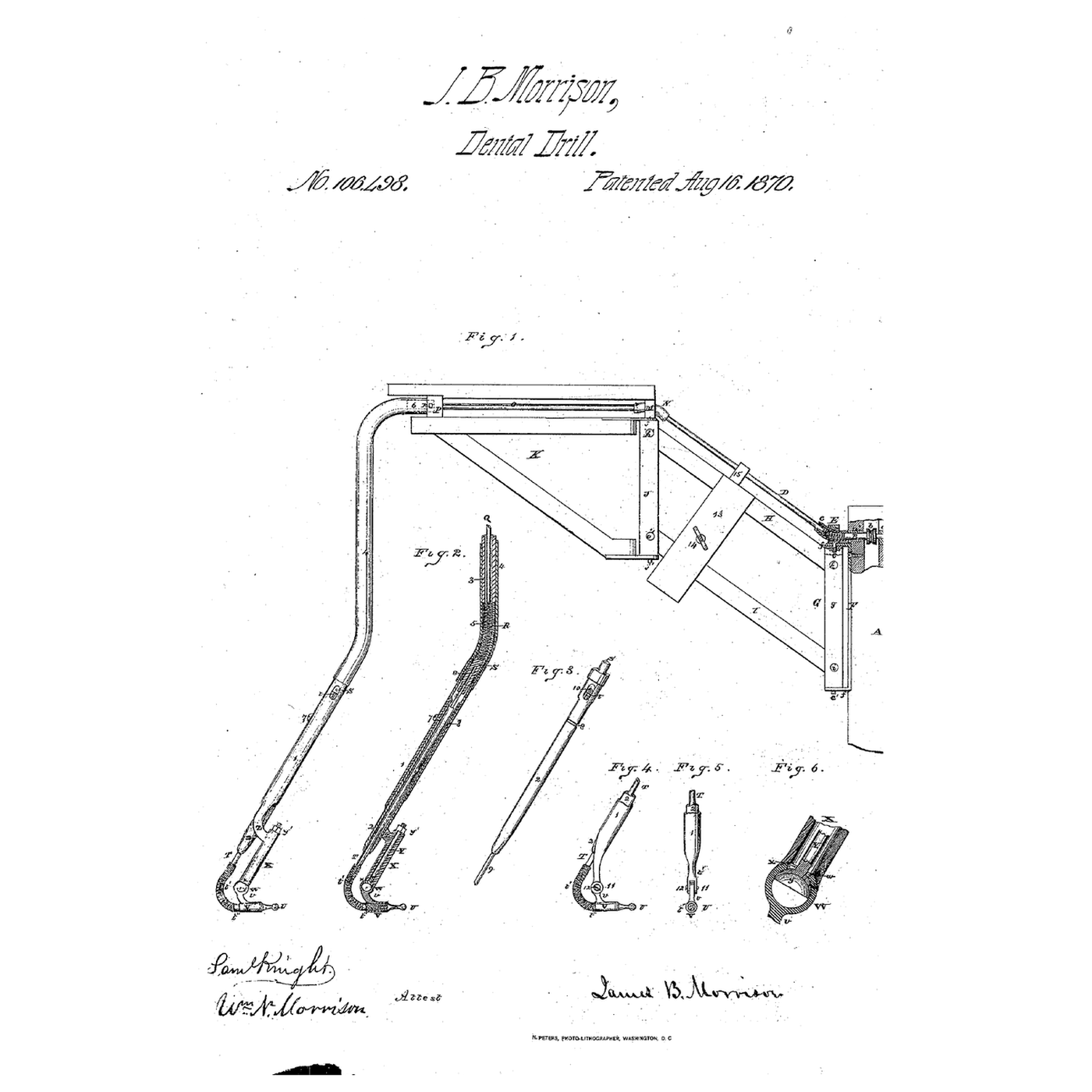
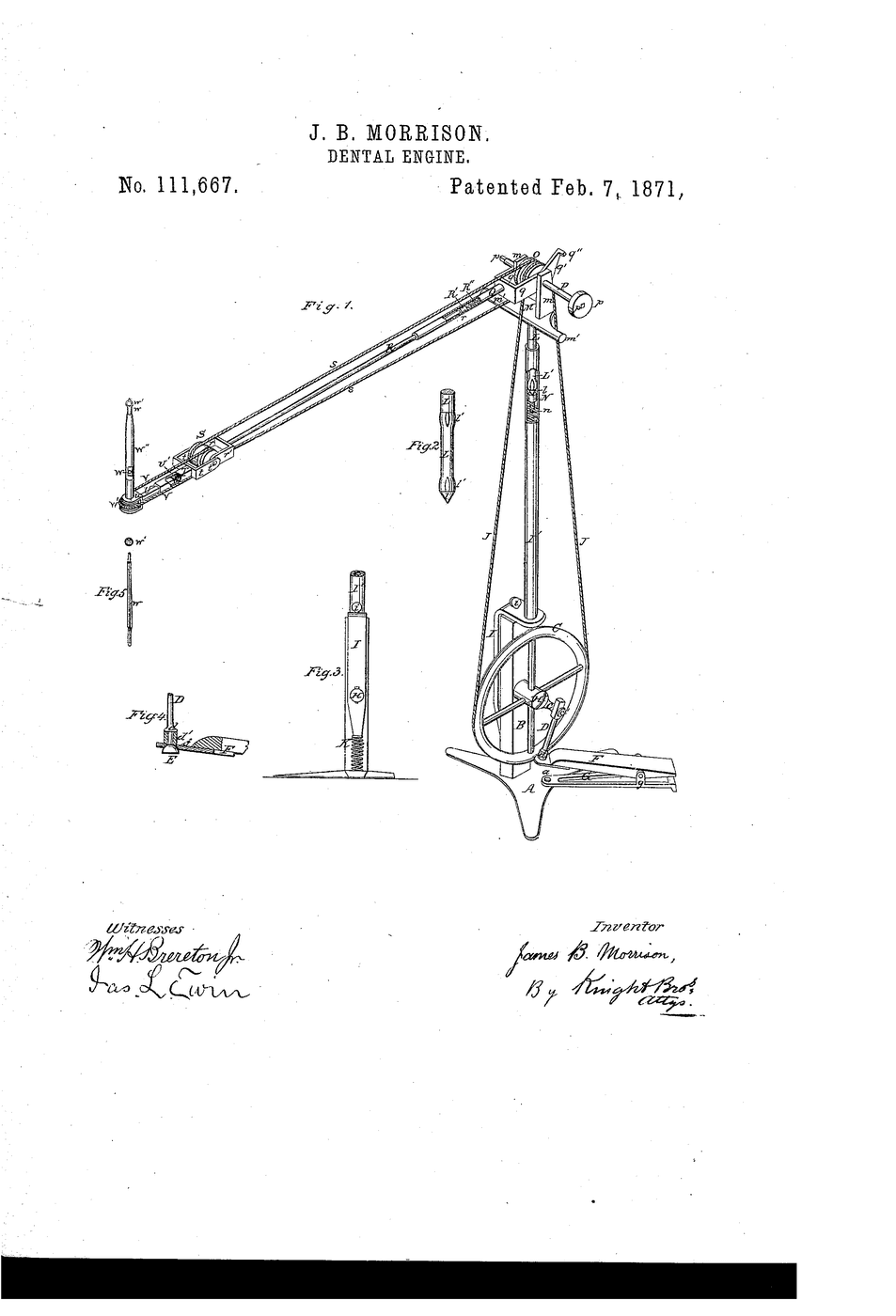
A dentist's drill must reach any tooth at any angle while it spins. A rigid shaft cannot follow the hand; universal joints give a few fixed bends. James B. Morrison of St. Louis tried two answers. His dental engine of 1871 carried the drive by a belt over pivoted, sprung arms. A year earlier his US 106,498, *Improvement in Flexible Shafts*, dated 16 August 1870, carried it through "a wire spiral or helix … enveloped in a short piece of india-rubber pipe, which allows the free flexure of the helix", in sleeves that act as bearings, with an adjustable head holding the bur and a parallel bracket for the instrument tray.
The flexible shaft outlived the dental use: it drives rotary tools, speedometers and hedge trimmers today. This rung works out why only thin wires can bend and keep turning, and makes a flexible shaft from wound spring wire.
Anfänger
About 3 hours
Anweisungen
1
1
Bending stress, fatigue and torque
Bending stress, fatigue and torque
Jupyter-Notebook wird geladen …
2
2
The sibling: belt over sprung arms
The sibling: belt over sprung arms
Morrison's other answer to the same problem carries the drive by a belt over pivoted arms. The embedded blueprint builds it; compare the two ways of reaching round a corner.
3
3
Read the 1870 flexible power-conveyer
Read the 1870 flexible power-conveyer
Fig. 1 of US 106,498 shows the apparatus on a stand: a pulley shaft B, joined by a wire helix C in a rubber pipe c to a shaft section D, turning in a swivel-eye E; a double hinged parallel bracket H, I carrying the instrument tray L, which stays level however the bracket swings; and further helix sections R and t′ leading through a sleeve to the socket-head holding the burr U.
The patent's three claims, in order: the flexible shaft with its enveloping sleeve, which gives journal-bearing to the enclosed shaft and the tool; an adjustable head joined to the sleeve by a hinge, so the tool can be set at any angle; and the combination with a parallel bracket that swings, rises and extends.
4
4
Wind a flexible shaft and drive it
Wind a flexible shaft and drive it
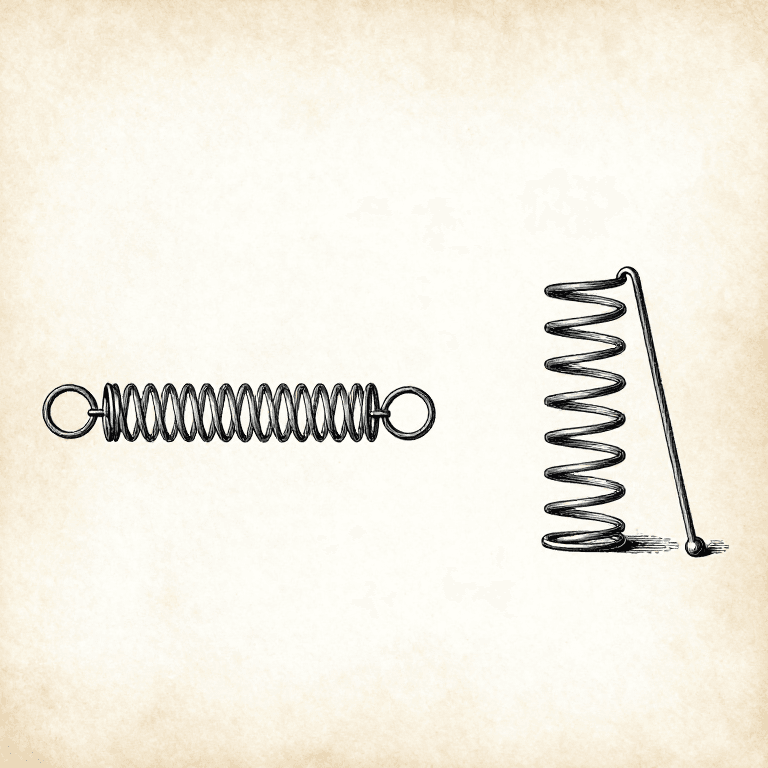
Clamp a 3 mm steel rod in a cordless drill as a mandrel. Clamp one end of a length of 0.8 mm spring steel wire to the rod and, turning the drill slowly, wind a close helix about 400 mm long, every turn touching the last. Slide it off: that is the core.
Push a short length of steel rod into each end and secure it with a dab of solder or a crimped sleeve. Chuck one end in the drill; put a small drill bit in a pin chuck on the other end, held in a length of aluminium tube as the sleeve-bearing.
Bend the core round a 100 mm radius and run the drill in the direction that tightens the coil: the bit turns and will drill soft wood. Reverse the drill: the coil opens, winds up and barely turns the bit. Compare with a commercial rotary-tool flex shaft.
Materialien für diesen Schritt:
 Federstahldraht1 Stück
 Stahl-Stangenmaterial1 Stück
 Aluminiumrohr1 Stück
 Zinn-Blei-Lot1 Stück
 Biegewelle für Rotationswerkzeug1 Stück
Benötigte Werkzeuge:
 Akkubohrschrauber
 Bohrersatz
 Schraubstock
 Lötkolben
 Lederarbeitshandschuhe
 Klare Schutzbrille
5
5
A flexible shaft that fails
A flexible shaft that fails
Flexible shaft faults.
Flow
Loading...
6
6
History and honest limits
History and honest limits
**James B. Morrison** of St. Louis was granted **US 106,498**, dated 16 August 1870, for his flexible power-conveyer "for dental and other purposes"; his treadle dental engine with sprung arms followed in 1871 (US 111,667). Flexible shafts with multi-layer wire cores now drive rotary tools, instrument cables and garden tools.
**Honest limits.** The bending-stress figures are the simple beam formula for one wire; a real core's stresses depend on its winding. A hand-wound single helix is a demonstration, not a tool shaft — it will not last.
Materialien
5- 1 StückPlatzhalter
- 1 StückPlatzhalter
- 1 StückPlatzhalter
- 1 StückPlatzhalter
- Platzhalter
Benötigte Werkzeuge
6- 1 vendor sell this, none ship to you yetPlatzhalter
- Platzhalter
- Platzhalter
- 2 vendors sell this, none ship to you yetPlatzhalter
- Platzhalter
- Platzhalter
Verwandte Blueprints
Diese Blueprints teilen Wissen — Techniken, Materialien oder Prinzipien


CC0 Gemeinfrei
Dieser Blueprint ist unter CC0 veröffentlicht. Sie dürfen dieses Werk für jeden Zweck frei kopieren, ändern, verbreiten und verwenden, ohne um Erlaubnis zu fragen.
Unterstützen Sie den Maker, indem Sie Produkte über seinen Blueprint kaufen, wo er eine Maker-Provision von Anbietern festgelegt, verdient. Oder erstellen Sie eine neue Iteration dieses Blueprints und verbinden Sie ihn in Ihrem eigenen Blueprint, um Einnahmen zu teilen.