KUNST
SCHÖNHEIT & WELLNESS
HANDWERK
KULTUR & GESCHICHTE
UNTERHALTUNG
UMFELD
ESSEN & GETRÄNKE
REVERSE ENGINEERING
WISSENSCHAFTEN
SPORT
TECHNOLOGIE
WEARABLES
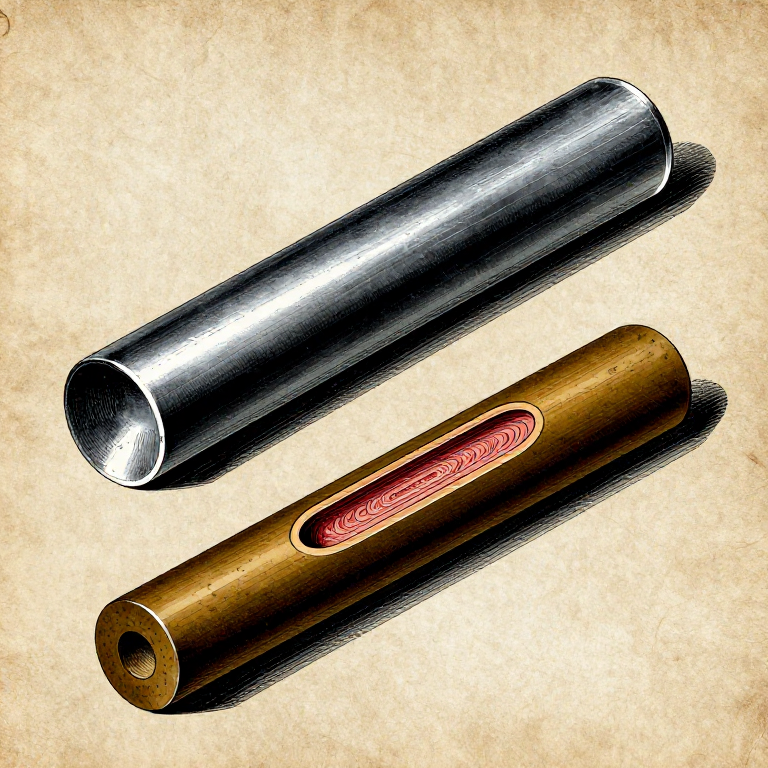
Understanding Hafnium from Zircon — The Nuclear Fuel Rod Guardian
Fortgeschritten
Anweisungen
1
1
Understand Hafnium's Discovery
Understand Hafnium's Discovery
Dirk Coster and George de Hevesy discovered hafnium in 1923 in Copenhagen using X-ray spectroscopy of Norwegian zircon crystals. They named it after Hafnia, the Latin name for Copenhagen. Hafnium was the last stable element predicted by Mendeleev's periodic table and Bohr's atomic model to remain undiscovered. Its discovery confirmed Bohr's prediction that element 72 would be a transition metal chemically similar to zirconium, not a rare earth.
2
2
Identify Hafnium's Intimate Association with Zirconium
Identify Hafnium's Intimate Association with Zirconium
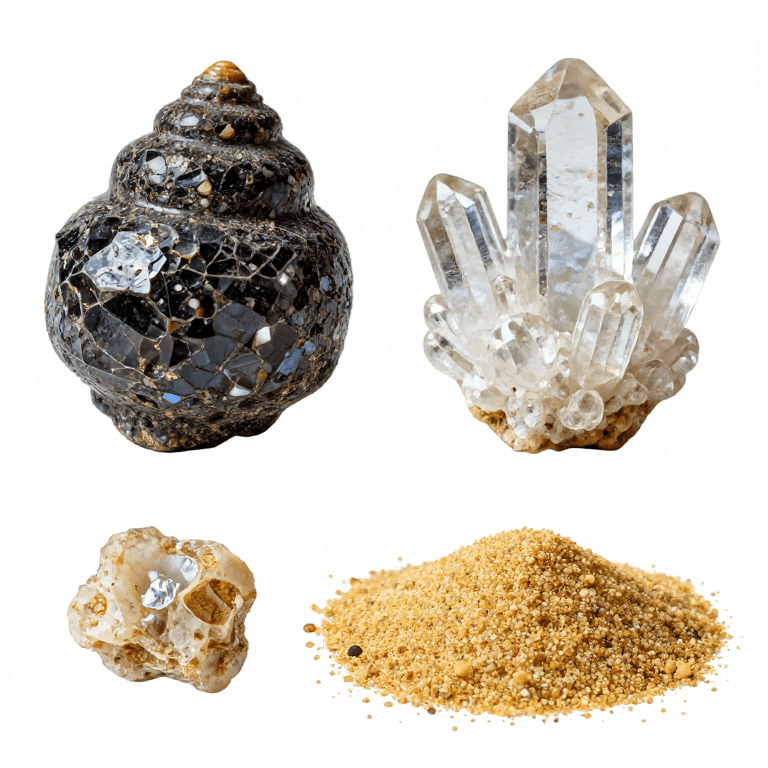
Hafnium always occurs with zirconium in nature because both elements have nearly identical atomic radii (Hf: 159 pm, Zr: 160 pm) and identical oxidation states (+4). Zircon (ZrSiO₄) typically contains 1-4% hafnium substituting for zirconium. Separating hafnium from zirconium is one of the most difficult separations in industrial chemistry — their chemical properties are so similar that fractional crystallization is impractical. Liquid-liquid extraction (MIBK process) is used instead.
Materialien für diesen Schritt:
 Zirkonprobe
Benötigte Werkzeuge:
 Handlupe 10-fachHandlupe 10-fach
 Strichtafel (unglasiertes Porzellan)
 Mohs-Härteprüfstifte
3
3
Examine Nuclear Reactor Applications
Examine Nuclear Reactor Applications
Hafnium has a thermal neutron absorption cross-section of 104 barns — 600 times higher than zirconium's 0.18 barns. This huge difference means hafnium must be completely removed from zirconium used in fuel rod cladding (where neutron transparency is needed), while hafnium itself is excellent for control rods. US Navy nuclear submarines use hafnium control rods because hafnium absorbs neutrons without swelling or becoming brittle under intense irradiation.
4
4
Discover Hafnium in Semiconductor Technology
Discover Hafnium in Semiconductor Technology
Hafnium oxide (HfO₂) replaced silicon dioxide as the gate dielectric in Intel's 45 nm process node in 2007 — one of the most important materials transitions in semiconductor history. HfO₂ has a dielectric constant of 25, versus 3.9 for SiO₂, allowing thicker gate layers that block leakage current while maintaining the same effective capacitance. Every modern CPU, GPU, and smartphone processor manufactured since 2007 contains hafnium oxide in its transistor gates.
5
5
Understand Superalloy Applications
Understand Superalloy Applications
Hafnium additions of 0.5-2% dramatically improve the creep strength and oxidation resistance of nickel-based superalloys used in jet engine turbine blades. Hafnium carbide (HfC) has the highest melting point of any known binary compound at 3,958°C. Hafnium is added to the superalloy CMSX-10 used in single-crystal turbine blades operating at temperatures above 1,100°C in the hottest section of modern turbofan engines.
6
6
Explore Plasma Cutting and Welding
Explore Plasma Cutting and Welding
Hafnium electrodes are used in plasma arc cutting torches because hafnium has a high melting point (2,233°C), forms a stable protective oxide layer at the electrode tip, and resists erosion by the plasma arc better than alternatives. Hafnium-tipped electrodes last 5-10 times longer than copper electrodes in industrial plasma cutting of steel, stainless steel, and aluminum. This is the largest commercial use of hafnium metal by volume.
7
7
Examine Metal Properties
Examine Metal Properties
Hafnium is a lustrous, silvery-gray metal that is ductile and resistant to corrosion. Melting point is 2,233°C, density 13.31 g/cm³ — nearly twice as dense as zirconium despite being chemically almost identical. Hafnium resists corrosion by alkalis, acids (except HF), and most other chemicals. The metal is pyrophoric in powder form. Hafnium is produced by the Kroll process (magnesium reduction of hafnium tetrachloride), the same process used for titanium and zirconium.
8
8
Survey Optical and Ceramic Applications
Survey Optical and Ceramic Applications
Hafnium oxide thin films are used as high-refractive-index layers in multilayer optical coatings for laser mirrors and anti-reflection coatings operating at UV wavelengths. HfO₂ has exceptional radiation hardness — it maintains its optical properties under intense gamma and neutron bombardment. Hafnium diboride (HfB₂) is an ultra-high-temperature ceramic researched for hypersonic vehicle leading edges where temperatures exceed 2,000°C during atmospheric reentry.
Benötigte Werkzeuge:
 Präzisionswaage
9
9
Understand Supply Chain and Production
Understand Supply Chain and Production
Global hafnium production is only about 70 tonnes per year — entirely as a byproduct of nuclear-grade zirconium production. For every 50 tonnes of nuclear-grade zirconium produced, approximately 1 tonne of hafnium is separated. Hafnium metal is priced at $500-1,500 per kilogram. The entire supply depends on the nuclear industry's demand for hafnium-free zirconium — if nuclear power declined, hafnium supply would shrink proportionally.
10
10
Document Findings and Strategic Importance
Document Findings and Strategic Importance
Record hafnium's key data: atomic number 72, density 13.31 g/cm³, melting point 2,233°C, lustrous silvery-gray metal. Hafnium is a quiet workhorse of advanced technology — present in every modern microprocessor, every naval nuclear reactor, and every high-performance jet engine. Its inseparability from zirconium means that controlling the Hf/Zr separation process is strategically critical. Demand from the semiconductor industry continues to grow with each new transistor generation.
11
11
Ore grade: how much zircon per kilogram
Ore grade: how much zircon per kilogram
Jupyter-Notebook wird geladen …
Materialien
1- 1 StückPlatzhalter
Benötigte Werkzeuge
4- Platzhalter
- Platzhalter
- Platzhalter
- Platzhalter
Materialien verbundener Blueprints
10% Zuordnung
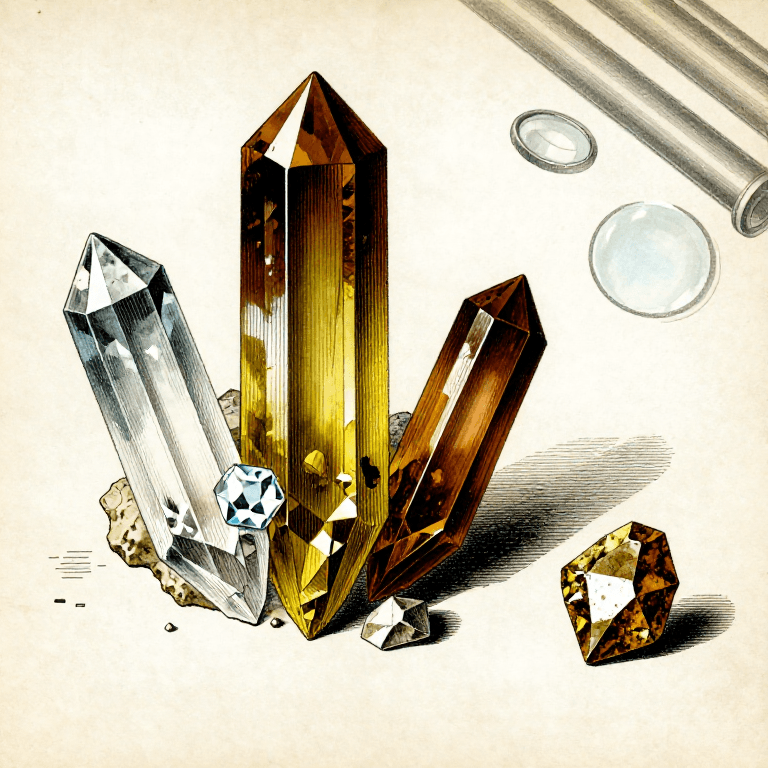
Understanding Zirconium from Zircon — The Ancient Gemstone That Clocks Earth's Age
von Peter
Bergbau
24
0
0
0
2
0
Gefährlich
10% Zuordnung
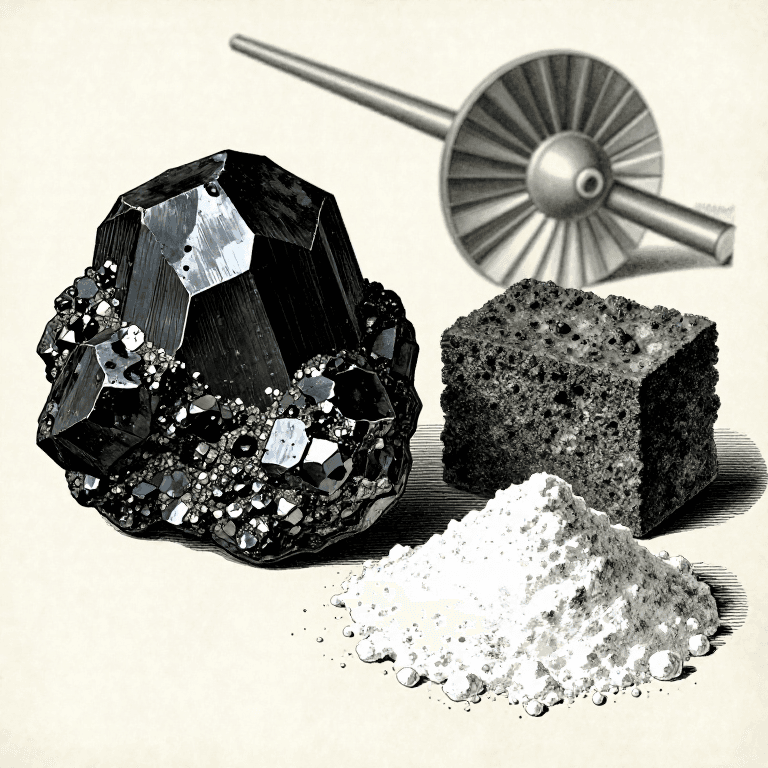
Understanding Titanium Extraction from Ilmenite — The Impossible Metal to Smelt
von Peter
Bergbau
62
0
0
0
3
0

10% Zuordnung
Understanding Niobium from Columbite — The Superconducting Steel Strengthener
von Peter
Bergbau
12
0
0
0
3
0
10% Zuordnung
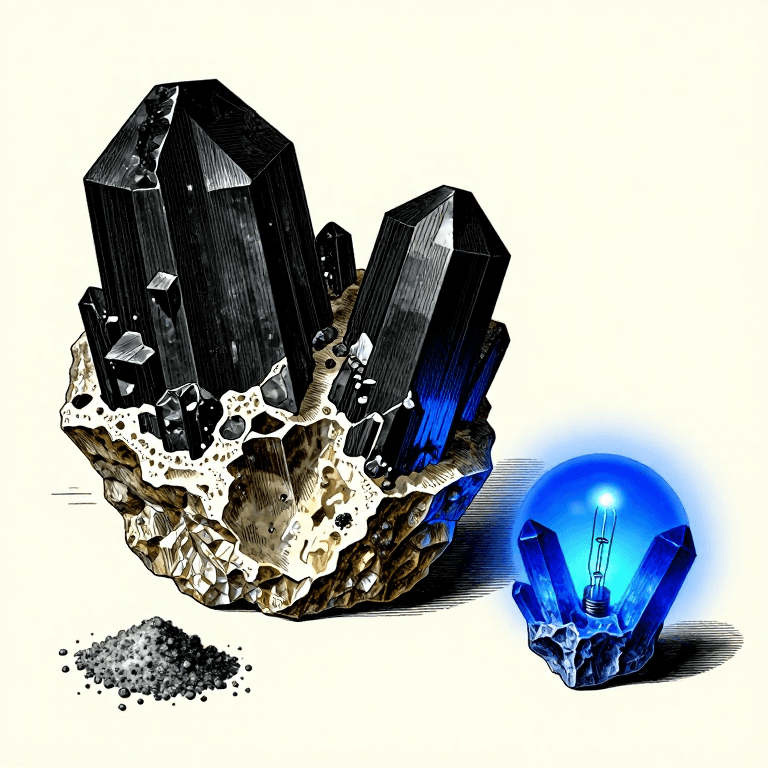
Extracting Tungsten from Wolframite — The Heaviest Practical Metal
von Peter
Metallbearbeitung
85
0
0
0
4
0
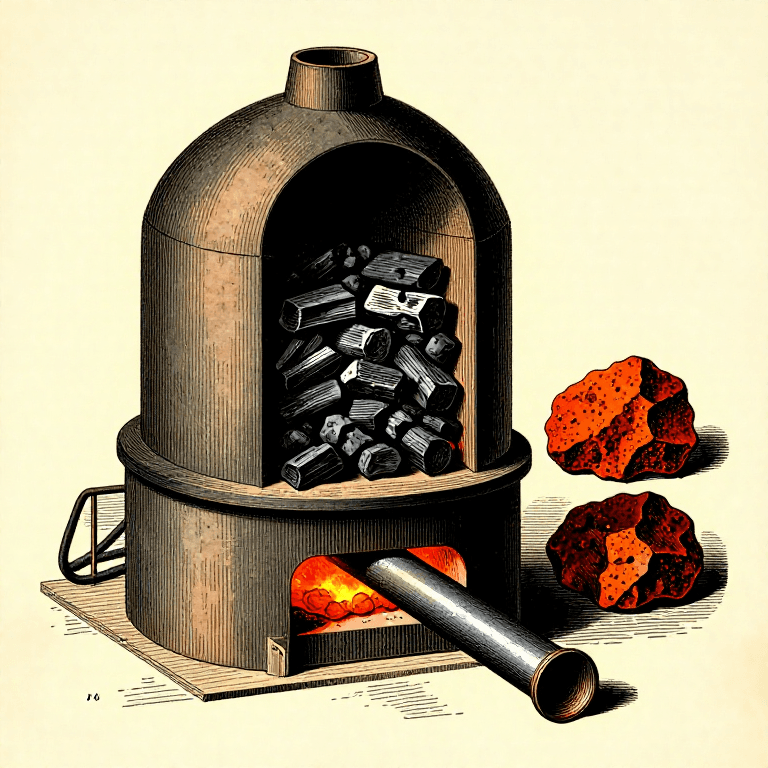
10% Zuordnung
Extracting Iron from Hematite — Bloomery Smelting from Ore to Bloom
von Peter
Metallbearbeitung
162
0
0
0
12
0
Verwandte Blueprints
Diese Blueprints teilen Wissen — Techniken, Materialien oder Prinzipien
CC0 Gemeinfrei
Dieser Blueprint ist unter CC0 veröffentlicht. Sie dürfen dieses Werk für jeden Zweck frei kopieren, ändern, verbreiten und verwenden, ohne um Erlaubnis zu fragen.
Unterstützen Sie den Maker, indem Sie Produkte über seinen Blueprint kaufen, wo er eine Maker-Provision von Anbietern festgelegt, verdient. Oder erstellen Sie eine neue Iteration dieses Blueprints und verbinden Sie ihn in Ihrem eigenen Blueprint, um Einnahmen zu teilen.