Zusammenarbeit
KUNST
SCHÖNHEIT & WELLNESS
HANDWERK
KULTUR & GESCHICHTE
UNTERHALTUNG
UMFELD
ESSEN & GETRÄNKE
REVERSE ENGINEERING
WISSENSCHAFTEN
SPORT
TECHNOLOGIE
WEARABLES
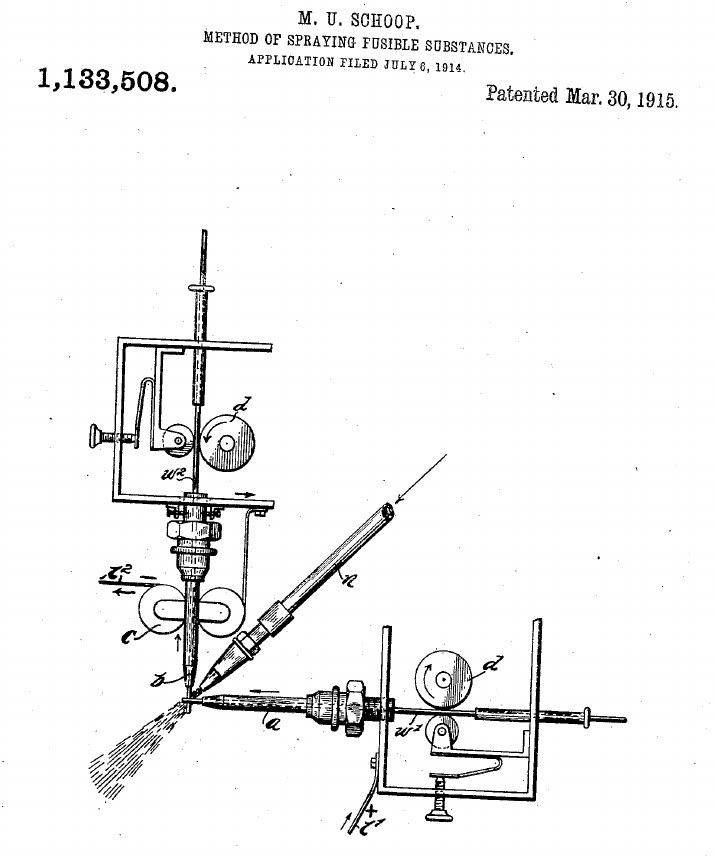


Wire-Arc Spray Gun: Two Crossed Wires, a Vibrating Arc and an Air Blast (Schoop, US 1,133,508, 1915)
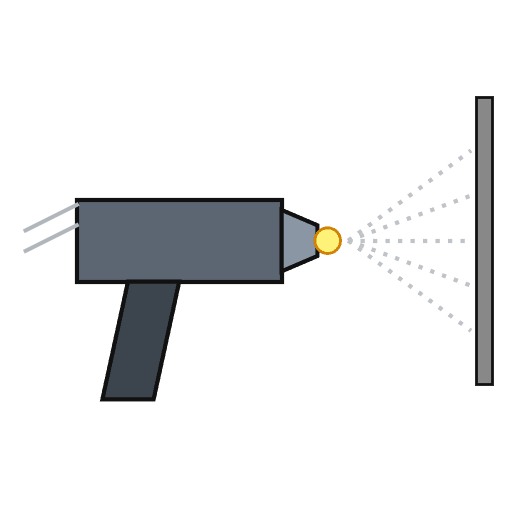
The first wire-arc metal sprayer. Two metal wires are pushed through iron tubes until their tips cross. Current through the wires also runs an electromagnet that pulls one tube back, so a small arc springs between the tips and melts them; a jet of air blows the molten metal off as a fine spray and puts the arc out, the magnet lets go, the wires touch again, and the cycle repeats very fast.
Result: a continuous spray of molten metal for coating a surface.
Source: M. U. Schoop, US 1,133,508 (1915). Unknown: the wire metals and sizes, the coil, the air pressure. Picture: the patent drawing.
Erfahren
Unknown
Anweisungen
1
1
Make the feed tubes and rolls
Make the feed tubes and rolls
Make two feed tubes ending in nozzles, preferably of iron. For each, mount a pair of feed rolls in a frame to push a wire through the tube. Set the tubes at about 90° to each other so the wires cross as they come out, the nozzles only a few millimetres apart. Mount one tube on an elastic support so it can move a little. Not given: sizes, the roll drive (the air blast may drive a small turbine for it).
Materialien für diesen Schritt:
 Eisenrohr2 feed tubes
 Unbekanntes Metall1 rolls, frames
 Blattfeder1 elastic support
Benötigte Werkzeuge:
 Metalldrehmaschine
 Unbekannte Maße
2
2
Fit the electromagnet
Fit the electromagnet
Wind an electromagnet beside the springing tube, so the tube is its armature. Wire the coil into the same circuit as the two tubes and wires, positive to one tube and negative to the other. When current flows the magnet pulls the tube aside and draws its wire slightly back from the other. Ours: enamelled copper wire for the coil. Not given: the coil.
Materialien für diesen Schritt:
 Lackierter Kupferdraht1 coilUnbekanntes Metall1 magnet core
 Kupferdraht1 circuit leads
Benötigte Werkzeuge:
 Schraubendreher-Satz
3
3
Fit the air blast
Fit the air blast
Aim a blast pipe at the point where the wires cross, either close to it or 20-30 mm away, whichever sprays best for the metal. Feed it with compressed air or another gas. Not given: the pressure.
Materialien für diesen Schritt:
 Luftdüse1 Stück
 Druckluftschlauch1 Stück
Benötigte Werkzeuge:
 Industrie-Luftkompressor
 Rollgabelschlüssel
4
4
Spray
Spray
Load a wire of the coating metal in each tube and feed them until they touch. Switch on the current, generally 40 to 75 volts depending on the metal and wire thickness, and the air. The magnet pulls the wires apart, an arc melts their tips, the air blows the melt away as spray and snuffs the arc, the magnet releases, and the cycle repeats very rapidly. The positive wire burns faster, so feed it faster or use a thicker wire; match the feed to the melting. Hold the work in the spray. Without the vibration the arc flickers and the wires may weld together.
Benötigte Werkzeuge:
 GleichstromnetzgerätIndustrie-LuftkompressorUnbekanntes Metall
Materialien
7- 2 feed tubesPlatzhalter
- 1 magnet corePlatzhalter
- 1 elastic supportPlatzhalter
- 1 coilPlatzhalter
- 1 circuit leadsPlatzhalter
- 1 StückPlatzhalter
- 1 StückPlatzhalter
Benötigte Werkzeuge
7- Platzhalter
- Platzhalter
- Platzhalter
- Platzhalter
- Platzhalter
- Platzhalter
- Platzhalter
Materialien verbundener Blueprints
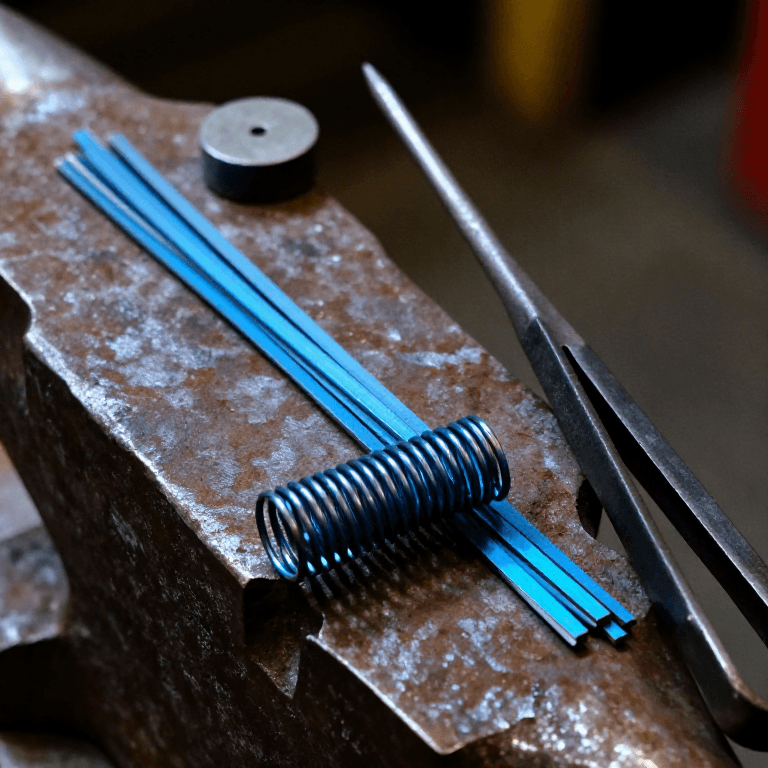
Dieser Bauplan stellt her
CC0 Gemeinfrei
Dieser Blueprint ist unter CC0 veröffentlicht. Sie dürfen dieses Werk für jeden Zweck frei kopieren, ändern, verbreiten und verwenden, ohne um Erlaubnis zu fragen.
Unterstützen Sie den Maker, indem Sie Produkte über seinen Blueprint kaufen, wo er eine Maker-Provision von Anbietern festgelegt, verdient. Oder erstellen Sie eine neue Iteration dieses Blueprints und verbinden Sie ihn in Ihrem eigenen Blueprint, um Einnahmen zu teilen.