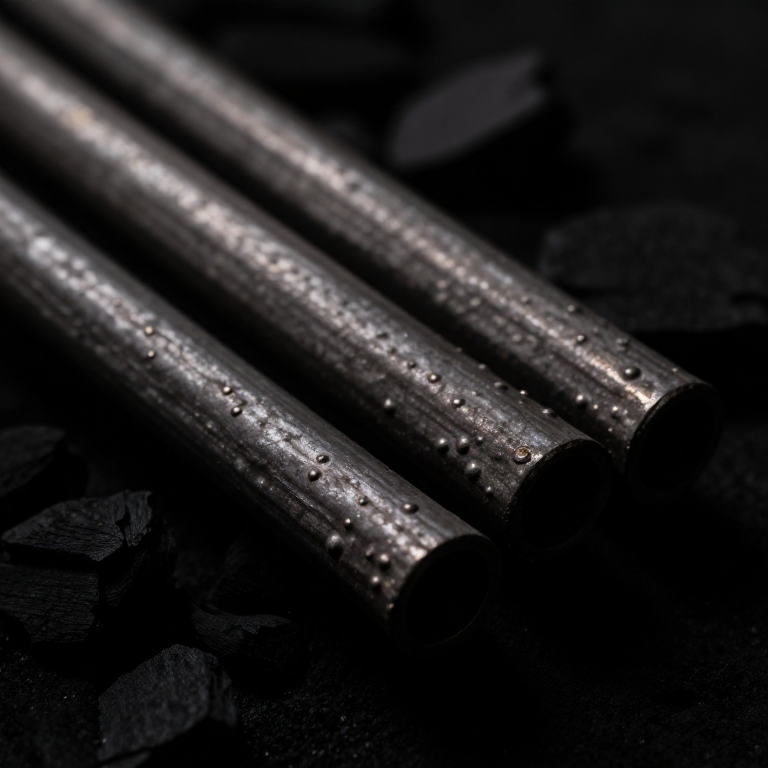


Making Blister Steel by Cementation — Carburizing Wrought Iron into Steel
Wrought iron bends but will not hold an edge; cast iron holds an edge but shatters. Steel — iron with just the right sliver of carbon — does both, and for centuries the great problem of metalworking was how to make it reliably. The cementation process, used across Europe from the 1600s, was the first method to manufacture steel in quantity from ordinary wrought iron bars.
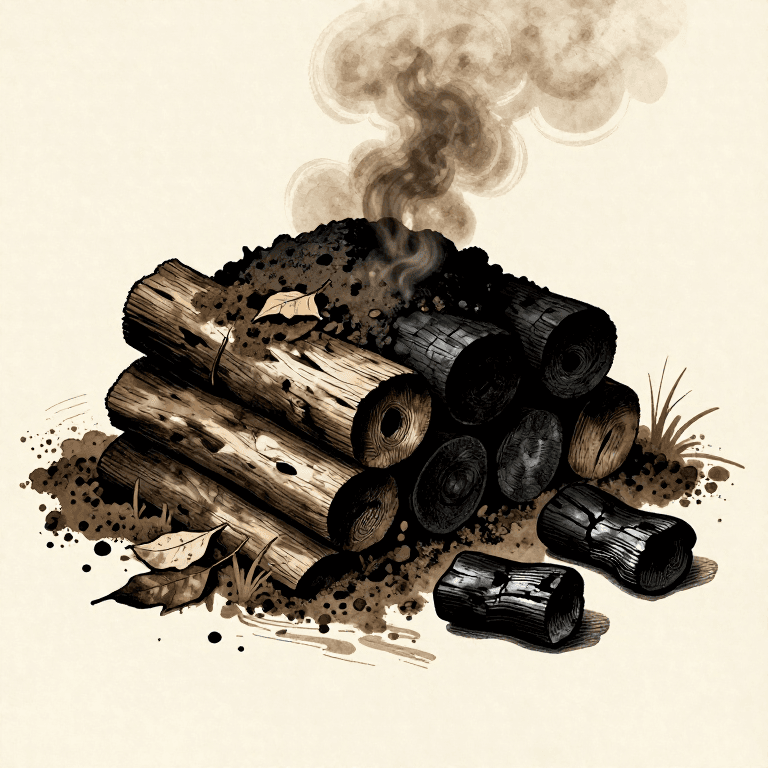
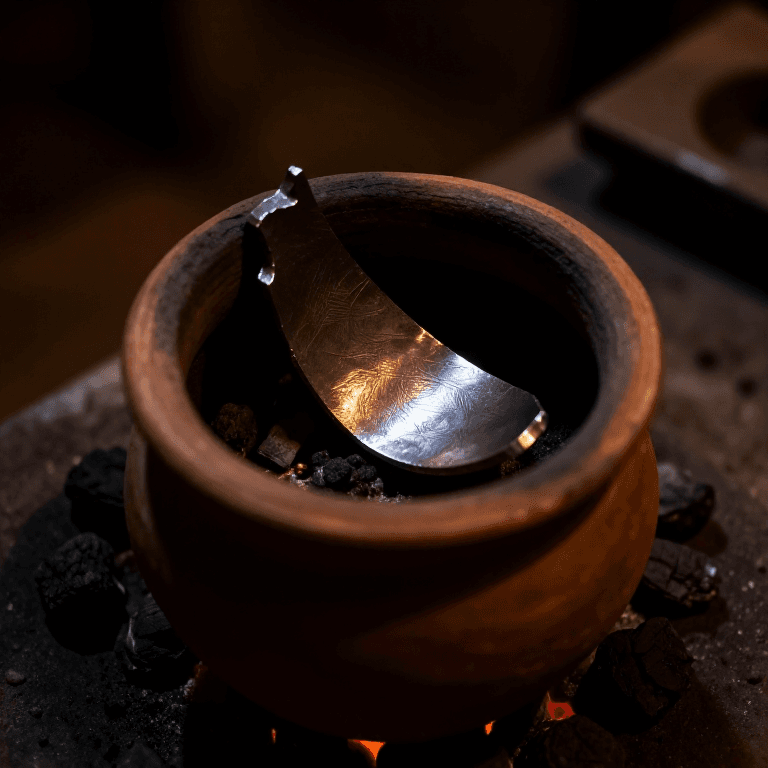
The idea is to add carbon to solid iron without ever melting it. Bars of wrought iron are packed in powdered charcoal inside a sealed stone chest and roasted for a week at a bright red heat. Over those days, carbon slowly creeps out of the charcoal and diffuses into the surface of the iron, turning the skin into steel. Gas trapped under the surface raises little blisters across the bars — which is why the product is called blister steel.
Blister steel is uneven, carbon-rich at the surface and soft in the core, so smiths refined it further: forge-welding and folding it into shear steel, or melting it in crucibles into perfectly uniform cast steel. But cementation was the foundation — the step that first made steel an industrial material rather than a rare treasure.
Instrucciones
Understand cementation
Understand cementation
Select wrought iron bars
Select wrought iron bars
Materiales para este paso:
 Barras de hierro forjado20 kg
Build the cementation chest
Build the cementation chest
Materiales para este paso:
 Ladrillos refractarios60 piezas
Herramientas necesarias:
 Palustre de mano
Crush the charcoal
Crush the charcoal
Materiales para este paso:
 Carbón vegetal en trozos15 kg
Herramientas necesarias:
 Martillo
Pack iron and charcoal in layers
Pack iron and charcoal in layers
Seal the chest with clay
Seal the chest with clay
Materiales para este paso:
 Arcilla10 kg
Fire at red heat for days
Fire at red heat for days
Materiales para este paso:
 Carbón bituminoso200 kg
Let the carbon diffuse
Let the carbon diffuse
Recognise the blisters
Recognise the blisters
Herramientas necesarias:
 Tenazas de estirar
Cool slowly and open
Cool slowly and open
Herramientas necesarias:
Tenazas de estirarRefine into shear steel
Refine into shear steel
Herramientas necesarias:
MartilloTest that it is steel
Test that it is steel
Materiales para este paso:
 Agua5 litros
Materiales
6- Marcador de posición
- 60 piezasMarcador de posición
- Marcador de posición
- 10 kgMarcador de posición
- 200 kgMarcador de posición
- 5 litrosMarcador de posición
Materiales de Blueprints conectados


Blueprints relacionados
Estos blueprints comparten conocimiento — técnicas, materiales o principios

CC0 Dominio público
Este Blueprint se publica bajo CC0. Eres libre de copiar, modificar, distribuir y usar este trabajo para cualquier propósito, sin pedir permiso.
Apoya al Maker comprando productos a través de su Blueprint, donde gana una Comisión del Maker establecida por los vendedores, o crea una nueva iteración de este Blueprint e inclúyela como conexión en tu propio Blueprint para compartir ingresos.