Colaboración
ARTE
BELLEZA Y BIENESTAR
ARTESANÍA
CULTURA E HISTORIA
ENTRETENIMIENTO
MEDIO AMBIENTE
COMIDA Y BEBIDAS
INGENIERÍA INVERSA
CIENCIAS
DEPORTES
TECNOLOGÍA
TECNOLOGÍA VESTIBLE
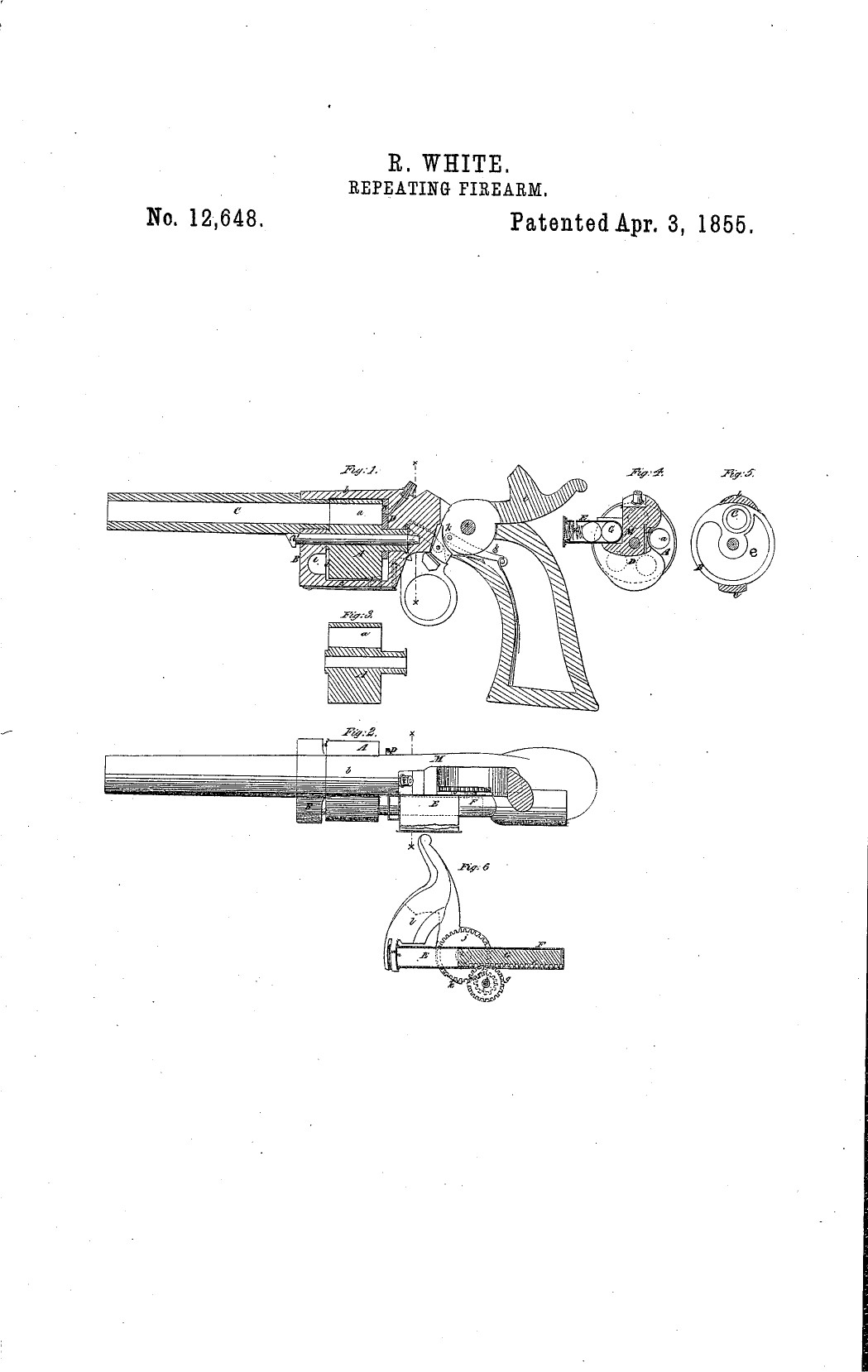

The Bored-Through Cylinder and the Self-Contained Cartridge (Rollin White, 1855) - History and How It Works
Principiante
About 15 minutes
Instrucciones
1
1
Read White's patent
Read White's patent
His first claim: "Extending the chambers a a of the rotating cylinder A right through the rear of the said cylinder." (US 12,648, dated 3 April 1855.)
2
2
How it works, in principle
How it works, in principle
With the chambers open at both ends, a cartridge (powder and ball made up as one unit) goes in from the back instead of being loaded loose from the front. White made the chambers slightly conical, smallest at the front, "in order that a cartridge may be inserted easily at the back, but that the ball may fit tight when it arrives in its place".
3
3
What came of it
What came of it
Once cartridges carried their own powder, ball and ignition in a metal case, a revolver could be reloaded in seconds from the back. Smith & Wesson built their first cartridge revolvers under a licence of White's patent.
4
4
Honest limits
Honest limits
From the text of US 12,648 (1855). His patent also describes a magazine and charging piston not covered here. This page gives no dimensions, charges or making steps, by design.
Blueprints relacionados
Estos blueprints comparten conocimiento — técnicas, materiales o principios

Peligroso
Building a Song Dynasty Fire Lance — The World's First Gunpowder Weapon
por Charlie
Armamento
116
1
0
0
4
0
Peligroso
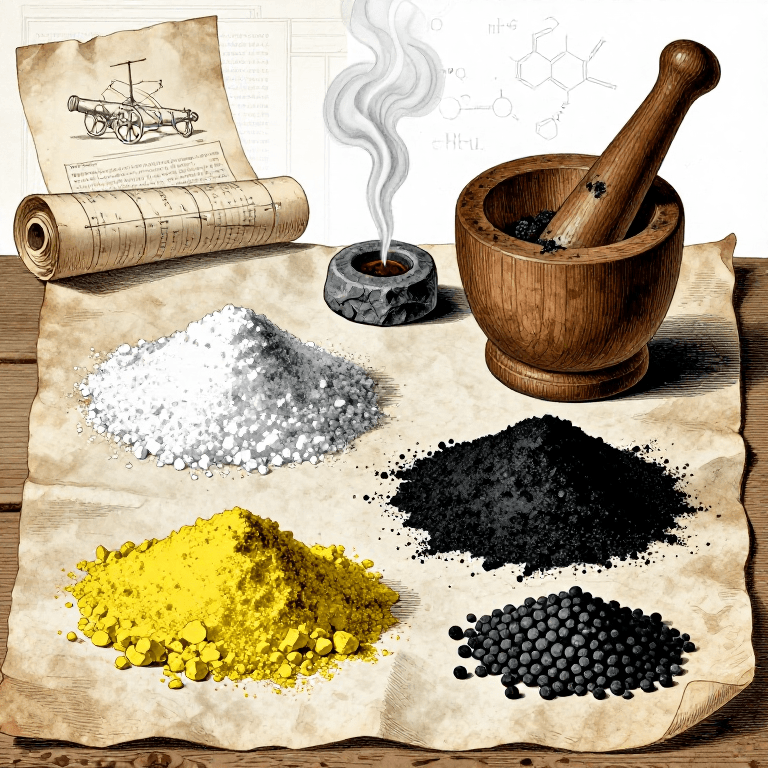
Making Black Powder from Saltpeter, Sulfur, and Charcoal — The Mixture That Changed the World
por Charlie
Armamento
197
0
0
0
7
0
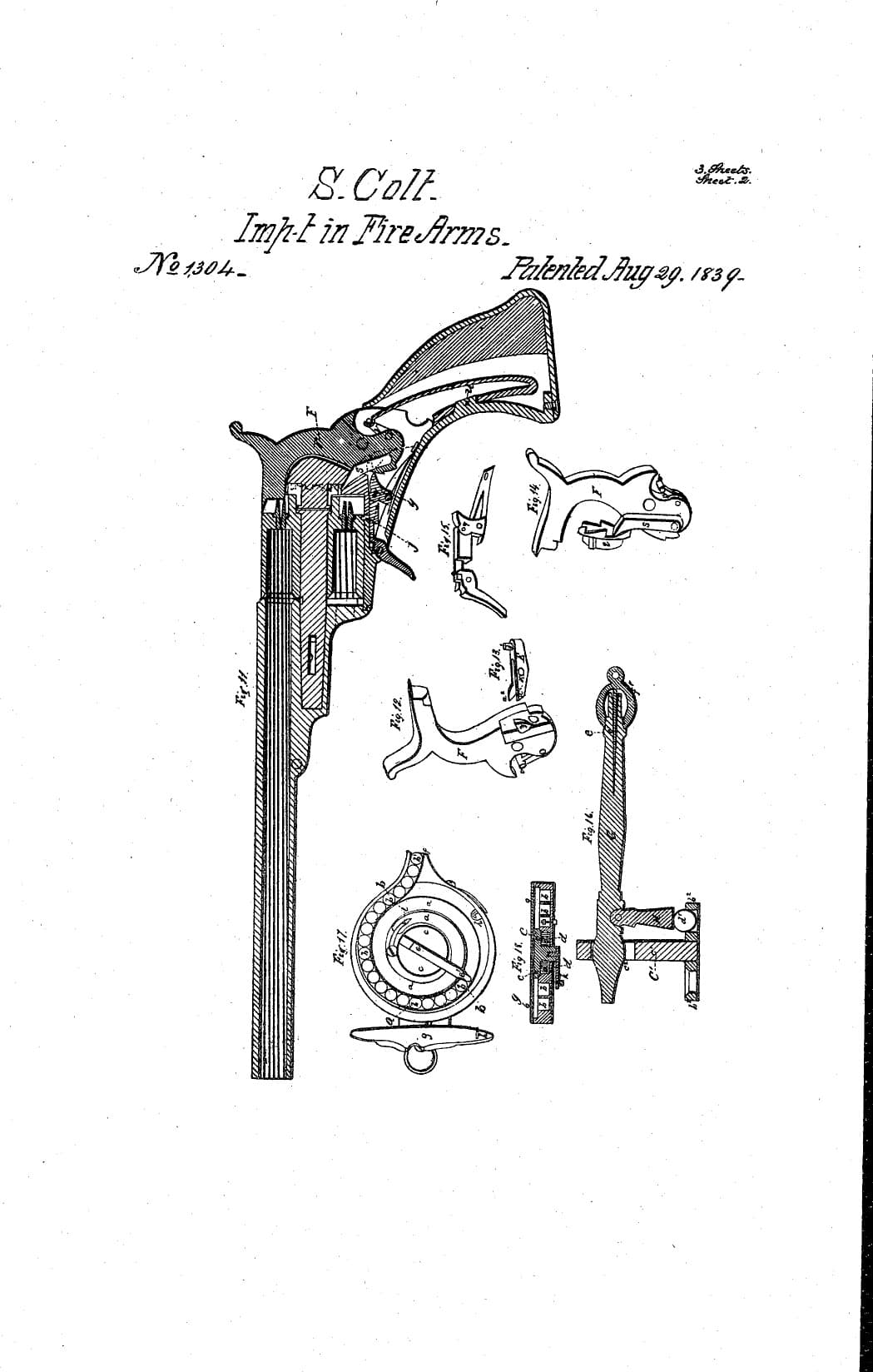
The Revolver: Several Chambers Turning Behind One Barrel (Colt, 1836 and 1839) - History and How It Works
por Charlie
Armamento
2
0
0
0
0
0
CC0 Dominio público
Este Blueprint se publica bajo CC0. Eres libre de copiar, modificar, distribuir y usar este trabajo para cualquier propósito, sin pedir permiso.
Apoya al Maker comprando productos a través de su Blueprint, donde gana una Comisión del Maker establecida por los vendedores, o crea una nueva iteración de este Blueprint e inclúyela como conexión en tu propio Blueprint para compartir ingresos.