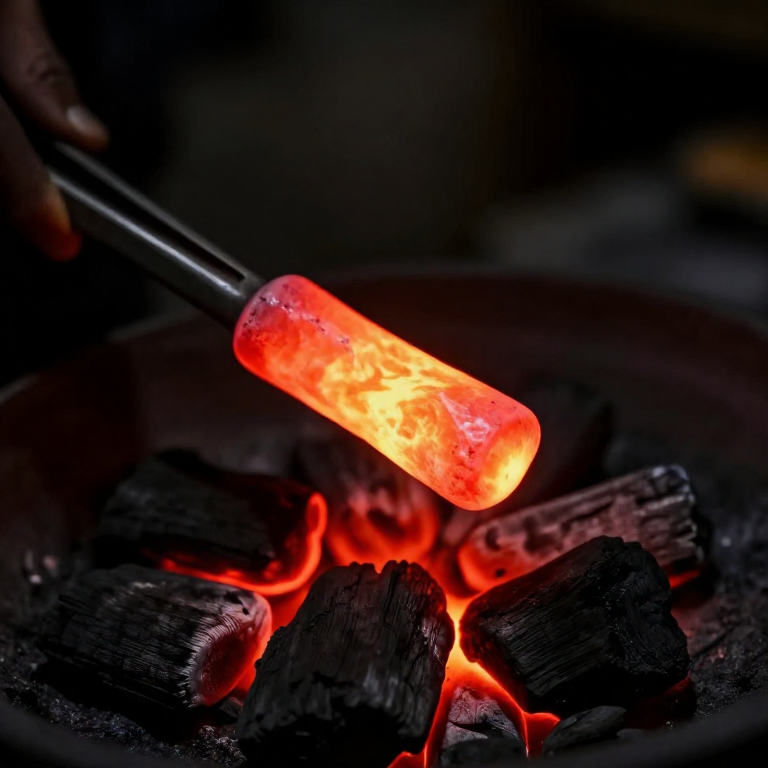


Annealing and Cold-Working Bronze — Hardening Without a Forge
Annealing and cold-working are the two inseparable halves of Bronze Age metallurgy. Every bronze tool, weapon, and ornament was shaped and strengthened by this cycle — hammer to harden, heat to soften, hammer again. Understanding these two processes is the foundation of all pre-industrial metalwork.
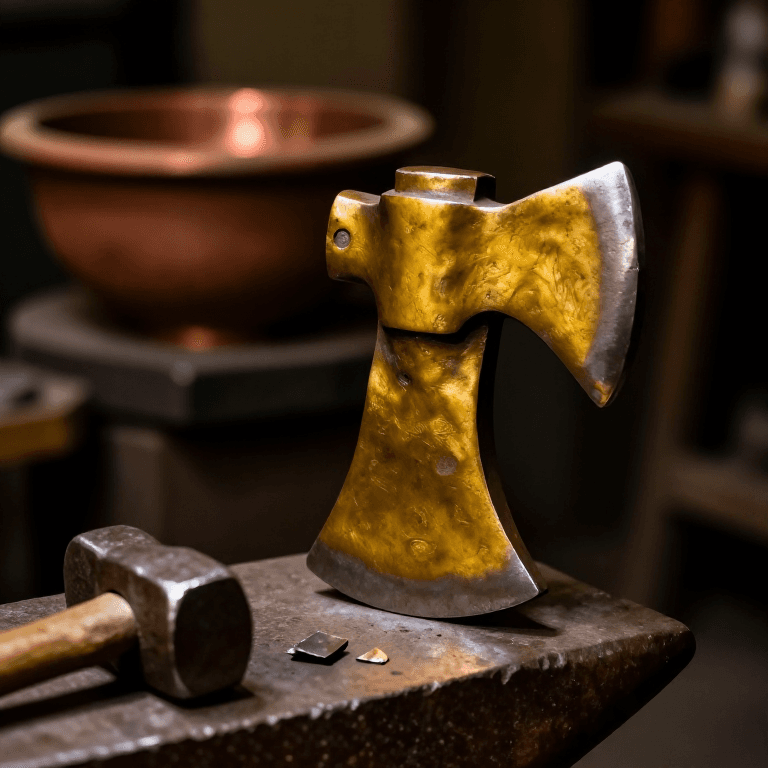
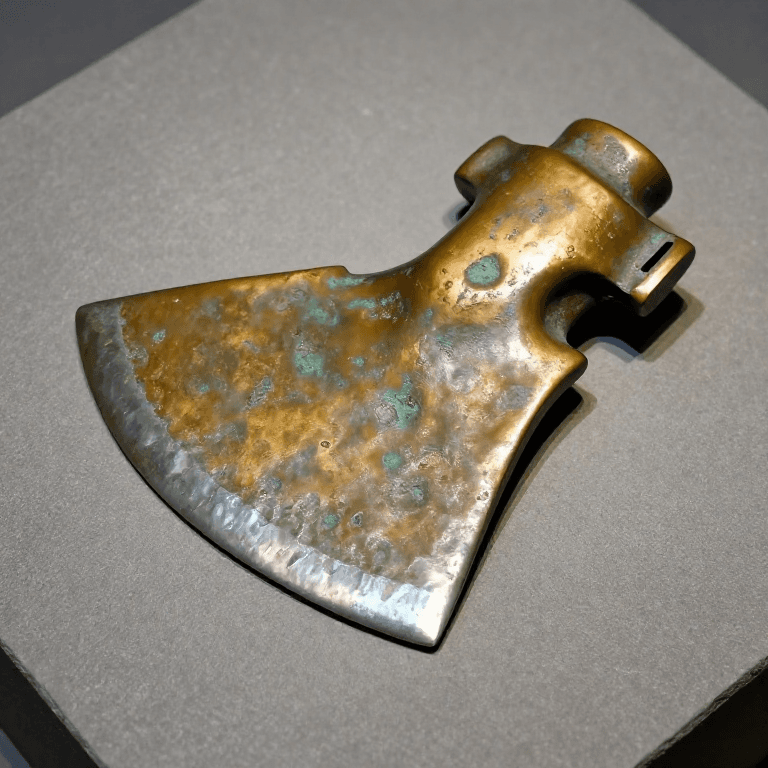
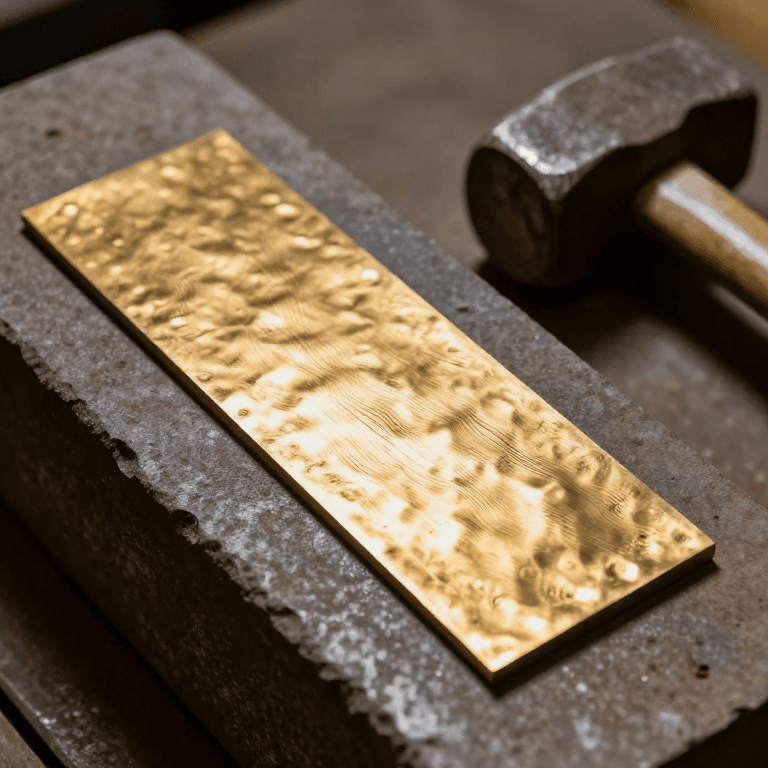
Cold-working means deforming metal at room temperature. Each hammer blow compresses the crystal grains, creating dislocations that resist further movement — the metal becomes harder and stiffer. This is called work-hardening. A freshly cast bronze axe at 80 HV (Vickers hardness) can be cold-worked to 200+ HV, rivalling mild steel.
But work-hardening has a limit. Continue hammering past it and the bronze cracks. Annealing resets the process: heating to 500-600 °C causes the distorted grains to recrystallise into new, strain-free grains. The metal is soft again and ready for the next cycle. A Bronze Age smith might anneal the same piece 15 times during a single project.
Instrucciones
Prepare a test piece
Prepare a test piece
Materiales para este paso:
 Lámina de cobre100 g
Test as-cast hardness
Test as-cast hardness
Cold-work one half
Cold-work one half
Herramientas necesarias:
 Percutor de piedra
 Losa de piedra plana
Compare hardness
Compare hardness
Anneal the cold-worked section
Anneal the cold-worked section
Materiales para este paso:
 Carbón vegetal500 g
Herramientas necesarias:
 Tenazas de mango largo
Test annealed hardness
Test annealed hardness
Demonstrate the full cycle on a cutting edge
Demonstrate the full cycle on a cutting edge
Understand the critical differences from steel
Understand the critical differences from steel
Materiales
2- 100 gMarcador de posición
- 500 gMarcador de posición
Herramientas requeridas
3- Marcador de posición
- Marcador de posición
- Marcador de posición
Materiales de Blueprints conectados
Blueprints relacionados
Estos blueprints comparten conocimiento — técnicas, materiales o principios
CC0 Dominio público
Este Blueprint se publica bajo CC0. Eres libre de copiar, modificar, distribuir y usar este trabajo para cualquier propósito, sin pedir permiso.
Apoya al Maker comprando productos a través de su Blueprint, donde gana una Comisión del Maker establecida por los vendedores, o crea una nueva iteración de este Blueprint e inclúyela como conexión en tu propio Blueprint para compartir ingresos.