ARTE
BELLEZA Y BIENESTAR
ARTESANÍA
CULTURA E HISTORIA
ENTRETENIMIENTO
MEDIO AMBIENTE
COMIDA Y BEBIDAS
INGENIERÍA INVERSA
CIENCIAS
DEPORTES
TECNOLOGÍA
TECNOLOGÍA VESTIBLE
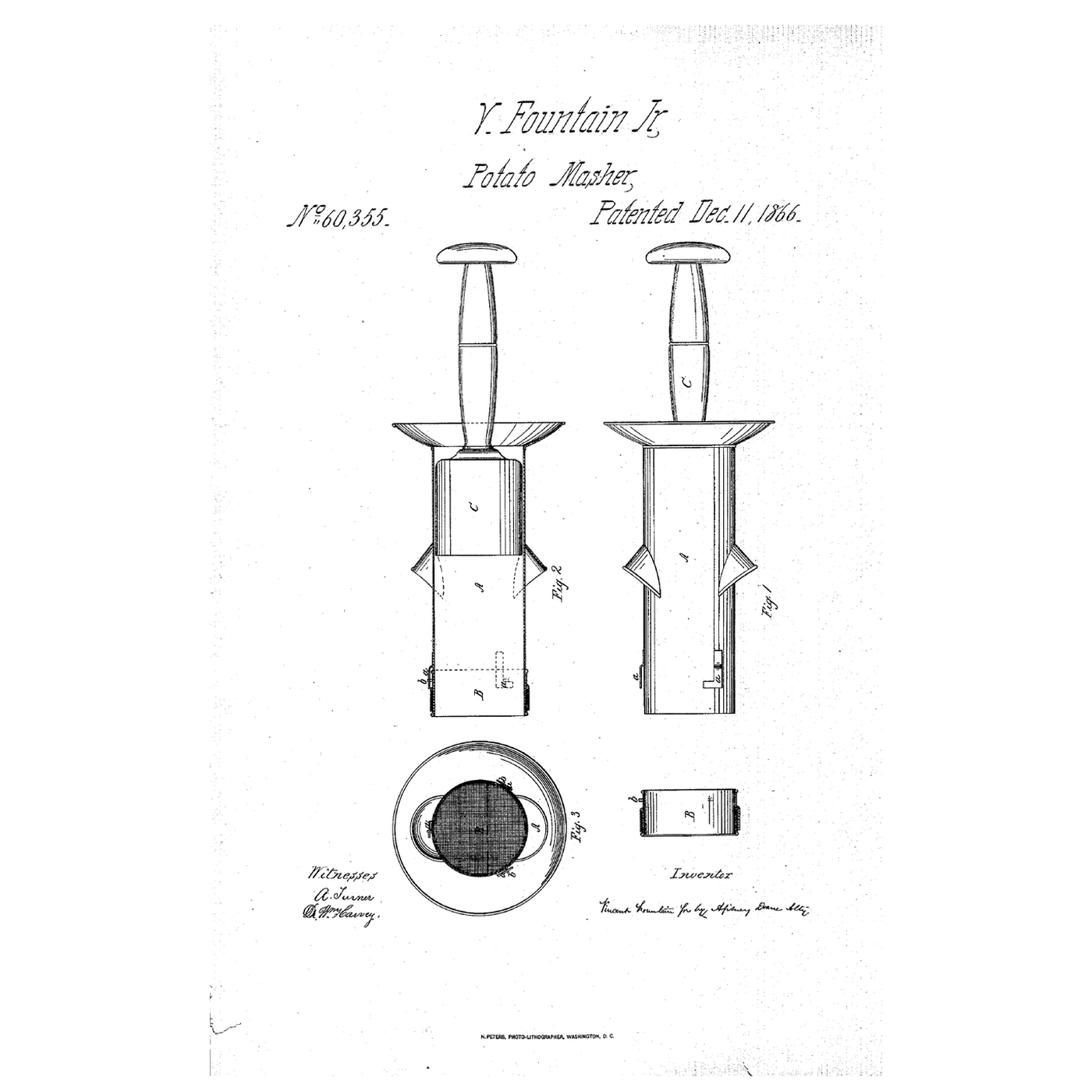


Draining-Tube Potato Masher: Mash in a Tube, the Water Runs Out
Potatoes mashed in the pot keep their water and go gluey.
Vincent Fountain Jr. of Castleton, New York, received US 60,355, dated 11 December 1866, for a potato masher: a tubular receptacle with a handle on each side and a removable bottom of wire cloth held by pins under ears; a plunger "moved freely up and down within the same" mashes the potatoes, "the water from the same, passing off through the wire bottom," and with the bottom taken off the potatoes are pressed out.
This rung works out the plunger pressure, then prints the tube, bottom and plunger, and mashes a pan of potatoes, weighing the water that runs out.
Principiante
About 1 hour, plus printing
Instrucciones
1
1
Plunger pressure
Plunger pressure
Cargando el cuaderno de Jupyter…
2
2
A mesh partition before it
A mesh partition before it
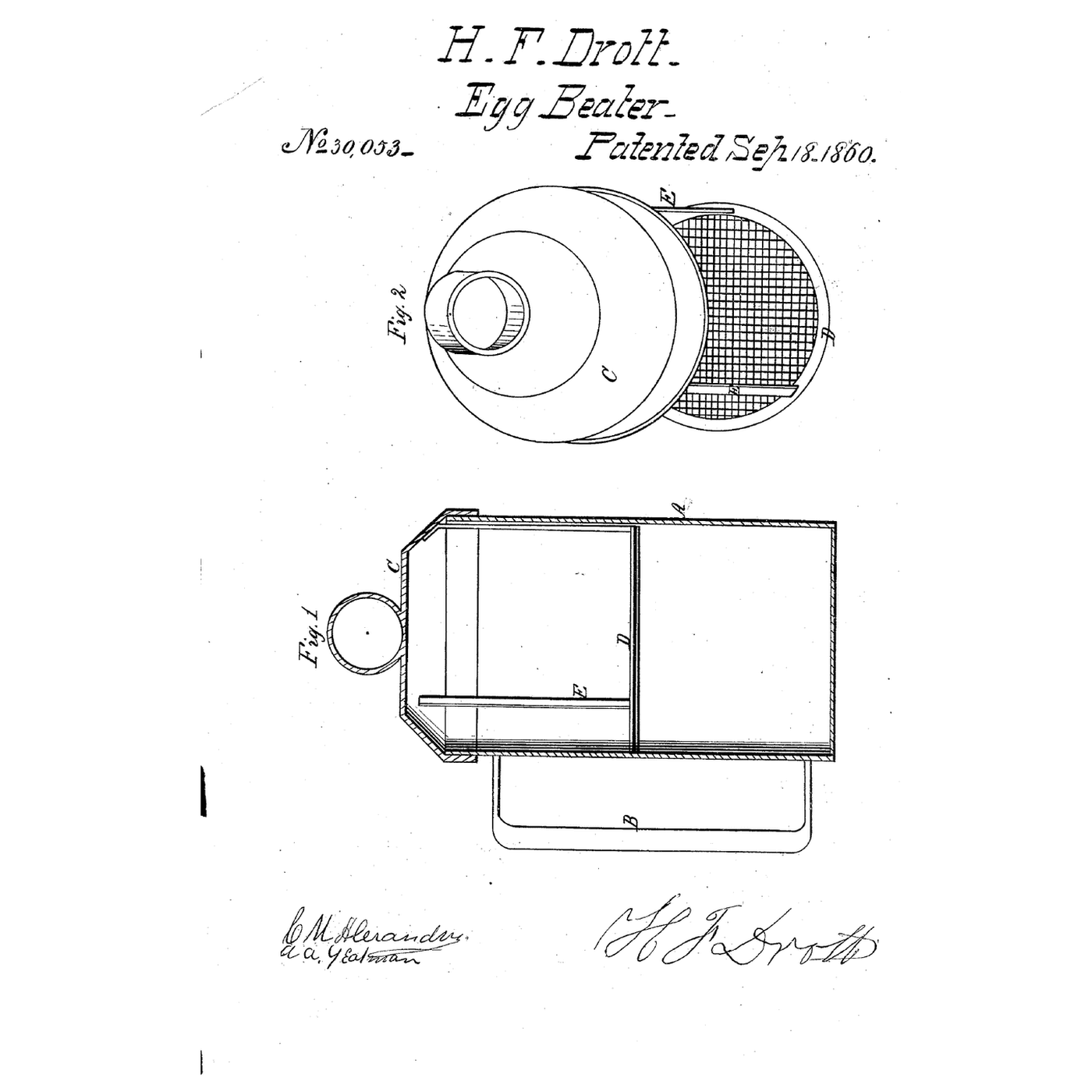
The embedded blueprint drives egg through a gauze. Fountain lets the potatoes' water out through a wire-cloth bottom while a plunger mashes them.
3
3
Read US 60,355
Read US 60,355
"My improved masher being thus constructed, the potatoes to be mashed are placed in the receptacle, A, and the masher, C, is moved freely up and down within the same, and the potatoes are thus mashed, the water from the same passing off through the wire bottom, B. When desired to remove the potatoes, the bottom, B, is removed from the receptacle, A, and the potatoes may be pressed out of the receptacle, A."
4
4
Print the parts
Print the parts
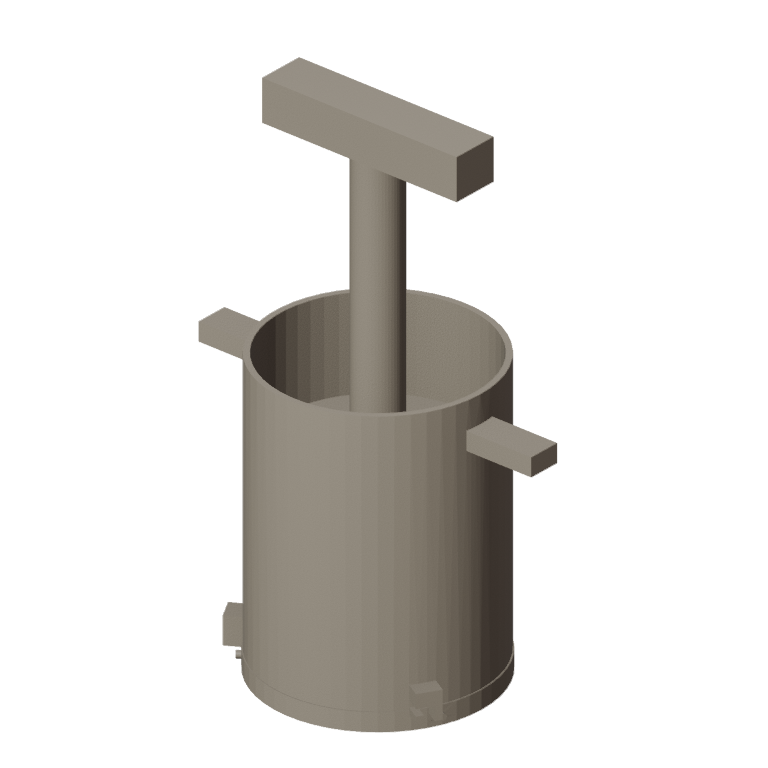
Print the tube with handles and ears, the bottom with its 3.2 mm grid and pins, and the plunger. Print in PETG at 0.2 mm layers, 30 % infill, 4 walls; wash before first use.
Materiales para este paso:
 Filamento PETG1 pieza
Herramientas necesarias:
 Impresora 3D de filamento (FDM)
5
5
Print the tube
6
6
Print the bottom
Print the bottom
The bottom, printed as step 4 describes.
7
7
Print the plunger
Print the plunger
The plunger, printed as step 4 describes.
8
8
Fit the bottom
Fit the bottom
Push the bottom's ring onto the tube so its pins enter the ears' slots, and twist to lock. File the slots if they are tight.
Herramientas necesarias:
 Limas (lima de mano)
9
9
The patent drawing
The patent drawing
US 60,355 drawing sheet, public domain (expired patent).
10
10
Cook the potatoes
Cook the potatoes
Boil 500 g of potatoes, peeled and quartered, in salted water for about 20 minutes until a knife slides in; drain.
Materiales para este paso:
 Patatas1 pieza
 Agua1 pieza
Herramientas necesarias:
 Cazo alto
 Báscula digital de cocina
11
11
Mash and weigh the water
Mash and weigh the water
Stand the tube in a bowl on the scale and zero it. Fill it with hot potatoes and work the plunger; read how much water collects. Twist the bottom off and press the mash out.
Herramientas necesarias:
 Bol grande de acero inoxidableBáscula digital de cocina
 Cronómetro
12
12
A bottom that falls off, a plunger that sticks
A bottom that falls off, a plunger that sticks
Draining-tube potato masher troubleshooting.
Flow
Loading...
13
13
History and honest limits
History and honest limits
**Vincent Fountain Jr.** of Castleton, Richmond County, New York, received US 60,355, dated 11 December 1866. The receptacle may be tin or any suitable material; the bottom is a ring with a bottom of wire cloth; the masher is hard wood, like the usual masher but large enough to fit the receptacle. He claimed the tube with its detachable perforated bottom and handles, and the plunger.
**Honest limits.** A printed grid stands in for wire cloth; FDM prints hold food in their layer lines, so wash well. Your weights are the result.
Materiales
3- 1 piezaMarcador de posición
- 1 piezaMarcador de posición
- 1 piezaMarcador de posición
Herramientas requeridas
6- Marcador de posición
- Marcador de posición
- Marcador de posición
- Marcador de posición
- Marcador de posición
- Marcador de posición
Archivos de diseño
3Este plano hace
Blueprints relacionados
Estos blueprints comparten conocimiento — técnicas, materiales o principios

CC0 Dominio público
Este Blueprint se publica bajo CC0. Eres libre de copiar, modificar, distribuir y usar este trabajo para cualquier propósito, sin pedir permiso.
Apoya al Maker comprando productos a través de su Blueprint, donde gana una Comisión del Maker establecida por los vendedores, o crea una nueva iteración de este Blueprint e inclúyela como conexión en tu propio Blueprint para compartir ingresos.