
Colaboración
ARTE
BELLEZA Y BIENESTAR
ARTESANÍA
CULTURA E HISTORIA
ENTRETENIMIENTO
MEDIO AMBIENTE
COMIDA Y BEBIDAS
INGENIERÍA INVERSA
CIENCIAS
DEPORTES
TECNOLOGÍA
TECNOLOGÍA VESTIBLE
Forged Flat Drills: Tool Steel Drawn to Blade and Square Taper Head, Tempered by Colour for the Metal to Be Drilled (Edwinson, 1886)
Forge

Creado por

Forge

14. noviembre 2026NO
6
0
0
0
0

Forged Flat Drills: Tool Steel Drawn to Blade and Square Taper Head, Tempered by Colour for the Metal to Be Drilled (Edwinson, 1886)

How a smith forged his own set of flat drills, from George Edwinson's series in Amateur Work (1886): 3/4 in. square tool steel drawn to a blade and shank with a square taper head, hardened in 45-50 F water and tempered by watching the colours run from a red-hot iron (pale straw for cast iron, orange yellow for wrought iron and copper, purplish yellow for wood), then ground to a notched gauge with clear corners.
Avanzado
An hour or two per drill

Instrucciones

1

His sizes

Cargando el cuaderno de Jupyter…
2

Read Edwinson

"A good drill may be made to turn out good work even when all other parts are indifferently made."
3

Draw the blade

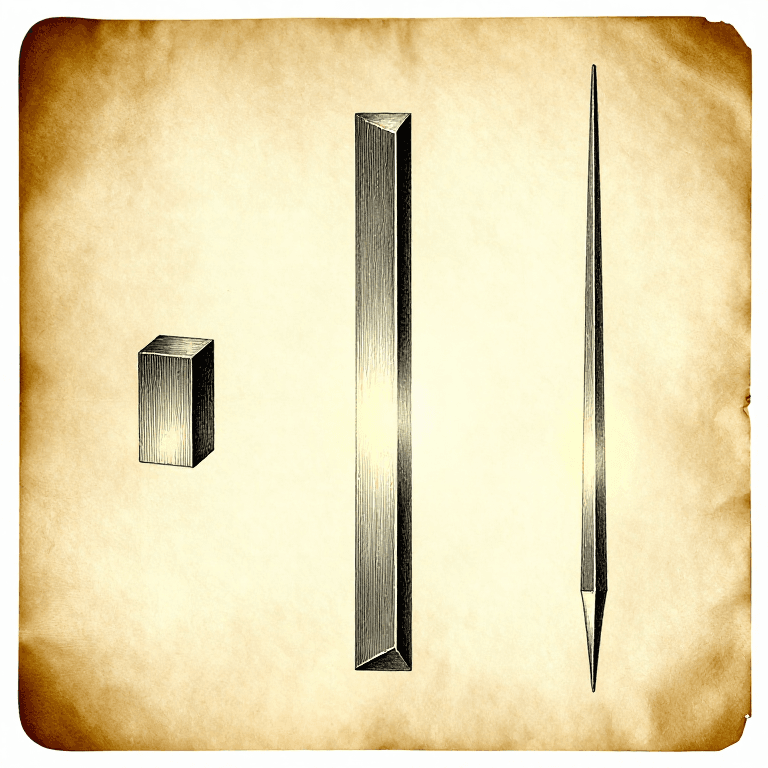
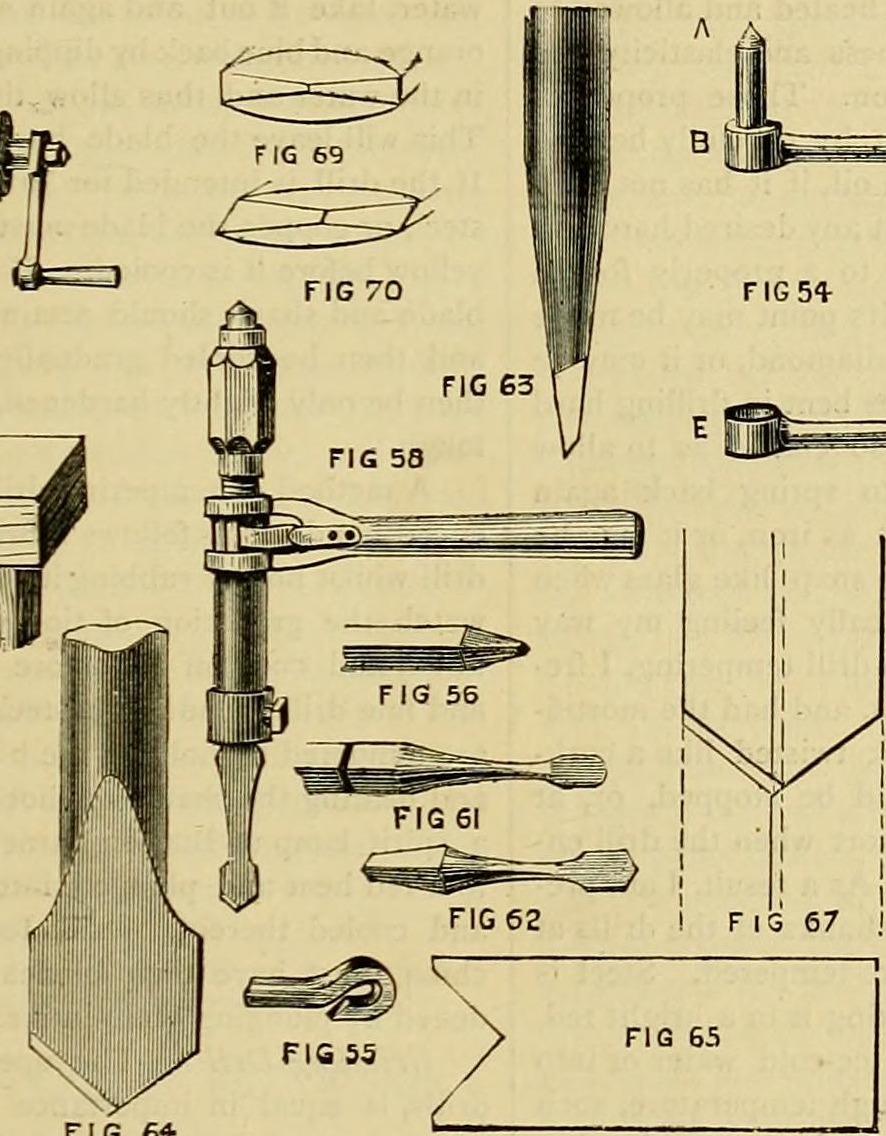
Cut a two-foot length of 3/4 in. (19 mm) square tool steel. Heat 3 in. to blood red in a clean fire, never hotter, and hammer only down to a dull red before reheating. Draw out the blade and shank first (fig. 61), close to shape.

Materiales para este paso:

Barra de acero de herramientasBarra de acero de herramientas1 pieza

Herramientas necesarias:

Fragua de herreroFragua de herrero
YunqueYunque
MartilloMartillo
Tenazas de herreroTenazas de herrero
4

Forge the head

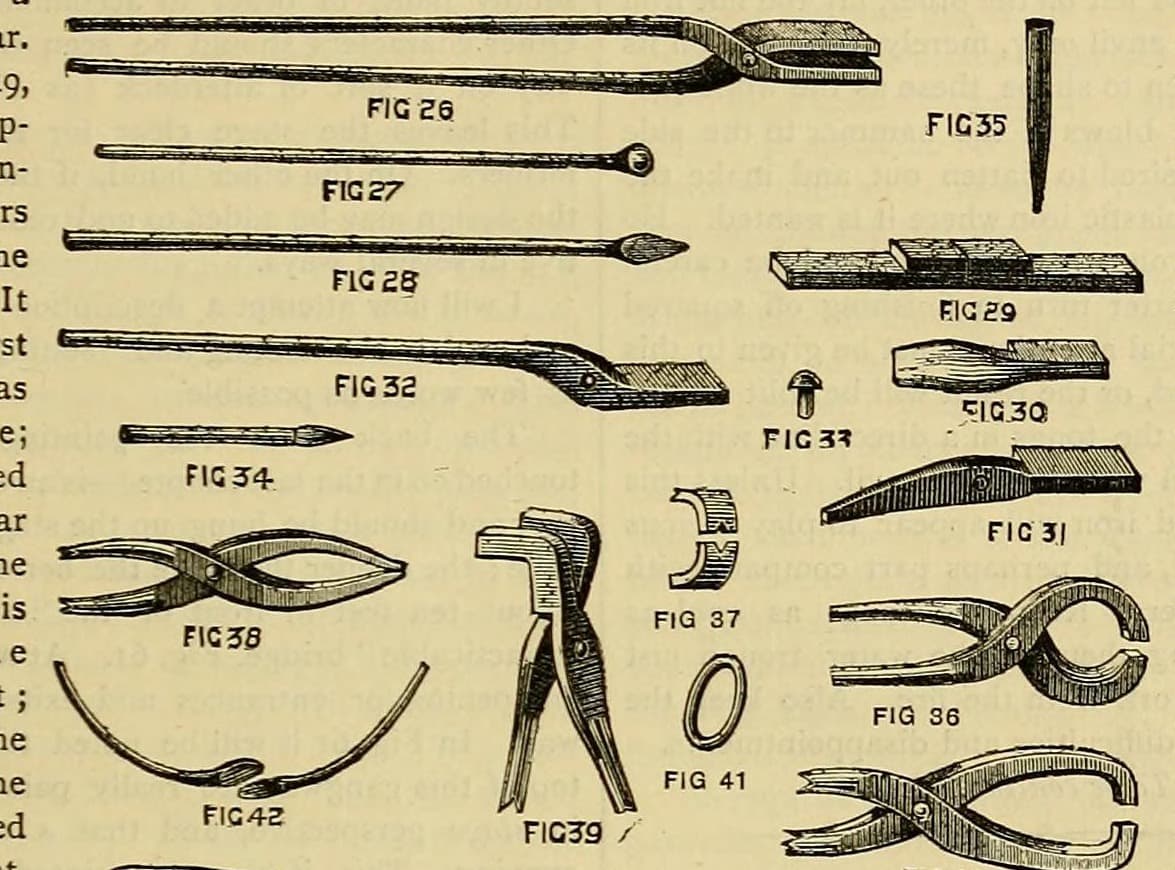
Cut off the length for the head, hold the blade and shank in grooved flat-bit tongs, and forge a square taper head to fit your brace socket, sides equal, shank and blade central. Finish at a dull red, set true, cool.

Herramientas necesarias:

Tajadera en calienteTajadera en caliente
Fragua de herreroFragua de herrero
YunqueYunque
MartilloMartillo
Tenazas de herreroTenazas de herrero
5

Shape and substance

Taper gradually from head to shank, keep the shank even for an inch or two, then let the blade swell out and thin toward the point (figs. 62, 63). Blade about 1/16 in. at the point and 1/8 in. at the corners for a 1/4 in. drill, up to 3/16 in. for 1/2 or 3/4 in.; a 1/4 in. drill's shank half as thick as a 1/2 in. blade. Leave blades a little full for grinding.

Herramientas necesarias:

Fragua de herreroFragua de herrero
YunqueYunque
MartilloMartillo
6

Harden

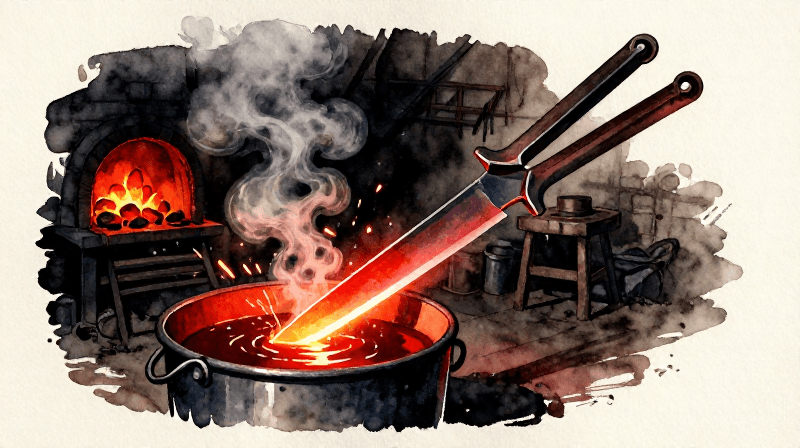
Heat to red and plunge the drill straight down into cool water of 45-50 F (7-10 C), holding it until cold: icy water makes the edges brittle. Brighten the blade and part of the shank on a brick or grit-stone.

Materiales para este paso:

AguaAgua1 pieza

Herramientas necesarias:

Fragua de herreroFragua de herrero
CuboCubo
TermómetroTermómetro
Piedra de afilarPiedra de afilar
7

Temper by colour

Lay the shank across a red-hot piece of stout iron and watch the tints run toward the blade: straw, yellow, orange yellow, purplish yellow, purple, blues. For cast iron and hard brass stop when pale straw reaches the blade, dipping the blade to hold the later colours back while the shank cools in air. For wrought iron, soft steel or copper let the blade reach orange yellow. For wood only, let blade and shank reach purplish yellow and cool slowly.

Materiales para este paso:

AguaAgua1 pieza

Herramientas necesarias:

Fragua de herreroFragua de herrero
Placa de hierroPlaca de hierro
CuboCubo
8

Grind to a gauge

Cut gauges from thin sheet brass with notches at the point angles (figs. 65, 66): very obtuse for cast iron and hard brass, more acute for wrought iron, tough steel and copper. Grind both edges equal with the point on the centre line, and give the corners clearance (fig. 70). Grind each blade to its finished size.

Materiales para este paso:

Lámina de latónLámina de latón1 pieza

Herramientas necesarias:
Limas (lima de mano)Limas (lima de mano)
Piedra de afilar de ruedaPiedra de afilar de rueda
9

Troubleshooting

Drill troubleshooting.

Flow

Loading...
10

History and honest limits

From George Edwinson, "Smithing and Forging" IV, **Amateur Work, Illustrated**, vol. V (1886), pp. 348-351 and figs. 54-70 (checked on the archive.org scan amateurworkillus05lond; the scan reads 3/4 in. bar where the OCR text says 1/2). He also hardened glass and china drills in mercury: left out here (mercury is a poison). Metric figures, the brass gauge stock and the thermometer are ours.

Materiales

3

Herramientas requeridas

11

CC0 Dominio público

Este Blueprint se publica bajo CC0. Eres libre de copiar, modificar, distribuir y usar este trabajo para cualquier propósito, sin pedir permiso.

Apoya al Maker comprando productos a través de su Blueprint, donde gana una Comisión del Maker establecida por los vendedores, o crea una nueva iteración de este Blueprint e inclúyela como conexión en tu propio Blueprint para compartir ingresos.

Discusión

(0)

Iniciar sesión para unirte a la discusión

Cargando comentarios...