Colaboración
ARTE
BELLEZA Y BIENESTAR
ARTESANÍA
CULTURA E HISTORIA
ENTRETENIMIENTO
MEDIO AMBIENTE
COMIDA Y BEBIDAS
INGENIERÍA INVERSA
CIENCIAS
DEPORTES
TECNOLOGÍA
TECNOLOGÍA VESTIBLE
Youblob · CC0


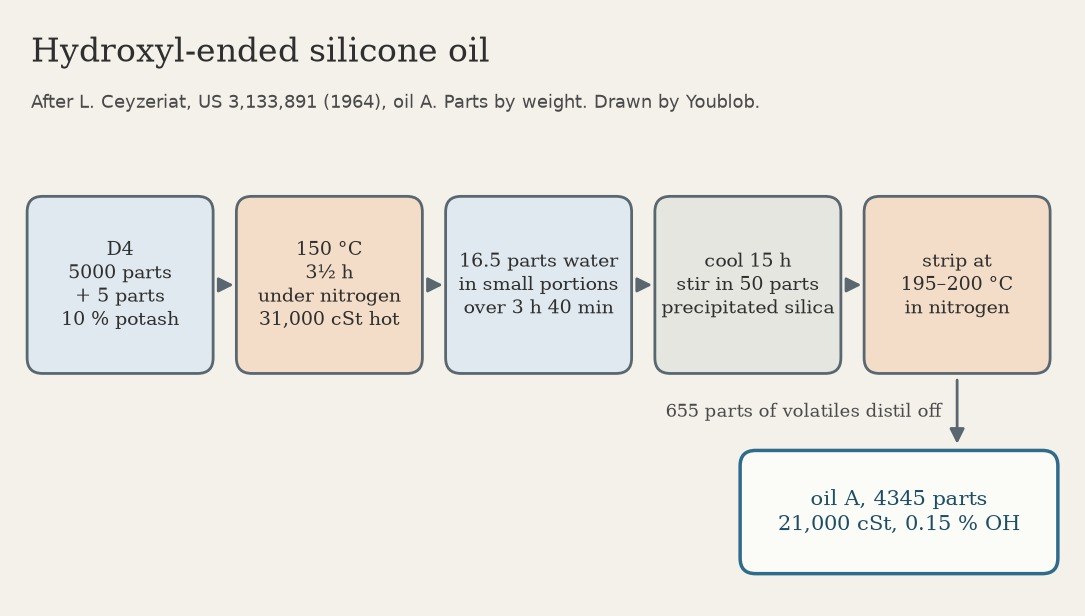
Hydroxyl-Ended Silicone Oil: D4 Opened with Potash, Then Water (Ceyzeriat 1964)
A trace of hot potash opens the ring of D4 and strings it into a long, thick chain. Water added a little at a time then cuts the chains back and leaves hydroxyl groups on their ends, which is what later lets the oil cure into rubber. This is Louis Ceyzeriat's oil A, the base of every sealant in his patent: 21,000 centistokes, 0.15 % hydroxyl.
Source: L. Ceyzeriat (Rhône-Poulenc), US 3,133,891 (1964), column 4. His neutraliser was the precipitated silica Hi-Sil X303; we use our precipitated silica in its place. The potash mix and the equipment are ours. Picture drawn by Youblob.
Avanzado
2 days
Instrucciones
1
1
Make the 10 % potash
Make the 10 % potash
Dissolve 0.5 part of potassium hydroxide in 4.5 parts of water (our arithmetic for 5 parts of a 10 % solution). All parts are by weight.
Materiales para este paso:
 Hidróxido de potasio0.5 parts
 Agua4.5 parts
Herramientas necesarias:
 Recipiente de vidrio
 Balanza de platillos
2
2
Heat D4 with the potash under nitrogen
Heat D4 with the potash under nitrogen
Heat 5000 parts of octamethylcyclotetrasiloxane (it melts at 17.5 °C) with the 5 parts of 10 % potash at 150 °C for 3½ hours under nitrogen. The oil thickens to 31,000 centistokes while hot.
Materiales para este paso:
 Octametilciclotetrasiloxano (D4)5000 parts
Herramientas necesarias:
 Matraz de destilación de vidrio
 Placa calefactora
 Termómetro
 Agitador
 Botella de nitrógeno
3
3
Add water a little at a time
Add water a little at a time
Still hot, add 16.5 parts of water in small portions over 3 hours 40 minutes. The hot oil thins to 1730 centistokes.
Materiales para este paso:
Agua16.5 partsHerramientas necesarias:
Matraz de destilación de vidrioPlaca calefactoraTermómetroAgitador4
4
Cool, then neutralise with silica
Cool, then neutralise with silica
Let it cool for 15 hours. Then stir in 50 parts of precipitated silica to neutralise the potash. The liquid now measures 13,400 centistokes at 25 °C.
Materiales para este paso:
 Sílice precipitada50 parts
Herramientas necesarias:
Matraz de destilación de vidrioAgitador5
5
Strip the volatiles at 195–200 °C
Strip the volatiles at 195–200 °C
Heat it to about 195–200 °C in a current of nitrogen, with a water condenser on the outlet. 655 parts of liquid distil over; 4345 parts of oil A stay in the boiler, 21,000 centistokes at 25 °C with 0.15 % hydroxyl groups.
Herramientas necesarias:
Matraz de destilación de vidrio Serpentín condensadorPlaca calefactoraTermómetroBotella de nitrógeno
 Tarros de vidrio con tapa
Materiales
4- 0.5 partsMarcador de posición
- 21 partsMarcador de posición
- 5000 partsMarcador de posición
- 50 partsMarcador de posición
Herramientas requeridas
9- Marcador de posición
- Marcador de posición
- Marcador de posición
- Marcador de posición
- Marcador de posición
- Marcador de posición
- Marcador de posición
- Marcador de posición
- Marcador de posición
Este plano hace
Blueprints relacionados
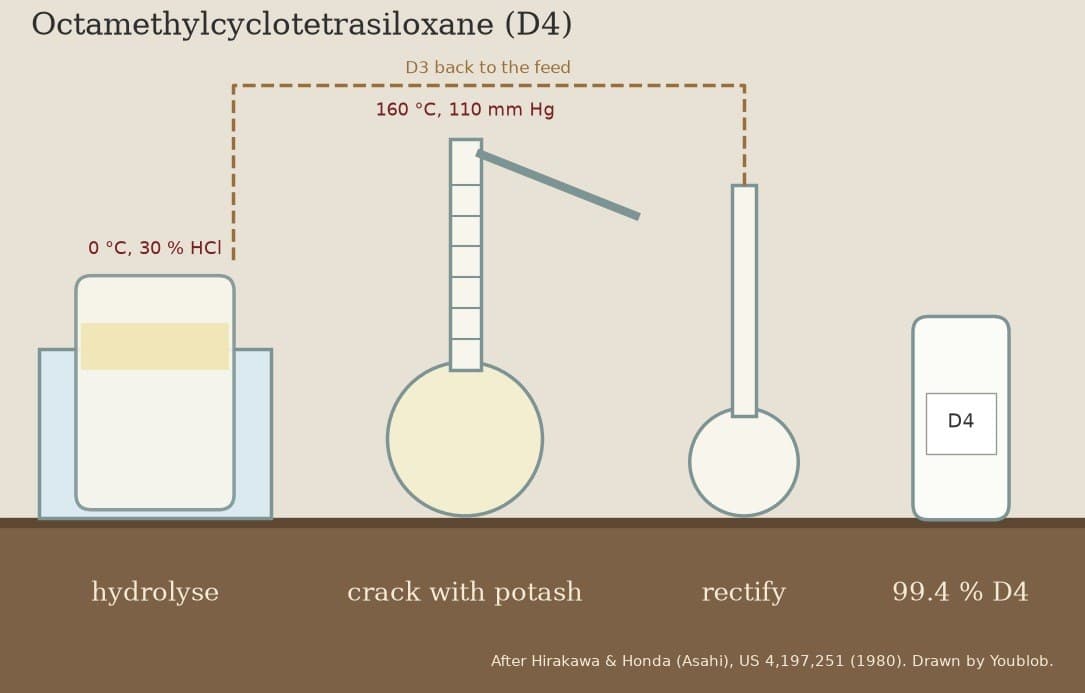
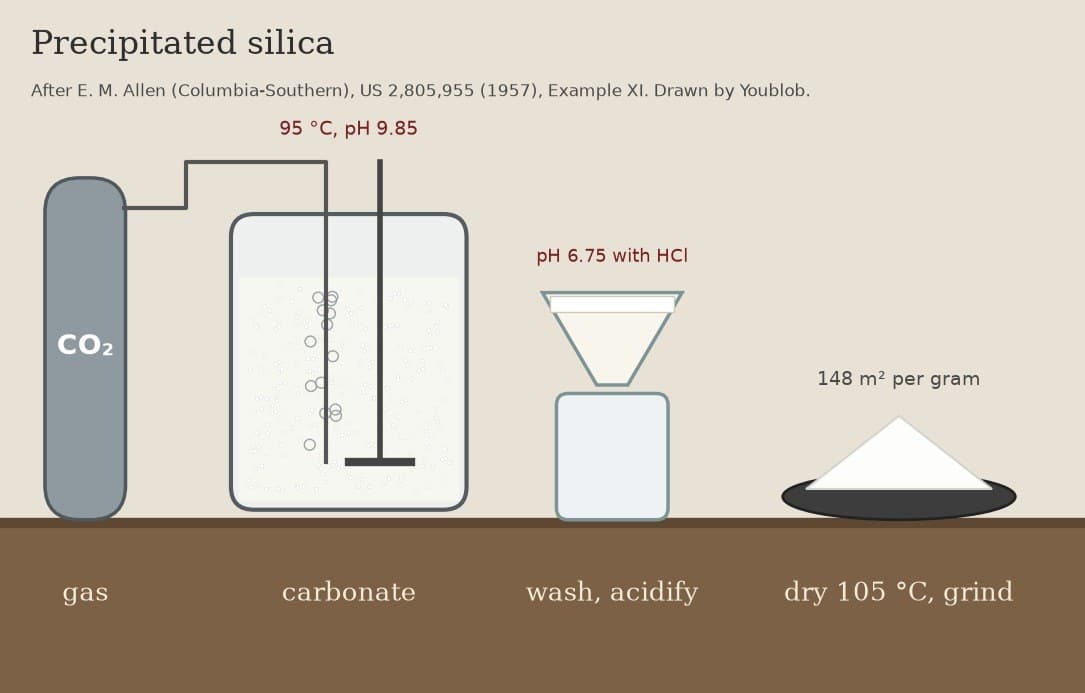
Estos blueprints comparten conocimiento — técnicas, materiales o principios
CC0 Dominio público
Este Blueprint se publica bajo CC0. Eres libre de copiar, modificar, distribuir y usar este trabajo para cualquier propósito, sin pedir permiso.
Apoya al Maker comprando productos a través de su Blueprint, donde gana una Comisión del Maker establecida por los vendedores, o crea una nueva iteración de este Blueprint e inclúyela como conexión en tu propio Blueprint para compartir ingresos.