

ARTE
BELLEZA Y BIENESTAR
ARTESANÍA
CULTURA E HISTORIA
ENTRETENIMIENTO
MEDIO AMBIENTE
COMIDA Y BEBIDAS
INGENIERÍA INVERSA
CIENCIAS
DEPORTES
TECNOLOGÍA
TECNOLOGÍA VESTIBLE
Making Coke from Coal — The Smokeless Fuel That Forged the Industrial Revolution
Gimli

Creado por

Gimli

25. junio 2026US
62
0
0
2
0

Making Coke from Coal — The Smokeless Fuel That Forged the Industrial Revolution

Charcoal built the ancient world's iron, but it has a fatal limit: it is soft, and a tall furnace packed with ore crushes it to powder that chokes the air blast. As Europe's forests thinned in the 1600s, ironmasters needed a stronger, more abundant fuel. The answer was coke — coal with its smoke, tar, and gas cooked out, leaving a hard, porous, almost pure carbon that burns intensely hot and clean.

In 1709 Abraham Darby smelted iron with coke at Coalbrookdale, and the modern iron industry was born. Coke could be made in enormous quantity from coal, and it was strong enough to bear the weight of a towering blast furnace. Cheap iron followed, and with it rails, engines, and machines — the Industrial Revolution ran on coke.

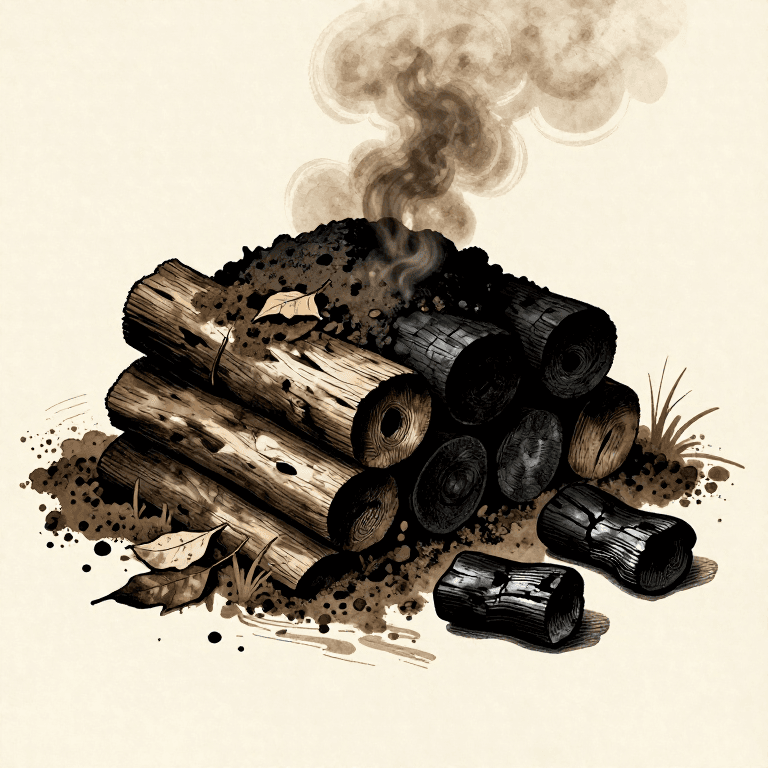
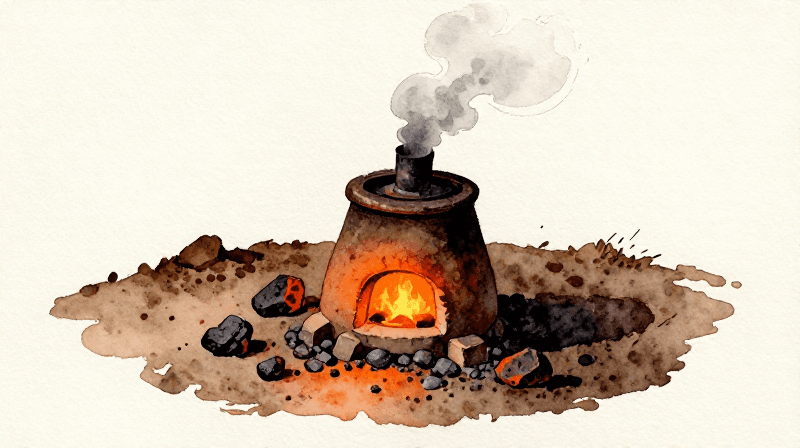
Coke is made by destructive distillation: heating bituminous coal in a starved-air fire so the volatile matter (water, coal gas, coal tar, and sulfur compounds) is driven off and burned, while the carbon skeleton fuses and hardens. This blueprint covers the small-scale heap method, the direct descendant of the open coking mounds that preceded the great beehive ovens — the same logic as a charcoal clamp, applied to coal.

Intermedio
2-3 days (mostly unattended coking + cooling)

Instrucciones

1

Choose coking coal

Use bituminous (soft) coal of a 'caking' grade — the kind that softens and swells when heated, then fuses into a solid mass. Anthracite is already too high in carbon and will not coke; lignite and peat are too low in rank. Pick coal that is low in sulfur and ash for clean, strong coke.

Materiales para este paso:

Carbón bituminosoCarbón bituminoso25 kg
2

Break the coal to size

Break the coal into uniform fist-sized lumps with a hammer. Even sizing lets heat penetrate the heap evenly so all the coal cokes at the same rate. Set aside a bucket of coal dust and small fragments to use as covering material later.

Herramientas necesarias:

MartilloMartillo
3

Prepare the coking base

Clear a level patch of bare earth or clay outdoors, well away from buildings, dry vegetation, and anything flammable. You need open air and steady wind, because coking releases dense toxic smoke. Never coke coal indoors or in any enclosed space.

Herramientas necesarias:

PalaPala
4

Build a central flue

Stand a bundle of dry kindling upright in the centre of the base to form an ignition flue, exactly as you would for a charcoal clamp. This central chimney carries fire up through the middle of the heap so coking spreads outward evenly.

Materiales para este paso:

Hojarasca y astillas de encendidoHojarasca y astillas de encendido2 kg
5

Stack the coal into a dome

Pack the sized coal around the central flue, building it up into a rounded dome about knee-high. Keep the pile dense with few large gaps — tight packing starves the interior of oxygen so the coal pyrolyses (cokes) instead of simply burning to ash.

Materiales para este paso:

Carbón bituminosoCarbón bituminoso25 kg
6

Cover the heap

Coat the dome with a layer of damp clay, earth, or coal dust about a hand's width thick, leaving the top of the central flue open and a ring of small air holes around the base. This skin restricts airflow so the heap smoulders and cokes rather than flames into open fire.

Materiales para este paso:

ArcillaArcilla10 kg
7

Light the core

Drop burning tinder down the central flue to ignite the kindling at the heart of the heap. Fire should take hold in the centre and begin working outward into the surrounding coal. Once the core is burning steadily, loosely cap the top vent.

Herramientas necesarias:

CerillasCerillas
8

Read the smoke

Thick yellow-brown smoke pours off as the volatile matter — water vapour, coal gas, coal tar, and sulfur compounds — is driven out of the coal and burns at the surface. This smoke is toxic and carcinogenic: stay upwind and never breathe it. Heavy smoke means active coking.

Herramientas necesarias:

AtizadorAtizador
9

Control the air

Manage the base air holes to keep the heap coking, not burning. If you see open yellow flame and the heap shrinks fast, you have too much air — close holes to smother it. If smoke dies and the heap stalls, open a few holes. The goal is a slow, smoky smoulder.

Herramientas necesarias:

PalaPala
10

Coke until the smoke clears

Let the heap work for 24 to 48 hours depending on its size. As the volatiles run out, the thick yellow smoke thins to a faint blue haze and then to almost nothing, and the heap settles as the coal fuses and shrinks. Clear, near-smokeless air signals that coking is complete.
11

Quench or seal

Stop the process before the coke itself burns to ash. Either douse the whole heap thoroughly with water until it stops steaming, or seal every air hole and the top vent airtight with earth and let it cool sealed for one to two days. Both methods cut off oxygen and preserve the carbon.

Materiales para este paso:

AguaAgua40 litros
12

Open and rake out the coke

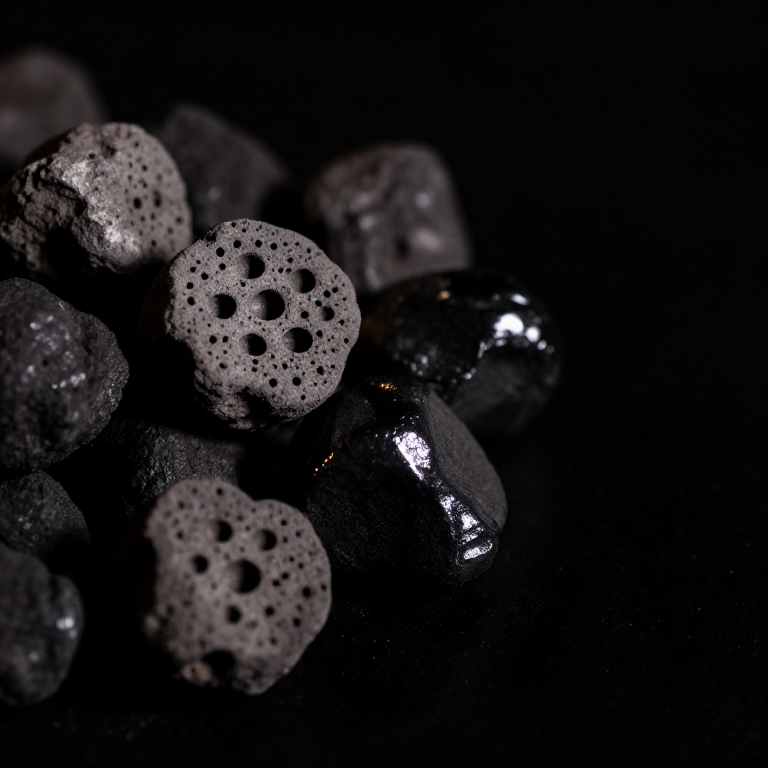
Once fully cold, break open the earth skin and rake out the contents. Good coke is light grey, hard, and full of pores where the gas escaped. It is far lighter than the coal you started with — most of the lost weight left as smoke and gas.

Herramientas necesarias:

Rastrillo de hierroRastrillo de hierro
13

Test the coke

Strike a lump against another — well-made coke gives a clear metallic ring, while under-cooked coal thuds dully. Lit in a forge, good coke burns with intense heat and almost no smoke or flame. Set aside any unconverted black 'green' cores to coke again in the next batch.

Herramientas necesarias:

AtizadorAtizador
14

Store the coke dry

Keep the finished coke under cover and off the ground. Coke is porous and brittle, so it absorbs moisture and crumbles if left in the wet, and damp coke wastes heat boiling off water before it can do useful work in the forge or furnace.

Materiales

4

Herramientas requeridas

5
  • Marcador de posición
  • Marcador de posición
  • Marcador de posición
  • Marcador de posición
  • Marcador de posición

CC0 Dominio público

Este Blueprint se publica bajo CC0. Eres libre de copiar, modificar, distribuir y usar este trabajo para cualquier propósito, sin pedir permiso.

Apoya al Maker comprando productos a través de su Blueprint, donde gana una Comisión del Maker establecida por los vendedores, o crea una nueva iteración de este Blueprint e inclúyela como conexión en tu propio Blueprint para compartir ingresos.

Discusión

(0)

Iniciar sesión para unirte a la discusión

Cargando comentarios...