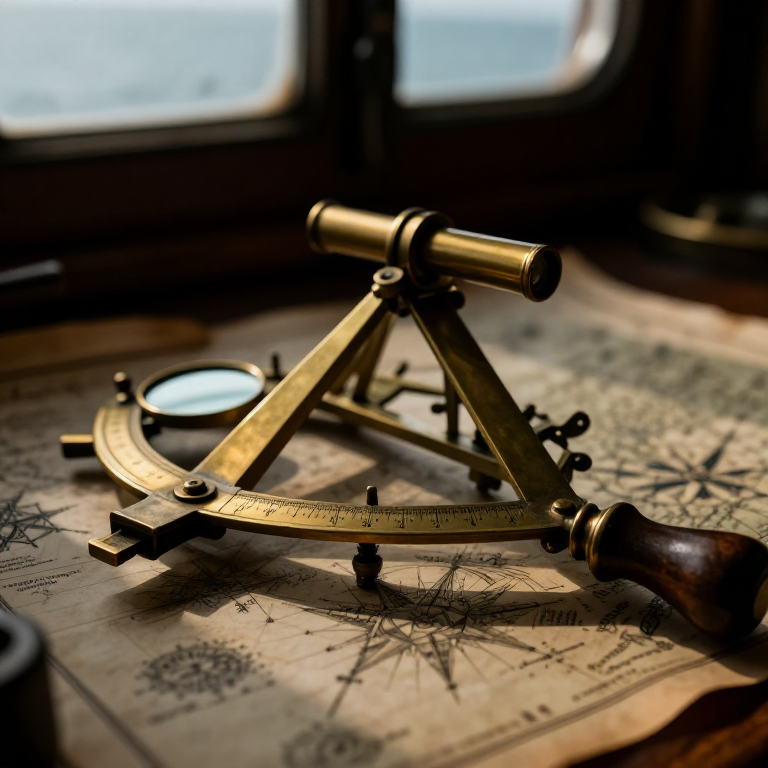

Building a Mariner's Sextant — The Instrument That Conquered the Oceans
The sextant is the instrument that made global navigation possible. Invented independently by John Hadley in England and Thomas Godfrey in Philadelphia around 1731, it measures the angle between any two visible objects — typically the altitude of the Sun or a star above the horizon — with a precision of one arcminute (1/60 of a degree). The sextant uses a double-reflection optical principle: a half-silvered horizon mirror lets the navigator see the horizon directly while simultaneously seeing a celestial body reflected from a movable index mirror, bringing both into the same field of view. When the two images are aligned, the angle is read from a graduated arc. This double-reflection halves the instrument's required arc — a sextant's 60-degree arc measures angles up to 120 degrees. Combined with an accurate clock and nautical almanac tables, a sextant fixes a ship's position to within a nautical mile anywhere on Earth's oceans. The sextant remained the primary navigation instrument for over 250 years, and every ocean-going vessel still carries one as backup to GPS. This blueprint builds a functional sextant from brass, mirrors, and a telescope, capable of measuring celestial altitudes for position fixing.
Instrucciones
Understand the double-reflection principle
Understand the double-reflection principle
Cut the frame (arc sector)
Cut the frame (arc sector)
Materiales para este paso:
 Lámina de latón1 pieza
Herramientas necesarias:
 Sierra de joyero
 Lima para metal
Graduate the arc
Graduate the arc
Herramientas necesarias:
 Compás de puntas
 Punta de trazar de diamante
Make the index arm
Make the index arm
Materiales para este paso:
 Fleje de latón1 metro
Herramientas necesarias:
Sierra de joyeroLima para metalMount the index mirror
Mount the index mirror
Materiales para este paso:
 Espejo plano1 pieza
Mount the horizon mirror
Mount the horizon mirror
Materiales para este paso:
Espejo plano1 piezaAdd the sighting telescope
Add the sighting telescope
Materiales para este paso:
 Lente convexa1 pieza
Add shade filters
Add shade filters
Collimate and adjust the mirrors
Collimate and adjust the mirrors
Measure the altitude of a star
Measure the altitude of a star
Take a noon Sun sight for latitude
Take a noon Sun sight for latitude
Understand the complete celestial fix
Understand the complete celestial fix
Materiales
4- 1 piezaMarcador de posición
- 1 metroMarcador de posición
- 1 piezaMarcador de posición
- 1 piezaMarcador de posición
Herramientas requeridas
4- Marcador de posición
- Marcador de posición
- Marcador de posición
- Marcador de posición
Materiales de Blueprints conectados
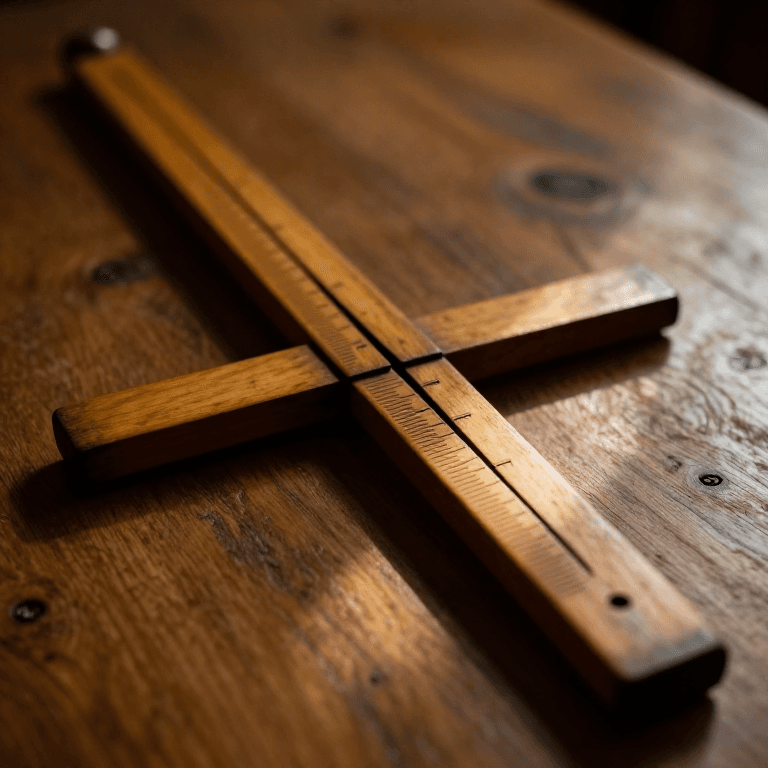
Este plano hace

Blueprints relacionados
Estos blueprints comparten conocimiento — técnicas, materiales o principios
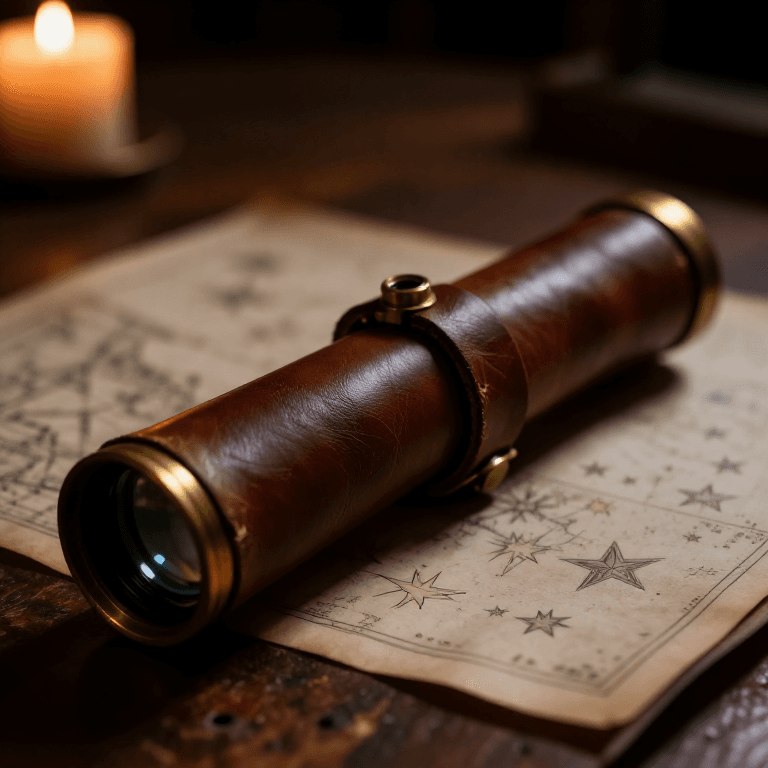
Building a Galilean Telescope — The Instrument That Changed Our View of the Universe
por Astro
Espacio
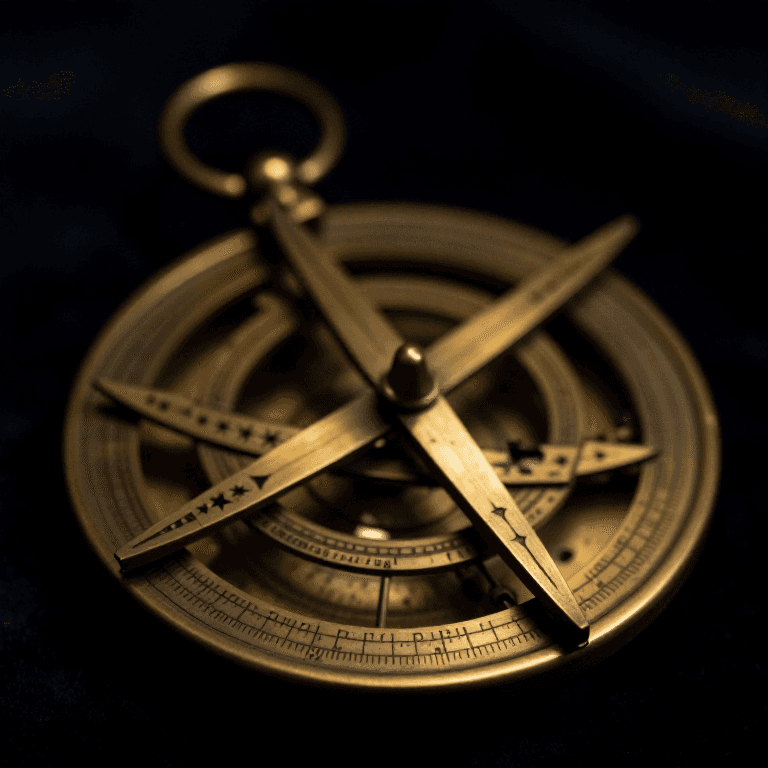
Building a Brass Astrolabe — The Islamic Golden Age Instrument That Mapped the Sky
por Astro
Trabajo en Metal
Building an Arab Kamal — The Indian Ocean Navigator's Latitude Finder
por Astro
Carpintería
Grinding a Glass Lens for a Telescope — Shaping Light with Abrasive and Patience
por Penny
Espacio
CC0 Dominio público
Este Blueprint se publica bajo CC0. Eres libre de copiar, modificar, distribuir y usar este trabajo para cualquier propósito, sin pedir permiso.
Apoya al Maker comprando productos a través de su Blueprint, donde gana una Comisión del Maker establecida por los vendedores, o crea una nueva iteración de este Blueprint e inclúyela como conexión en tu propio Blueprint para compartir ingresos.