ARTE
BELLEZA Y BIENESTAR
ARTESANÍA
CULTURA E HISTORIA
ENTRETENIMIENTO
MEDIO AMBIENTE
COMIDA Y BEBIDAS
INGENIERÍA INVERSA
CIENCIAS
DEPORTES
TECNOLOGÍA
TECNOLOGÍA VESTIBLE
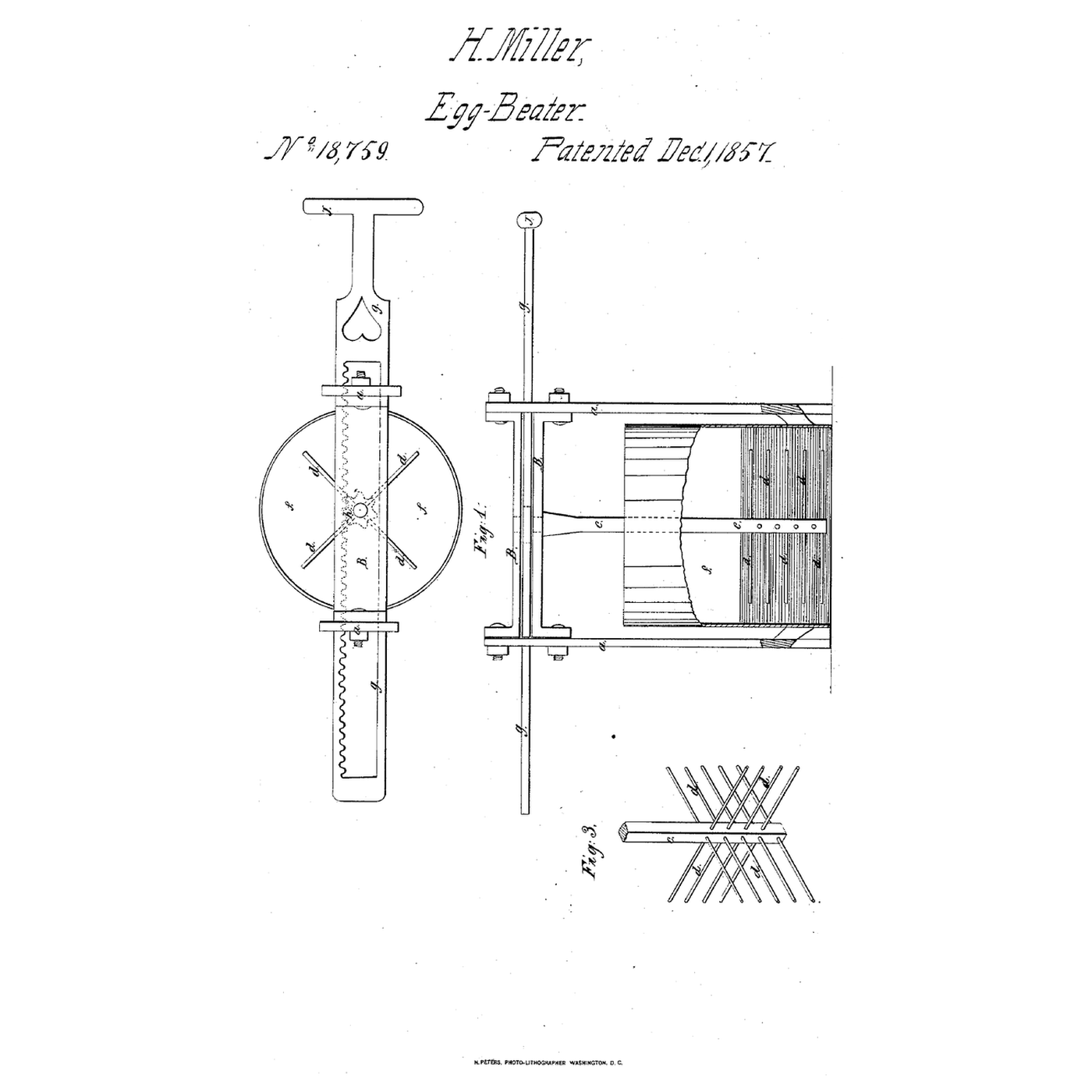


Ratchet-Bar Egg Beater: Push a Rack, the Floats Spin Both Ways
Beating eggs in a closed beater keeps the air out, and a beater bolted to its vessel is slow to empty and clean.
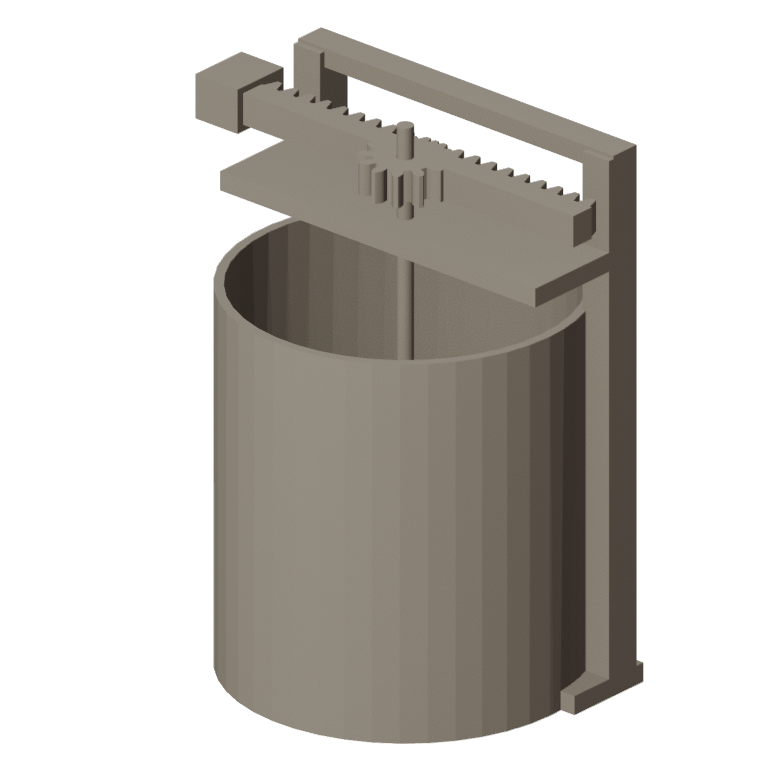
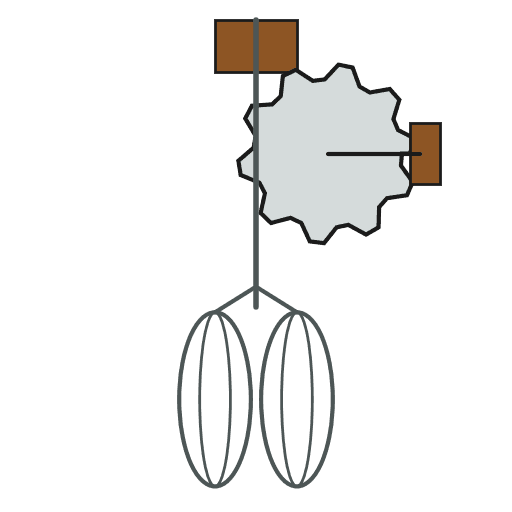
Harvey Miller of Cincinnati, Ohio, received US 18,759, dated 1 December 1857, for an egg beater: a frame whose standards clasp an open jar, a bar sliding through slots that gears into a pinion on a vertical spindle, and wire floats on the spindle that turn rapidly one way then the other as the bar is pushed to and fro; lifting the frame frees the jar.
This rung works out the turns per stroke, then prints the rack and pinion, builds the frame and floats, and times a beating.
Intermedio
About 5 hours, plus printing
Instrucciones
1
1
Turns per stroke
Turns per stroke
Cargando el cuaderno de Jupyter…
2
2
The rack and pinion it uses
The rack and pinion it uses
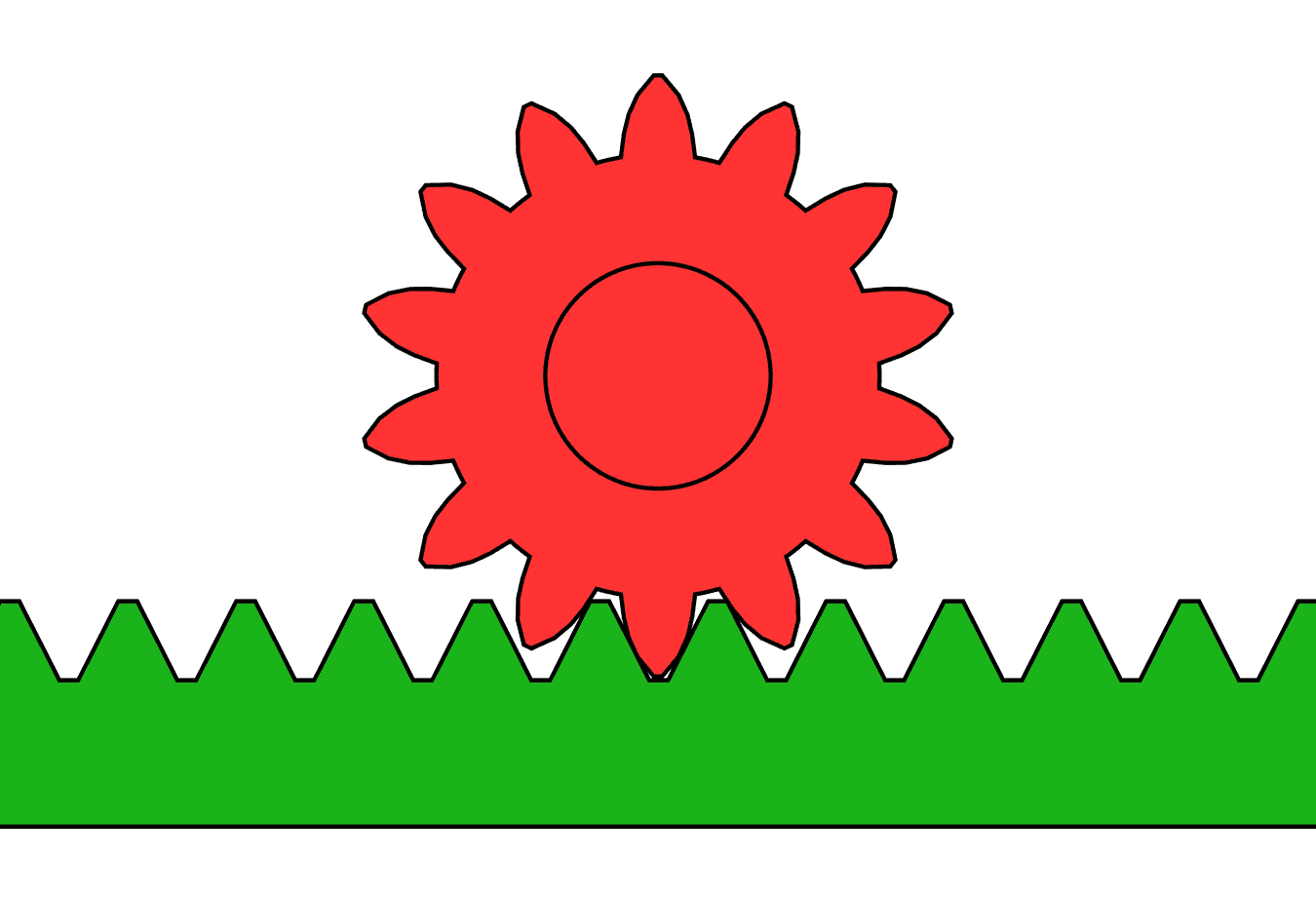
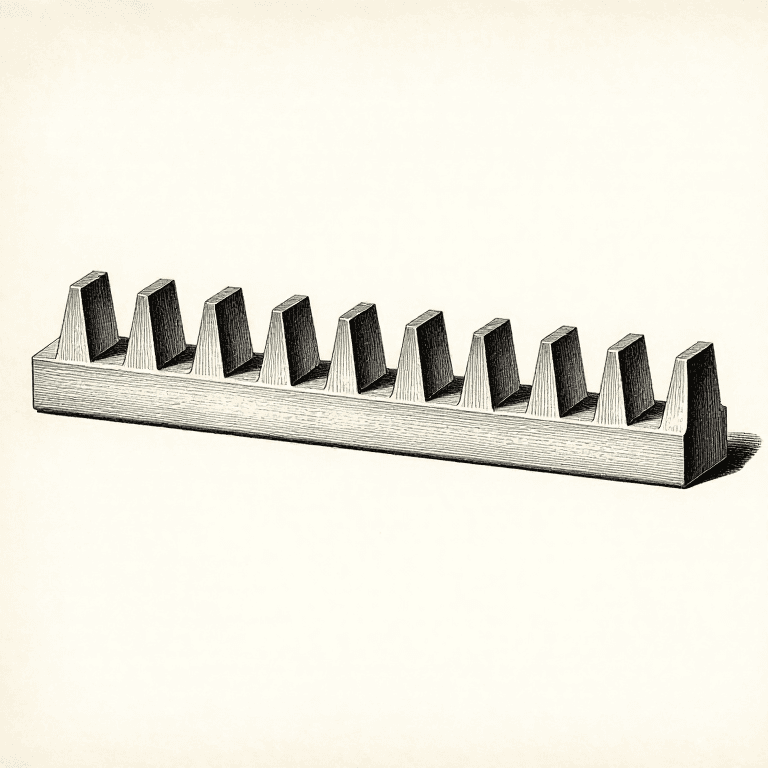
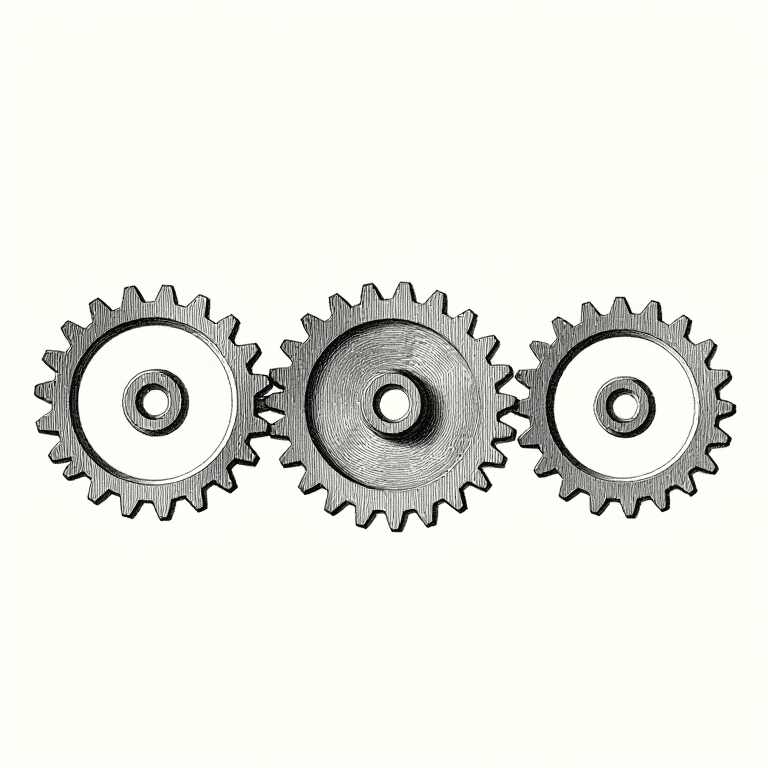
The embedded blueprint turns a straight push into rotation. Miller pushes the rack by hand and the pinion spins the floats.
3
3
Read US 18,759
Read US 18,759
"By this arrangement, if one hand be placed upon the upper bar B to hold the machine steady, while with the other hand upon the handle j, of the ratchet bar g, a reciprocating motion be given to the ratchet bar, then the spindle c, with its floats d, is set in rapid motion, alternately revolving in each direction."
4
4
Print the rack and pinion
Print the rack and pinion
Print the 12-tooth pinion and the 20-tooth rack. Print in PETG at 0.2 mm layers, 30 % infill, 4 walls.
Materiales para este paso:
 Filamento PETG1 pieza
Herramientas necesarias:
 Impresora 3D de filamento (FDM)
5
5
Print the pinion
Print the pinion
The pinion, printed as step 4 describes.
6
6
Print the rack
7
7
Build the frame
Build the frame
Cut two 170 mm standards and two cross-bars from hardwood. Screw them into a gate that straddles the jar, cut 13 × 11 mm slots across the standards' tops for the rack, and give the feet a curve to fit the jar.
Materiales para este paso:
 Bloque de madera dura1 pieza
 Tornillo para madera n.º 8 x 1"1 pieza
Herramientas necesarias:
 Segueta (sierra de marquetería)
 Limas (lima de mano)
 Taladro inalámbrico
 Juego de brocas
 Juego de destornilladores
 Regla
8
8
Make the spindle and floats
Make the spindle and floats
Cut 160 mm of 5 mm steel rod. Bend three loops of stainless wire 45 mm across and 50 mm high, bind their ends to the rod's lower end, and epoxy them. Press the pinion onto the top.
Materiales para este paso:
 Redondo de acero dulce1 pieza
 Alambre de acero inoxidable1 pieza
 Epoxi de dos componentes1 pieza
Herramientas necesarias:
 Sierra para metales
 Alicates de punta redonda
 Alicates de boca plana
 Gafas de seguridad transparentes
9
9
Assemble
Assemble
Hang the spindle from the lower cross-bar in a 5 mm hole, slide the rack through the slots so its teeth mesh with the pinion, and stand the gate over the bowl.
Materiales para este paso:
 Arandela plana1 pieza
Herramientas necesarias:
Taladro inalámbricoJuego de brocas10
10
The patent drawing
The patent drawing
US 18,759 drawing sheet, public domain (expired patent).
11
11
Beat egg whites
Beat egg whites
Separate two egg whites into the bowl. Pump the rack at about two strokes a second and time how long until they hold stiff peaks.
Materiales para este paso:
 Huevo2 piezas
Herramientas necesarias:
 Bol grande de acero inoxidable
 Cronómetro
12
12
A rack that jams, slips or a float that hits the bowl
A rack that jams, slips or a float that hits the bowl
Ratchet-bar egg beater troubleshooting.
Flow
Loading...
13
13
History and honest limits
History and honest limits
**Harvey Miller** of Cincinnati, Ohio, received US 18,759, dated 1 December 1857. His frame and parts were cast iron, the floats iron wire coated with tin, the jar porcelain or tin with no cover, so air has free access; neither shaft nor floats touch the vessel. He did not claim the ratchet bar or revolving beaters alone, only the frame with them in combination with the jar.
**Honest limits.** FDM prints hold food in their layer lines, so wash well and replace when worn. Printed PETG gears and a hardwood gate stand in for cast iron. Your times are the result.
Materiales
8- 1 piezaMarcador de posición
- 1 piezaMarcador de posición
- Marcador de posición
- 1 piezaMarcador de posición
- 1 piezaMarcador de posición
- 1 piezaMarcador de posición
- 1 piezaMarcador de posición
- 2 piezasMarcador de posición
Herramientas requeridas
13- Marcador de posición
- Marcador de posición
- Marcador de posición
- 1 vendor sell this, none ship to you yetMarcador de posición
- Marcador de posición
- Marcador de posición
- Marcador de posición
- Marcador de posición
- Marcador de posición
- Marcador de posición
- Marcador de posición
- Marcador de posición
- Marcador de posición
Archivos de diseño
2Este plano hace
Blueprints relacionados
Estos blueprints comparten conocimiento — técnicas, materiales o principios


CC0 Dominio público
Este Blueprint se publica bajo CC0. Eres libre de copiar, modificar, distribuir y usar este trabajo para cualquier propósito, sin pedir permiso.
Apoya al Maker comprando productos a través de su Blueprint, donde gana una Comisión del Maker establecida por los vendedores, o crea una nueva iteración de este Blueprint e inclúyela como conexión en tu propio Blueprint para compartir ingresos.