Colaboración
ARTE
BELLEZA Y BIENESTAR
ARTESANÍA
CULTURA E HISTORIA
ENTRETENIMIENTO
MEDIO AMBIENTE
COMIDA Y BEBIDAS
INGENIERÍA INVERSA
CIENCIAS
DEPORTES
TECNOLOGÍA
TECNOLOGÍA VESTIBLE
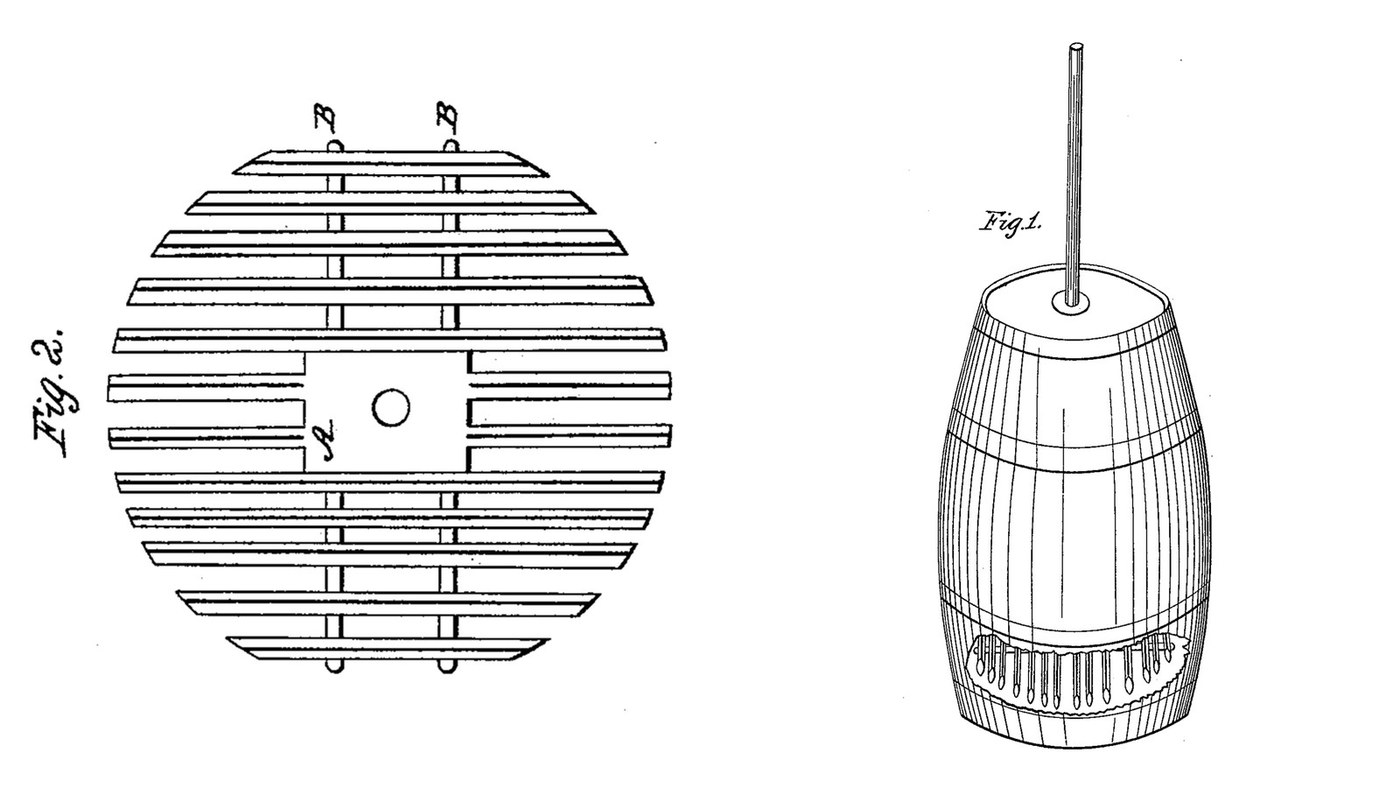


Oval-Breaker Rod Dasher: Breakers Strung on Two Rods, Add More for More Agitation
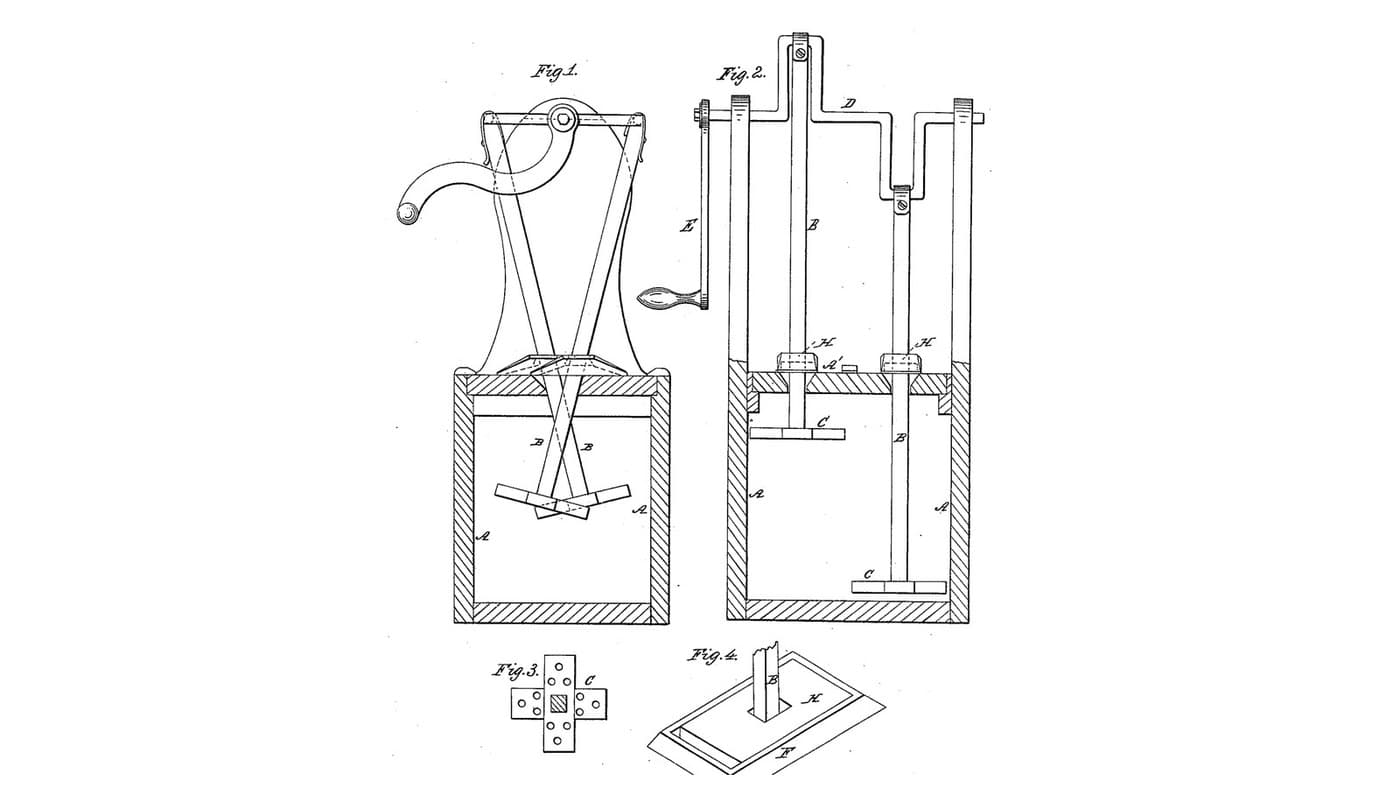
Alfred Rose of Penn Yan, New York, received US 25,914, dated 25 October 1859, for a churn-dasher for an ordinary up-and-down churn. A centre piece takes the staff, and breakers of oval section, with nearly sharp upper and lower edges, are strung beside it on two parallel rods, their ends cut to a circle. Putting on more breakers narrows the gaps between them and gives more agitation.
The patent gives no sizes; every size here is ours.
Principiante
About a day, plus printing
Instrucciones
1
1
Breaker lengths, and how open the dasher is
Breaker lengths, and how open the dasher is
Cargando el cuaderno de Jupyter…
2
2
An up-and-down dasher of crossed boards, a few weeks before
An up-and-down dasher of crossed boards, a few weeks before
Gilpatrick's dashers are two boards crossed and bored with holes. Rose builds his from breakers strung on rods, so the openings can be changed.
3
3
Read US 25,914
Read US 25,914
"They may be adjusted to the width required to give the necessary agitation and if more agitation is required put on more of the breakers, thereby reducing the space between them and any amount of agitation required may by this means be produced."
4
4
Print the spacers
Print the spacers
Sixteen spacer rings 12 mm across and 8 mm long, bored 6.4 mm, to go on the rods between the pieces. Print more, or shorter ones, to change the gaps. PETG, 0.2 mm layers, 100 % infill.
5
5
Centre piece A
Centre piece A
Draw a 248 mm circle on 30 mm hardwood. Cut the centre piece 64 mm wide right across it, then cut away its middle down to a 90 mm block, leaving two prongs 12 mm wide each side, 20 mm apart, out to the circle. Bore a 31 mm hole down through the block for the staff, and two 6.6 mm holes across it, 50 mm apart, for the rods. Shave the prongs to an oval 12 x 24 mm, their upper and lower edges nearly sharp.
Materiales para este paso:
 Tabla de madera dura1 pieza
 Cola de carpintero1 pieza
Herramientas necesarias:
 Brújula
 Sierra de mesa
 Sierra de calar
 Juego de brocas de pala
 Taladro inalámbrico
 Juego de brocas
 Cuchilla de dos manos
 Papel de lija
6
6
Breakers and rods B
Breakers and rods B
Cut eight breakers 12 x 24 mm from hardwood, two each of 230, 210, 179 and 129 mm long along their middles, ends trimmed to the circle. Shave each to the same oval with nearly sharp edges, and bore two 6.6 mm holes through each, 50 mm apart across their middles. Cut two 6 mm stainless threaded rods 236 mm long, thread the breakers and spacers on either side of the centre piece, and close each end with a cap nut.
Materiales para este paso:
Tabla de madera dura1 pieza Varilla roscada1 pieza
 Tuerca autoblocante con inserto de nailon4 piezas
 Filamento PETG1 pieza
Herramientas necesarias:
 Impresora 3D de filamento (FDM)Sierra de mesaCuchilla de dos manosTaladro inalámbricoJuego de brocas
 Sierra para metales
 Limas (lima de mano)
 Llave inglesa ajustable
 Cinta métrica
7
7
The build in 3D
The build in 3D
FreeCAD model of the dasher: the centre piece with its prongs and the staff's foot, the eight breakers with their ends on a 248 mm circle, the two rods, spacers and cap nuts.
8
8
Churn
Churn
Fit a 30 mm hardwood staff into the centre piece and wedge it. Use a dash churn at least 260 mm across inside where the dasher works. Pour in cream at about 15 °C to a third of the churn's height, checked with the thermometer, put the dasher in and the lid on, and work the staff up and down, timing it. When the butter comes, lift the dasher out, drain the buttermilk, wash the butter in cold water until it runs clear, salt and weigh it. If it churns slowly, add breakers next time to close the gaps.
Materiales para este paso:
 Crema de leche espesa6 l
 Sal marina gruesa1 pieza
 Espigas de madera dura1 piezaCola de carpintero1 pieza
Herramientas necesarias:
 Mantequera
 Termómetro de sonda permanente
 Cronómetro
 Báscula digital de cocina
 Bol grande de acero inoxidable
 Agua
9
9
Troubleshooting
Troubleshooting
Rod dasher troubleshooting.
Flow
Loading...
10
10
History and honest limits
History and honest limits
**Alfred Rose** of Penn Yan, Yates County, New York, US 25,914, 25 October 1859, "Churn-Dasher". He claimed "the churn dasher when made in the manner substantially as specified". The patent gives no sizes and leaves the number of breakers to the maker; every size here is ours, and his drawing shows five breakers each side where ours has four.
Materiales
8- 1 piezaMarcador de posición
- 2 piezasMarcador de posición
- 1 piezaMarcador de posición
- Marcador de posición
- 1 piezaMarcador de posición
- Marcador de posición
- 1 piezaMarcador de posición
- 1 piezaMarcador de posición
Herramientas requeridas
19- Marcador de posición
- 1 vendor sell this, none ship to you yetMarcador de posición
- 1 vendor sell this, none ship to you yetMarcador de posición
- Marcador de posición
- 1 vendor sell this, none ship to you yetMarcador de posición
- Marcador de posición
- Marcador de posición
- Marcador de posición
- Marcador de posición
- Marcador de posición
- Marcador de posición
- Marcador de posición
- 1 vendor sell this, none ship to you yetMarcador de posición
- Marcador de posición
- Marcador de posición
- Marcador de posición
- Marcador de posición
- Marcador de posición
- Marcador de posición
Archivos de diseño
2

Blueprints relacionados
Estos blueprints comparten conocimiento — técnicas, materiales o principios


CC0 Dominio público
Este Blueprint se publica bajo CC0. Eres libre de copiar, modificar, distribuir y usar este trabajo para cualquier propósito, sin pedir permiso.
Apoya al Maker comprando productos a través de su Blueprint, donde gana una Comisión del Maker establecida por los vendedores, o crea una nueva iteración de este Blueprint e inclúyela como conexión en tu propio Blueprint para compartir ingresos.