ARTE
BELLEZA Y BIENESTAR
ARTESANÍA
CULTURA E HISTORIA
ENTRETENIMIENTO
MEDIO AMBIENTE
COMIDA Y BEBIDAS
INGENIERÍA INVERSA
CIENCIAS
DEPORTES
TECNOLOGÍA
TECNOLOGÍA VESTIBLE
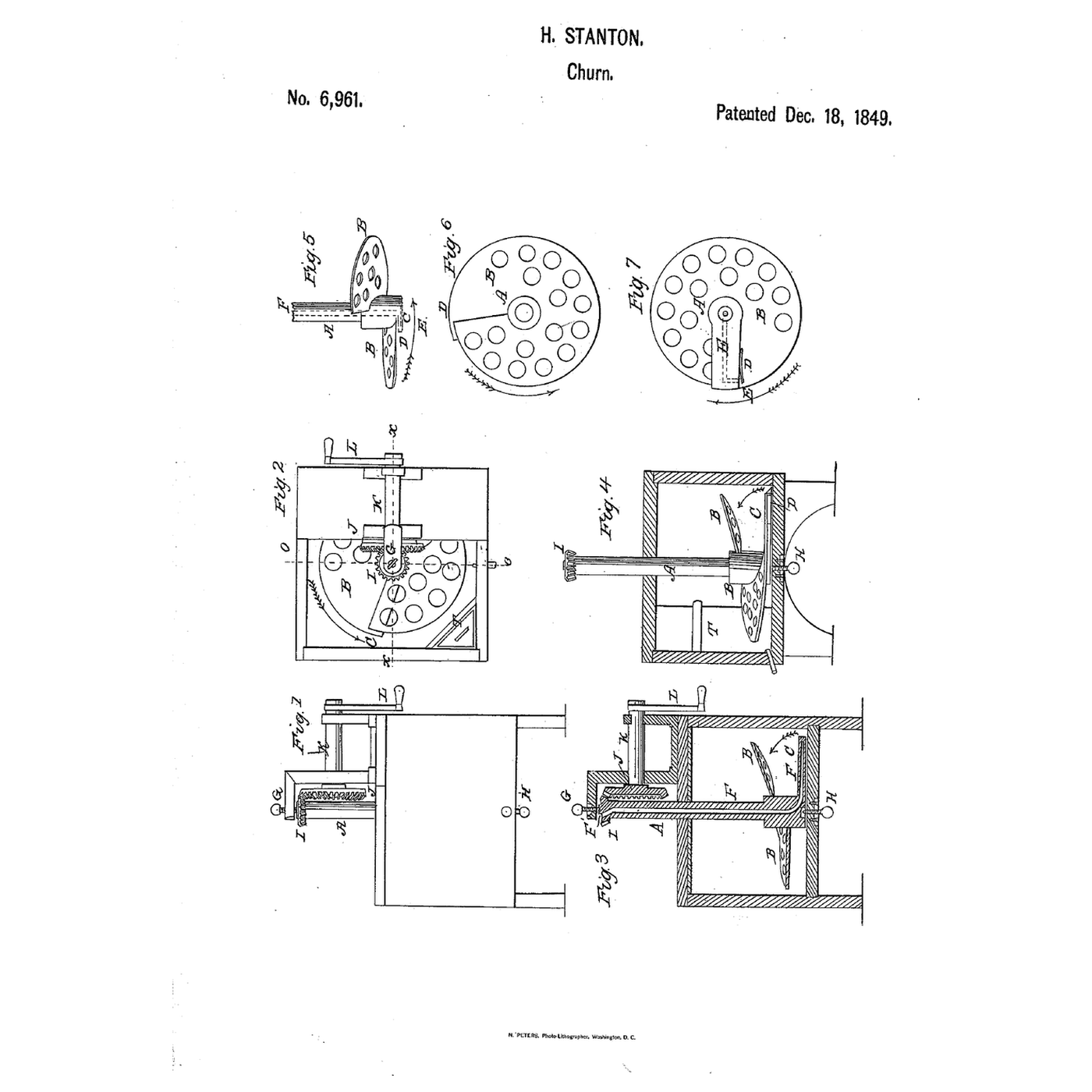


Spiral-Float Air-Arm Churn: A Perforated Screw Over a Breathing Wedge
Stanton wanted one float that would churn slowly with air, lift and drop the cream, and gather the butter.
Henry Stanton of Richfield, New York, received US 6,961, dated 18 December 1849, for "Stanton's Atmospheric Churn": a perforated spiral float of wood "cramped or pressed in the form of a screw" round a hollow vertical shaft, unperforated for its first quarter, above a hollow wedge-shaped radial arm with a spring valve over its outlet; the shaft's top is funnel-shaped; and a movable metal vessel of ice or warm water stands in a corner to bring the cream to temperature. Turned right it churns; turned left it gathers.
This rung works out what the spiral lifts, then prints the shaft-and-arm and the spiral float, fits them with a can for the tempering water, and makes butter.
Intermedio
About 3 hours, plus printing
Instrucciones
1
1
What the spiral lifts
What the spiral lifts
Cargando el cuaderno de Jupyter…
2
2
A screw that lifts the cream before it
A screw that lifts the cream before it
The embedded blueprint lifts cream in a screw inside a tube. Stanton's spiral is open and perforated, and breathes air in through its hollow shaft.
3
3
Read US 6,961
Read US 6,961
"This spiral float with vertical axis answers a three fold purpose—namely for producing a vacuum—agitating the cream—and gathering the butter—the butter being churned by turning the spiral float to the right and gathered by turning it to the left."
4
4
Print the parts
Print the parts
Print the hollow shaft with its funnel and wedge-shaped arm upright, with supports, and the spiral float upright with supports: unperforated for its first quarter, perforated beyond. Print the crank arm. Print in PETG at 0.2 mm layers, 30 % infill, 4 walls; wash before first use.
Materiales para este paso:
 Filamento PETG1 pieza
Herramientas necesarias:
 Impresora 3D de filamento (FDM)
5
5
Print the hollow shaft with its funnel and arm
Print the hollow shaft with its funnel and arm
The hollow shaft with its funnel and arm, printed as step 4 describes.
6
6
Print the spiral float
Print the spiral float
The spiral float, printed as step 4 describes.
7
7
Print the crank arm
Print the crank arm
The crank arm, printed as step 4 describes.
8
8
Valve and assembly
Valve and assembly
Glue a small leather flap over the arm's outlet along its leading side, so it lifts when air blows out and closes against butter, as his spring valve. Slide the float down the shaft, its unperforated start just above the arm, and glue it. Stand the shaft's foot in a seat drilled in the centre of a food-safe box's floor.
Materiales para este paso:
 Tira de cuero1 pieza
 Epoxi de dos componentes1 pieza
 Recipiente de almacenaje de grado alimentario1 pieza
Herramientas necesarias:
 Taladro inalámbrico
 Juego de brocas
9
9
Crank and temperer
Crank and temperer
Pass the shaft through a plywood half-lid and fix a hardwood crank to it below the funnel, keeping the funnel open. Stand a clean tin can in a corner as his tempering vessel: warm water in it to raise the cream's temperature, ice water to lower it.
Materiales para este paso:
 Tablero contrachapado1 pieza
 Bloque de madera dura1 pieza
 Espigas de madera dura1 pieza
 Lata1 pieza
 Cola de carpintero1 pieza
Herramientas necesarias:
 SerruchoTaladro inalámbricoJuego de brocas
10
10
The build in 3D
The build in 3D
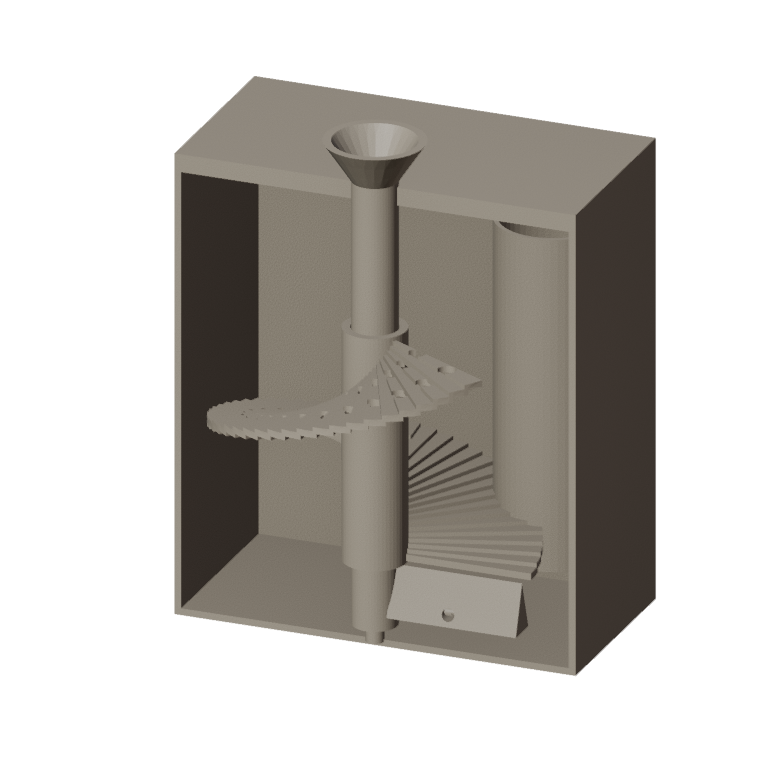
FreeCAD model of this build, not of the patent: the box cut away to show the hollow shaft with its funnel top, the perforated spiral float, the wedge-shaped air arm at its foot, and the tempering can in a corner.
11
11
Churn right, gather left
Churn right, gather left
Pour in 1.5 litres of heavy cream and bring it to about 15 °C with warm or ice water in the can, checked with the thermometer; then lift the can out. Turn the float slowly to the right and time until the butter comes; then turn it to the left to gather the butter at its foot. Pour off the buttermilk, add cold water, churn a little and pour off again until it runs clear; work in a pinch of salt and weigh the butter.
Materiales para este paso:
 Crema de leche espesa1500 ml
 Sal marina gruesa1 pieza
 Agua1 pieza
Herramientas necesarias:
 Termómetro de sonda permanente
 Cronómetro
 Báscula digital de cocina
 Bol grande de acero inoxidable
12
12
No air, butter in the arm
No air, butter in the arm
Spiral-float air-arm churn troubleshooting.
Flow
Loading...
13
13
History and honest limits
History and honest limits
**Henry Stanton** of Richfield, Otsego County, New York, received US 6,961, dated 18 December 1849. The shaft was held by two pointed set screws so the float came out for cleaning, and turned by a small bevel wheel and a larger one on a cranked horizontal shaft on half the lid. He poured an alkali into the funnel "for correcting the acidity of the cream"; this build does not, and nothing should be added to cream for butter unless you know it is safe. He explained the result by the oxygen of the atmosphere; that is his account. He claimed the combination of the perforated spiral float with the prismatic radial arm and vertical shaft.
**Honest limits.** Our crank turns the shaft directly, without his bevel wheels; printed parts, a box and a tin can stand in for his wooden float, tub and metal vessel. FDM prints hold food in their layer lines, so wash well and replace when worn. Your times and weights are the result.
Materiales
12- 1 piezaMarcador de posición
- 1 piezaMarcador de posición
- 1 piezaMarcador de posición
- Marcador de posición
- 1 piezaMarcador de posición
- 1 piezaMarcador de posición
- 1 piezaMarcador de posición
- 1 piezaMarcador de posición
- 1 piezaMarcador de posición
- 1500 mlMarcador de posición
- 1 piezaMarcador de posición
- 1 piezaMarcador de posición
Herramientas requeridas
8- Marcador de posición
- 1 vendor sell this, none ship to you yetMarcador de posición
- Marcador de posición
- Marcador de posición
- Marcador de posición
- Marcador de posición
- Marcador de posición
- Marcador de posición
Archivos de diseño
4Este plano hace
Blueprints relacionados
Estos blueprints comparten conocimiento — técnicas, materiales o principios
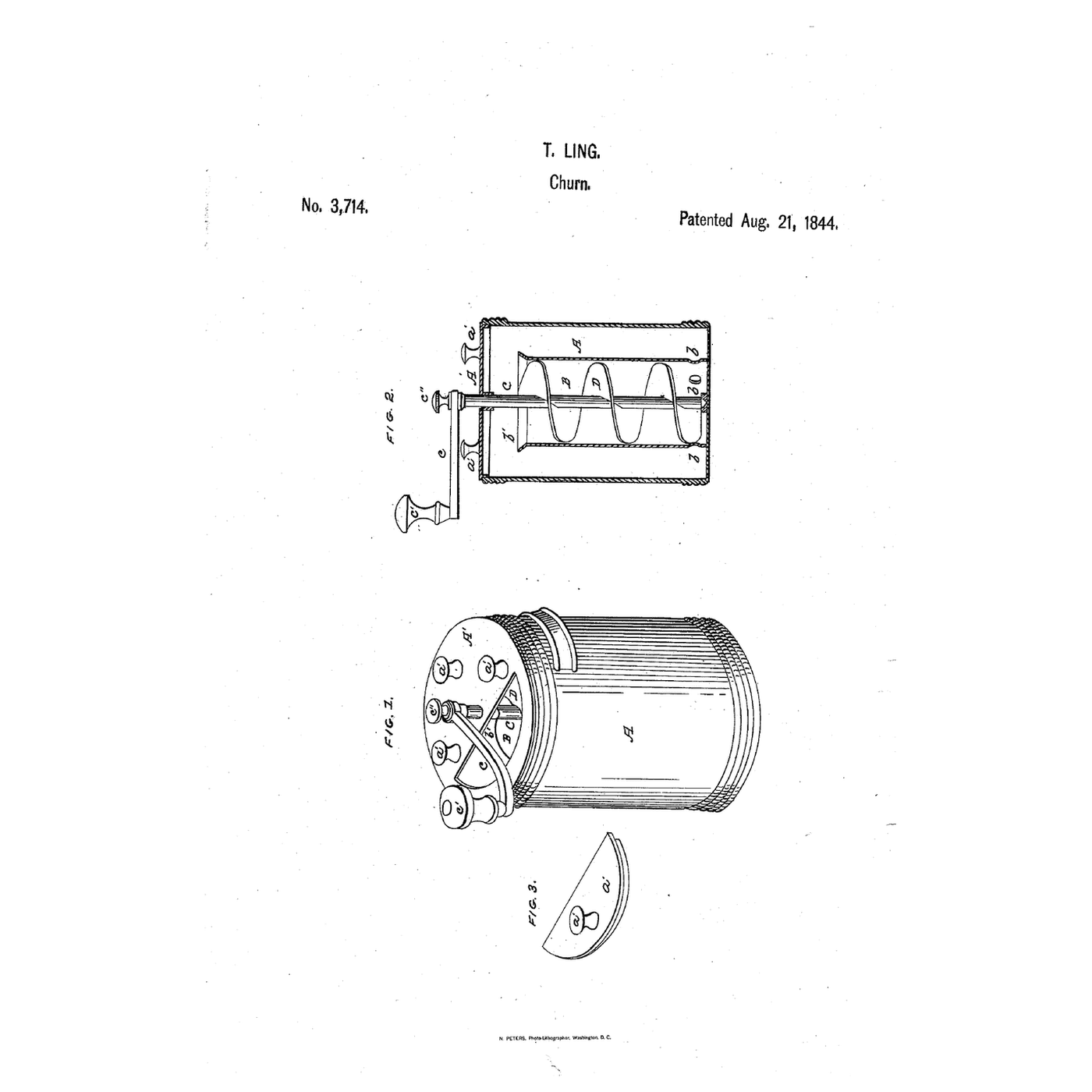
Screw-Lift Churn: An Archimedean Screw Keeps the Whole Body of Cream Moving
por Emma
COMIDA Y BEBIDAS
24
0
0
0
0
0
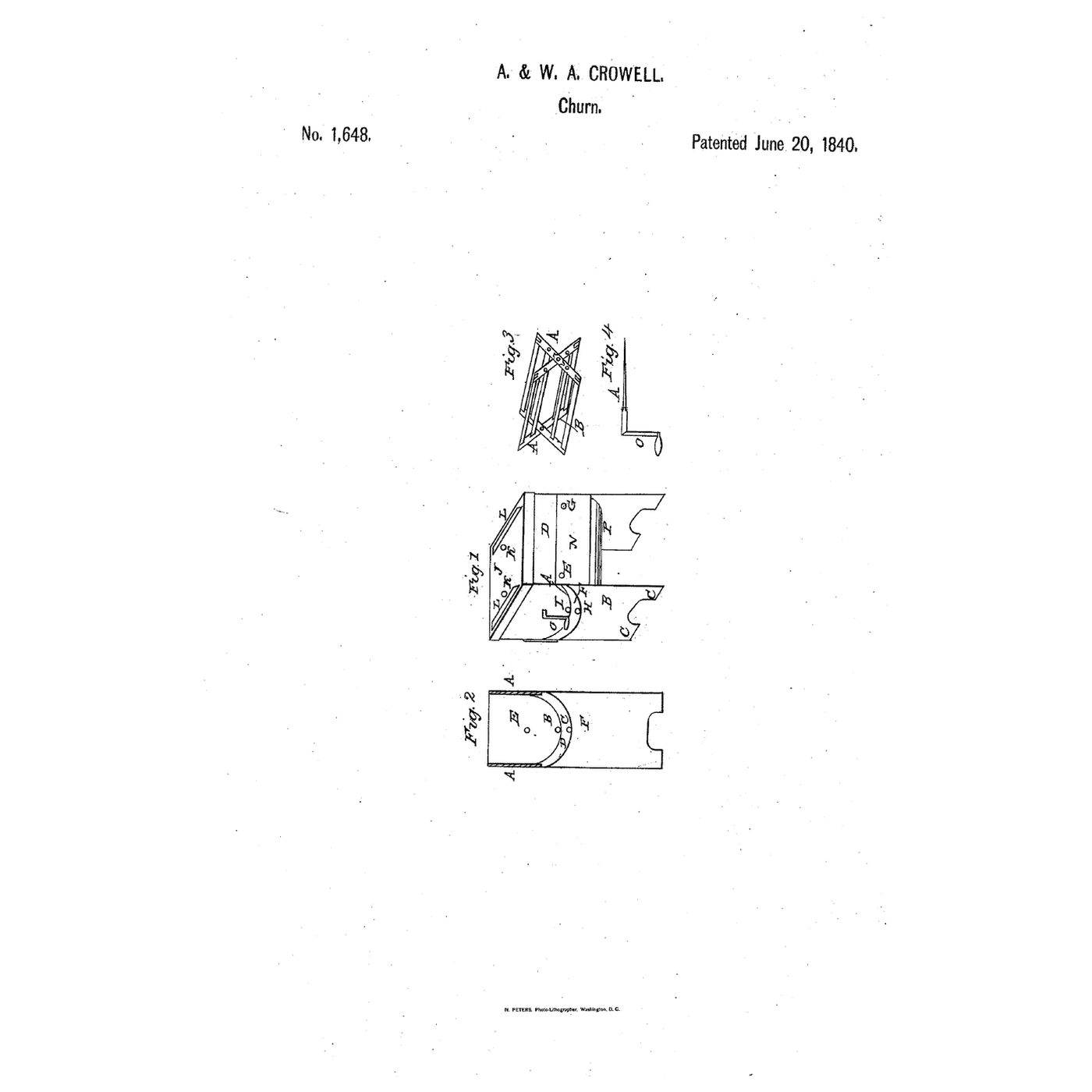
Water-Jacketed Churn: Hot or Cold Water Under a Metal Plate Tempers the Cream
por Karen
COMIDA Y BEBIDAS
34
0
0
0
0
0
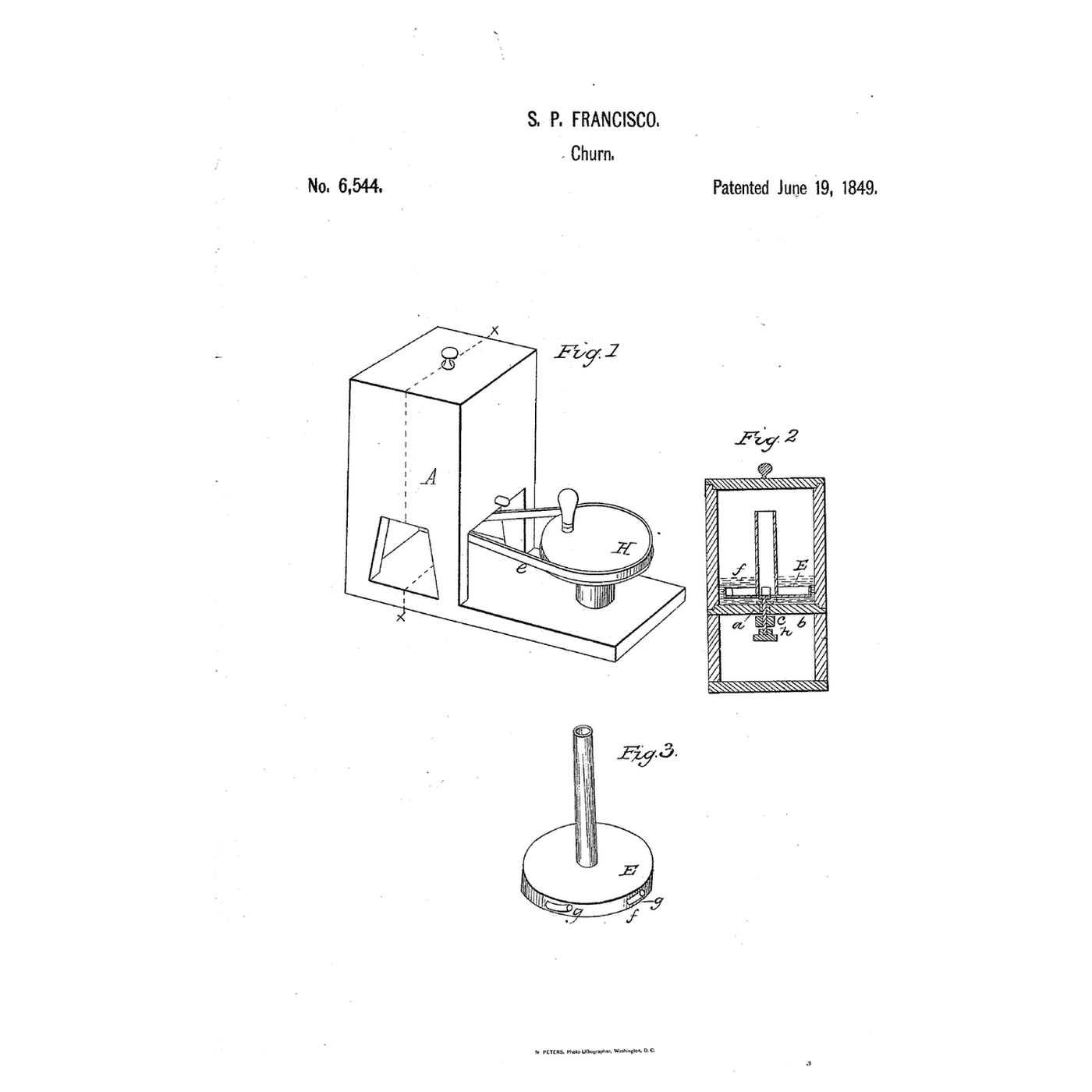
Tubular Disk Dasher Churn: A Wide Shallow Churn That Rolls the Butter Into Balls
por TheChef
COMIDA Y BEBIDAS
16
0
0
0
0
0
CC0 Dominio público
Este Blueprint se publica bajo CC0. Eres libre de copiar, modificar, distribuir y usar este trabajo para cualquier propósito, sin pedir permiso.
Apoya al Maker comprando productos a través de su Blueprint, donde gana una Comisión del Maker establecida por los vendedores, o crea una nueva iteración de este Blueprint e inclúyela como conexión en tu propio Blueprint para compartir ingresos.