ARTE
BELLEZA Y BIENESTAR
ARTESANÍA
CULTURA E HISTORIA
ENTRETENIMIENTO
MEDIO AMBIENTE
COMIDA Y BEBIDAS
INGENIERÍA INVERSA
CIENCIAS
DEPORTES
TECNOLOGÍA
TECNOLOGÍA VESTIBLE
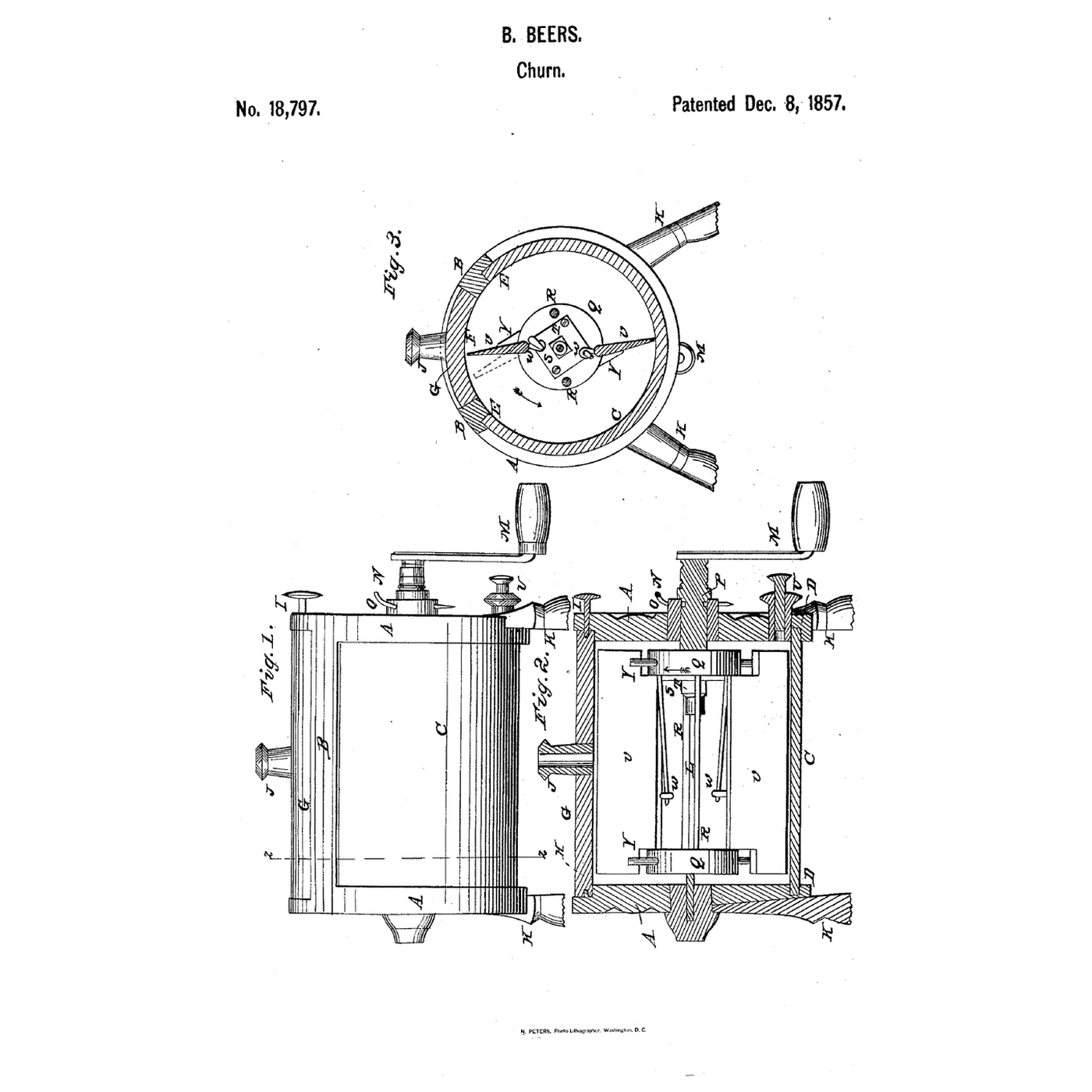


Spring-Float Barrel Churn: Floats Stand Rigid to Churn, Fold Back on Springs to Gather and Work
Benjamin Beers of New Fairfield, Connecticut, received US 18,797, dated 8 December 1857, for a barrel churn whose dasher floats are held against stops by springs: rigid when turned one way to churn, they "yield or give way" when turned the other, pressing the butter against the barrel to gather and work it.
This rung prints the disks and floats, builds the barrel and makes, gathers and salts butter.
Intermedio
About 4 hours, plus printing
Instrucciones
1
1
Rigid one way, yielding the other
Rigid one way, yielding the other
Cargando el cuaderno de Jupyter…
2
2
A dasher that changes when reversed, before it
A dasher that changes when reversed, before it
Thorpe's loose bucket closes on a screw; Beers's floats fold on springs.
3
3
Read US 18,797
Read US 18,797
"When the disks and floats are turned the other way so as to gather and amass the butter by pressing it against the sides of the barrel, the springs allow the floats to yield or give way, when they come over and strike on the buttermilk and butter and assume a tangential direction."
4
4
Print the parts
Print the parts
Print two disks and two floats. Print in PETG at 0.2 mm layers, 30 % infill, 4 walls; wash before first use.
Materiales para este paso:
 Filamento PETG1 pieza
Herramientas necesarias:
 Impresora 3D de filamento (FDM)
5
5
Print the disk
6
6
Print the float
Print the float
The float, printed as step 4 describes.
7
7
Dasher
Dasher
Fix the two disks on a 10 mm square hardwood shaft and join them with two 4 mm stainless rods. Pivot each float between the disks on a 4 mm rod, and hook a spring from its eye to the anchor hole in a disk so it presses the float against its stop.
Materiales para este paso:
 Espigas de madera dura1 pieza
 Redondo de acero dulce1 pieza
 Juego de muelles de compresión1 pieza
 Epoxi de dos componentes1 pieza
Herramientas necesarias:
 Sierra para metales
 Taladro inalámbrico
8
8
Barrel and crank
Barrel and crank
Lay a round food-grade container about 170 mm across on its side in a pine cradle, cut a door in its top with a cork vent, and run the shaft through its ends on the axis with a crank outside.
Materiales para este paso:
 Recipiente de almacenaje de grado alimentario1 pieza
 Tabla de pino1 pieza
 Corchos1 pieza
 Sellador de silicona1 pieza
 Tornillo para madera n.º 8 x 1"1 pieza
Herramientas necesarias:
 Segueta (sierra de marquetería)Taladro inalámbrico
 Juego de brocas
9
9
The build in 3D
The build in 3D
FreeCAD model of this build: the barrel cut open to show the two disks on the shaft, the joining rods and the two floats on their pivots.
10
10
Churn, gather, salt
Churn, gather, salt
Let the heavy cream stand until it reaches about 15 °C, checked with the thermometer. Pour in 1.5 litres. Turn the crank the way that holds the floats on their stops; time until the butter comes. Turn it back so the floats fold and press the butter against the barrel; draw off the buttermilk, add salt and work the crank a little back and forth to mix it in, as he did. Weigh the butter.
Materiales para este paso:
 Crema de leche espesa1500 ml
 Sal marina gruesa1 pieza
 Agua1 pieza
Herramientas necesarias:
 Termómetro de sonda permanente
 Cronómetro
 Báscula digital de cocina
 Bol grande de acero inoxidable
11
11
Troubleshooting
Troubleshooting
Spring-float barrel churn troubleshooting.
Flow
Loading...
12
12
History and honest limits
History and honest limits
**Benjamin Beers** of New Fairfield, Fairfield County, Connecticut, US 18,797, 8 December 1857. He bent a wooden hoop into the barrel's body between two heads, cheaper than staves and less likely to leak. He claimed the rotating dasher with spring floats to churn and to work the butter. A container and printed parts stand in for his barrel. FDM prints hold food in their layer lines, so wash well and replace when worn.
Materiales
13- 1 piezaMarcador de posición
- 1 piezaMarcador de posición
- 1 piezaMarcador de posición
- Marcador de posición
- 1 piezaMarcador de posición
- Marcador de posición
- 1 piezaMarcador de posición
- 1 piezaMarcador de posición
- 1 piezaMarcador de posición
- Marcador de posición
- 1500 mlMarcador de posición
- 1 piezaMarcador de posición
- 1 piezaMarcador de posición
Herramientas requeridas
9- Marcador de posición
- Marcador de posición
- 1 vendor sell this, none ship to you yetMarcador de posición
- Marcador de posición
- Marcador de posición
- Marcador de posición
- Marcador de posición
- Marcador de posición
- Marcador de posición
Archivos de diseño
3Este plano hace
Blueprints relacionados
Estos blueprints comparten conocimiento — técnicas, materiales o principios
Self-Folding Blade Dasher Churn: Six Blades to Churn, Reverse and They Fold to Two That Gather
por Woody
Carpintería
31
0
0
0
0
0
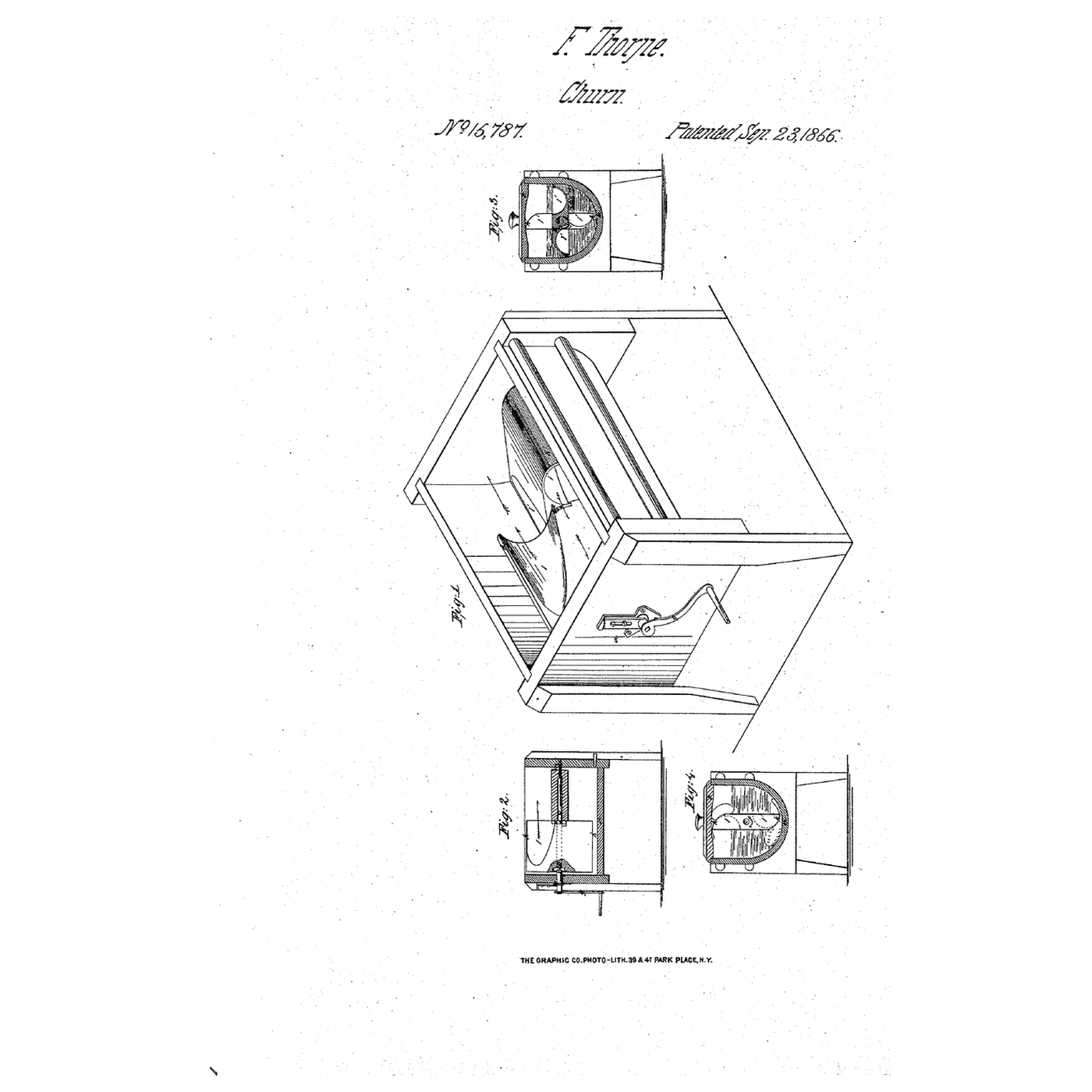
Fast-and-Loose Bucket Churn: One Way the Buckets Cross to Churn, the Other They Close to Gather
por Millie
COMIDA Y BEBIDAS
36
0
0
0
0
0

Churning Butter from Cream — The 5,000-Year-Old Fat Separation
por TheChef
ARTESANÍA
54
0
0
0
0
0
CC0 Dominio público
Este Blueprint se publica bajo CC0. Eres libre de copiar, modificar, distribuir y usar este trabajo para cualquier propósito, sin pedir permiso.
Apoya al Maker comprando productos a través de su Blueprint, donde gana una Comisión del Maker establecida por los vendedores, o crea una nueva iteración de este Blueprint e inclúyela como conexión en tu propio Blueprint para compartir ingresos.