ARTE
BELLEZA Y BIENESTAR
ARTESANÍA
CULTURA E HISTORIA
ENTRETENIMIENTO
MEDIO AMBIENTE
COMIDA Y BEBIDAS
INGENIERÍA INVERSA
CIENCIAS
DEPORTES
TECNOLOGÍA
TECNOLOGÍA VESTIBLE
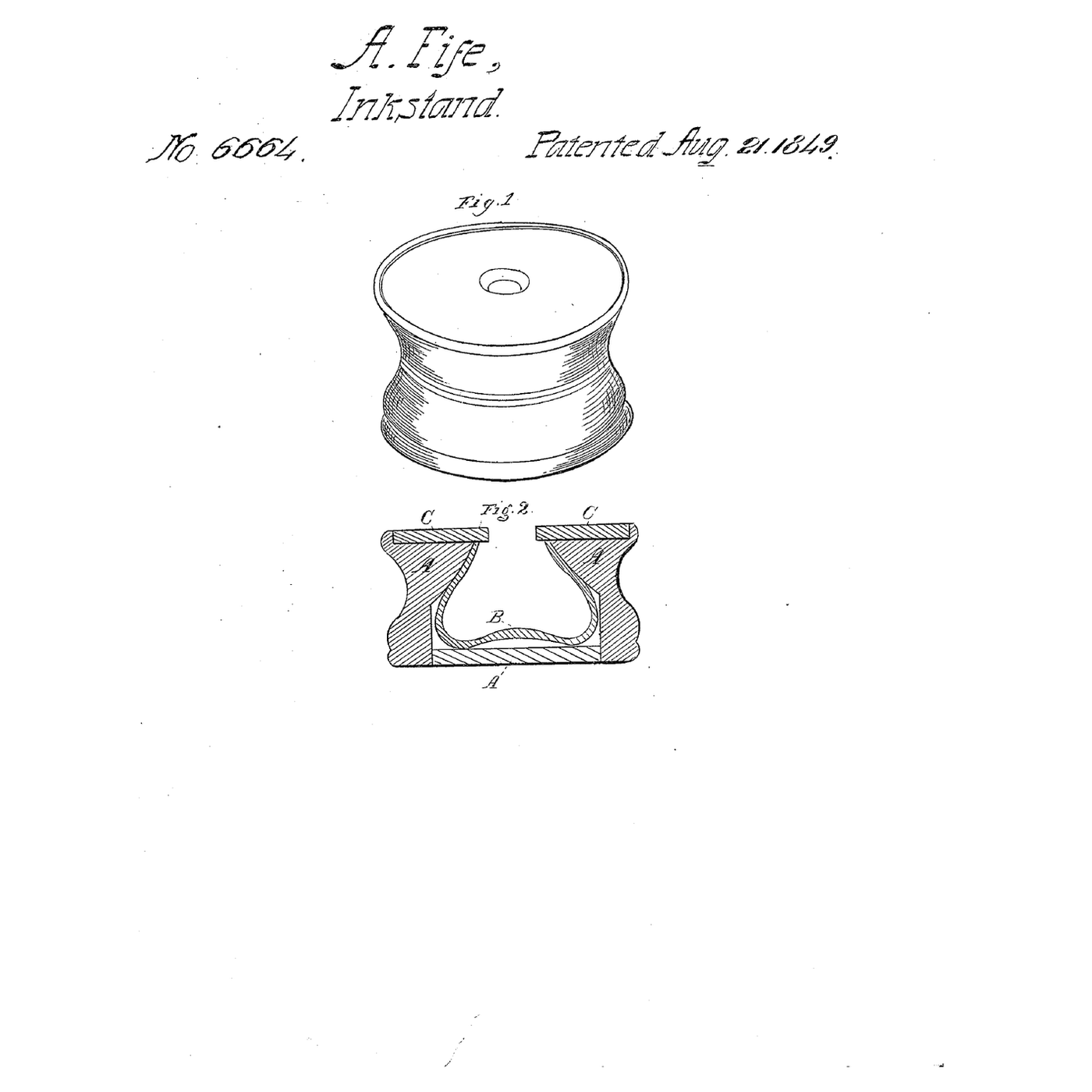


The Gold-Pen Protector Inkstand: A Rubber Rim for Careless Dipping
A pen thrust quickly into an inkwell strikes its point on the glass or brass edge of the mouth, and a costly diamond-pointed gold pen is spoiled.
Andrew Fife of Philadelphia received US 6,664, dated 21 August 1849, for an improvement in inkstands called a "Gold-Pen Protector": "forming the top, or surface surrounding and partially covering the mouth of the reservoir of the inkstand, of gum elastic, or other similar soft elastic substance, or composition", with its hole smaller than the mouth, so that the edge of the reservoir is covered.
This rung works out the force on the point with and without the rubber, then fits a rubber ring to a jar and dips two nibs, one on each, and compares them under a lens.
Principiante
About 1 hour
Instrucciones
1
1
Force on the point
Force on the point
Cargando el cuaderno de Jupyter…
2
2
Another well
Another well
The embedded blueprint protects the ink. Fife's rubber rim protects the pen.
3
3
Read US 6,664
Read US 6,664
"Among writers the habit is almost universal of thrusting the pen, quickly and carelessly, into the mouth of the reservoir for a supply of ink, and at it to throw out of the pen the superfluous ink it has taken up."
"The object of the 'gold pen protector' is to interpose a soft elastic substance between the pen and the hard substances composing the inkstand and its reservoir, in such a way as to greatly decrease—if not entirely remove—the danger of breaking the point of the pen in taking a dip of ink."
4
4
Fit the rim and dip two nibs
Fit the rim and dip two nibs
Cut a ring from rubber sheet about 3 mm thick, as large as the jar's rim and with a hole a few millimetres smaller than its mouth. Glue it on with contact cement so it covers the rim's edge.
Look at two new dip-pen nibs under the hand lens and note the tines. Fit one in a holder and thrust it into the rubber-rimmed jar 100 times as a writer would, knocking off the surplus on the rim. Do the same with the other nib on a bare glass jar.
Look at both nibs under the lens again, then write the same line with each and compare the strokes.
Materiales para este paso:
 Plancha de caucho1 pieza
 Cemento de contacto2 ml
 Tarro de vidrio2 piezas
 Tinta de escribir50 ml
 Cartulina1 pieza
Herramientas necesarias:
 Cúter de precisión
 Tijeras
 Regla
 Lupa de mano 10x
 Juego de plumillas de caligrafía
5
5
A rim that peels, clogs or still lets the nib strike
A rim that peels, clogs or still lets the nib strike
Gold-pen protector troubleshooting.
Flow
Loading...
6
6
History and honest limits
History and honest limits
**Andrew Fife** of Philadelphia signed US 6,664 on 27 March 1849; it is dated 21 August 1849. He secured the protector with glue, cement or other material according to the inkstand, and noted that steel and quill pens as well as diamond-pointed gold ones were destroyed the same way. He disclaimed the shape of the inkstand itself.
**Honest limits.** Sheet rubber and contact cement stand in for his gum elastic top, and steel dip-pen nibs for gold ones. The notebook's mass, speed and stopping distances are examples. Your lens comparisons are the result.
Materiales
5- 1 piezaMarcador de posición
- Marcador de posición
- 2 piezasMarcador de posición
- 50 mlMarcador de posición
- 1 piezaMarcador de posición
Herramientas requeridas
5- Marcador de posición
- Marcador de posición
- Marcador de posición
- Marcador de posición
- Marcador de posición
Blueprints relacionados
Estos blueprints comparten conocimiento — técnicas, materiales o principios

The Float Inkstand: A Cork That Keeps the Ink From the Air
por Charlie
Manualidades de Papel
33
0
0
0
0
0
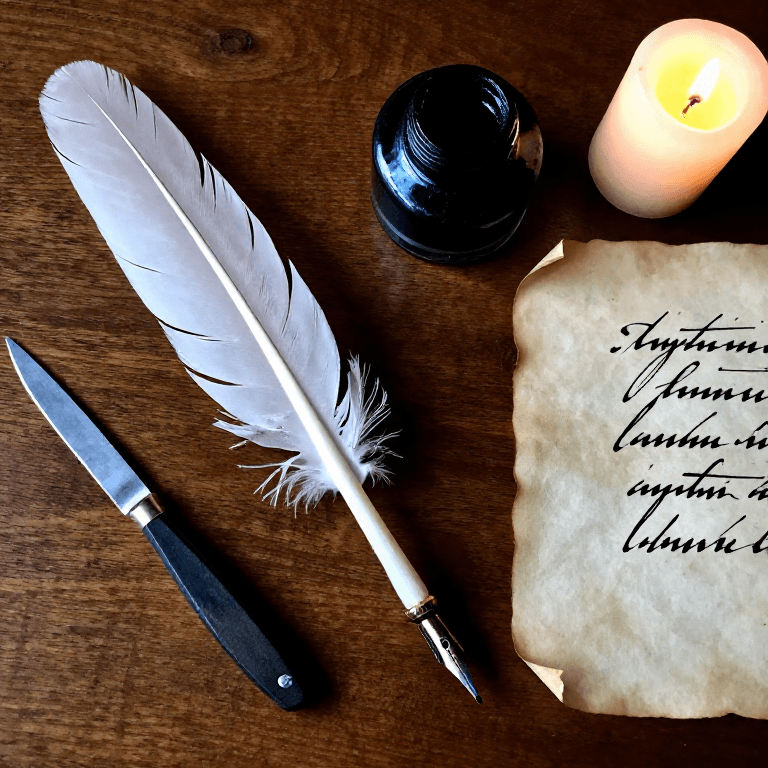
Cutting a Goose Quill Pen — Medieval Writing Instrument
por Bob
Manualidades de Papel
111
0
0
0
0
0
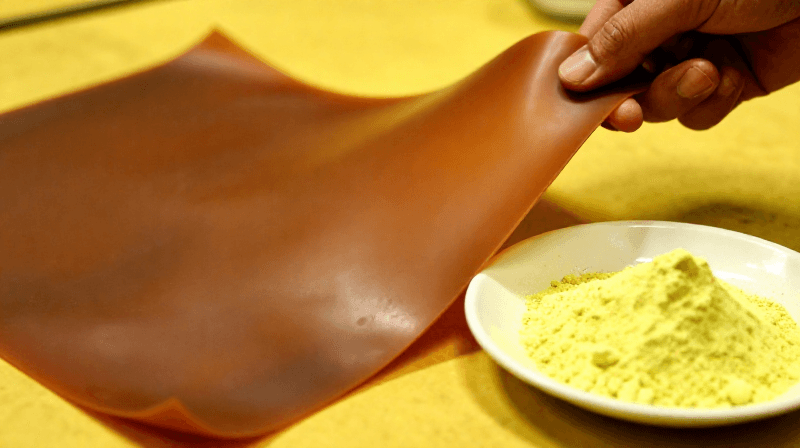
Vulcanizing Rubber with Sulfur — The Accidental Discovery That Put Tyres on the Road
por Charlie
Industrial
113
0
0
0
3
0
CC0 Dominio público
Este Blueprint se publica bajo CC0. Eres libre de copiar, modificar, distribuir y usar este trabajo para cualquier propósito, sin pedir permiso.
Apoya al Maker comprando productos a través de su Blueprint, donde gana una Comisión del Maker establecida por los vendedores, o crea una nueva iteración de este Blueprint e inclúyela como conexión en tu propio Blueprint para compartir ingresos.