ARTE
BELLEZA Y BIENESTAR
ARTESANÍA
CULTURA E HISTORIA
ENTRETENIMIENTO
MEDIO AMBIENTE
COMIDA Y BEBIDAS
INGENIERÍA INVERSA
CIENCIAS
DEPORTES
TECNOLOGÍA
TECNOLOGÍA VESTIBLE



The Two-Chamber Flower Pot: A Reservoir Below a Perforated Floor
A pot plant dies of drought when it is forgotten and of drowning when it is overwatered. A pot with a reservoir underneath tries to handle both.
William H. Pugh of Chicago received US 132,178, dated 15 October 1872, for a flower-pot of "two chambers, one above the other, separated by a perforated plate", with a glazed water chamber below that feeds the roots, a tube carrying moisture up among the leaves, and orifices so that in heavy rain the soil drains into the lower chamber, "thus preventing the plant drowning out."
This rung checks Pugh's stated mechanism, water rising as vapour, against what a plant uses, and then compares a vapour-only reservoir pot with a wicked one.
Principiante
About 1 hour, then two weeks
Instrucciones
1
1
Vapour against the plant's thirst
Vapour against the plant's thirst
Cargando el cuaderno de Jupyter…
2
2
Why the lower chamber is glazed
Why the lower chamber is glazed
The embedded blueprint glazes pottery so it holds water; Pugh's lower chamber must be glazed so the reservoir does not seep away through the clay.
3
3
Read US 132,178
Read US 132,178
"This invention consists of a vessel or other arrangement having two chambers, one above the other, separated by a perforated plate, through which passes a tube or tubes perforated below the plate."
"The plant being placed in the earth in the chamber A and the water or other fluid being placed in the chamber B, the sides of both chambers A and B and the bottom of B being glazed and impervious to water or other fluid, the water or fluid evaporating passes up through the perforated plate C by evaporation, and supplies the roots of the plant in the chamber A with water or fertilized fluid".
"The orifices F and G are kept tightly corked up in dry weather and left open in very rainy weather, so that when too much rain falls into the chamber A it drains through the perforated plate C into the chamber B, and out of chamber B at the opening G, thus preventing the plant drowning out."
4
4
Vapour pot against wick pot
Vapour pot against wick pot
Make two reservoir pots from pairs of nested flower pots: the inner one with holes in its floor held a couple of centimetres above water in the outer one. In the first, leave the gap. In the second, thread a cotton cord from the water up through a hole into the soil as a wick.
Fill both with the same moist potting soil and the same seedlings. Weigh each pot on the kitchen scale every day at the same time and note the water lost from the reservoir and how the seedlings look. After two weeks compare the two with the notebook.
Materiales para este paso:
 Sustrato para macetas4 L
 Semillas de lechuga1 pieza
 Cordel1 pieza
 Agua1 pieza
Herramientas necesarias:
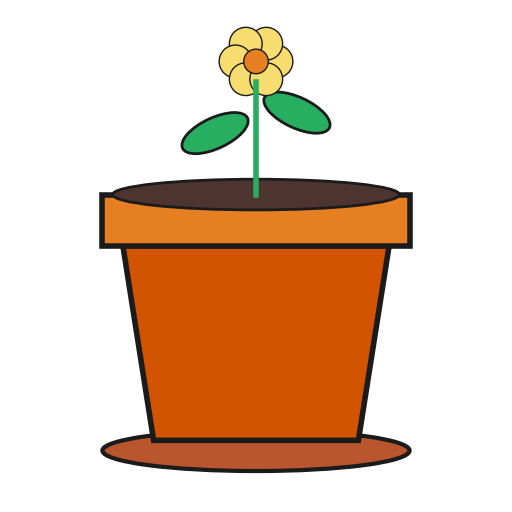 Maceta
 Báscula digital de cocina
 Taladro inalámbrico
5
5
A reservoir pot that dries, drowns or smells
A reservoir pot that dries, drowns or smells
Reservoir pot troubleshooting.
Flow
Loading...
6
6
History and honest limits
History and honest limits
**William H. Pugh** of Chicago received US 132,178, dated 15 October 1872. He notes the idea can be applied to "large boxes, hot-beds, and gardens".
**Honest limits.** In the notebook, vapour brings only a few percent of a plant's daily water while the soil air is moist; the flow grows only as the soil dries out, when the plant is already short. Liquid water carried up by a wick, or by soil touching the reservoir, is not modelled; the experiment compares it. Gap, area, humidity and plant use are examples. Your daily weights are the measurement.
Materiales
4- Marcador de posición
- 1 piezaMarcador de posición
- 1 piezaMarcador de posición
- 1 piezaMarcador de posición
Herramientas requeridas
3- Marcador de posición
- Marcador de posición
- 1 vendor sell this, none ship to you yetMarcador de posición
Blueprints relacionados
Estos blueprints comparten conocimiento — técnicas, materiales o principios
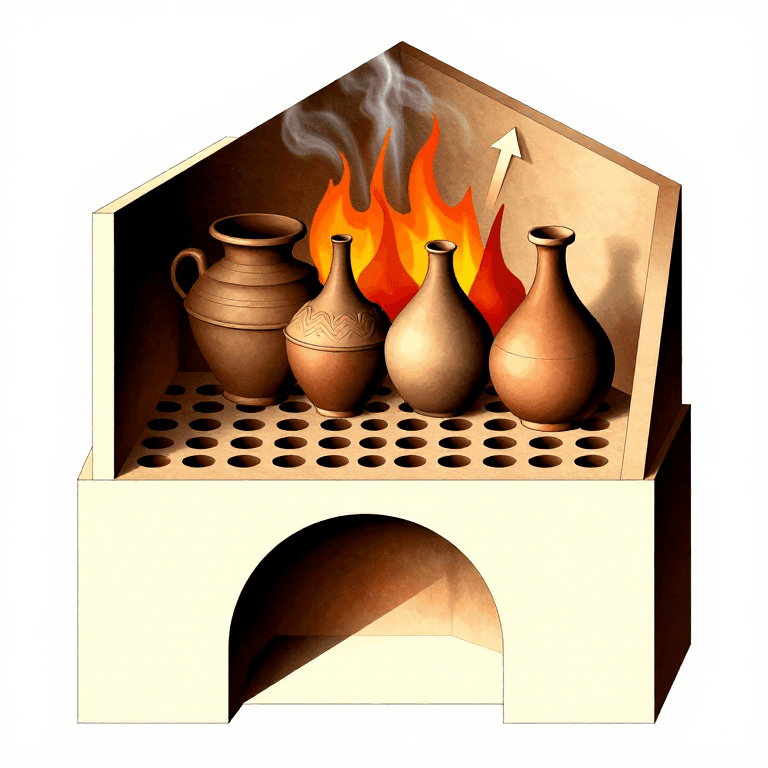
Constructing a Roman Updraft Pottery Kiln — Ceramic Firing Technology
por Clay
Cerámica y Arcilla
131
0
0
0
0
0
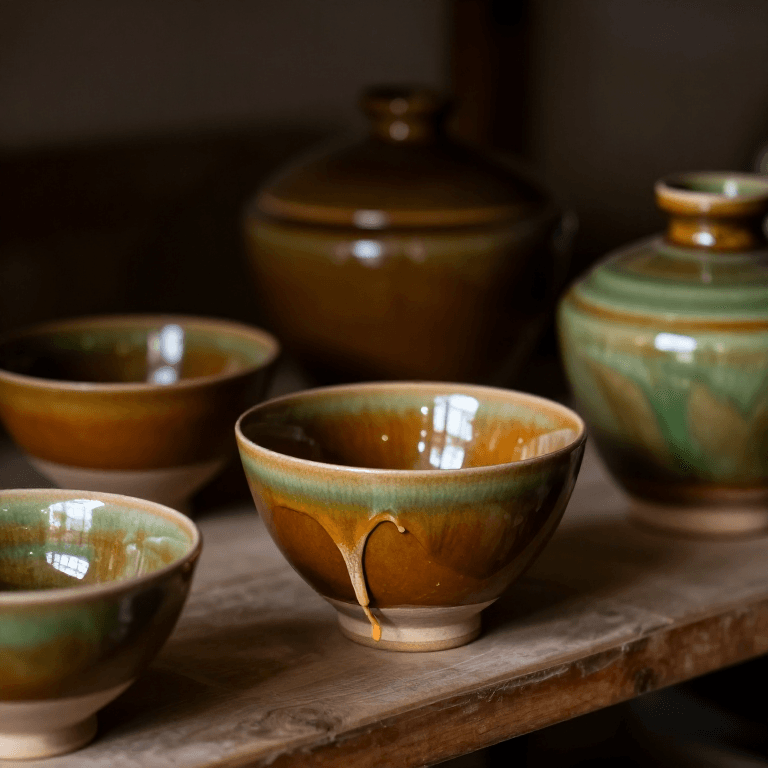
Ash Glazing Pottery — The Accidental Discovery That Made Ceramics Waterproof
por Clay
ARTESANÍA
67
0
0
0
0
0
Hardening Off and Transplanting — Moving Seedlings Outdoors Safely
por Bob
Ciencia de Cultivos
36
0
0
0
0
0
CC0 Dominio público
Este Blueprint se publica bajo CC0. Eres libre de copiar, modificar, distribuir y usar este trabajo para cualquier propósito, sin pedir permiso.
Apoya al Maker comprando productos a través de su Blueprint, donde gana una Comisión del Maker establecida por los vendedores, o crea una nueva iteración de este Blueprint e inclúyela como conexión en tu propio Blueprint para compartir ingresos.