ARTE
BELLEZA Y BIENESTAR
ARTESANÍA
CULTURA E HISTORIA
ENTRETENIMIENTO
MEDIO AMBIENTE
COMIDA Y BEBIDAS
INGENIERÍA INVERSA
CIENCIAS
DEPORTES
TECNOLOGÍA
TECNOLOGÍA VESTIBLE
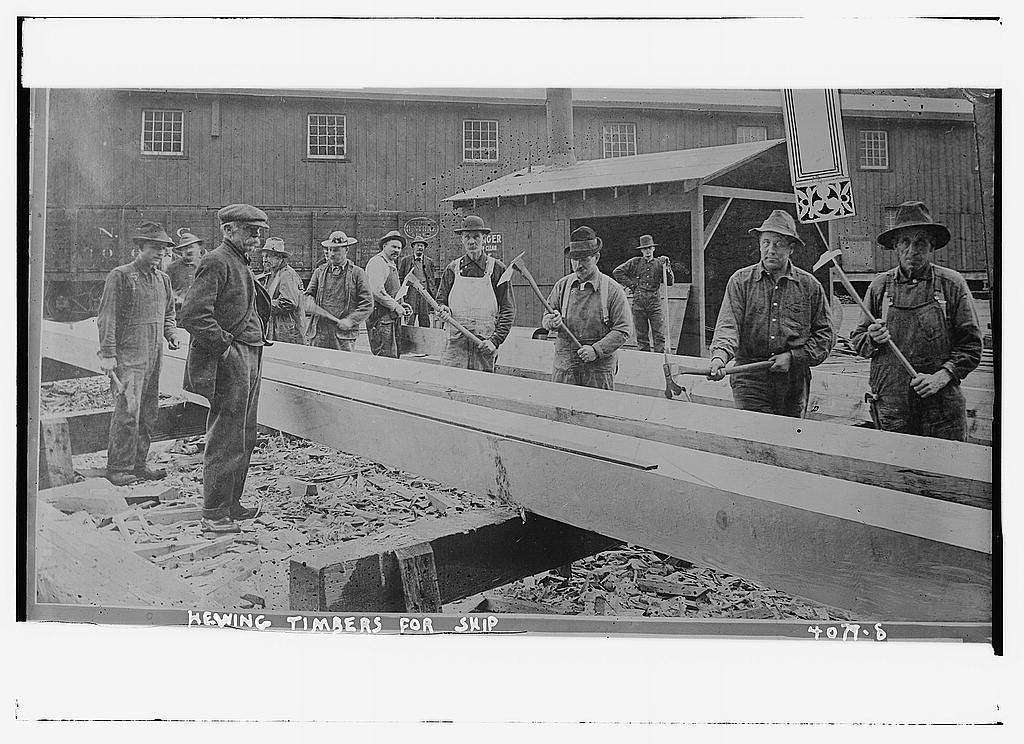


Timber Beams Hewn Square from the Log
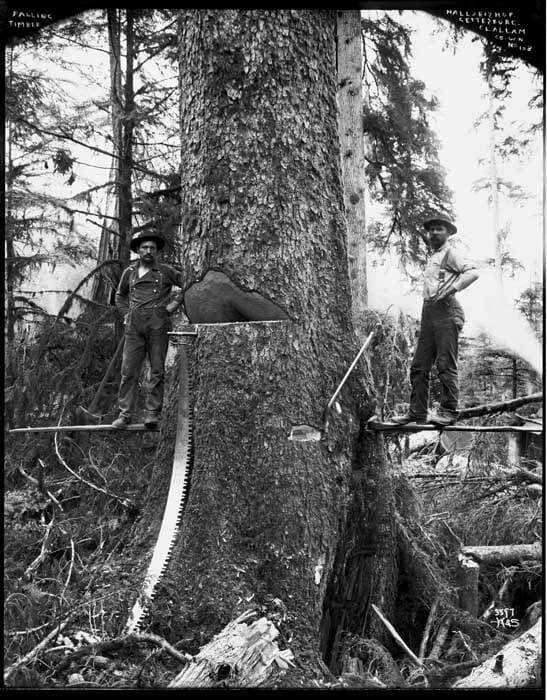
Before sawmills, beams for frames and machines were hewn square from the log with axes. Snap a chalk line, score notches down to it, knock out the wood between them (juggling), then hew the face smooth to the line with a broadaxe. Turn the log and do each side.
The picture: shipwrights with broadaxes hewing timbers for a ship, about 1915–1920 (Bain News Service, Library of Congress).
Intermedio
A day per beam
Instrucciones
1
1
Set the log up and mark
Set the log up and mark
Block the log off the ground so it cannot roll. Mark the beam's outline on both ends with the square and snap chalk lines along the log between them.
Materiales para este paso:
 Tronco1 pieza
Herramientas necesarias:
 Escuadra fija
 Cordel de marcar
2
2
Score
Score
Stand on the log and chop notches every 30 cm or so, almost down to the line.
Herramientas necesarias:
 Hacha
 Casco de obra
3
3
Juggle
Juggle
Knock off the blocks of wood between the notches with the axe, leaving a rough face just short of the line.
Herramientas necesarias:
Hacha4
4
Hew to the line
Hew to the line
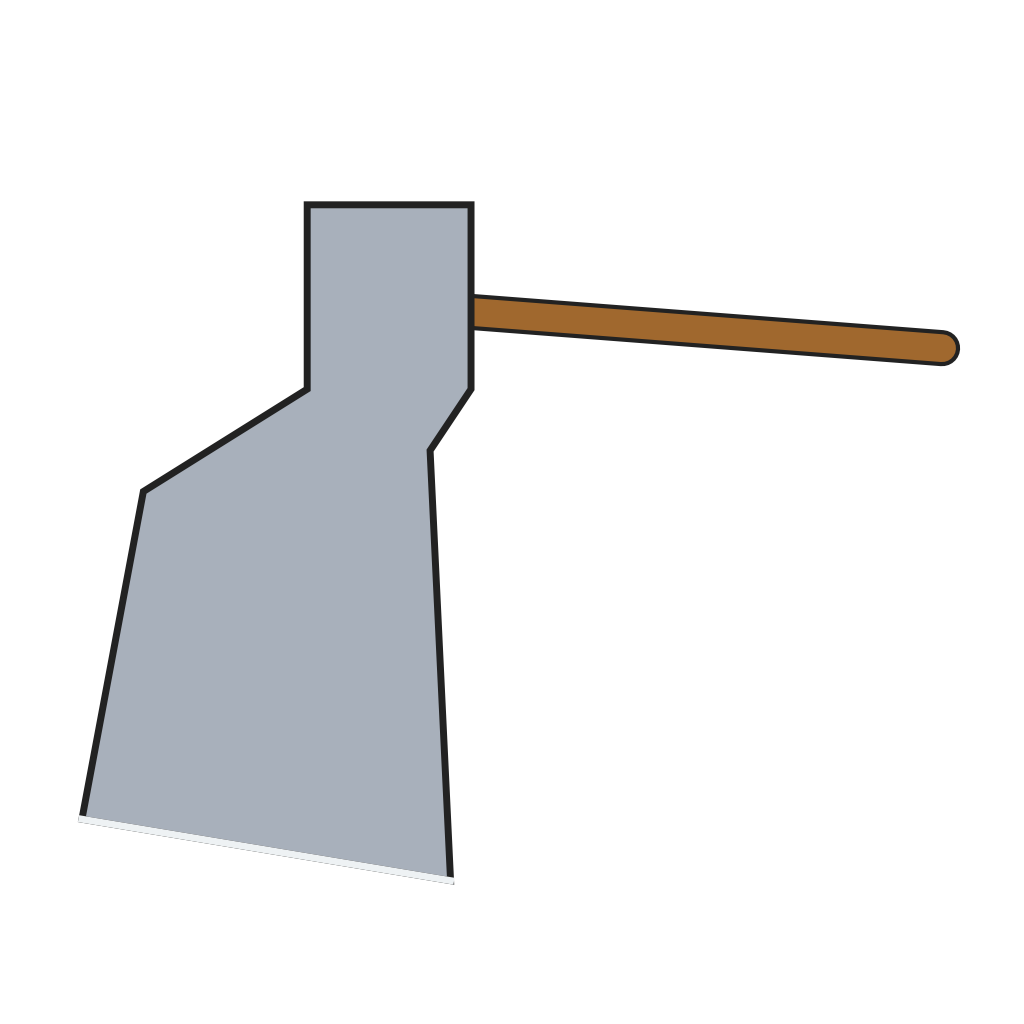
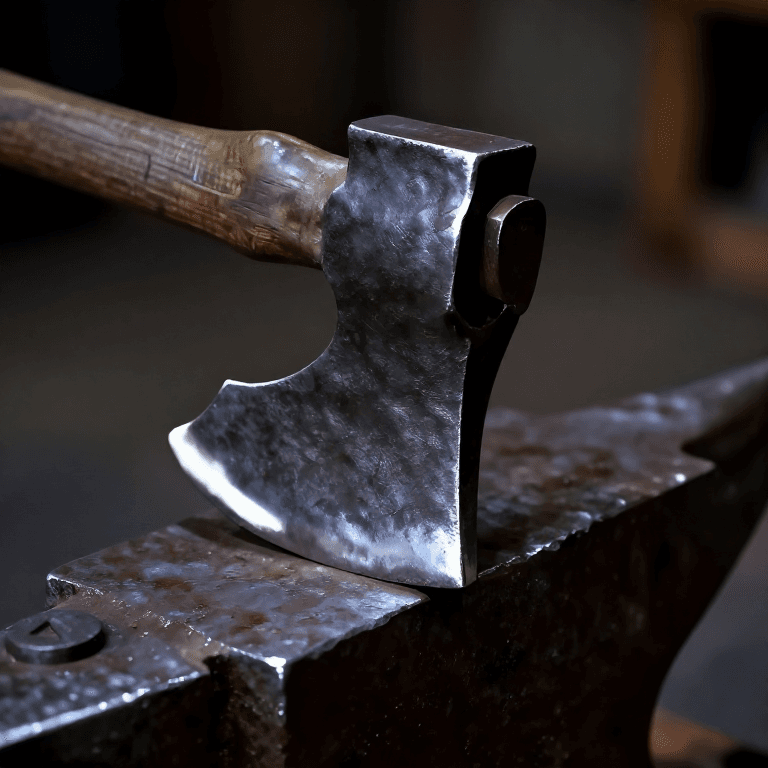
Hew the face smooth to the chalk line with the broadaxe, working from the bottom of the stem upward.
Herramientas necesarias:
 Hacha de labrar
5
5
Turn and repeat
Turn and repeat
Roll the log a quarter turn, snap new lines from the end marks, and hew the next face. Check the corners with the square; dress any high spots with the adze.
Herramientas necesarias:
Cordel de marcarEscuadra fija Azuela
6
6
The biggest beam in a log
The biggest beam in a log
Cargando el cuaderno de Jupyter…
Blueprints relacionados
Estos blueprints comparten conocimiento — técnicas, materiales o principios
CC0 Dominio público
Este Blueprint se publica bajo CC0. Eres libre de copiar, modificar, distribuir y usar este trabajo para cualquier propósito, sin pedir permiso.
Apoya al Maker comprando productos a través de su Blueprint, donde gana una Comisión del Maker establecida por los vendedores, o crea una nueva iteración de este Blueprint e inclúyela como conexión en tu propio Blueprint para compartir ingresos.