Colaboración
ARTE
BELLEZA Y BIENESTAR
ARTESANÍA
CULTURA E HISTORIA
ENTRETENIMIENTO
MEDIO AMBIENTE
COMIDA Y BEBIDAS
INGENIERÍA INVERSA
CIENCIAS
DEPORTES
TECNOLOGÍA
TECNOLOGÍA VESTIBLE
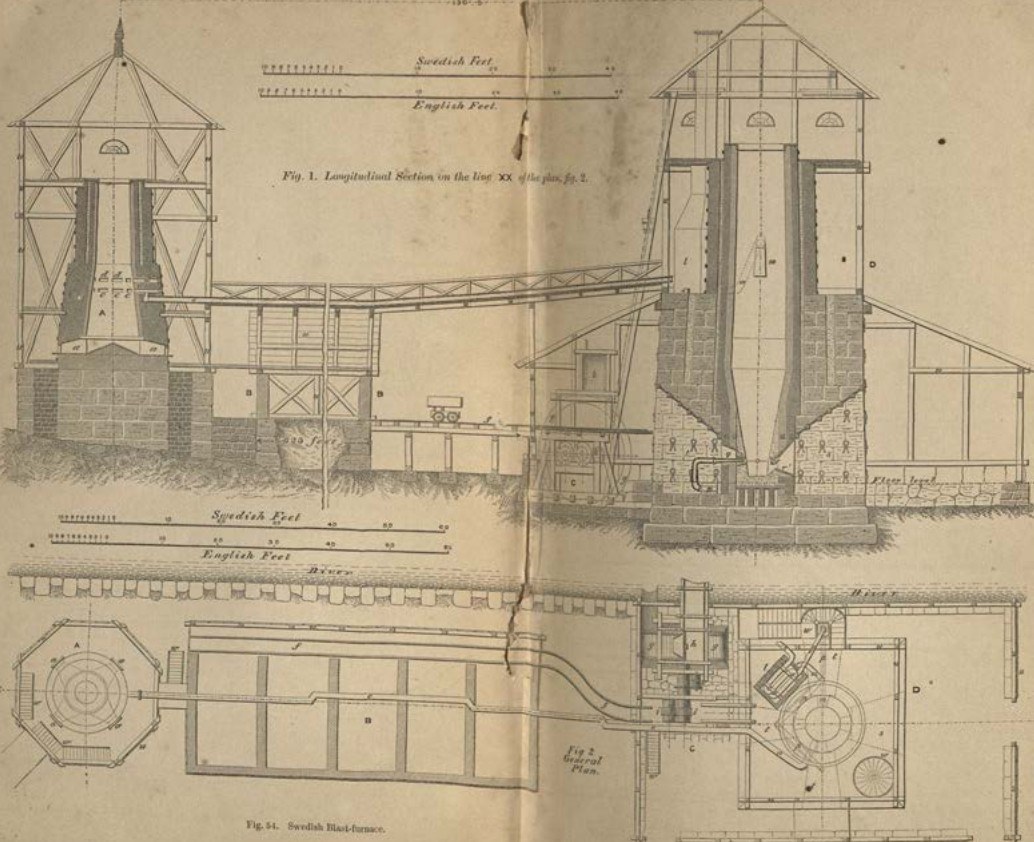


White Charcoal Pig Iron: Calcined Magnetic Ore Smelted with Charcoal in a Swedish Blast Furnace (Percy, 1864)
Sweden's bar iron began in small charcoal blast furnaces fed with roasted magnetic ore. Percy describes the Sten furnace and how the Swedes smelted: slow, with gentle blast, and with no hot blast at all for the best Dannemora iron, whose manganese-rich ore gives a white, crystalline pig made for the finery.
Result: white pig iron in iron moulds, 40-60 tons a week; about half the weight of the ore comes out as iron.
Source: John Percy, Metallurgy: Iron and Steel (1864), pp. 370-375. Picture: Percy's Fig. 54, the Swedish blast furnace.
Experto
continuous; tapped every 6 hours
Instrucciones
1
1
Calcine the ore
Calcine the ore
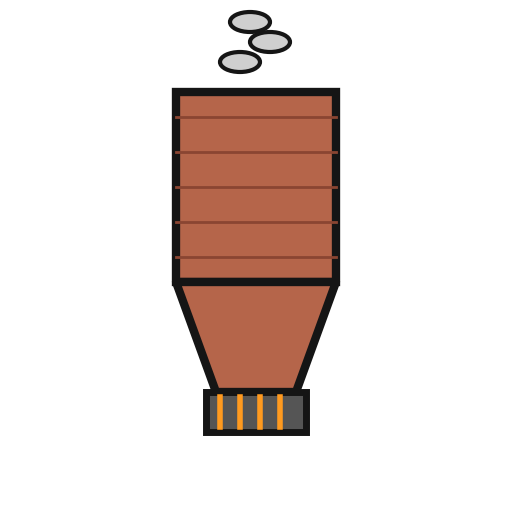
Break the magnetic ore into lumps no bigger than a double fist and roast it carefully in a mine-kiln heated by the waste gas of the furnace. The Swedes always calcine mountain ores, even without sulphur; any sulphur from pyrites is driven off.
Materiales para este paso:
 Magnetita1 ore
Herramientas necesarias:
 Horno de tostación
2
2
Crush the roasted ore
Crush the roasted ore
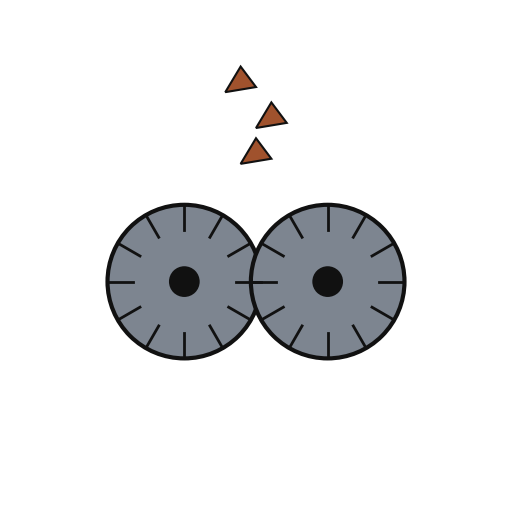
Crush the calcined ore between grooved cast-iron rolls driven by an overshot water wheel, to pieces of ¼ to 1 cubic inch.
Herramientas necesarias:
 Cilindros trituradores
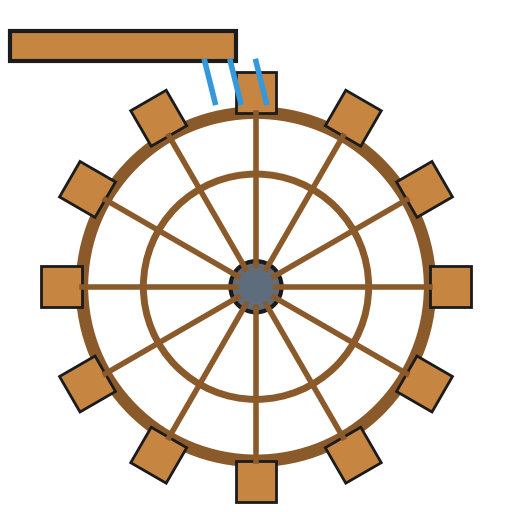 Rueda hidráulica
3
3
Prepare the furnace
Prepare the furnace
Use a charcoal blast furnace of fire-brick in a sand-filled outer shell. Stamp the lower boshes and hearth from 6 parts crushed quartz to 1 part raw fire-clay by measure round a wooden block, and dry it very slowly with a wood fire. It has three water-cooled tuyeres about 2½ inches across.
Herramientas necesarias:
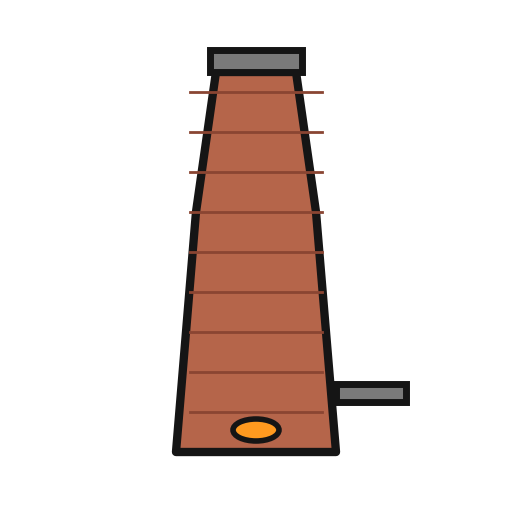 Alto horno
4
4
Set the blast
Set the blast
Blow with a water-driven blowing engine (at Sten three cylinders about 45 inches across, 45-inch stroke) at ½ to 1½ lb per square inch, more for hard charcoal. Keep the blast so slow that the furnace contents take at least 12 hours to pass through. For pig meant for bar iron the blast is warmed only to about 100 °C; the best Dannemora iron is made with cold blast.
Herramientas necesarias:
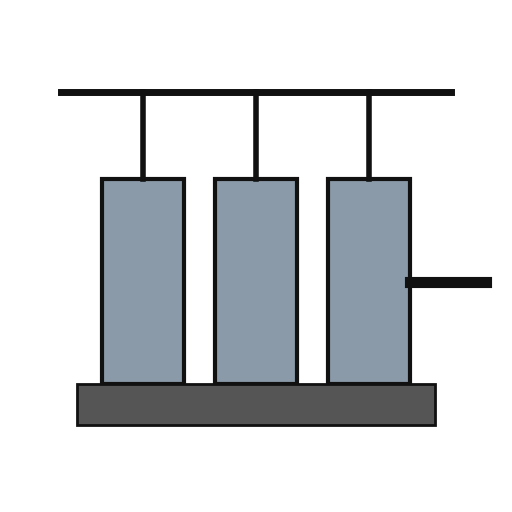 Máquina soplanteRueda hidráulica
5
5
Charge charcoal and ore
Charge charcoal and ore
Charge 30-50 cubic feet of charcoal at a time and 7-10 cwt of ore on top, half spread round the sides and half in the middle, the most siliceous ore first. Dannemora ore needs no flux (other ores take 10-15 % limestone). It takes about 0.8 to 1 ton of charcoal per ton of iron.
Materiales para este paso:
 Carbón vegetal1 0.8-1 ton per ton of iron
Herramientas necesarias:
Alto horno6
6
Tap into iron moulds
Tap into iron moulds
Tap every 6 hours and run the metal into iron moulds, not sand. A furnace makes 40-60 tons a week; the cinder runs thin and holds under 1 % iron. Pig from Dannemora ore is white and crystalline, from its manganese.
Herramientas necesarias:
 Lingotera
Materiales
2- 1 oreMarcador de posición
- 1 0.8-1 ton per ton of ironMarcador de posición
Herramientas requeridas
6- Marcador de posición
- Marcador de posición
- Marcador de posición
- Marcador de posición
- Marcador de posición
- Marcador de posición
Este plano hace
Blueprints relacionados
Estos blueprints comparten conocimiento — técnicas, materiales o principios

CC0 Dominio público
Este Blueprint se publica bajo CC0. Eres libre de copiar, modificar, distribuir y usar este trabajo para cualquier propósito, sin pedir permiso.
Apoya al Maker comprando productos a través de su Blueprint, donde gana una Comisión del Maker establecida por los vendedores, o crea una nueva iteración de este Blueprint e inclúyela como conexión en tu propio Blueprint para compartir ingresos.