Collaboration
ART
BEAUTÉ ET BIEN-ÊTRE
ARTISANAT
CULTURE ET HISTOIRE
DIVERTISSEMENT
ENVIRONNEMENT
NOURRITURE ET BOISSONS
INGÉNIERIE INVERSE
SCIENCES
SPORTS
TECHNOLOGIE
TECHNOLOGIE PORTABLE
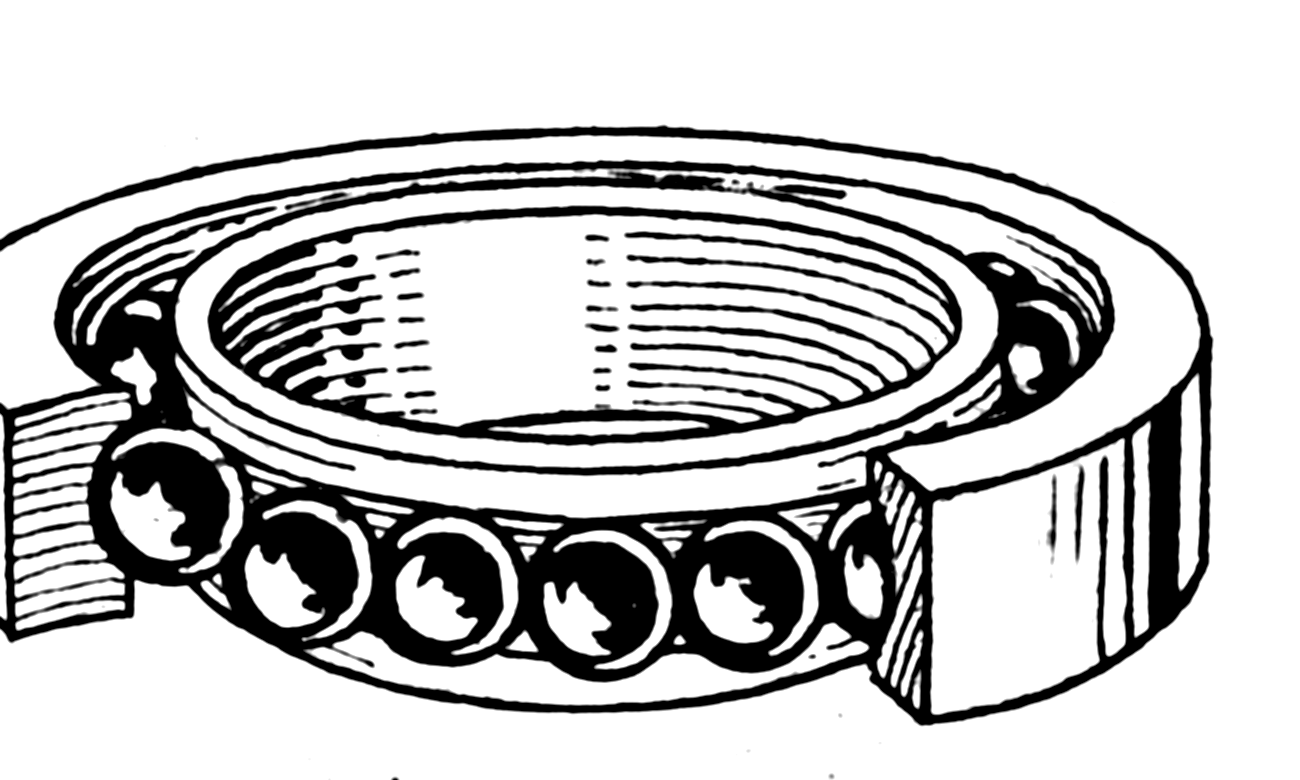


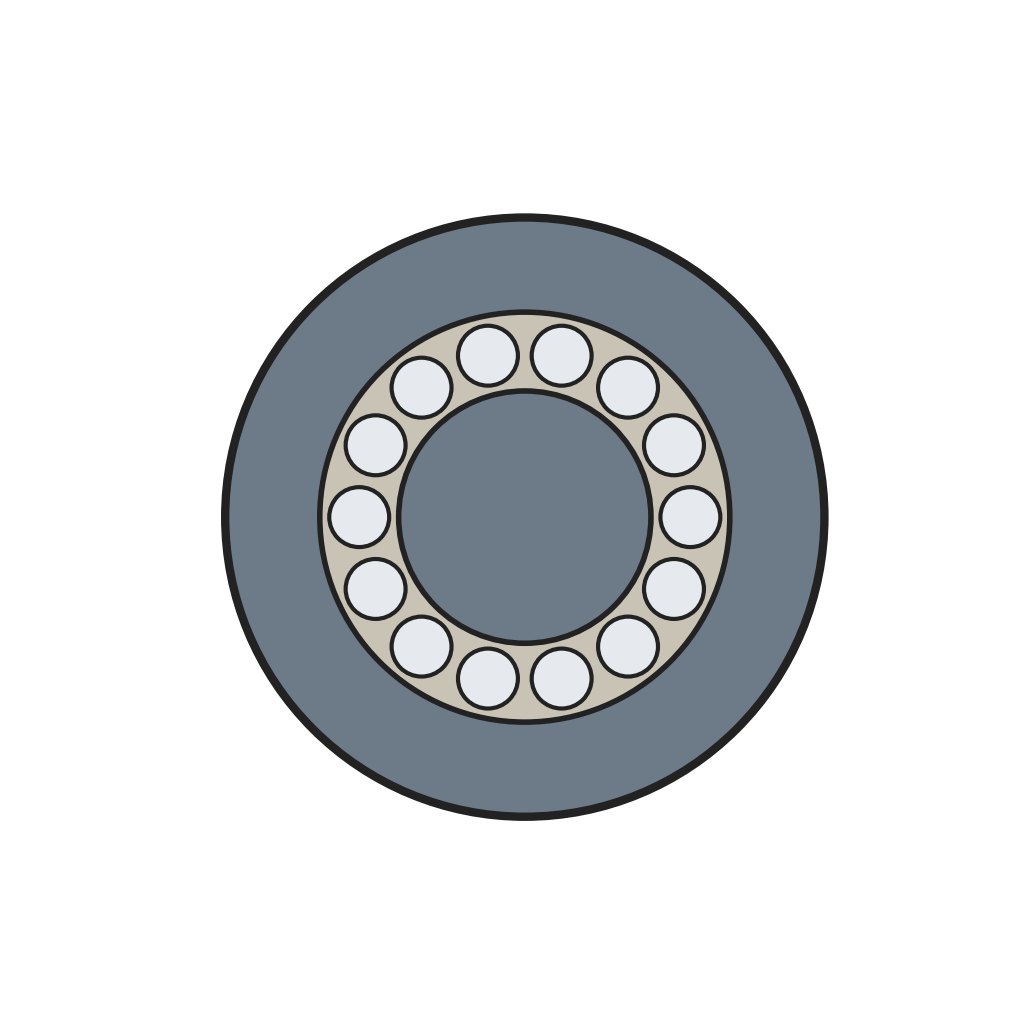
Ball Bearings: Races, Balls and Cage
A ball bearing has four parts: an outer race, an inner race, the balls that roll between them, and a cage that keeps the balls evenly spaced. Almost all of it is steel, usually 52100 (1.5% chromium, 1% carbon), which can be made very hard and tough by heat treating; 440C stainless is used where rust is a problem. The races are turned from tubing, the balls are cold headed from thick wire, both are hardened, tempered, ground and lapped to an almost mirror finish, and the cage is stamped from thin sheet. Even an inexpensive bearing's balls may be out of round by no more than 25 millionths of an inch; precision bearings allow five millionths.
Avancé
Factory process
Consignes
1
1
Turn the races
Turn the races
Cut the basic shape of both races from steel tubing on automatic lathe-like machines, leaving every dimension slightly oversize: the steel usually warps in heat treatment.
Matériaux pour cette étape :
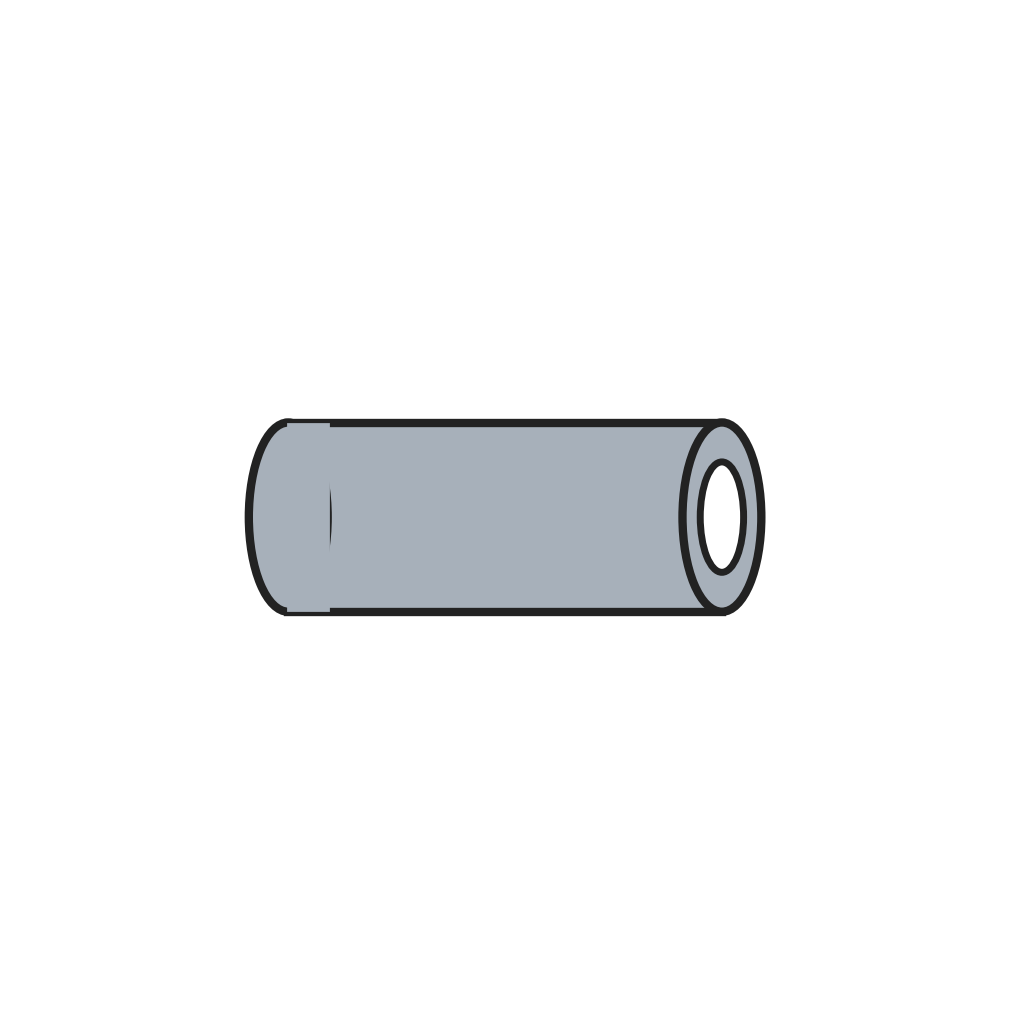 Tube en acier à roulements (52100)1 as required
Outils nécessaires :
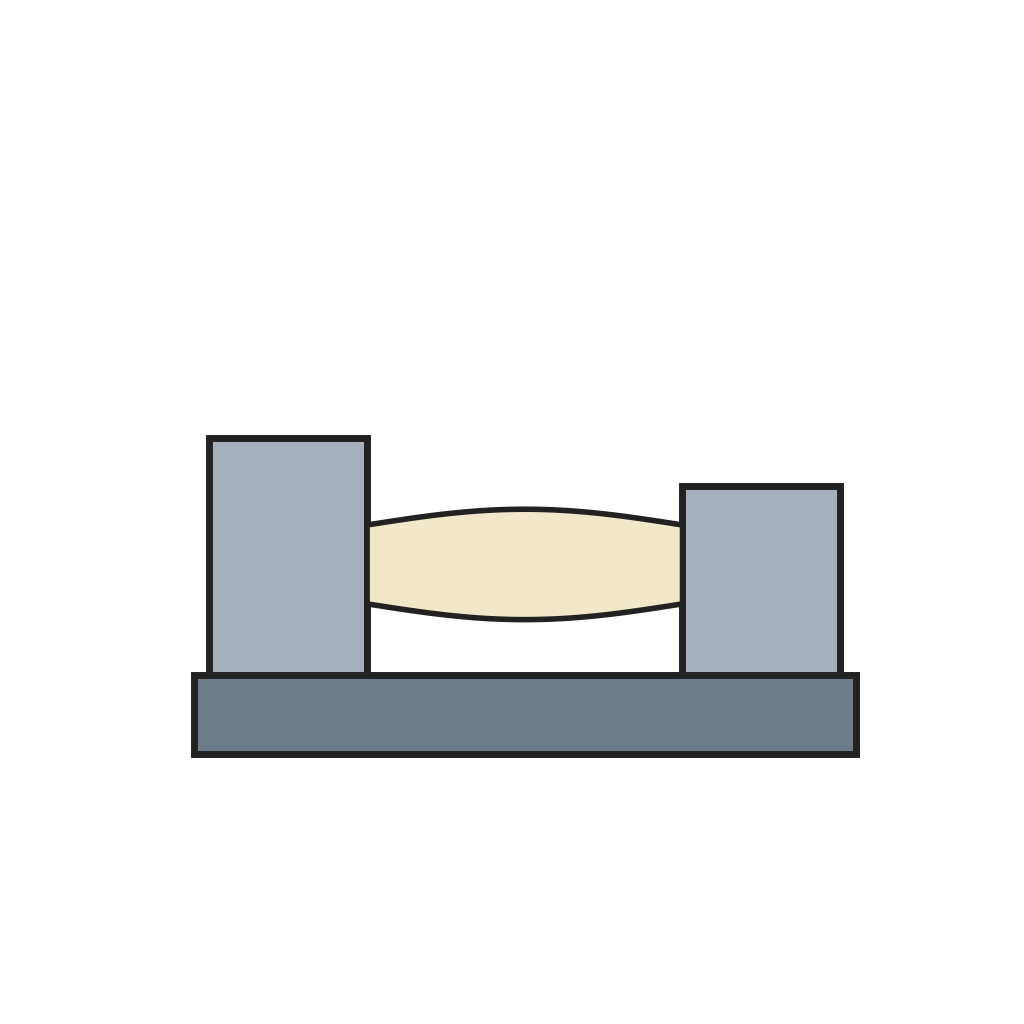 Tour automatique
2
2
Harden and temper the races
Harden and temper the races
Heat to about 843 °C (1,550 °F) for up to several hours depending on size, then quench in oil: hard but brittle. Temper at about 149 °C (300 °F) and let cool in air: hard and tough.
Outils nécessaires :
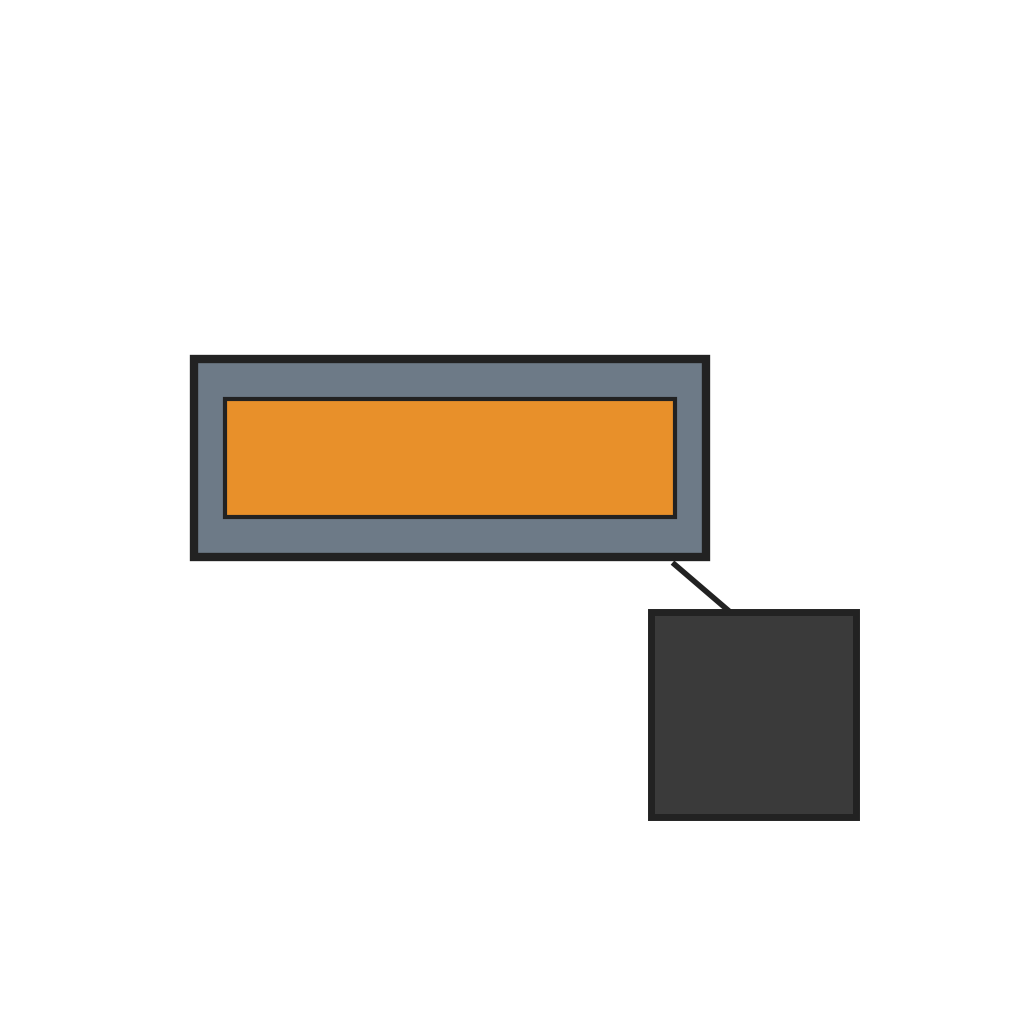 Four de trempe continu avec bain d'huile
 Four de revenu
3
3
Grind and lap the races
Grind and lap the races
The hardened steel is too hard to cut, so grind almost every surface: the fitting surfaces round, the sides flat. Grind the ball track, then lap it for several hours with a very fine abrasive slurry to an almost mirror finish.
Outils nécessaires :
 Rectifieuse de bagues de roulement
 Machine de rodage des chemins de roulement
 Pâte à roder
4
4
Cold head the balls
Cold head the balls
Feed thick wire from a roll into a machine that cuts off a short piece and smashes both ends in toward the middle between two dies, without heating. The ball comes out with a ring of "flash" round its middle.
Matériaux pour cette étape :
 Fil en acier à roulements (52100)1 as required
Outils nécessaires :
 Frappeuse à froid
5
5
Remove the flash
Remove the flash
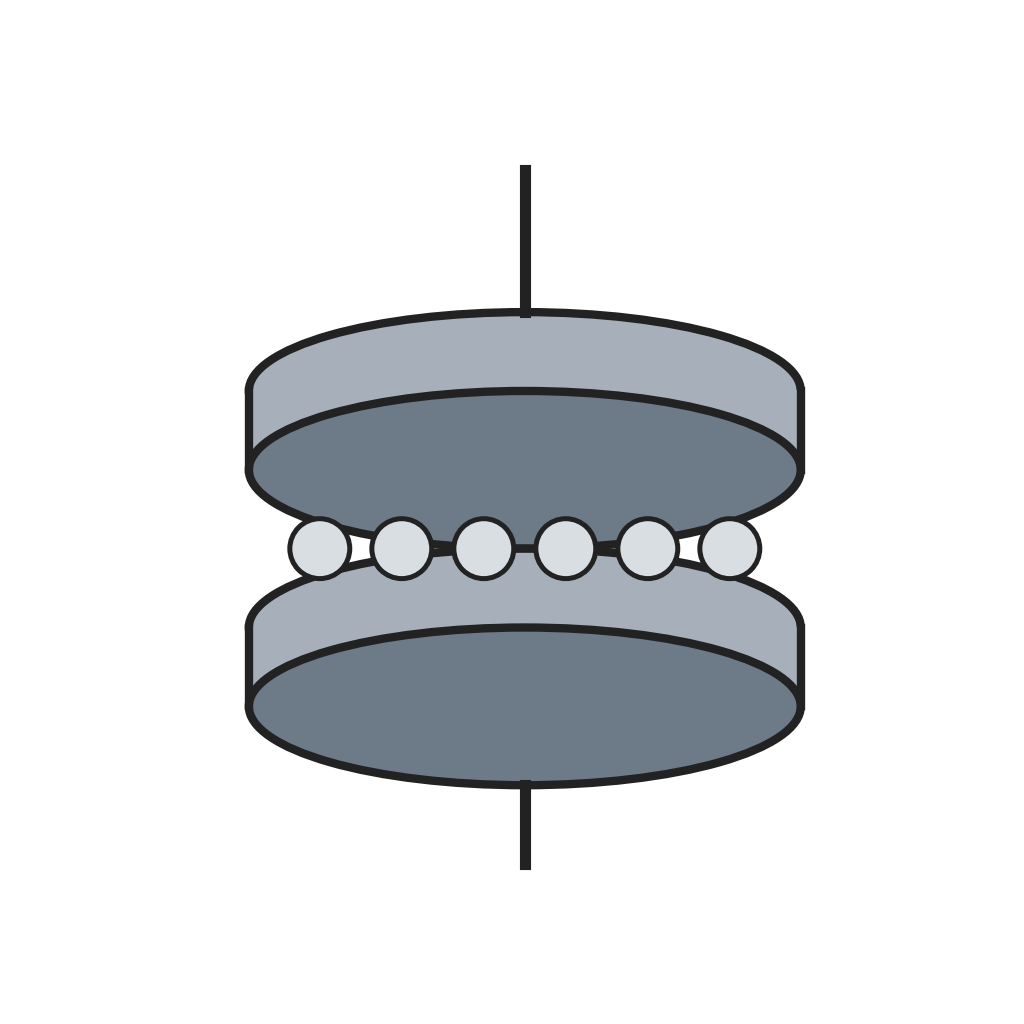
Run the balls many times round rough grooves between two cast-iron discs, one turning and one fixed, until the flash is gone and they are nearly round. Leave about 0.008 in (0.2 mm) for finishing.
Outils nécessaires :
 Machine d'ébavurage des billes
6
6
Harden, grind and lap the balls
Harden, grind and lap the balls
Heat treat and temper the balls like the races. Grind them in the same kind of disc machine with grinding wheels to within a few ten-thousandths of an inch, then lap them 8–10 hours on cast-iron wheels with lapping compound.
Outils nécessaires :
Four de trempe continu avec bain d'huileFour de revenu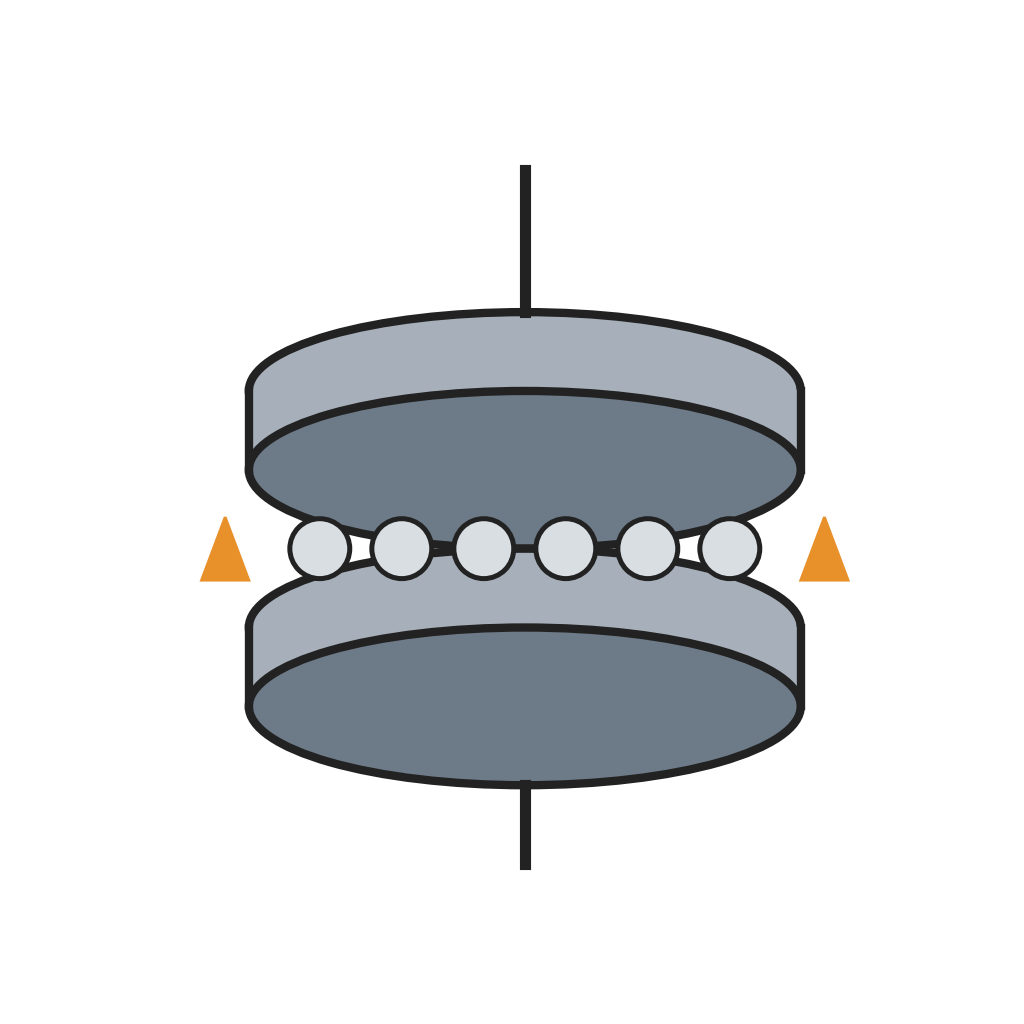 Rectifieuse à billes
 Machine de rodage des billesPâte à roder
7
7
Stamp the cage
Stamp the cage
Stamp the cage halves from thin steel sheet and bend them to shape in a die. (Plastic cages are injection moulded instead.)
Matériaux pour cette étape :
 Tôle d'acier1 as required
Outils nécessaires :
 Presse d'emboutissage
8
8
Assemble
Assemble
Put the inner race inside the outer race, pushed as far to one side as it goes, and drop the balls into the gap opposite. Centre the races and spread the balls evenly, fit the cage (steel cages riveted, plastic ones snapped in) and coat the bearing with a thin film of petroleum jelly against rust.
Matériaux pour cette étape :
 Rivets en acier1 as required
 Vaseline1 as required
Matériaux
5- 1 as requiredEspace réservé
- 1 as requiredEspace réservé
- 1 as requiredEspace réservé
- 1 as requiredEspace réservé
- 1 as requiredEspace réservé
Outils requis
11- Espace réservé
- Espace réservé
- Espace réservé
- Espace réservé
- Espace réservé
- Espace réservé
- Espace réservé
- Espace réservé
- Espace réservé
- Espace réservé
- Espace réservé


Blueprints liés
Ces blueprints partagent des connaissances — techniques, matériaux ou principes
CC0 Domaine public
Ce blueprint est publié sous CC0. Vous êtes libre de copier, modifier, distribuer et utiliser ce travail pour tout usage, sans demander la permission.
Soutenez le Maker en achetant des produits via son Blueprint où il perçoit une Commission Maker définie par les Vendeurs, ou créez une nouvelle itération de ce Blueprint et incluez-le comme connexion dans votre propre Blueprint pour partager les revenus.