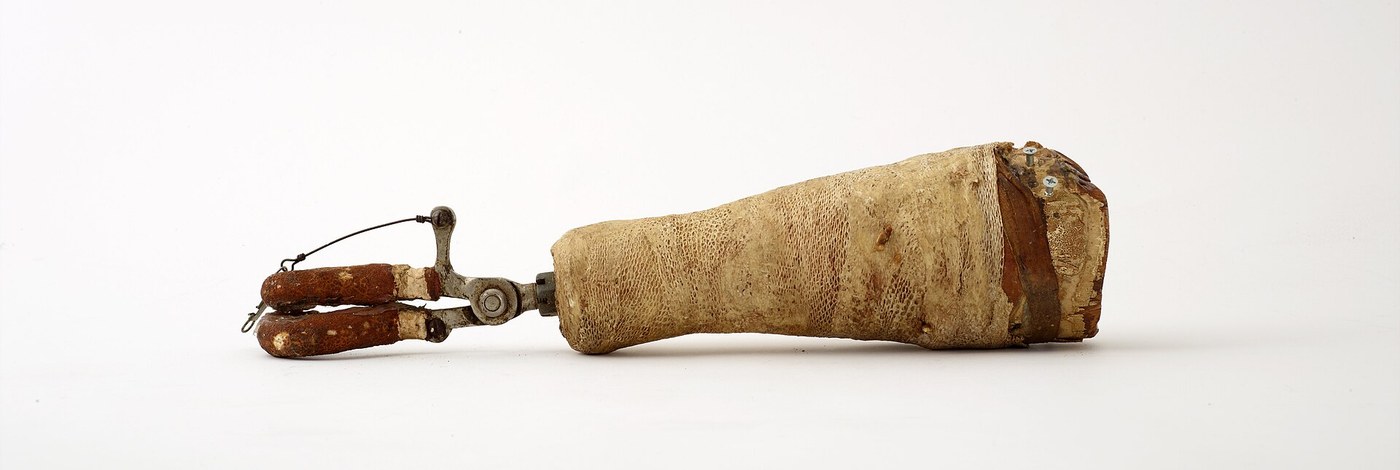


The Body-Powered Prosthetic Hand
A prosthetic hand needs a power source and a control signal. The obvious answer is a motor and a switch, and for a century the better answer has been neither.
A body-powered hand takes both from a movement the wearer still has. A harness across the shoulders is anchored so that reaching forward with the opposite shoulder tensions a cable, and that cable runs down the limb to the terminal device. Shrug or reach, and the hand operates. The muscle supplies the force, and the amount of reach supplies the command.
The consequence is the property no motorised hand has matched: the wearer feels the grip through the cable. Tension in the harness is proportional to force at the fingers, so the shoulder reports back how hard the object is being held — a crude but genuine sense of touch, arriving through the skin rather than the eyes.
The second design choice is equally counter-intuitive. Most such devices are voluntary-opening: rubber bands hold them shut, and pulling the cable opens them. So holding something requires no effort at all, and grip strength is set by how many bands are fitted. Effort is spent letting go, which is the rarer action.
No batteries, no electronics, and it works in the rain.
Consignes
Find a movement that is free to spare
Find a movement that is free to spare
Sit still and, without moving your arms, protract one shoulder — reach it forward — and measure how far a point on that shoulder travels. Then measure a shrug.
Expect a useful several centimetres of travel from each.
Now check that you can do it while holding your arm in various positions.
You are auditing for a motion that is independent of the task. A control input that is only available when the arm is in one position is useless, which rules out most of the obvious candidates.
Outils nécessaires :
 Mètre ruban
Route a cable so it survives a moving joint
Route a cable so it survives a moving joint
Build a rig with a cable in a flexible housing running past a hinge. Operate it with the hinge straight, then bent.
Expect the effective cable length to change as the joint moves, so the device partly operates itself when you bend the elbow.
Then reroute the housing so it crosses the joint close to the pivot and try again.
Expect much less interaction.
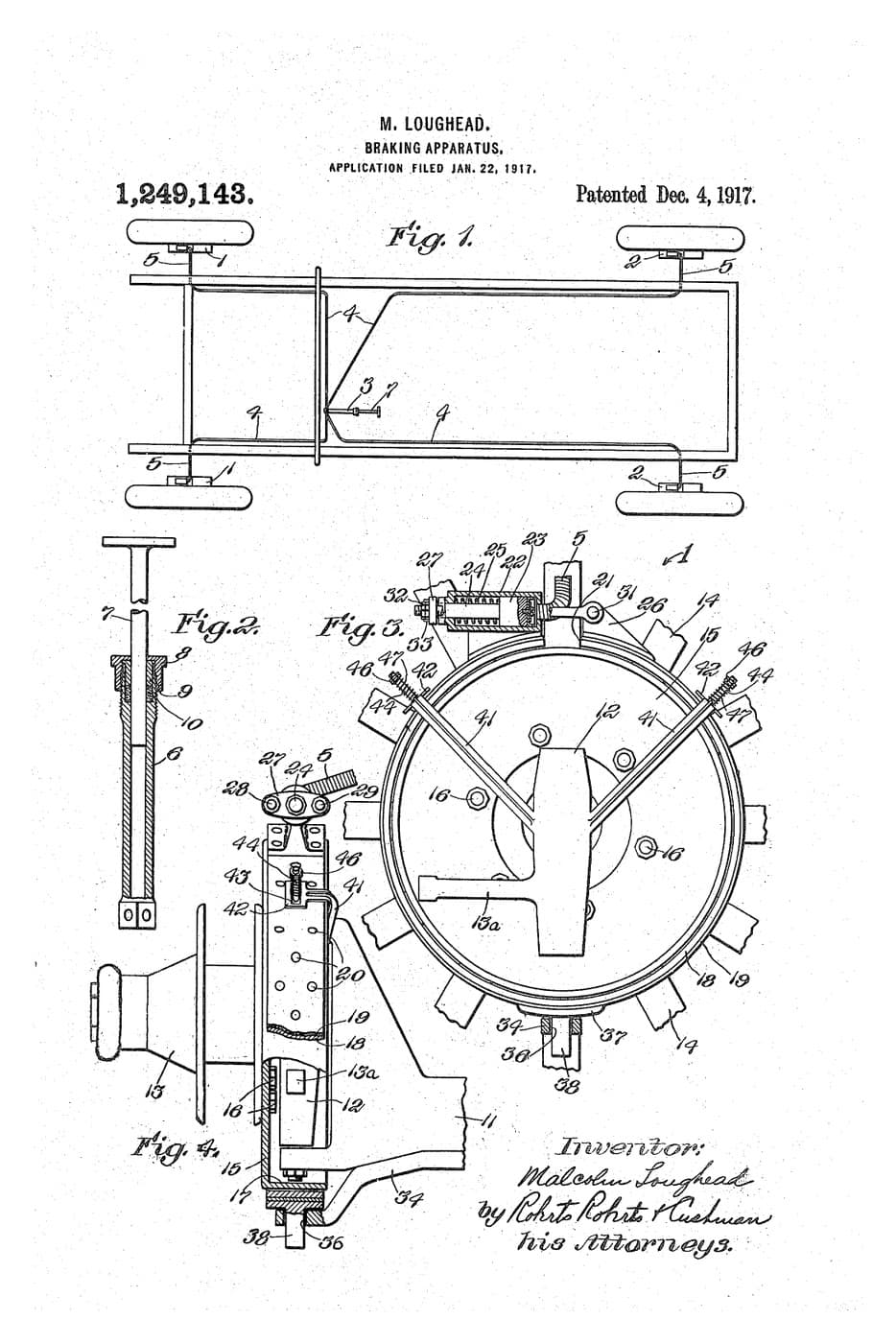
This is exactly the problem Loughead's hydraulic brake solved with a flexible hose: a control that crosses a moving joint must be routed so the motion does not become an input. Get it wrong and the hand opens whenever the elbow bends.
Matériaux pour cette étape :
 Fil d'acier galvanisé2 m
 Tube en silicone1 m
Build voluntary-opening and feel the difference
Build voluntary-opening and feel the difference
Make a simple two-finger gripper. First arrange it voluntary-closing: springs hold it open, the cable closes it. Hold an object for two minutes.
Now reverse it to voluntary-opening: bands hold it shut, the cable opens it. Hold the same object for two minutes.
Compare the fatigue honestly.
Expect voluntary-opening to be far less tiring, because holding — which you do most of the day — costs nothing.
Then note the trade you accepted: you can no longer vary grip force at will. It is whatever the bands provide.
Set grip strength by counting bands
Set grip strength by counting bands
Add rubber bands one at a time and, for each count, measure the force needed to open the device and the force it exerts on a scale.
Plot both against band count.
Expect the two to rise together — a stronger grip is a stronger pull to release.
That plot is the fitting decision. A user who needs to hold heavy tools accepts a tiring release; a user handling light objects all day fits fewer bands.
There is no setting that is simply better, and the right answer depends on the day's work — which is why bands are added and removed rather than fixed.
Outils nécessaires :
 Balance de cuisine numérique
Prove the cable carries information back
Prove the cable carries information back
Blindfolded, have someone place soft and hard objects in the gripper while you operate it, and try to identify which is which from the harness alone.
Expect surprising accuracy.
The cable is bidirectional: you pull it, and what happens at the far end changes the tension you feel.
This is proprioceptive feedback, and it is the reason many experienced users prefer a body-powered hand to a far more sophisticated myoelectric one. A motorised hand must be watched, because it reports nothing; a cable-driven one can be used without looking. Feeling beats function more often than designers expect.
History & Context
History & Context
Wars drove it, repeatedly. Cable-and-harness prostheses developed sharply after each of the twentieth century's major conflicts, when large numbers of young amputees needed to return to work rather than be retired. The split hook — deliberately not hand-shaped — dates from that period and is still in use, because it grips small objects better than fingers do and lets the user see what they are holding.
Function and appearance pull in opposite directions. A cosmetic hand looks right and does little. A hook works well and is stared at. Users choose differently, and often own both — a working device for the workshop and a cosmetic one for a wedding. The most functional design is not automatically the one someone will wear, which is a lesson assistive technology has had to learn repeatedly.
Myoelectric hands did not simply supersede it. Sensing muscle signals through the skin to drive motors gives more grip patterns and needs no harness. It also costs far more, needs charging, dislikes water and sweat, is heavier, and — the decisive point — gives no feedback. Rejection rates for advanced prosthetic hands are stubbornly high, and body-powered devices remain in daily use because they are robust, repairable, and felt.
It is a Bowden cable, like a bicycle brake. Inner wire in an outer housing, force transmitted along a curved path. The same component appears in brakes, gear shifters, throttles and aircraft controls, and the same routing rule from step 2 governs all of them.
Honest limits. It needs an intact opposite shoulder and enough excursion, so it does not suit every amputation level. The harness is worn against the skin all day and causes soreness. One cable means one function — grip — so a wrist must be positioned by hand. And it is visibly a device, which for many people is the cost that outweighs the engineering.
Matériaux
2- Espace réservé
- Espace réservé
Outils requis
2- 1 vendor sell this, none ship to you yetEspace réservé
- Espace réservé
Matériaux des Blueprints connectés
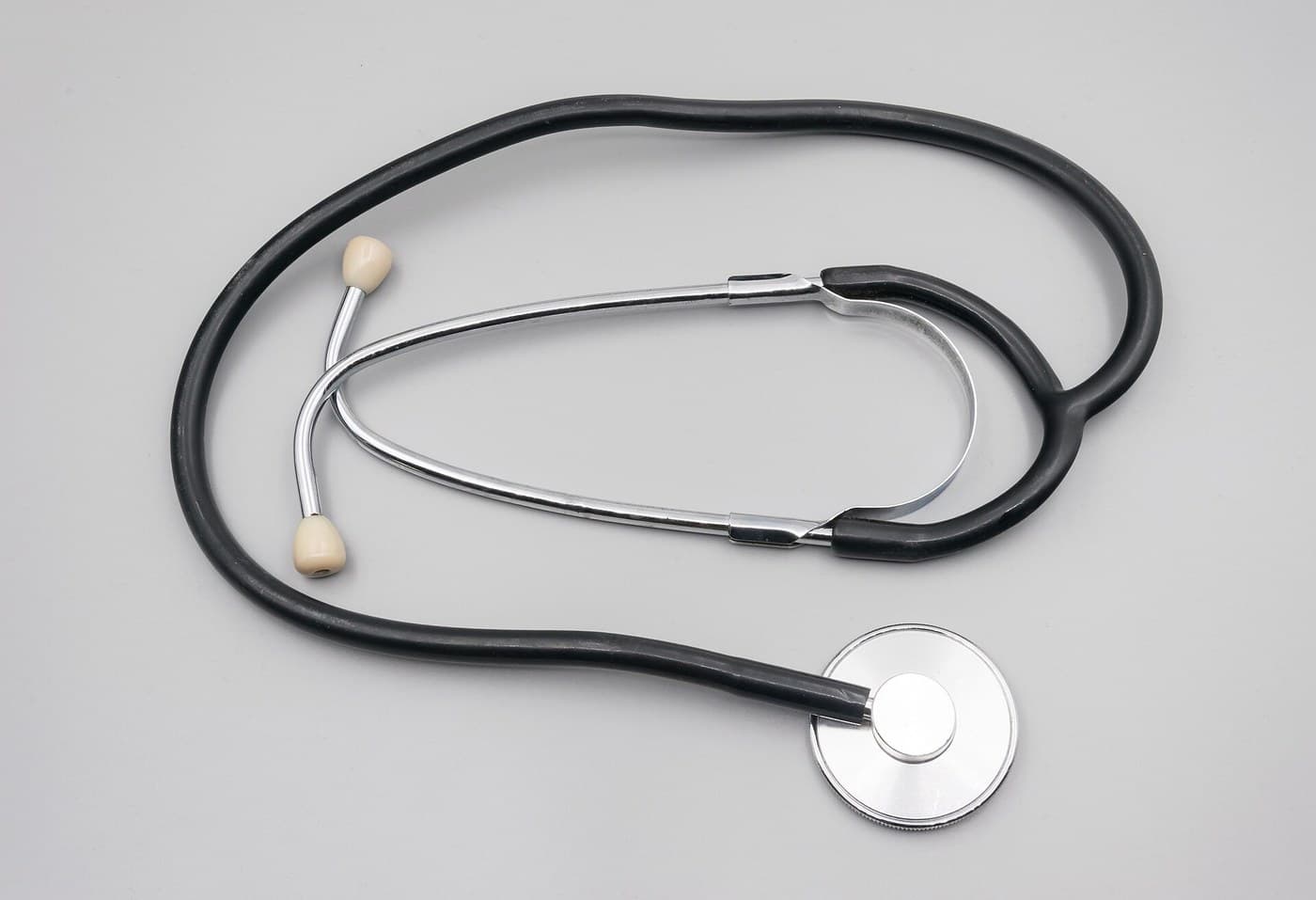

Blueprints liés
Ces blueprints partagent des connaissances — techniques, matériaux ou principes
CC0 Domaine public
Ce blueprint est publié sous CC0. Vous êtes libre de copier, modifier, distribuer et utiliser ce travail pour tout usage, sans demander la permission.
Soutenez le Maker en achetant des produits via son Blueprint où il perçoit une Commission Maker définie par les Vendeurs, ou créez une nouvelle itération de ce Blueprint et incluez-le comme connexion dans votre propre Blueprint pour partager les revenus.