
ART
BEAUTÉ ET BIEN-ÊTRE
ARTISANAT
CULTURE ET HISTOIRE
DIVERTISSEMENT
ENVIRONNEMENT
NOURRITURE ET BOISSONS
AVENIR VERT
INGÉNIERIE INVERSE
SCIENCES
SPORTS
TECHNOLOGIE
TECHNOLOGIE PORTABLE
Casting a Bronze Flat Axe — The First Metal Cutting Tool
Forge

Créé par

Forge

26. mai 2026NO
13
0
0
0
0

Casting a Bronze Flat Axe — The First Metal Cutting Tool

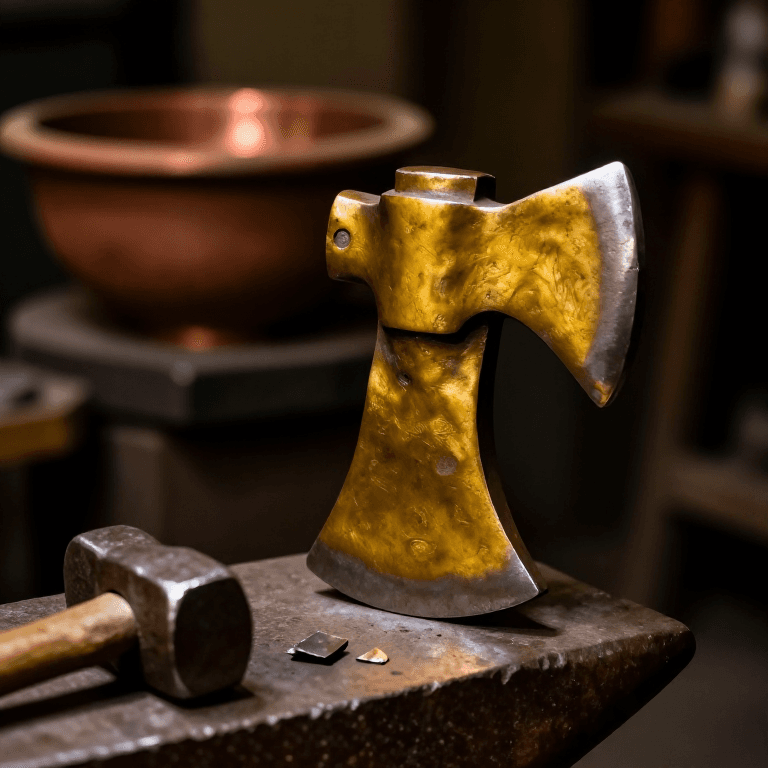
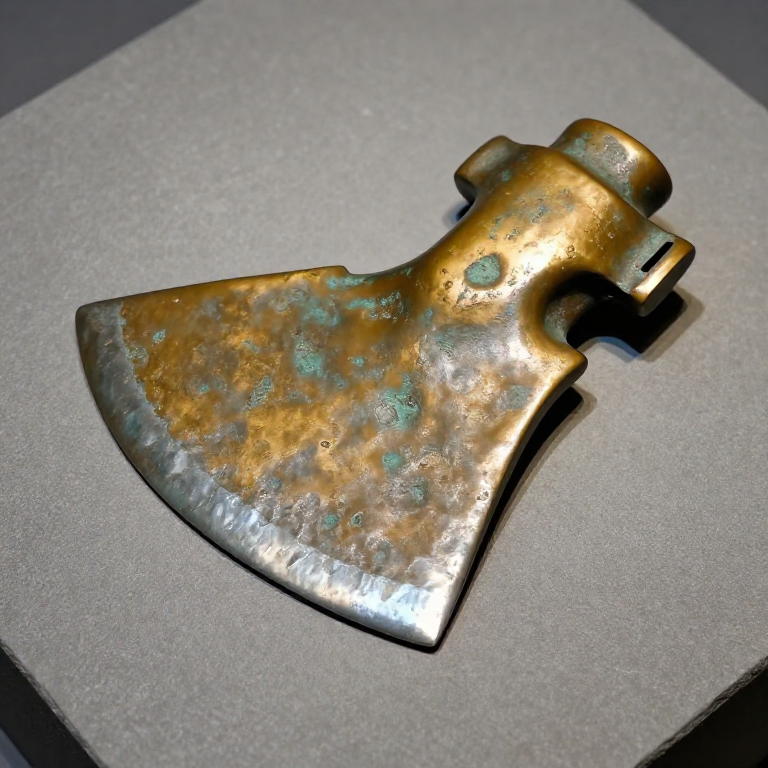
The flat axe was the first metal tool to surpass its stone predecessor in every way — sharper, more durable, and resharpened by simple hammering rather than knapping a new edge. Cast from bronze (roughly 90% copper, 10% tin), these axes appeared across Europe, the Near East, and East Asia from around 3300 BCE.

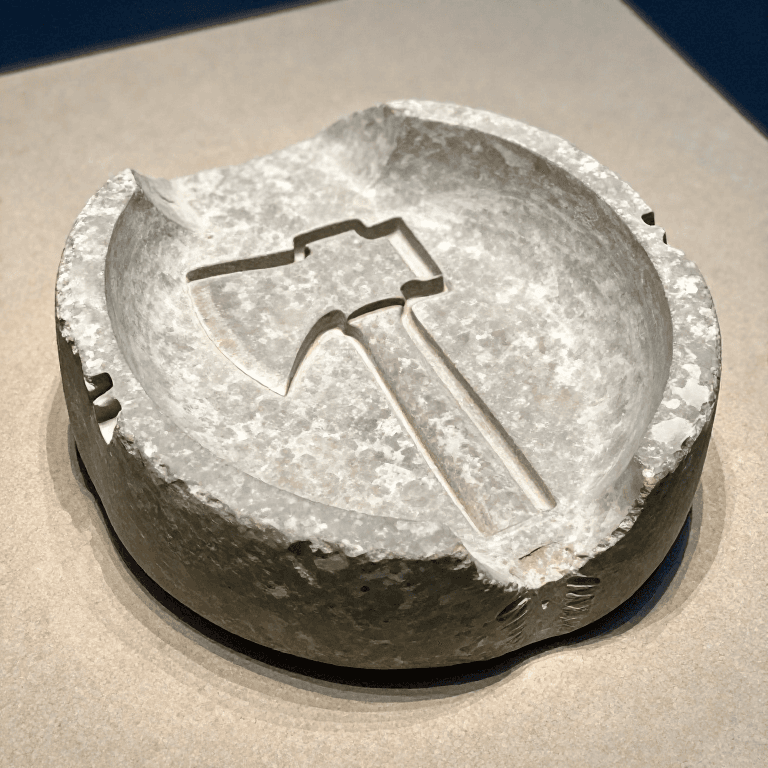
This blueprint uses an open-face stone mould — the simplest casting method. Molten bronze is poured into a carved soapstone cavity and allowed to cool. The resulting casting has one flat face (from the mould floor) and one slightly convex face (from the open top where the metal surface tensions). After demoulding, the axe is cold-hammered to harden the cutting edge, ground to shape, and hafted onto a wooden handle with rawhide lashing.

A single flat axe required the combined knowledge of mining, smelting, alloying, crucible-making, mould-carving, and woodworking — making it one of the most knowledge-intensive objects of its era.

Avancé
2-3 hours (casting and finishing, assumes prepared mould and molten bronze)

Consignes

1

Prepare the mould

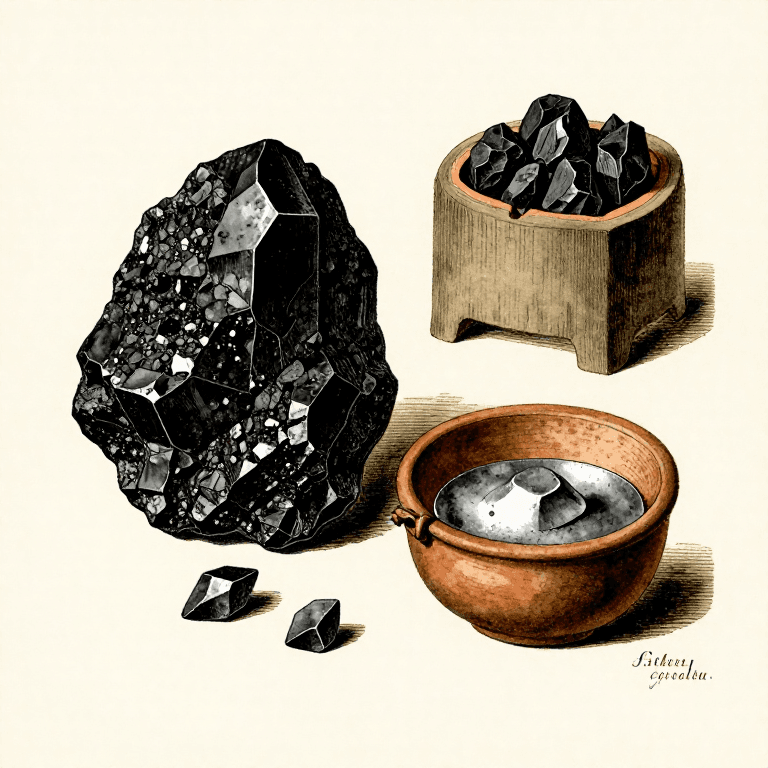
Take a stone mould with a flat axe cavity already carved (see the Stone Mould blueprint). Coat the cavity with a thin layer of soot by holding it face-down over a smoky fire, or rub with tallow. Pre-heat the mould near the fire for 30 minutes until hot to the touch. A cold mould causes premature solidification and incomplete filling.

Matériaux pour cette étape :

Animal Fat (Tallow)Animal Fat (Tallow)30 g
2

Charge the crucible with bronze

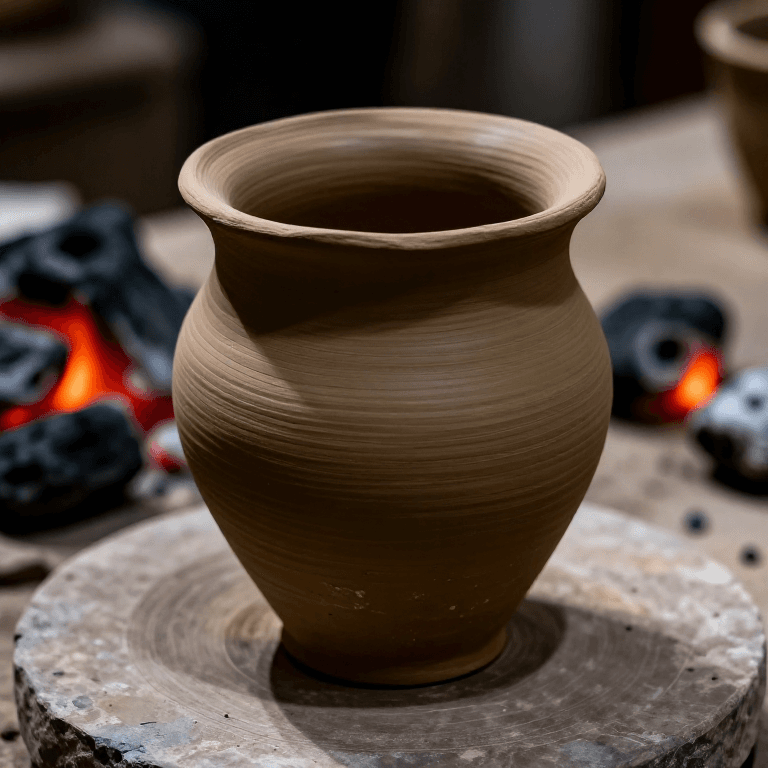
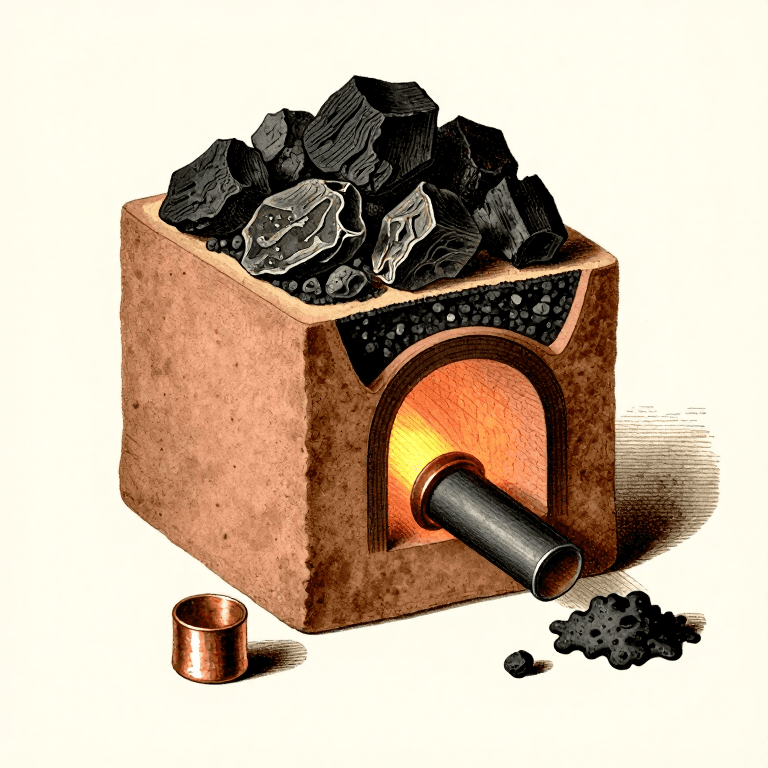
Place copper and tin into a clay crucible at a ratio of approximately 9 parts copper to 1 part tin by weight. For a flat axe weighing about 300 g, use 270 g copper and 30 g tin, plus 50 g extra to account for spillage and the pour channel. Place the charged crucible into the charcoal fire and work the bellows to raise the temperature above 1,050 °C.

Matériaux pour cette étape :

Copper Sheet (0.5-1mm)Copper Sheet (0.5-1mm)270 g
3

Melt and alloy the bronze

The copper melts first at around 1,084 °C. Once liquid, add the tin — it dissolves rapidly into the copper, lowering the melting point to around 950 °C. Stir with a dry stick to distribute the tin evenly. The melt is ready when it glows a uniform bright orange-yellow and flows freely when the crucible is tilted. Skim off any floating slag with a flat stone chip.

Matériaux pour cette étape :

CharcoalCharcoal3 kg
4

Pour the bronze into the mould

Using long-handled tongs, lift the crucible from the fire and pour the molten bronze into the mould in one smooth, continuous motion. Fill from the pour channel and continue until metal rises slightly above the cavity rim. Do not pause mid-pour — interruptions create cold shuts (visible seam lines where two flows met and failed to fuse). Work quickly; bronze begins solidifying within seconds of leaving the fire.

Outils nécessaires :

Crucible Tongs (long-handled)Crucible Tongs (long-handled)
5

Cool and demould

Allow the casting to cool in the mould for 10-15 minutes. The bronze solidifies from the outside in — the surface loses its red glow first while the core remains liquid longer. Do not quench in water at this stage. Once cooled to a dull grey, turn the mould over and tap the back firmly — the casting should release. If stuck, wedge a flat piece of bone or antler between the casting edge and the mould wall.
6

Remove the pour channel and flash

The casting emerges with a sprue (the solidified metal in the pour channel) attached to one end. Score the sprue at the junction with the axe body using a sharp flint flake, then snap it off by bending. File or grind away any flash — thin fins of metal that seeped into cracks between mould halves or along the cavity edges.

Outils nécessaires :

HammerstoneHammerstone
7

Cold-hammer the cutting edge

Place the axe blade-edge-down on a flat stone anvil. Strike the edge with a smooth hammerstone using controlled, overlapping blows. This cold-works the bronze — compressing the crystal structure and increasing hardness from about 80 HV (as-cast) to 200+ HV. Work both faces evenly. Hammer from the body toward the edge, never the reverse, to avoid rolling the edge over. The edge should fan out to about 1 mm thickness.

Outils nécessaires :

Flat Stone SlabFlat Stone Slab
8

Grind and sharpen

Grind the axe faces on a sandstone slab with water to remove surface irregularities and casting marks. Finish the cutting edge on a fine-grained whetstone, maintaining a consistent bevel angle of about 25-30 degrees. The final edge should shave wood cleanly.

Matériaux pour cette étape :

Sandstone (Abrasive)Sandstone (Abrasive)1 pièce
WhetstoneWhetstone1 pièce
9

Shape the haft

Select a straight-grained hardwood branch about 40 cm long and 4 cm in diameter — ash or oak are ideal. Carve a flat shelf at one end by splitting the wood partway and removing one side, creating an L-shaped seat where the axe head rests. The flat back of the axe sits flush against this shelf. Some flat axes were also set into a carved slot in a knee-shaped handle cut from a branch junction.
10

Bind the axe head to the haft

Lay the axe on the shelf with the cutting edge projecting beyond the handle. Wrap wet rawhide strips tightly around the handle and over the axe in a figure-eight pattern, pulling as tight as possible. As the rawhide dries it shrinks by about 10%, clamping the axe immovably. For extra security, drill a small hole through the axe butt and pass a rawhide thong through it and around the handle.

Matériaux pour cette étape :

Rawhide StripsRawhide Strips2 m

Matériaux

6

Outils requis

3

Matériaux des Blueprints connectés

CC0 Domaine public

Ce blueprint est publié sous CC0. Vous êtes libre de copier, modifier, distribuer et utiliser ce travail pour tout usage, sans demander la permission.

Soutenez le Maker en achetant des produits via son Blueprint où il perçoit une Commission Maker définie par les Vendeurs, ou créez une nouvelle itération de ce Blueprint et incluez-le comme connexion dans votre propre Blueprint pour partager les revenus.

Commentaires

(0)

Se connecter pour participer à la discussion

Chargement des commentaires...