ART
BEAUTÉ ET BIEN-ÊTRE
ARTISANAT
CULTURE ET HISTOIRE
DIVERTISSEMENT
ENVIRONNEMENT
NOURRITURE ET BOISSONS
INGÉNIERIE INVERSE
SCIENCES
SPORTS
TECHNOLOGIE
TECHNOLOGIE PORTABLE
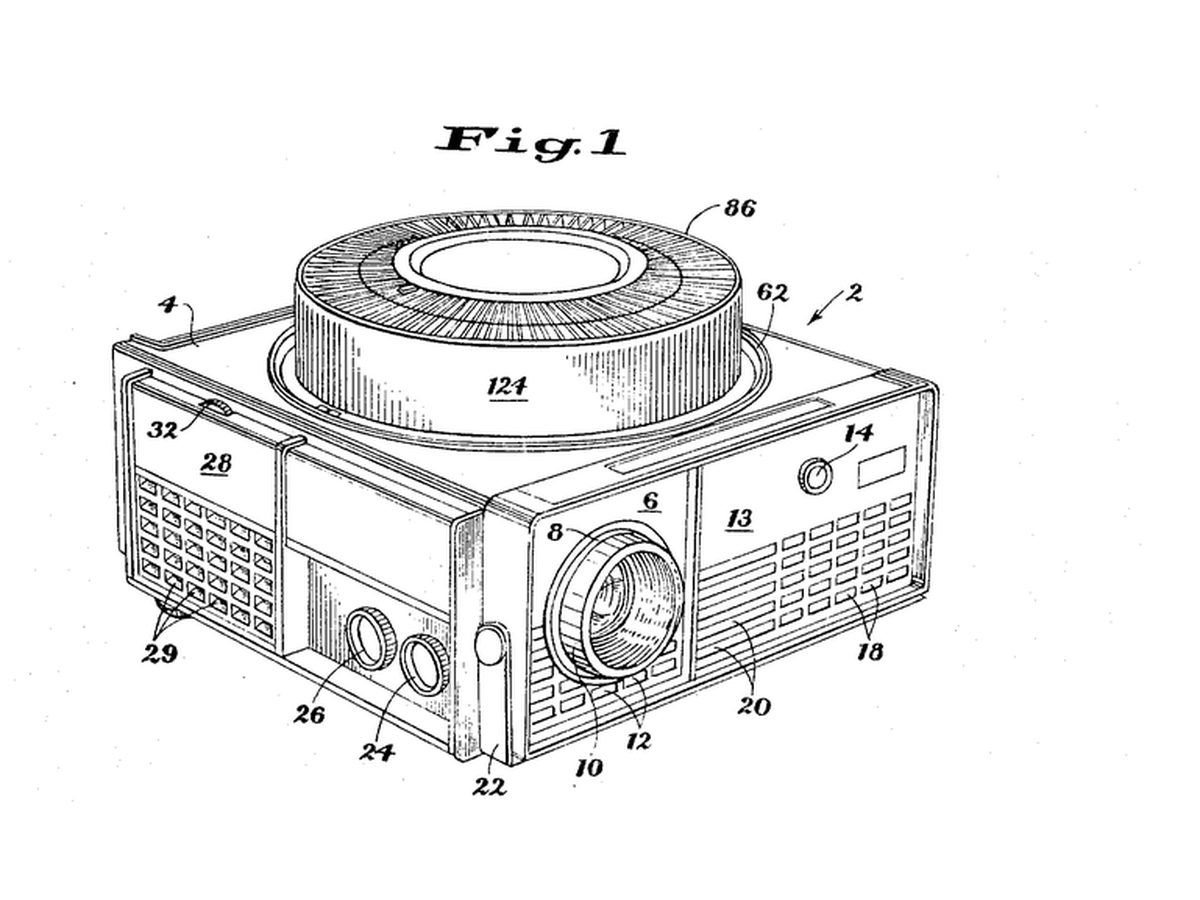


Rotary Gravity Slide Projector
Straight slide magazines pushed slides sideways and jammed. Kodak's round tray, designed by David E. Hansen, stood the slides on edge in a ring above the projector: each one fell into the gate by gravity when it reached the drop point and was lifted back when the tray moved on, so nothing had to push a slide sideways.
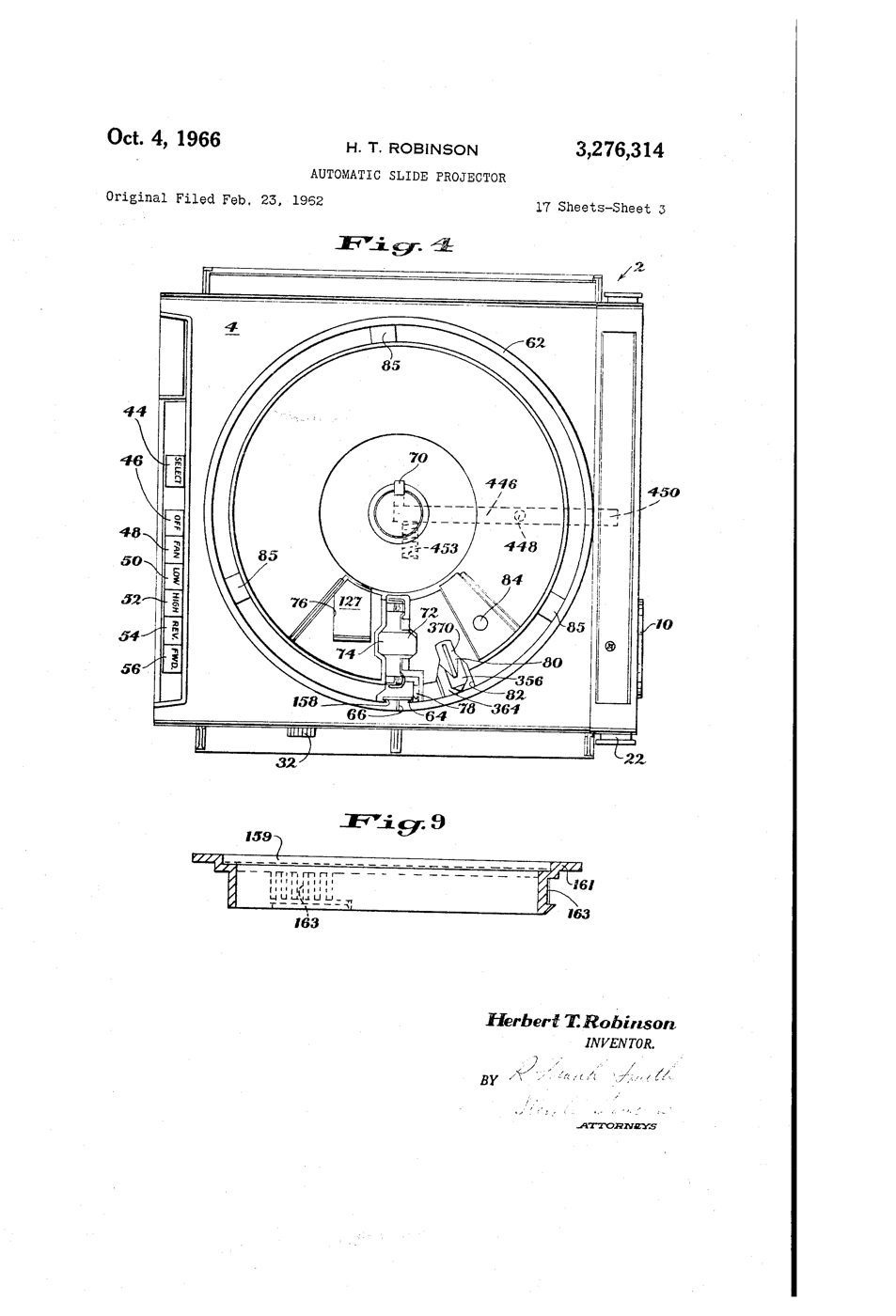
**US 3,276,314**, "Automatic slide projector", Herbert T. Robinson, assigned to Eastman Kodak, filed 1. June 1965 (continuing an application of 23. February 1962), granted 4. October 1966: a tray of two relatively movable portions with a passageway "through which the slides are adapted to pass substantially vertically, one at a time, in coordination with relative movement of the portions".
**You build the mechanism**: a 12-slot tray turned by a stepper, a servo that lifts each slide back, a torch and a lens to project it.
Avancé
6 hours
Consignes
1
1
Make twelve slides
Make twelve slides
Cut 50 x 50 mm frames from black card with a 36 x 24 mm window. Draw or print images on transparency film and tape one behind each window. Number them 0 to 11.
Matériaux pour cette étape :
 Carton noir2 feuilles
 Film transparent pour jet d'encre2 feuilles
Outils nécessaires :
 Cutter de précision
 Marqueur permanent
 Règle
Règle2
2
Build the tray
Build the tray
Glue two 240 mm foam-board discs together. Cut 12 radial slots 4 mm wide and 55 mm long, 30 degrees apart, open underneath so a slide can fall through. Glue a hub on the motor shaft and the tray on the hub.
Matériaux pour cette étape :
 Carton-plume pour maquettes2 feuilles
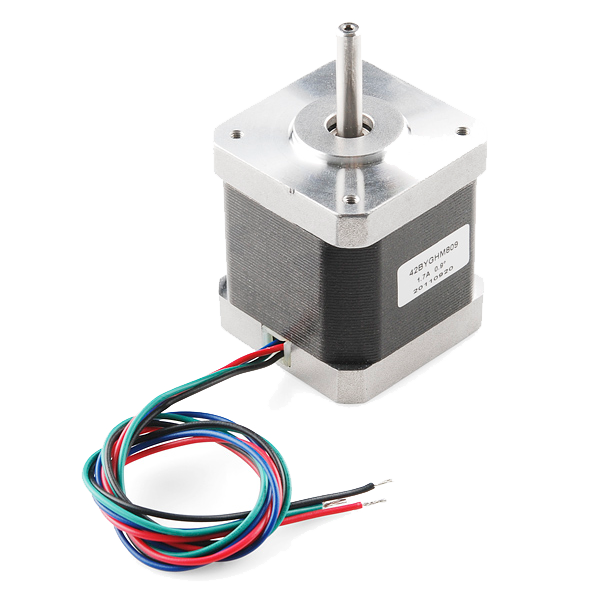 Stepper Motor - 68 oz.in (400 steps/rev)1 pièce
Outils nécessaires :
Cutter de précision Pistolet à colle chaude
3
3
Base, gate and lift
Base, gate and lift
On a plywood base cut one drop slot under the tray. Below it, build a foam-board gate channel that holds a dropped slide upright between the torch and a 100 mm convex lens. Mount the servo so its arm, raised, pushes the slide back up into the tray.
Matériaux pour cette étape :
 Panneau de contreplaqué1 pièce
 Micromoteur servo SG90 (5 pièces)1 paquet
 Jeu de lentilles convergentes1 jeu
Outils nécessaires :
 Scie égoïnePistolet à colle chaude
 Lampe d'inspection à LED
4
4
Wire and flash
Wire and flash
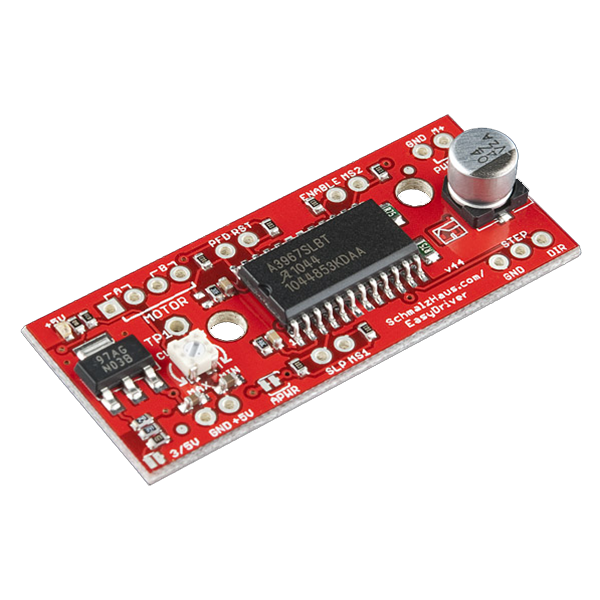
EasyDriver STEP to D3, DIR to D4, motor coils to A and B, 12 V supply to its power input, GND shared with the Uno. Servo signal D9. Button between D2 and GND. Set the EasyDriver current adjuster low - the tray is light. Turn the tray by hand so slot 0 is over the gate before powering up.
rotary_slide_tray.inocpp
Matériaux pour cette étape :
 EasyDriver Stepper Motor Driver1 pièce
 Microrupteur (à levier)1 pièce
 Jeu de câbles Dupont (mâle-femelle)1 jeu
Outils nécessaires :
 Arduino Uno R3
 Alimentation en courant continu
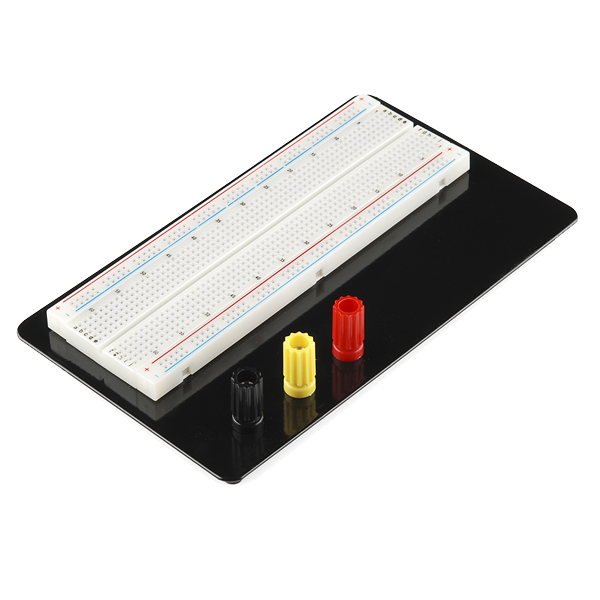 Breadboard - Classic
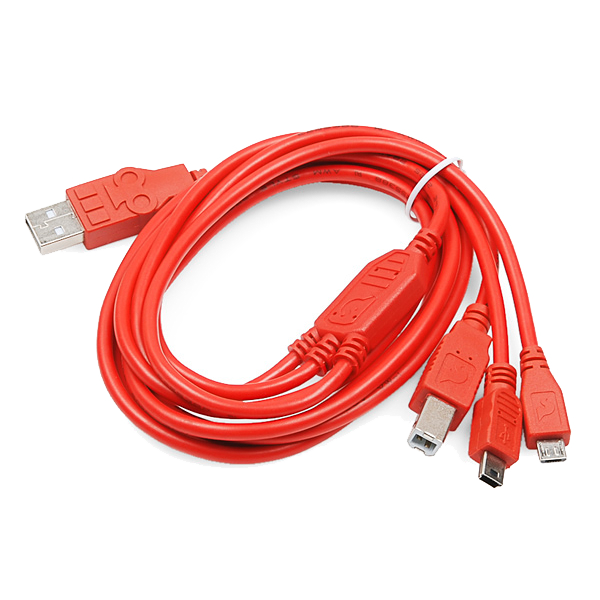 SparkFun Cerberus USB Cable - 1.8 meter
5
5
Why the steps must not drift
Why the steps must not drift
Chargement du notebook Jupyter…
6
6
Show
Show
Load the slides upside down and reversed (a projector inverts the image). Darken the room, focus the lens on a wall, and press to advance. Count misfeeds over two full turns.
Outils nécessaires :
 Mètre ruban
7
7
History & Context
History & Context
**What the patent specifies:** a projector for a tray of two relatively movable portions, slides passing substantially vertically through a passageway one at a time in step with the tray's movement. **Modern build (derived):** foam-board tray, stepper, servo lift and a torch.
Kodak made Carousel projectors from 1961 until 2004; a round tray held 80 slides. The limits: bent or thick mounts jam the gate, and the gravity drop needs the projector level.
Matériaux
10- 2 feuillesEspace réservé
- 2 feuillesEspace réservé
- 2 feuillesEspace réservé
- Stepper Motor - 68 oz.in (400 steps/rev)10 % de commission1 pièce€13.89
- 1 pièceEspace réservé
- Espace réservé
- Espace réservé
- EasyDriver Stepper Motor Driver10 % de commission1 pièce€12.55
- 1 pièceEspace réservé
- Espace réservé
Outils requis
11- Espace réservé
- Espace réservé
- Espace réservé
- Espace réservé
- Espace réservé
- Espace réservé
- 1 vendor sell this, none ship to you yetEspace réservé
- Espace réservé
- Breadboard - Classic10 % de commission€8.37
- SparkFun Cerberus USB Cable - 1.8 meter10 % de commission€5.01
- 1 vendor sell this, none ship to you yetEspace réservé
Total estimé
Ce que le maker a acheté. Les matériaux sans prix se trouvent là où vous les achetez.
Blueprints liés
Ces blueprints partagent des connaissances — techniques, matériaux ou principes

CC0 Domaine public
Ce blueprint est publié sous CC0. Vous êtes libre de copier, modifier, distribuer et utiliser ce travail pour tout usage, sans demander la permission.
Soutenez le Maker en achetant des produits via son Blueprint où il perçoit une Commission Maker définie par les Vendeurs, ou créez une nouvelle itération de ce Blueprint et incluez-le comme connexion dans votre propre Blueprint pour partager les revenus.