

Crucible Cast Steel by the Huntsman Process — Remelting Blister Steel into Flawless Ingots
Blister steel was a triumph, but it had a flaw: its carbon was uneven, rich at the surface of each bar and poor in the core. For fine springs, watch parts, and razors, smiths needed steel that was the same all the way through. In 1740 the Sheffield clockmaker Benjamin Huntsman found the answer — melt the steel completely.
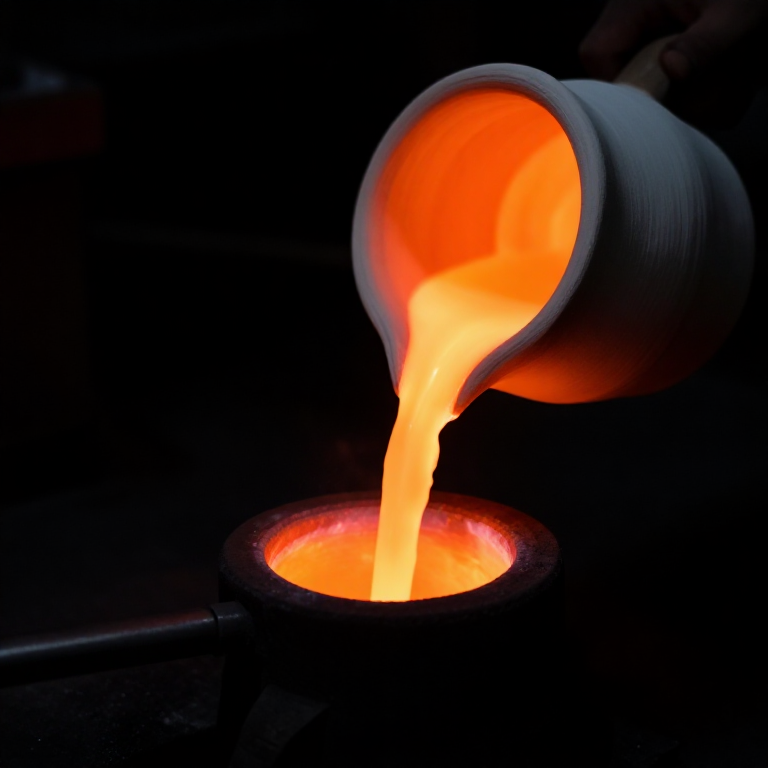
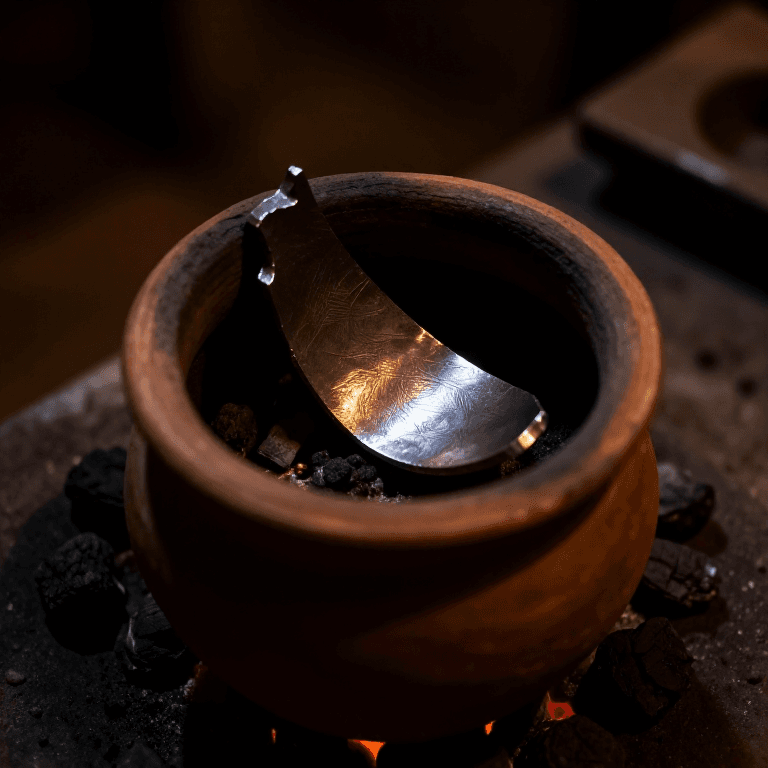
No furnace of the day could melt steel, so Huntsman built one that could. He broke blister steel into small pieces, sealed them in a covered clay crucible, and drove a coke fire hot enough — around 1600 degrees Celsius — to turn the solid steel into a clear liquid. Fully molten, the carbon spread perfectly evenly through the metal and the impurities floated off as slag. Poured into a mould, it set into a flawless ingot of cast steel.
Huntsman's crucible steel was the finest in the world and made Sheffield the steel capital of the age. The principle — melt it to make it uniform — is the same one that still underlies steelmaking today, and it sits at the very top of the iron-and-steel chain that runs from ore to coke to pig iron to wrought iron to blister steel to this.
Consignes
Understand the goal
Understand the goal
Break up the blister steel
Break up the blister steel
Matériaux pour cette étape :
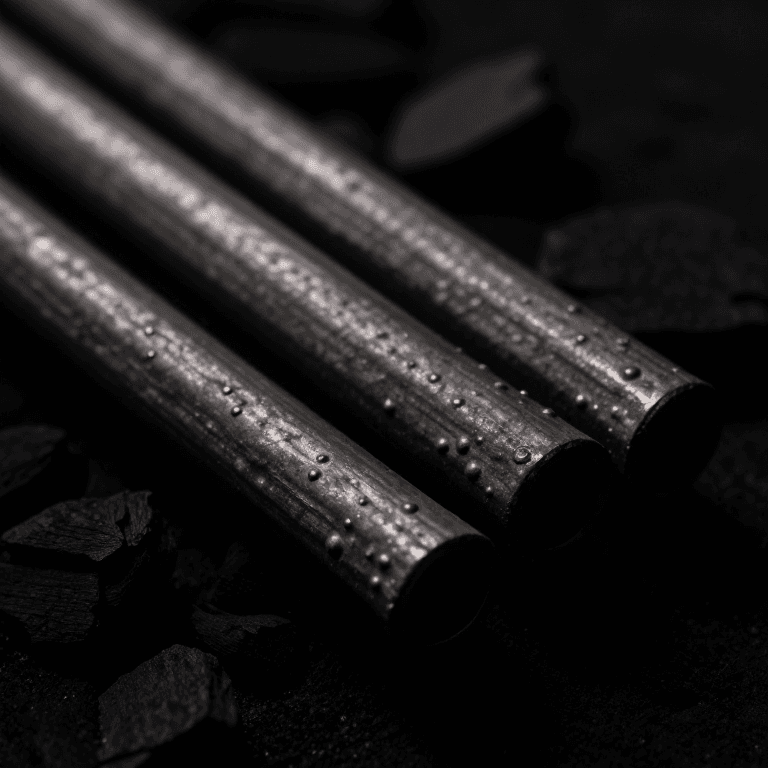
 Barres d'acier cloqué12 kg
Outils nécessaires :
 Marteau
Prepare a clay crucible
Prepare a clay crucible
Matériaux pour cette étape :
 Creuset en argile profond1 pièce
Charge the crucible
Charge the crucible
Matériaux pour cette étape :
 Dalle de calcaire1 kg
Build a coke melting furnace
Build a coke melting furnace
Matériaux pour cette étape :
 Coke métallurgique50 kg
Outils nécessaires :
 Soufflet
Melt the steel fully
Melt the steel fully
Outils nécessaires :
 Pince à creuset
Let the carbon even out
Let the carbon even out
Let the slag rise
Let the slag rise
Lift the crucible
Lift the crucible
Outils nécessaires :
Pince à creusetCast the ingot
Cast the ingot
Outils nécessaires :
 Lingotière
Cool and strip
Cool and strip
Outils nécessaires :
MarteauIdentify cast steel
Identify cast steel
Outils nécessaires :
 Jeu de limes
Matériaux
4- Espace réservé
- 1 pièceEspace réservé
- Espace réservé
- 50 kgEspace réservé
Matériaux des Blueprints connectés
Blueprints liés
Ces blueprints partagent des connaissances — techniques, matériaux ou principes

CC0 Domaine public
Ce blueprint est publié sous CC0. Vous êtes libre de copier, modifier, distribuer et utiliser ce travail pour tout usage, sans demander la permission.
Soutenez le Maker en achetant des produits via son Blueprint où il perçoit une Commission Maker définie par les Vendeurs, ou créez une nouvelle itération de ce Blueprint et incluez-le comme connexion dans votre propre Blueprint pour partager les revenus.