ART
BEAUTÉ ET BIEN-ÊTRE
ARTISANAT
CULTURE ET HISTOIRE
DIVERTISSEMENT
ENVIRONNEMENT
NOURRITURE ET BOISSONS
INGÉNIERIE INVERSE
SCIENCES
SPORTS
TECHNOLOGIE
TECHNOLOGIE PORTABLE

Doneness Is a Temperature, Not a Time — and Carryover Is Real
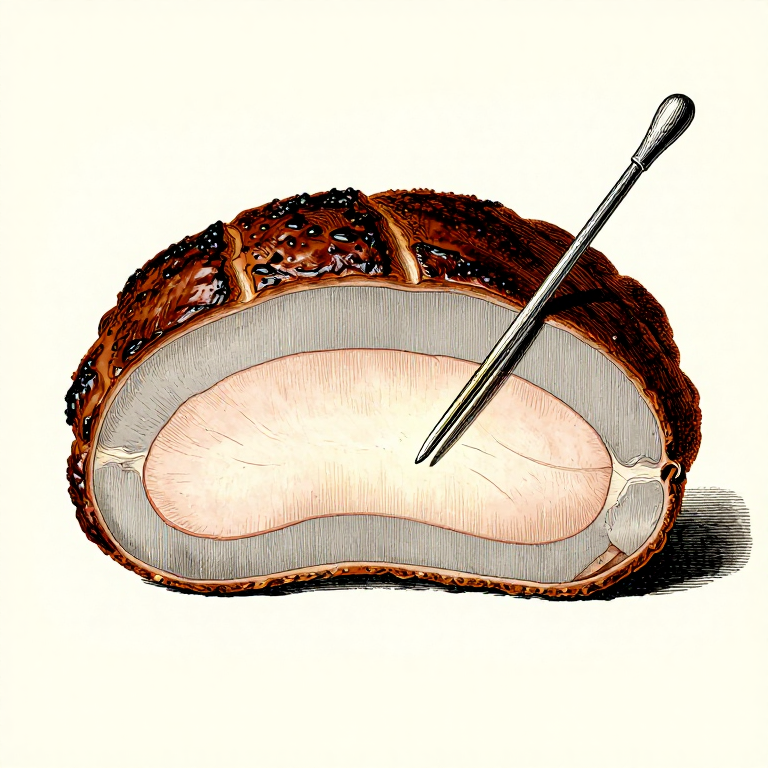
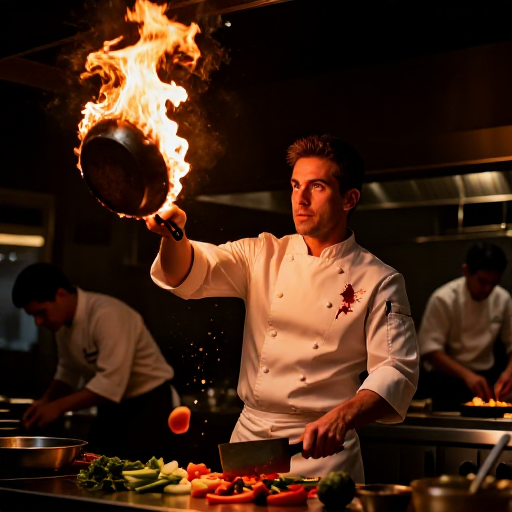
"Twenty minutes per kilo" assumes your oven, your pan, your starting temperature and your piece of meat. A thermometer assumes nothing, and it is the difference between cooking and hoping.
What actually matters is what happens to proteins at particular temperatures, and those numbers are the same everywhere: around 50 degrees for rare, 60 for medium, 70 for well done, 74 for poultry to be safe. They do not depend on the recipe.
And the meat does not stop cooking when it leaves the heat. The outside is far hotter than the middle, and that heat keeps travelling inward — CARRYOVER — which for a large roast can be 5 to 8 degrees. Ignore it and the thermometer was no help at all.
Intermédiaire
3 hours
Consignes
1
1
Measure the centre, and measure it properly
Measure the centre, and measure it properly
Push the probe into the THICKEST part and stop at the centre. Too shallow reads the hot outside and tells you it is done when it is not; too deep comes out the other side into the pan and reads the pan.
Avoid bone and avoid fat. Bone conducts heat differently and will read high; a pocket of fat reads differently again. Probe from the side of a roast rather than straight down, which makes it easier to find the true middle.
Take more than one reading, in more than one place. The repeat-and-look-at-the-spread rung applies directly: a single probe reading is a single measurement, and the coldest spot is the one that decides whether the thing is safe.
Matériaux pour cette étape :
 Poulet1 pièce
Outils nécessaires :
 Thermomètre à lecture instantanée
 Thermomètre de cuisson
 Pince de cuisine
2
2
The temperatures, and pulling early for carryover
The temperatures, and pulling early for carryover
Chargement du notebook Jupyter…
Matériaux pour cette étape :
 Bœuf maigre1 piècePoulet1 pièce
Outils nécessaires :
Thermomètre à lecture instantanée Ordinateur de bureau
 Carnet
3
3
Time and temperature together, not temperature alone
Time and temperature together, not temperature alone
Safety is a combination of how hot and for how long. Chicken at 74 degrees is safe instantly; the same chicken held at 60 degrees for a few minutes reaches the same reduction in bacteria — which is why low-temperature cooking can be both safe and far juicier.
Texture follows the same logic in the other direction. A tough cut held at 80 degrees for hours converts its collagen to gelatin and becomes tender; the same cut taken quickly to 80 degrees is simply dry. Time at temperature is doing the work, not the peak.
So braising is not a slow version of roasting. It is a different mechanism with a different target, and the thermometer question changes from "has it reached X" to "has it been at X long enough".
Matériaux pour cette étape :
Bœuf maigre1 pièce Eau1 pièce
Outils nécessaires :
 Marmite hauteThermomètre de cuissonCarnet
4
4
Check your thermometer, because it can be wrong
Check your thermometer, because it can be wrong
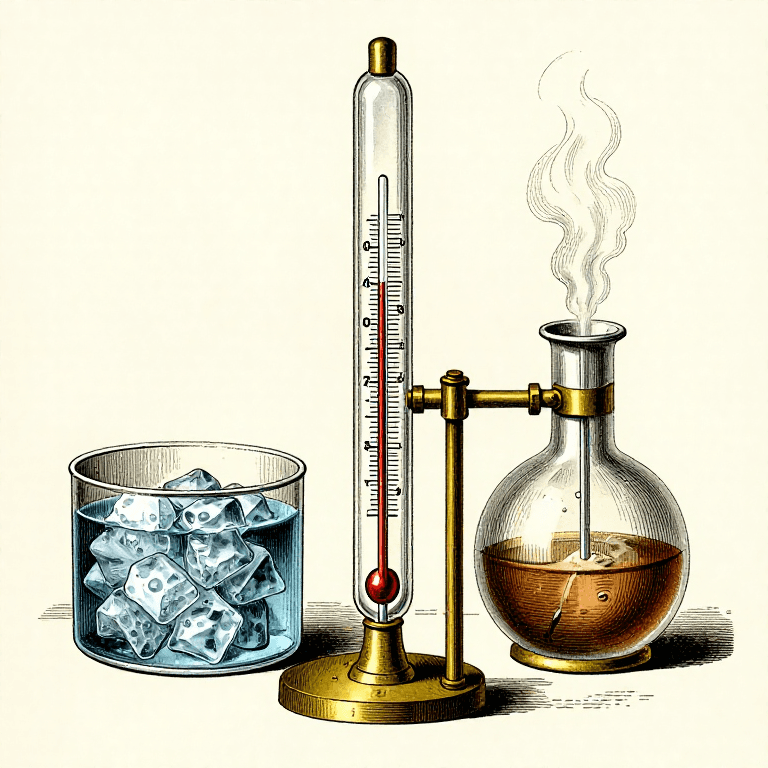
Put the probe in a glass of ice and water, stirred, and it should read 0 degrees. Put it in boiling water and it should read 100, less about 1 degree for every 300 metres of altitude.
That is a two-point calibration using references nature supplies free, and it is the same idea as the Celsius rung. Many thermometers have an adjustment; those that do not can still have their error written on a label and subtracted.
Do it when the thermometer is new, after it has been dropped, and once a year otherwise. A thermometer reading 4 degrees low will have you serving undercooked chicken with complete confidence, and nothing else in the kitchen will tell you.
Matériaux pour cette étape :
Eau1 pièceOutils nécessaires :
Thermomètre à lecture instantanéeThermomètre de cuisson Grand saladier en verre
Matériaux
3- 1 pièceEspace réservé
- 1 pièceEspace réservé
- 2 piècesEspace réservé
Blueprints liés
Ces blueprints partagent des connaissances — techniques, matériaux ou principes

CC0 Domaine public
Ce blueprint est publié sous CC0. Vous êtes libre de copier, modifier, distribuer et utiliser ce travail pour tout usage, sans demander la permission.
Soutenez le Maker en achetant des produits via son Blueprint où il perçoit une Commission Maker définie par les Vendeurs, ou créez une nouvelle itération de ce Blueprint et incluez-le comme connexion dans votre propre Blueprint pour partager les revenus.