ART
BEAUTÉ ET BIEN-ÊTRE
ARTISANAT
CULTURE ET HISTOIRE
DIVERTISSEMENT
ENVIRONNEMENT
NOURRITURE ET BOISSONS
INGÉNIERIE INVERSE
SCIENCES
SPORTS
TECHNOLOGIE
TECHNOLOGIE PORTABLE

Heat Control: The Pan Is Not the Hob, and It Does Not Follow the Dial
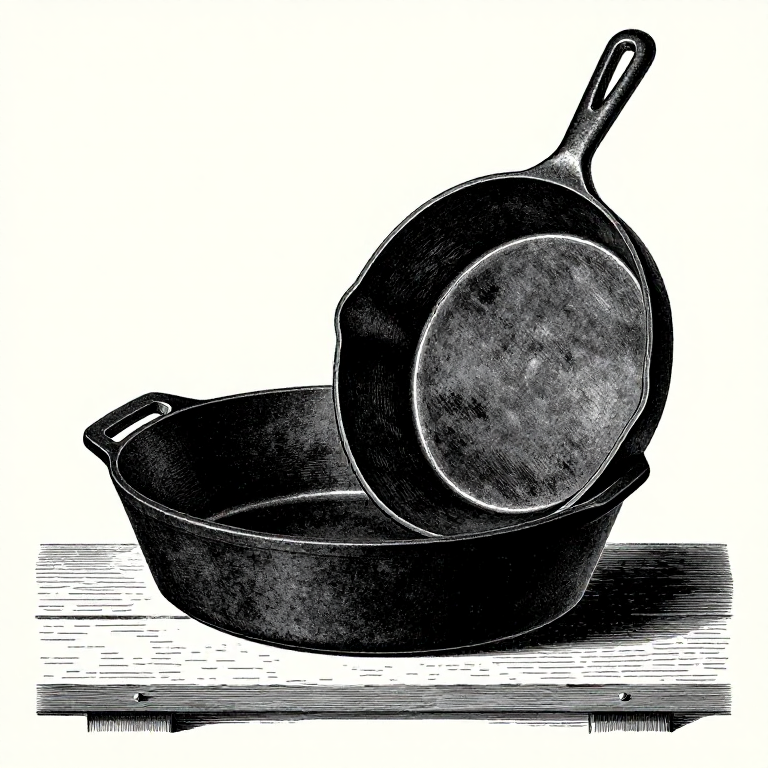
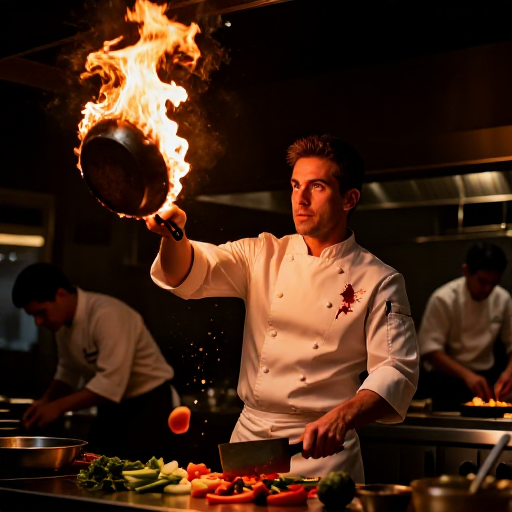
Turning the dial down does not cool the pan. It slows the rate at which heat is added, and the pan then takes its own time to fall — which for cast iron can be several minutes.
That lag is why so much cooking goes wrong at exactly the moment somebody notices it going wrong. By the time the dial has been turned down the food has already had another minute of full heat.
The other half is what happens when cold food lands in a hot pan. The pan gives up its stored heat to the food and its temperature DROPS, sometimes below browning temperature entirely — and how far it drops depends on the mass of the pan, not on the hob.
Intermédiaire
3 hours
Consignes
1
1
Preheat the pan, then judge it by a test not a timer
Preheat the pan, then judge it by a test not a timer
Heat the empty pan before anything goes in. A pan that starts cold is still heating while the food is cooking, so the food's early minutes happen at a temperature nobody chose.
Judge readiness by a test. A drop of water skittering across the surface in a ball rather than boiling off means the pan is well above 100 degrees — the Leidenfrost effect, and a reliable free thermometer. Oil that shimmers and flows like water is another.
An infrared thermometer settles it in a second if you have one, and it is worth doing once with your own pans just to learn what the tests correspond to. That is calibrating a judgement against an instrument, which is the measurement batch's habit applied to a kitchen.
Matériaux pour cette étape :
 Huile d'olive vierge extra1 pièce
 Eau1 pièce
Outils nécessaires :
 Poêle en fonte
 Thermomètre à lecture instantanée
 Poêle / sauteuse
2
2
What cold food does to a hot pan
What cold food does to a hot pan
Chargement du notebook Jupyter…
Matériaux pour cette étape :
 Bœuf maigre1 pièce
Outils nécessaires :
Poêle en fonte Ordinateur de bureauThermomètre à lecture instantanée
3
3
Every setting is a different job
Every setting is a different job
HIGH is for browning and for boiling. It is the only setting where the surface gets past 140 degrees quickly, and the only one that will keep a big pot of water boiling with pasta in it.
MEDIUM is for cooking things through — the setting where the inside has time to reach temperature before the outside is ruined. Most things people burn were cooked on high when they wanted medium.
LOW is for sweating onions without colour, for reductions, and for anything with dairy or egg in it that will split or scramble if it gets hot. A simmer is occasional bubbles, not a rolling boil, and holding it there is what the last two rungs of this batch are about.
Matériaux pour cette étape :
 Oignon1 pièceHuile d'olive vierge extra1 pièce
Outils nécessaires :
 LouchePoêle / sauteuse
 Cuillère à remuer en bois
4
4
Listen to the pan
Listen to the pan
A pan is an instrument you can hear. A loud, sharp, continuous sizzle means water is leaving fast and the surface is above 100 degrees — browning is happening. A quiet pan with a soft bubbling means liquid, and steaming.
Silence from a pan that was loud means either the food is done and dry, or it is burning. Both need attention immediately and they sound the same, so look.
Smell is the other channel, and it leads sound by about a minute: nutty and sweet is the Maillard reaction working; acrid and sharp is past it. A cook who is listening and smelling does not need a timer for most things, and that is a skill built by paying attention rather than by being told.
Matériaux pour cette étape :
Bœuf maigre1 pièceOutils nécessaires :
Poêle / sauteuse Pince de cuisine
 Carnet
Matériaux
4- 1 pièceEspace réservé
- 1 pièceEspace réservé
- 1 pièceEspace réservé
- 1 pièceEspace réservé
Outils requis
8- Espace réservé
- Espace réservé
- Poêle / sauteuse10 % de commissionEspace réservé
- Espace réservé
- Espace réservé
- Espace réservé
- Pince de cuisine10 % de commissionEspace réservé
- Espace réservé
Blueprints liés
Ces blueprints partagent des connaissances — techniques, matériaux ou principes

CC0 Domaine public
Ce blueprint est publié sous CC0. Vous êtes libre de copier, modifier, distribuer et utiliser ce travail pour tout usage, sans demander la permission.
Soutenez le Maker en achetant des produits via son Blueprint où il perçoit une Commission Maker définie par les Vendeurs, ou créez une nouvelle itération de ce Blueprint et incluez-le comme connexion dans votre propre Blueprint pour partager les revenus.