ART
BEAUTÉ ET BIEN-ÊTRE
ARTISANAT
CULTURE ET HISTOIRE
DIVERTISSEMENT
ENVIRONNEMENT
NOURRITURE ET BOISSONS
INGÉNIERIE INVERSE
SCIENCES
SPORTS
TECHNOLOGIE
TECHNOLOGIE PORTABLE



Glaze Fit: Crazing, Shivering, and the Mismatch Behind Both
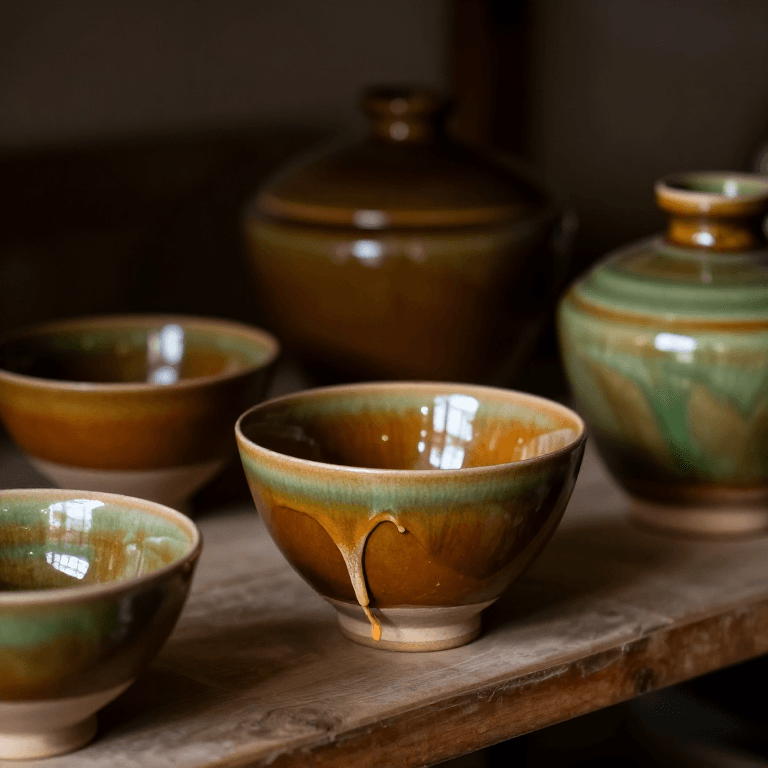
A glazed pot is two materials stuck together that shrink by different amounts as they cool. If the difference is small, the glaze ends up gently squeezed and the pot is stronger for it. If it is large, something has to give.
CRAZING is the glaze cracking into a network of fine lines, because the glaze shrank MORE than the body and is being stretched. SHIVERING is the glaze flaking off in slivers, because it shrank LESS and is being crushed. They are the same problem with opposite signs.
Crazing is often left deliberately, as a decorative crackle. Shivering never is: the flakes are glass, they come off in use, and on anything that holds food that is a genuine hazard rather than a flaw.
Avancé
3 hours
Consignes
1
1
Tell them apart, and know which way to move
Tell them apart, and know which way to move
CRAZING looks like a fine web of cracks across the glaze surface, often appearing days or weeks after firing as the body slowly takes up atmospheric moisture and expands. Run a finger over it and it is smooth; the cracks are in the glass, not the surface.
SHIVERING shows as sharp slivers lifting or flaking away, usually at edges, rims and handles where the glaze wraps a curve. It often appears with an audible ping as the kiln cools.
A crazed pot is not waterproof even if it looks it — liquid travels through the cracks into the porous body, which is why a crazed mug eventually smells. That is the practical reason to care beyond appearance.
Matériaux pour cette étape :
 Émail transparent1 pièce
 Récipients en argile secs à cœur1 pièce
Outils nécessaires :
 Four céramique
2
2
The numbers behind the mismatch
The numbers behind the mismatch
Chargement du notebook Jupyter…
Matériaux pour cette étape :
Émail transparent1 pièce Émail céramique1 pièce
Outils nécessaires :
 Ordinateur de bureauFour céramique
3
3
Thickness and edges, before any chemistry
Thickness and edges, before any chemistry
Before changing a recipe, check the application. Glaze that is too thick shivers at edges long before a well-fitted glaze would, because an edge has glaze on two faces meeting at a corner and nothing to hold it.
Wipe glaze thinner on rims, handles and any sharp arris. Rounding sharp edges slightly while the pot is leather-hard also helps a great deal, and costs one pass with a damp sponge.
Most reported glaze-fit faults turn out to be application faults. Chemistry is the answer when the fault persists on properly applied glaze across several firings — which is the change-one-thing-at-a-time rule saving a lot of wasted effort.
Matériaux pour cette étape :
Émail transparent1 pièceOutils nécessaires :
 Éponge
 Jeu d'outils de potier
 Pied à coulisse numérique 6 pouces
4
4
Keep test tiles, and label them
Keep test tiles, and label them
Fire test tiles of every glaze on every body you use, with one, two and three dips on the same tile, and keep them. A shelf of tiles answers questions that no amount of reading will.
Mark each tile with the glaze and body before firing — scratched into the clay, not written on with a pen that burns away. An unlabelled test tile is a pretty object of no use whatever.
Record the firing too: which kiln, what schedule, what cone it reached. A glaze is a result of a recipe AND a firing, and the same bucket in a different kiln is a different glaze.
Matériaux pour cette étape :
Émail transparent1 pièce Argile de faïence1 kg
Outils nécessaires :
Jeu d'outils de potierFour céramiqueMatériaux
4- 4 piècesEspace réservé
- Espace réservé
- Émail céramique10 % de commission1 pièceEspace réservé
- Espace réservé
Blueprints liés
Ces blueprints partagent des connaissances — techniques, matériaux ou principes
CC0 Domaine public
Ce blueprint est publié sous CC0. Vous êtes libre de copier, modifier, distribuer et utiliser ce travail pour tout usage, sans demander la permission.
Soutenez le Maker en achetant des produits via son Blueprint où il perçoit une Commission Maker définie par les Vendeurs, ou créez une nouvelle itération de ce Blueprint et incluez-le comme connexion dans votre propre Blueprint pour partager les revenus.