ART
BEAUTÉ ET BIEN-ÊTRE
ARTISANAT
CULTURE ET HISTOIRE
DIVERTISSEMENT
ENVIRONNEMENT
NOURRITURE ET BOISSONS
INGÉNIERIE INVERSE
SCIENCES
SPORTS
TECHNOLOGIE
TECHNOLOGIE PORTABLE
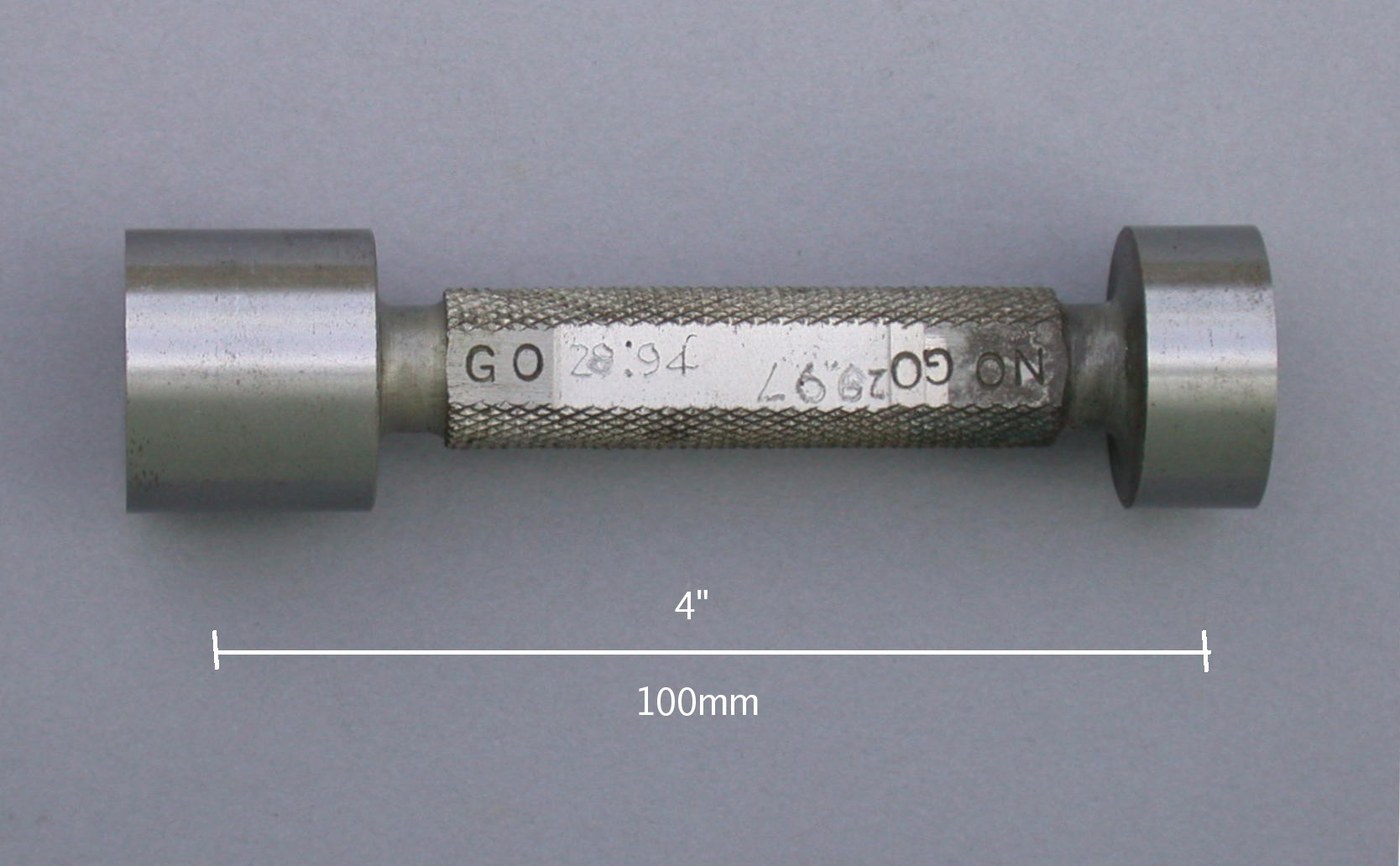


Go/No-Go: Gauging to a Limit Instead of Measuring
Measuring tells you what size a thing is. Most of the time nobody wants to know. What the job actually asks is a yes or a no: is this part within its limits?
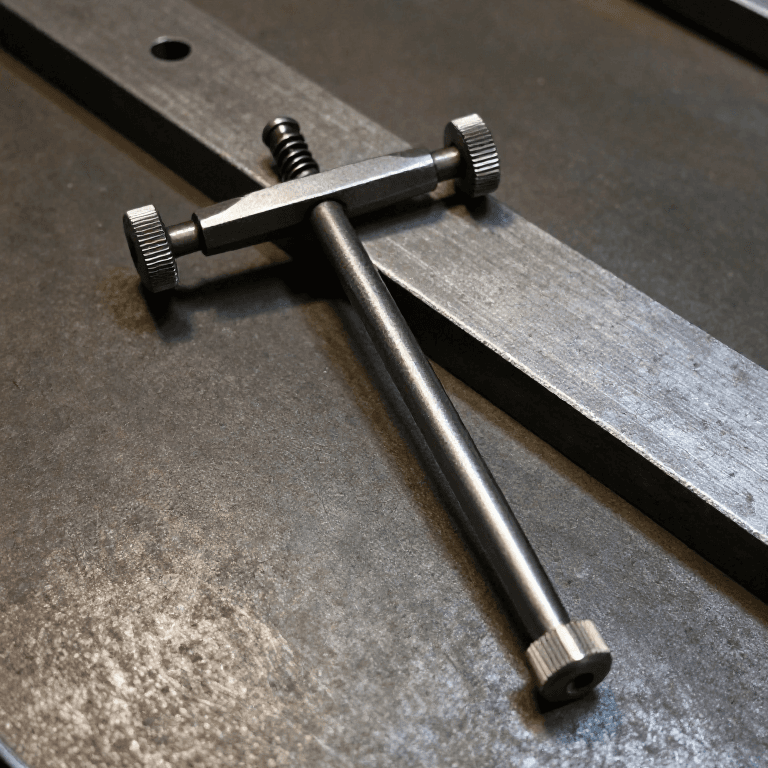
A limit gauge answers that directly. A GO gauge is made to one limit and must fit; a NO-GO gauge is made to the other and must not. Two attempts, no reading, no arithmetic, no skill of feel, and no opportunity to misread a vernier — and it takes a couple of seconds instead of a couple of minutes.
This is what made interchangeable parts possible. You cannot measure a million rifle bolts, but you can gauge them, and an unskilled operator with a good gauge will out-sort a skilled one with a micrometer all day long.
Intermédiaire
3 hours
Consignes
1
1
Work out which limit each gauge is made to
Work out which limit each gauge is made to
Take a hole specified as 25.000 to 25.021 mm. The GO plug is made to the SMALLEST permitted hole, 25.000, and must enter. The NO-GO plug is made to the LARGEST permitted hole, 25.021, and must not.
For a shaft it is the mirror image. A ring GO gauge is made to the LARGEST permitted shaft and must pass over it; the NO-GO ring is the smallest and must not.
The rule underneath is always the same: the GO gauge is cut to the maximum material condition of the part — the most metal it is allowed to have — and the NO-GO to the least. Learn it that way round and you will never have to remember which is which for holes and which for shafts.
Outils nécessaires :
 Jeu de calibres tampons
 Carnet
2
2
Taylor's principle: GO checks everything, NO-GO checks one thing
Taylor's principle: GO checks everything, NO-GO checks one thing
The GO gauge must have the FULL FORM of the feature and its full length. The NO-GO gauge should check one dimension at a time, and is made short.
The reason is that a hole can be the right size everywhere and still refuse a shaft, because it is bent, or tapered, or oval along its length. A full-length GO plug will not enter such a hole — which is correct, because neither will the part that has to go in there. The GO gauge is checking size and form together, exactly as the assembly will.
A NO-GO plug of full length would do the opposite: on an oval hole it would jam on the narrow axis and pass the part that should have been rejected on the wide one. So it is made short, and it is tried across the diameter in several directions. This is Taylor's principle, set out in 1905, and it is why limit gauges come in that particular pair of shapes.
Outils nécessaires :
Jeu de calibres tampons3
3
Gauge a batch, and let the gauge do the deciding
Gauge a batch, and let the gauge do the deciding
Try the GO end first, using the gauge's own weight and no force. It should enter the full depth. Then try the NO-GO end, which should start and stop.
Do not push. A limit gauge forced into a hole will enter a part that is out of tolerance and will also wear the gauge, so the error you introduce today is still there next month and is now permanent. If it needs persuading, it does not go.
Accept only GO-in and NO-GO-out. Everything else is a reject, and the gauge does not tell you by how much — deliberately. The moment an operator starts deciding that a part is only a bit tight, the gauge has stopped working and you are back to opinions.
Outils nécessaires :
Jeu de calibres tampons Barre d'acier brut
4
4
The gauge has tolerances too, and they eat the part's
The gauge has tolerances too, and they eat the part's
Chargement du notebook Jupyter…
Outils nécessaires :
Jeu de calibres tampons Calculatrice
5
5
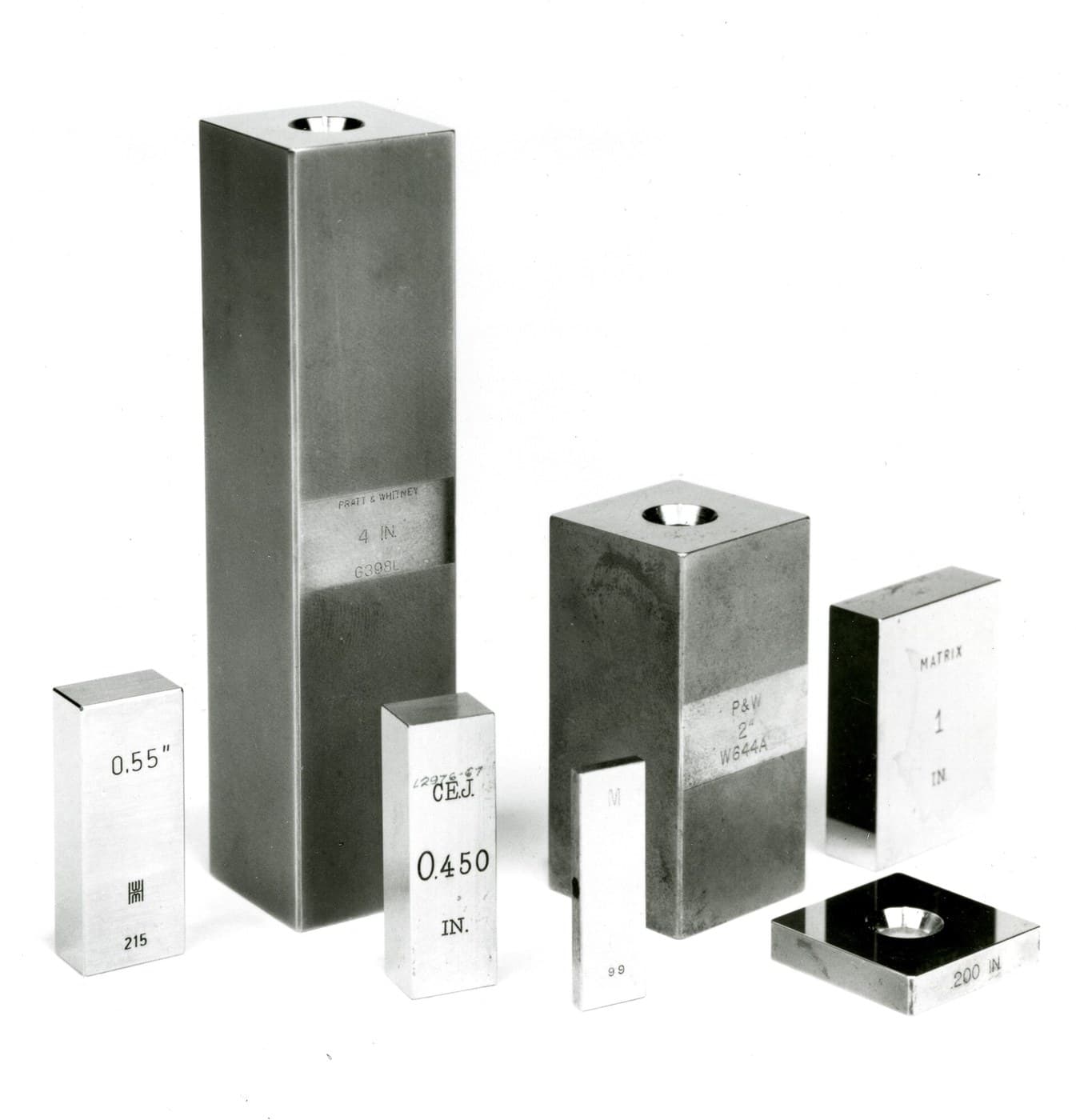
Check the gauges against the gauge blocks
Check the gauges against the gauge blocks
A limit gauge is only an answer if it is the size it claims. Measure the GO and NO-GO ends with a micrometer that you have already calibrated against a wrung stack, or compare them directly against a stack with a dial indicator.
Do this on a schedule, not when you suspect a problem. A worn GO plug passes parts that are too small, and it does it silently and consistently — the whole batch goes out and nothing in the workshop looks wrong.
Record the sizes with dates. A gauge that has lost two micrometres in a year is behaving normally; one that lost twenty in a month was being forced, and the parts gauged in that month want a second look.
Outils nécessaires :
Jeu de calibres tampons Jeu de cales étalon en céramique
 Micromètre
 Comparateur à cadranCarnet
Blueprints liés
Ces blueprints partagent des connaissances — techniques, matériaux ou principes



CC0 Domaine public
Ce blueprint est publié sous CC0. Vous êtes libre de copier, modifier, distribuer et utiliser ce travail pour tout usage, sans demander la permission.
Soutenez le Maker en achetant des produits via son Blueprint où il perçoit une Commission Maker définie par les Vendeurs, ou créez une nouvelle itération de ce Blueprint et incluez-le comme connexion dans votre propre Blueprint pour partager les revenus.