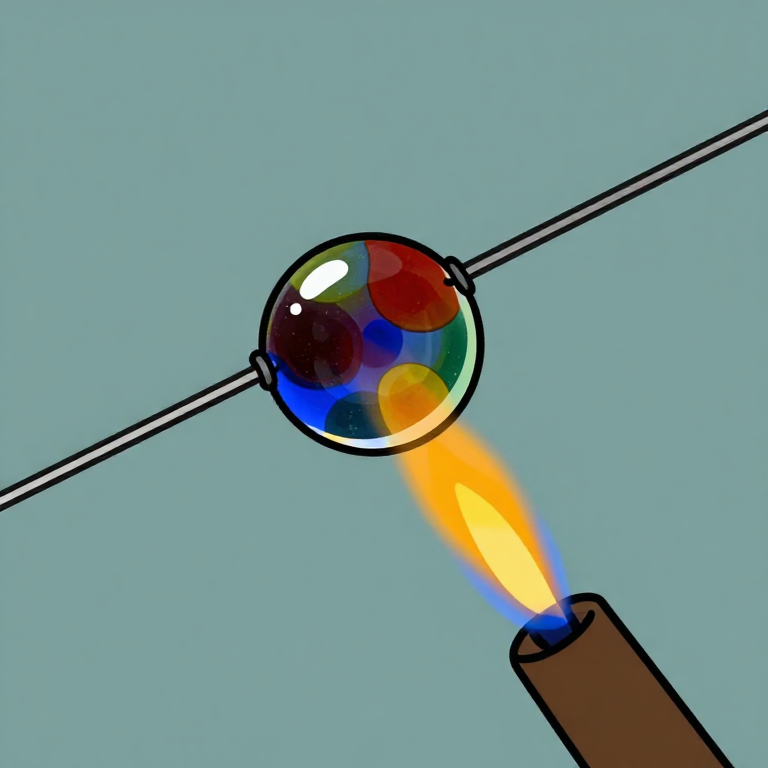

Making a Glass Bead on a Mandrel — Lampwork Beadmaking
Lampwork is the art of shaping glass in the flame of a torch or oil lamp. A glass rod is heated until it flows, then wound around a steel mandrel coated in bead release to form a bead. By layering colours, pulling trails, and pressing with simple tools, the beadmaker creates intricate patterns in miniature. Glass beadmaking dates to at least 1500 BCE in Mesopotamia and Egypt, and lampwork beads have been trade goods across every continent. This blueprint covers the core technique of winding a single-colour round bead — the foundation for all lampwork.
Consignes
Set up the torch
Set up the torch
Outils nécessaires :
 Chalumeau à propane
Prepare the mandrel with bead release
Prepare the mandrel with bead release
Matériaux pour cette étape :
 Anti-adhérent pour mandrin50 ml
Outils nécessaires :
 Mandrin en acier
Pre-heat the glass rod
Pre-heat the glass rod
Matériaux pour cette étape :
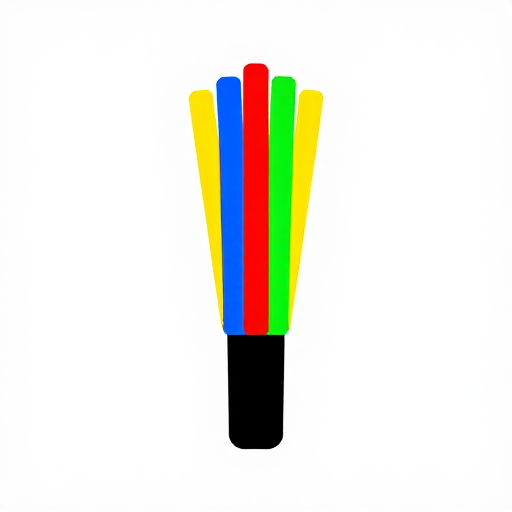 Baguette de verre — sodocalcique, colorée1 pièce
Heat the glass to working temperature
Heat the glass to working temperature
Wind the glass onto the mandrel
Wind the glass onto the mandrel
Shape the bead in the flame
Shape the bead in the flame
Even out the shape
Even out the shape
Add decorative trails (optional)
Add decorative trails (optional)
Final flame polish
Final flame polish
Anneal the bead
Anneal the bead
Cool and remove from mandrel
Cool and remove from mandrel
Clean and inspect
Clean and inspect
Matériaux
2- Espace réservé
- Espace réservé
Outils requis
2- Espace réservé
- Espace réservé
Matériaux des Blueprints connectés
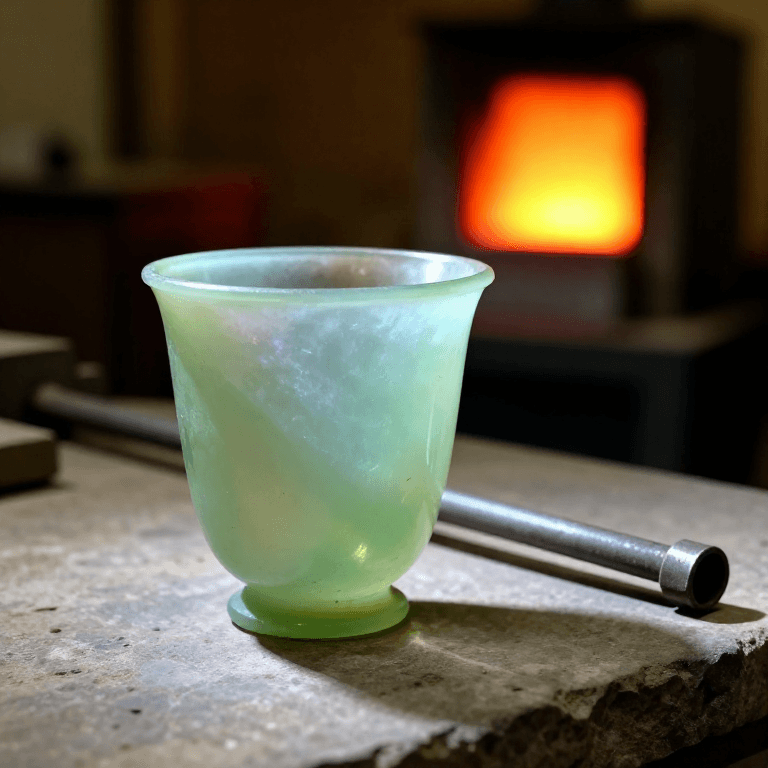
Ce plan fabrique

Blueprints liés
Ces blueprints partagent des connaissances — techniques, matériaux ou principes
Blowing a Glass Bottle by Hand — Free-Blown Vessel Shaping
par Forge
Travail du Verre

Making Soda-Lime Glass from Raw Materials — The Recipe That Has Not Changed in 5,000 Years
par Mary
Travail du Verre
Extracting Cobalt from Cobaltite — The Goblin Metal That Colors Glass Blue
par Peter
Travail des Métaux
CC0 Domaine public
Ce blueprint est publié sous CC0. Vous êtes libre de copier, modifier, distribuer et utiliser ce travail pour tout usage, sans demander la permission.
Soutenez le Maker en achetant des produits via son Blueprint où il perçoit une Commission Maker définie par les Vendeurs, ou créez une nouvelle itération de ce Blueprint et incluez-le comme connexion dans votre propre Blueprint pour partager les revenus.