ART
BEAUTÉ ET BIEN-ÊTRE
ARTISANAT
CULTURE ET HISTOIRE
DIVERTISSEMENT
ENVIRONNEMENT
NOURRITURE ET BOISSONS
INGÉNIERIE INVERSE
SCIENCES
SPORTS
TECHNOLOGIE
TECHNOLOGIE PORTABLE
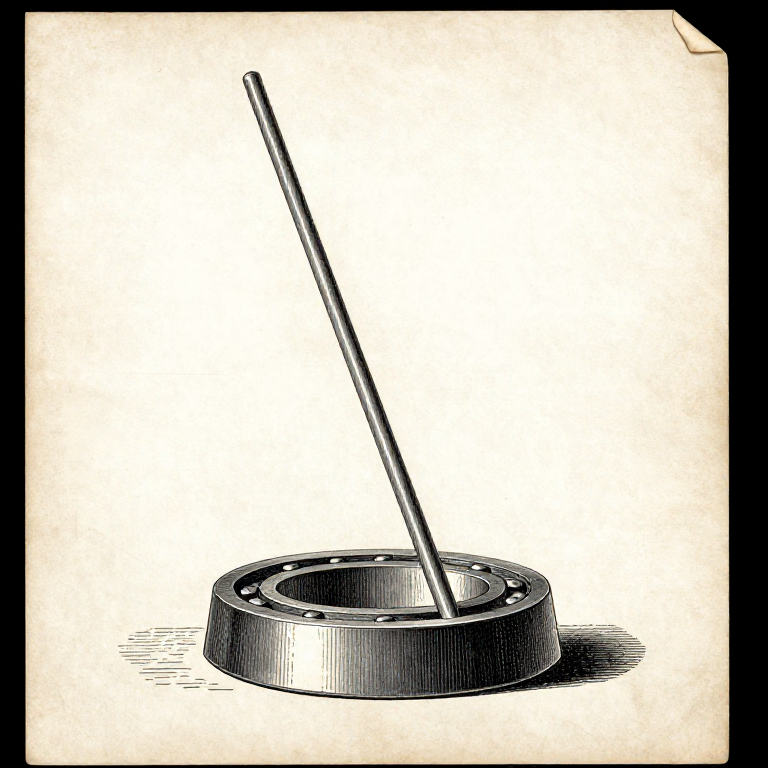


Listening to a Machine: Noise, Heat and Play Are All Telling You Something
A machine that is about to fail almost always says so first. It gets louder, or hotter, or develops play, or changes the noise it makes — usually weeks before anything breaks.
The skill is knowing what normal sounds like, which means paying attention while everything is fine. A baseline is not interesting at the time and is the only thing that makes a change detectable later.
Each symptom has a vocabulary. A rumble is not a whine is not a click, and each points at a different part. Learning that vocabulary turns "something is wrong" into "the drive end bearing is failing", which is the difference between a planned repair and a breakdown.
Intermédiaire
2 hours
Consignes
1
1
What each noise means
What each noise means
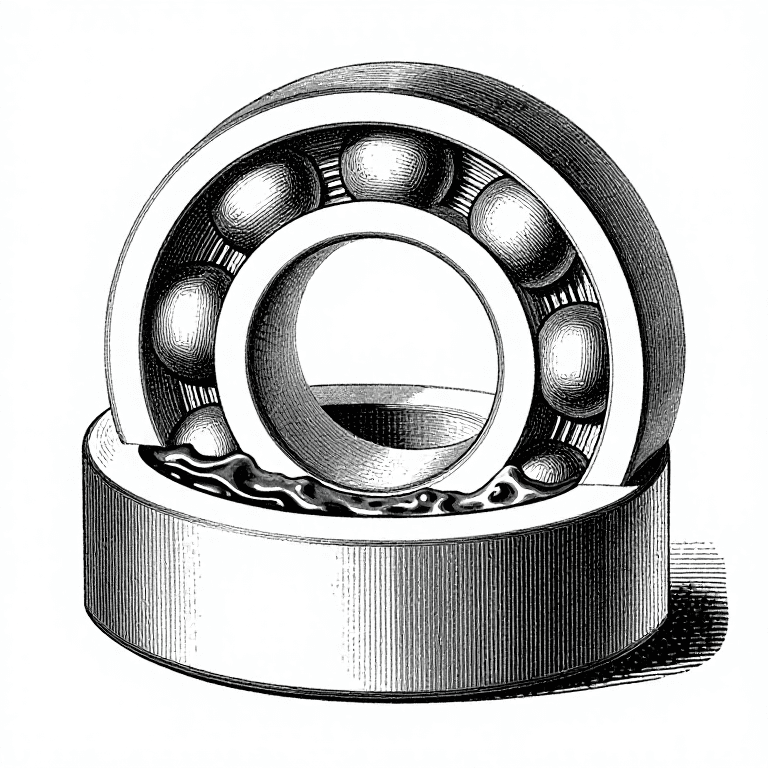
A RUMBLE or growl that rises with speed is usually a rolling bearing with damaged raceways — contamination, brinelling from bad mounting, or simple fatigue.
A steady WHINE at a constant pitch for a given speed is usually gears, and a whine that appears only under load is a gear mesh problem rather than a bearing. A regular CLICK or knock once per revolution is a single defect passing a point — a chipped tooth, a flat on a roller, a loose key.
A SQUEAL from a belt drive is slip. A squeal from a bearing is usually lack of lubricant, and it is the last warning before seizure. Use a screwdriver handle or a length of rod against the housing and your ear at the other end: it localises a noise remarkably well.
Outils nécessaires :
 Réglet
2
2
Heat is a number, so take it
Heat is a number, so take it
A bearing housing normally runs warm — comfortable to keep a hand on, typically 20 to 40 degrees above ambient. Too hot to touch means something is wrong, and it will get worse quickly.
Measure it rather than judging it, at the same place every time, and write it down with the ambient temperature. "Hotter than usual" is only meaningful against a record of usual, and the repeat-and-look-at-the-spread rung applies here exactly.
A NEW bearing often runs warm for the first hours as the grease distributes, and then settles. Temperature that rises and then falls is normal; temperature that rises and keeps rising is over-greasing, over-tight fits, misalignment or impending failure.
Outils nécessaires :
 Ordinateur de bureau
3
3
Play: feel for it with the machine stopped and locked out
Play: feel for it with the machine stopped and locked out
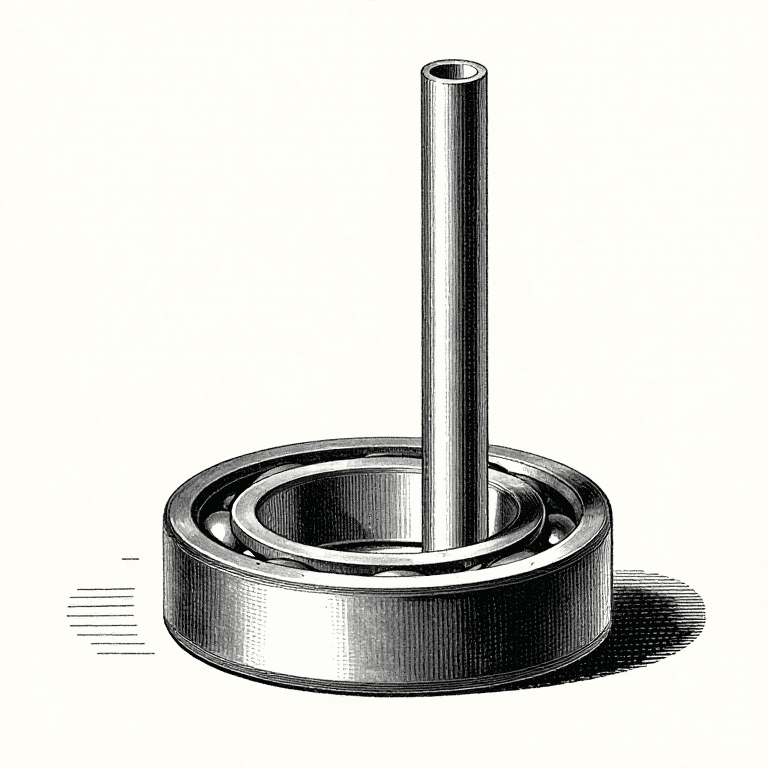
With the machine stopped and isolated, grip the shaft and try to move it radially and axially. A rolling bearing has a small measurable clearance and should feel tight and smooth; a plain bearing has more, by design.
Measure it with a dial indicator rather than by feel where it matters. Feel finds gross play; an indicator gives a number you can compare against last time, which is what tells you whether it is getting worse.
Turn the shaft slowly by hand and feel for roughness and notches. A bearing that is smooth in one position and notchy in another has a local defect, and a bearing that feels gritty throughout is contaminated or has lost its lubricant.
Outils nécessaires :
 Comparateur à cadran avec base magnétique
 Comparateur à cadran
4
4
Read the failed part before fitting a new one
Read the failed part before fitting a new one
A failed bearing is a report. Even wear all round means normal fatigue. Wear on one side of the raceway means misalignment or a bent shaft. Dents evenly spaced at ball pitch mean it was hammered on. A polished, scored band means a ring turning on its seat — the fit was too loose.
Brown staining and pitting mean water. Fluting — regular marks across the raceway — means electrical current passing through, which needs an insulated bearing or a shaft grounding brush rather than another bearing.
Fitting a new part without reading the old one means fitting a new part into the same conditions that destroyed the last one. Photograph it, write down what you saw, and put it in the machine's log — which is where this batch ends, and where the next repair starts.
Matériaux pour cette étape :
 Dégraissant (à base d'agrumes)1 pièce
Outils nécessaires :
 Gants en nitrileOrdinateur de bureau
Matériaux
1- Espace réservé
Outils requis
5- Espace réservé
- Espace réservé
- Comparateur à cadran avec base magnétique10 % de commissionEspace réservé
- Espace réservé
- Espace réservé
Blueprints liés
Ces blueprints partagent des connaissances — techniques, matériaux ou principes
CC0 Domaine public
Ce blueprint est publié sous CC0. Vous êtes libre de copier, modifier, distribuer et utiliser ce travail pour tout usage, sans demander la permission.
Soutenez le Maker en achetant des produits via son Blueprint où il perçoit une Commission Maker définie par les Vendeurs, ou créez une nouvelle itération de ce Blueprint et incluez-le comme connexion dans votre propre Blueprint pour partager les revenus.