ART
BEAUTÉ ET BIEN-ÊTRE
ARTISANAT
CULTURE ET HISTOIRE
DIVERTISSEMENT
ENVIRONNEMENT
NOURRITURE ET BOISSONS
INGÉNIERIE INVERSE
SCIENCES
SPORTS
TECHNOLOGIE
TECHNOLOGIE PORTABLE
Longquan Celadon Bowls: Glaze of Glaze Stone, Husk-and-Lime Ash and Zijin Clay, Reduction Fired
Clay

Créé par

Clay

1. novembre 2026DK
3
0
0
0
0

Longquan Celadon Bowls: Glaze of Glaze Stone, Husk-and-Lime Ash and Zijin Clay, Reduction Fired

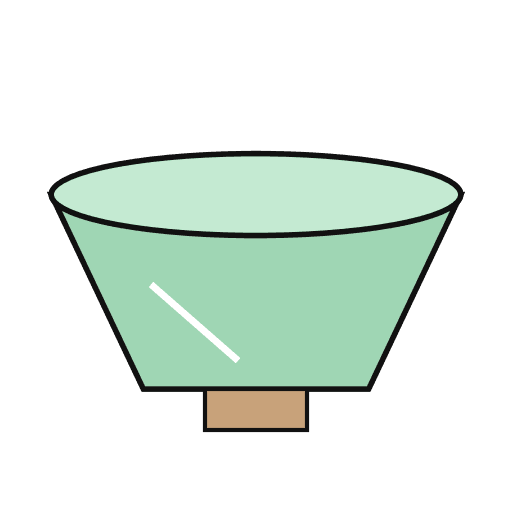
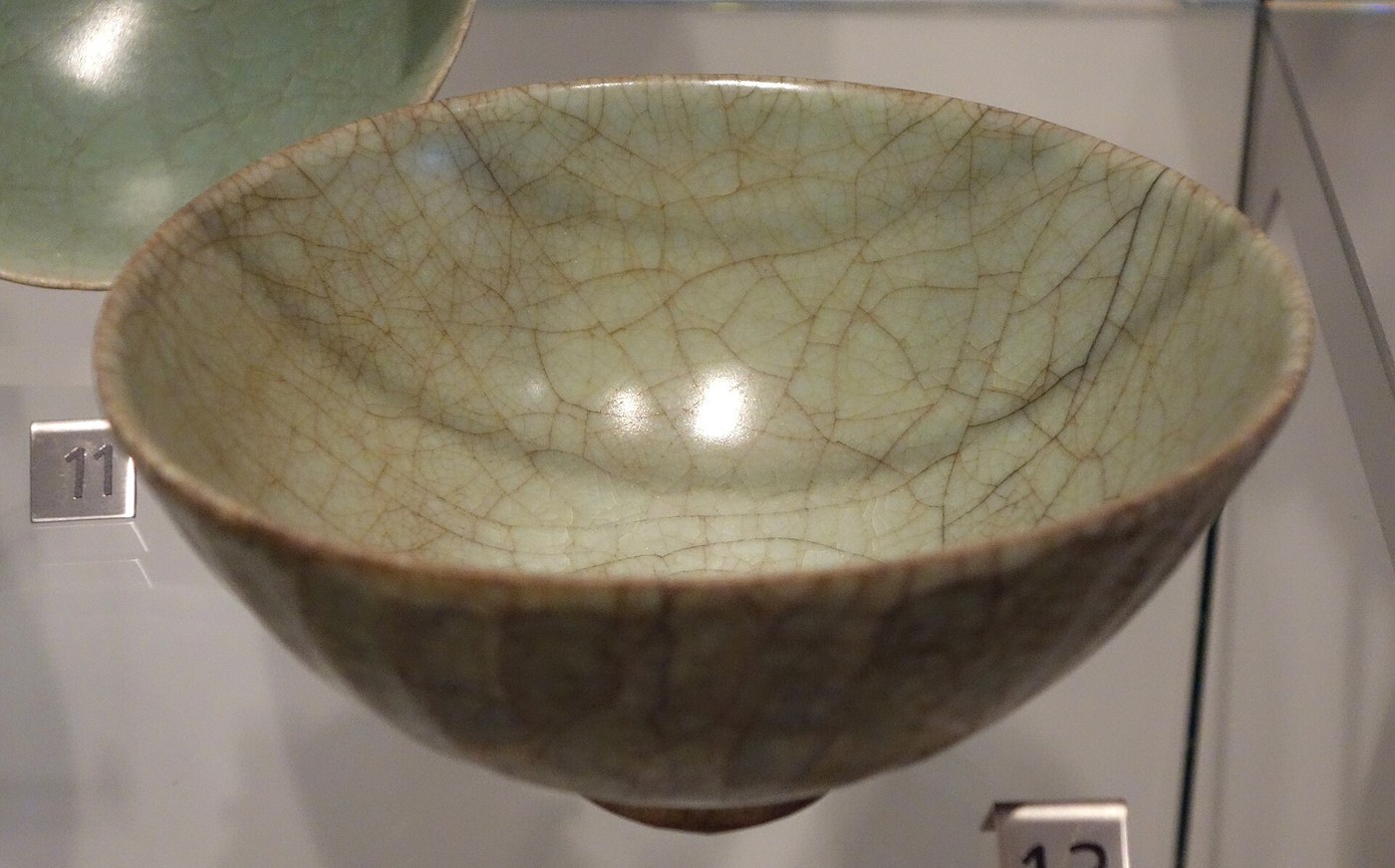
Longquan celadon, made in Longquan, China, since the 10th century, is a thick jade-green glaze over a bisque-fired body. The glaze is three powders washed out of local materials: glaze stone, the ash of rice husk burnt together with limestone, and iron-rich Zijin clay. Fired in reduction between 900 and 1230 °C, the iron in the glaze turns blue-green. Result: thick-glazed, jade-green celadon bowls. Source: the video 'Longquan celadon' by Shanbai (2025), checked frame by frame against its captions. Not given: amounts, the glaze proportion, ageing times, how iron is taken out, firing times. Unknown: the clay body of the bowls; the video does not show it. Photo: Southern Song Longquan bowl, Royal Ontario Museum, by Daderot (CC0).
Avancé
several weeks

Consignes

1

Watch: Longquan celadon from stone to bowl

The whole process in eight minutes, by Shanbai: preparing the three glaze materials, throwing and bisque firing the bowls, glazing, and the reduction firing.
2

Pound the glaze stone

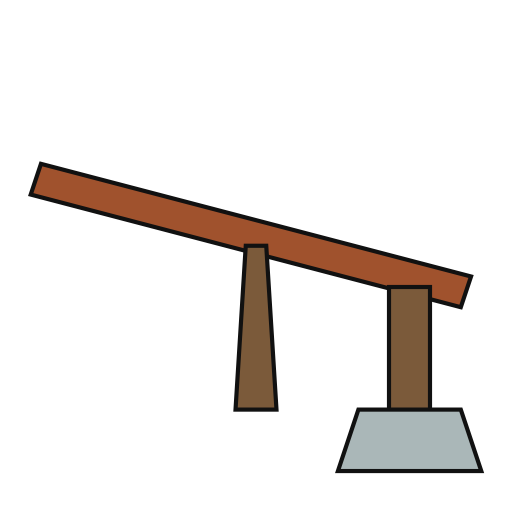
Crush the glaze stone in a stone mortar with a foot-trodden pestle.

Matériaux pour cette étape :

Pierre à glaçurePierre à glaçure1 as required

Outils nécessaires :
Pilon à piedPilon à pied
3

Sieve and settle the stone

Sieve the crushed stone and pound the coarse bits again. Stir the fine stone into water in a vat, sieve off the fine particles suspended in the water into another vat, and let them settle.

Outils nécessaires :

Jeu de tamis (mailles graduées)Jeu de tamis (mailles graduées)
EauEau
Pot en céramique avec couverclePot en céramique avec couvercle
LoucheLouche
4

Burn rice husk with limestone

In a brick-edged bed outdoors, lay rice husk and limestone in alternate layers and burn them. Turn the materials several times during the firing so the husk burns completely.

Matériaux pour cette étape :

Balle de rizBalle de riz1 as required
Bloc de calcaireBloc de calcaire1 as required

Outils nécessaires :
BriqueBrique
PellePelle
5

Sieve and wash the ash

Sieve the ash into a vat. Add water and ladle it through a fine sieve into a fresh vat. While this 'black glaze' settles, change the water and wash it several times.

Outils nécessaires :

Jeu de tamis (mailles graduées)Jeu de tamis (mailles graduées)
Pot en céramique avec couverclePot en céramique avec couvercle
EauEau
LoucheLouche
6

Mill and settle the Zijin clay

Grind the dry Zijin clay to powder in a stone hand mill. Mix it well with water, sieve it into a fresh vat and let the fine particles settle.

Matériaux pour cette étape :

Argile zijinArgile zijin1 as required

Outils nécessaires :
Moulin à main en pierreMoulin à main en pierre
EauEau
Jeu de tamis (mailles graduées)Jeu de tamis (mailles graduées)
Pot en céramique avec couverclePot en céramique avec couvercle
7

Dewater in bags, then age

Drain the water off each of the three vats without stirring up the settled powder. Scoop each paste into a cloth bag, lay the bags on a board and press them under a millstone. When they are dewatered to a certain degree, let them age for a while. Not given: how long. Ours: linen bags (as in the transcript).

Outils nécessaires :

LoucheLouche
Sac en linSac en lin
Meule à brasMeule à bras
8

Throw the bowls

Throw the bowls on the wheel and let them air-dry in the shade. Unknown: the clay body; the video does not show what it is or how it is made.

Matériaux pour cette étape :

Pâte argileuse inconnuePâte argileuse inconnue1 as required

Outils nécessaires :
Tour de potierTour de potier
9

Trim and stamp

Set each dry bowl upside down on a chuck on the wheel, trim the outside and the foot smooth, and stamp your mark in the foot.

Outils nécessaires :

Tour de potierTour de potier
Outils de tournage à bois vertOutils de tournage à bois vert
Tampon de potierTampon de potier
10

Bisque fire at about 800 °C

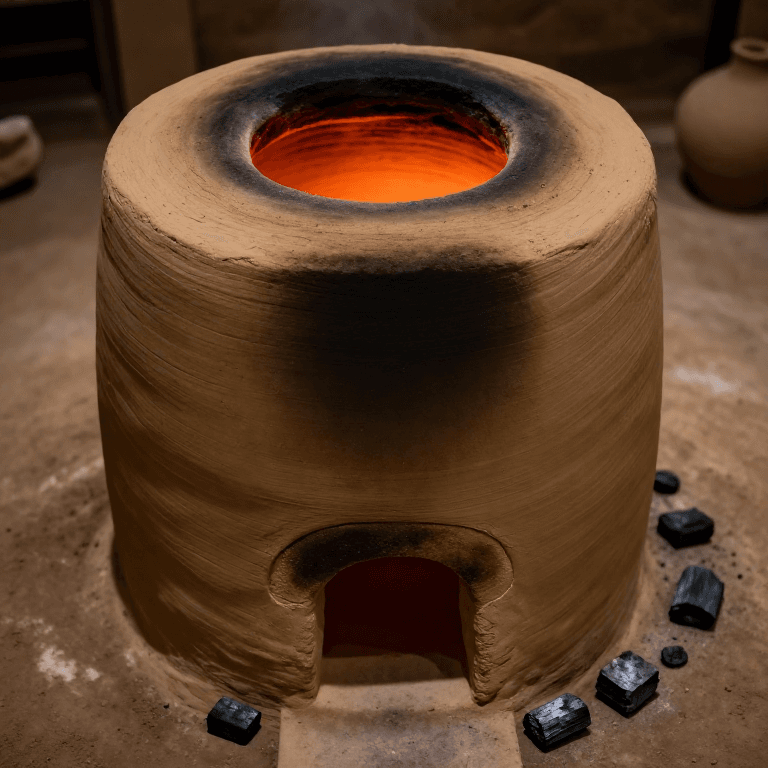
Stack the bowls in the kiln, brick up the door and seal it with mud, and fire with wood to about 800 °C. The bisque firing makes the body stronger and more absorbent, so the glaze takes better.

Outils nécessaires :

Four céramiqueFour céramique
BriqueBrique
Bois de chauffageBois de chauffage
PyromètrePyromètre
11

Make the glaze

Mix the burnt husk-and-lime ash, the glaze stone and the Zijin clay in proportion, add about an equal amount of water, stir and grind fine. Sieve it, take out the iron, and let the glaze age in the glaze vat. Not given: the proportion, how the iron is removed, how long it ages. Rice husk ash, glaze stone and Zijin clay give the silica, feldspar and kaolin; Zijin clay's iron is the colourant; lime and the potash and soda of feldspar lower the melting point.

Outils nécessaires :

Mortier et pilon en pierreMortier et pilon en pierre
EauEau
Jeu de tamis (mailles graduées)Jeu de tamis (mailles graduées)
Pot en céramique avec couverclePot en céramique avec couvercle
12

Dip the bowls

Hold each bisque bowl with wire tongs and dip it into the glaze. Let it air-dry.

Outils nécessaires :

Pince à tremperPince à tremper
Pot en céramique avec couverclePot en céramique avec couvercle
13

Spray on more glaze

Set the bowl upside down on a chuck on the wheel and spray glaze evenly over the outside with a mouth-blown sprayer. Repeated bisque firings, dipping and thin spray coats build a thick glaze; Longquan celadon is a lime-alkali glaze that stays put at high temperature. Scrape the glaze off the foot with a knife.

Outils nécessaires :

Tour de potierTour de potier
Pulvérisateur à glaçure souffléPulvérisateur à glaçure soufflé
CouteauCouteau
14

Reduction fire in saggars

Set the bowls in saggars, stack them in the kiln and seal the door. Between 900 °C and 1230 °C, feed fuel often, and when combustion is insufficient fire in reduction: the iron in the glaze gives up oxygen, and the mix of divalent and trivalent iron turns the glaze blue-green. Not given: how long the firing takes.

Outils nécessaires :

GazetteGazette
Four céramiqueFour céramique
BriqueBrique
Bois de chauffageBois de chauffage
PyromètrePyromètre

Matériaux

5

Outils requis

21

CC0 Domaine public

Ce blueprint est publié sous CC0. Vous êtes libre de copier, modifier, distribuer et utiliser ce travail pour tout usage, sans demander la permission.

Soutenez le Maker en achetant des produits via son Blueprint où il perçoit une Commission Maker définie par les Vendeurs, ou créez une nouvelle itération de ce Blueprint et incluez-le comme connexion dans votre propre Blueprint pour partager les revenus.

Commentaires

(0)

Se connecter pour participer à la discussion

Chargement des commentaires...