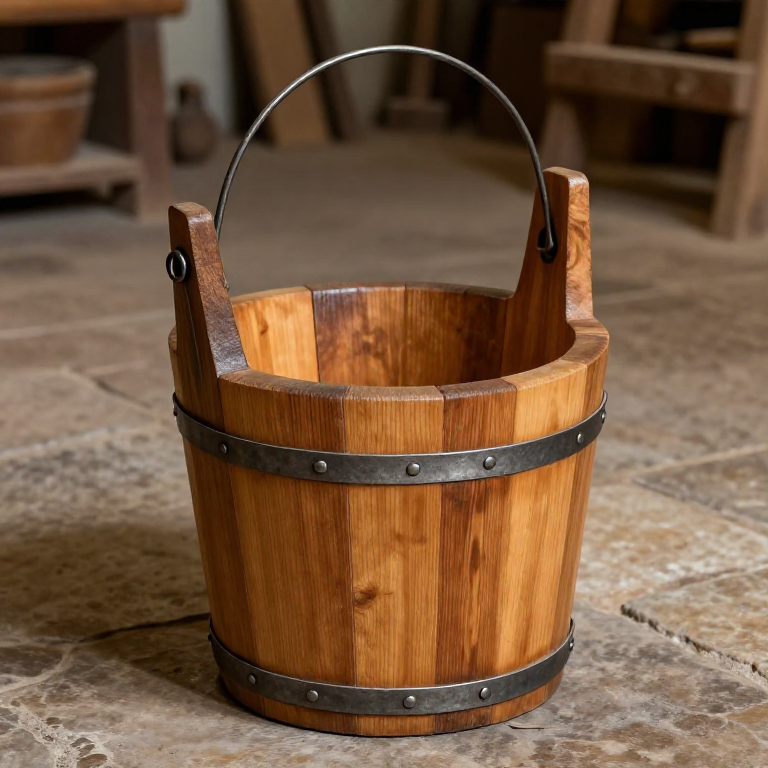


Making a Wooden Bucket — Basic Cooperage with Staves and Hoops
A wooden bucket is one of the earliest watertight vessels made entirely from wood and metal — a set of shaped staves held together by hoops that compress the joints into a seal. The cooper's trade (barrel and bucket making) was one of the most important crafts from antiquity through the Industrial Revolution. Every liquid — water, wine, beer, oil, vinegar — was stored and transported in cooperage.
A bucket is the simplest form of cooperage: straight staves arranged in a circle, wider at the top than the bottom, bound by two or three iron hoops. The staves taper in width so that when assembled they form a truncated cone. Each stave edge is bevelled at a precise angle — when the hoops are driven down, the bevel faces press together and the vessel becomes watertight without any sealant.
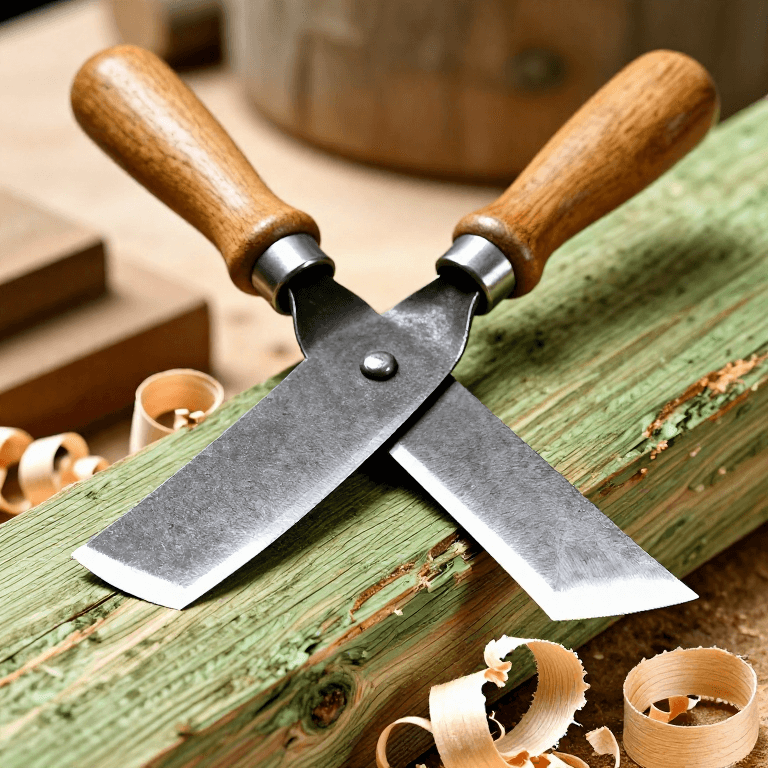
The skill is in the stave preparation. Each stave must be riven from straight-grained oak or similar hardwood, shaped with a drawknife, and bevelled with a jointer plane or drawknife to the exact angle. If even one stave is wrong, the bucket leaks. A good cooper could produce a watertight bucket in two to three hours from prepared staves.
Consignes
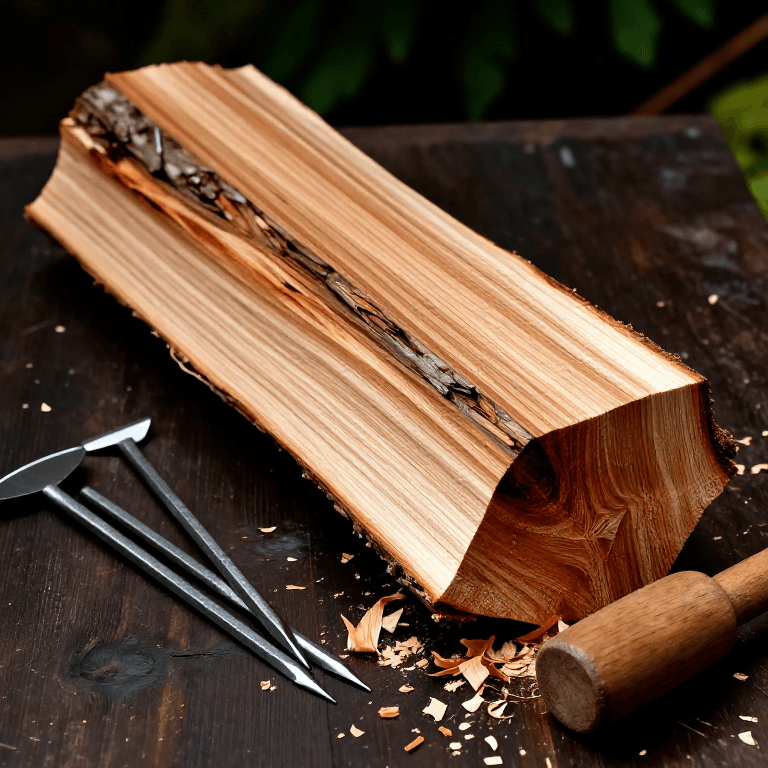
Rive and prepare the staves
Rive and prepare the staves
Outils nécessaires :
 Départoir (froe)
Shape and bevel the stave edges
Shape and bevel the stave edges
Outils nécessaires :
 Plane
PlaneCut the croze groove for the bottom
Cut the croze groove for the bottom
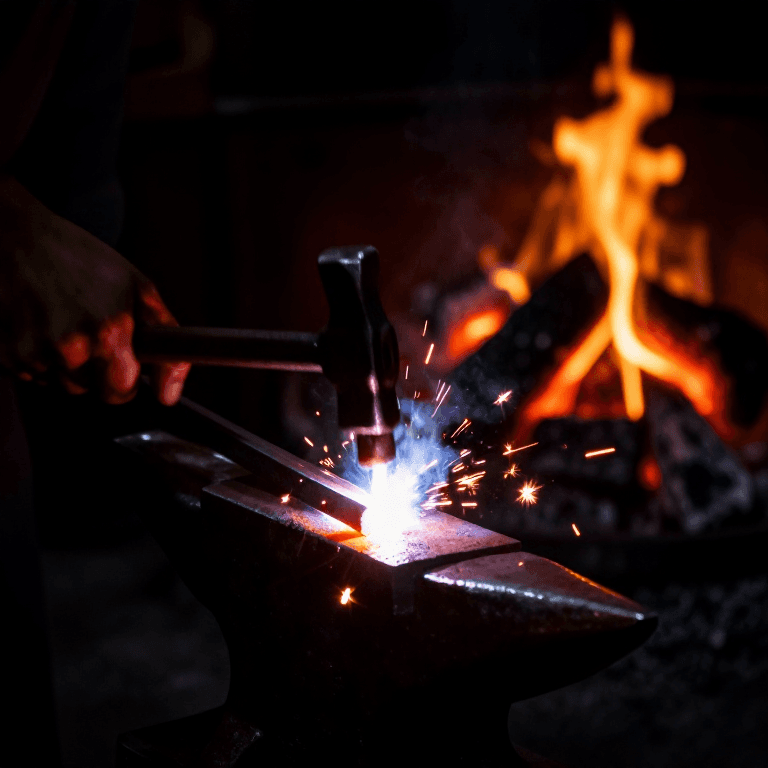
Assemble the staves and drive the hoops
Assemble the staves and drive the hoops
Matériaux pour cette étape :
 Cercle de fer2 pièces
Outils nécessaires :
 Marteau de forge
Fit the bottom board
Fit the bottom board
Attach a handle and test for leaks
Attach a handle and test for leaks
Matériaux
1- 2 piècesEspace réservé
Outils requis
3- Espace réservé
- Espace réservé
- Espace réservé
Matériaux des Blueprints connectés
Blueprints liés
Ces blueprints partagent des connaissances — techniques, matériaux ou principes
CC0 Domaine public
Ce blueprint est publié sous CC0. Vous êtes libre de copier, modifier, distribuer et utiliser ce travail pour tout usage, sans demander la permission.
Soutenez le Maker en achetant des produits via son Blueprint où il perçoit une Commission Maker définie par les Vendeurs, ou créez une nouvelle itération de ce Blueprint et incluez-le comme connexion dans votre propre Blueprint pour partager les revenus.