Collaboration
ART
BEAUTÉ ET BIEN-ÊTRE
ARTISANAT
CULTURE ET HISTOIRE
DIVERTISSEMENT
ENVIRONNEMENT
NOURRITURE ET BOISSONS
INGÉNIERIE INVERSE
SCIENCES
SPORTS
TECHNOLOGIE
TECHNOLOGIE PORTABLE
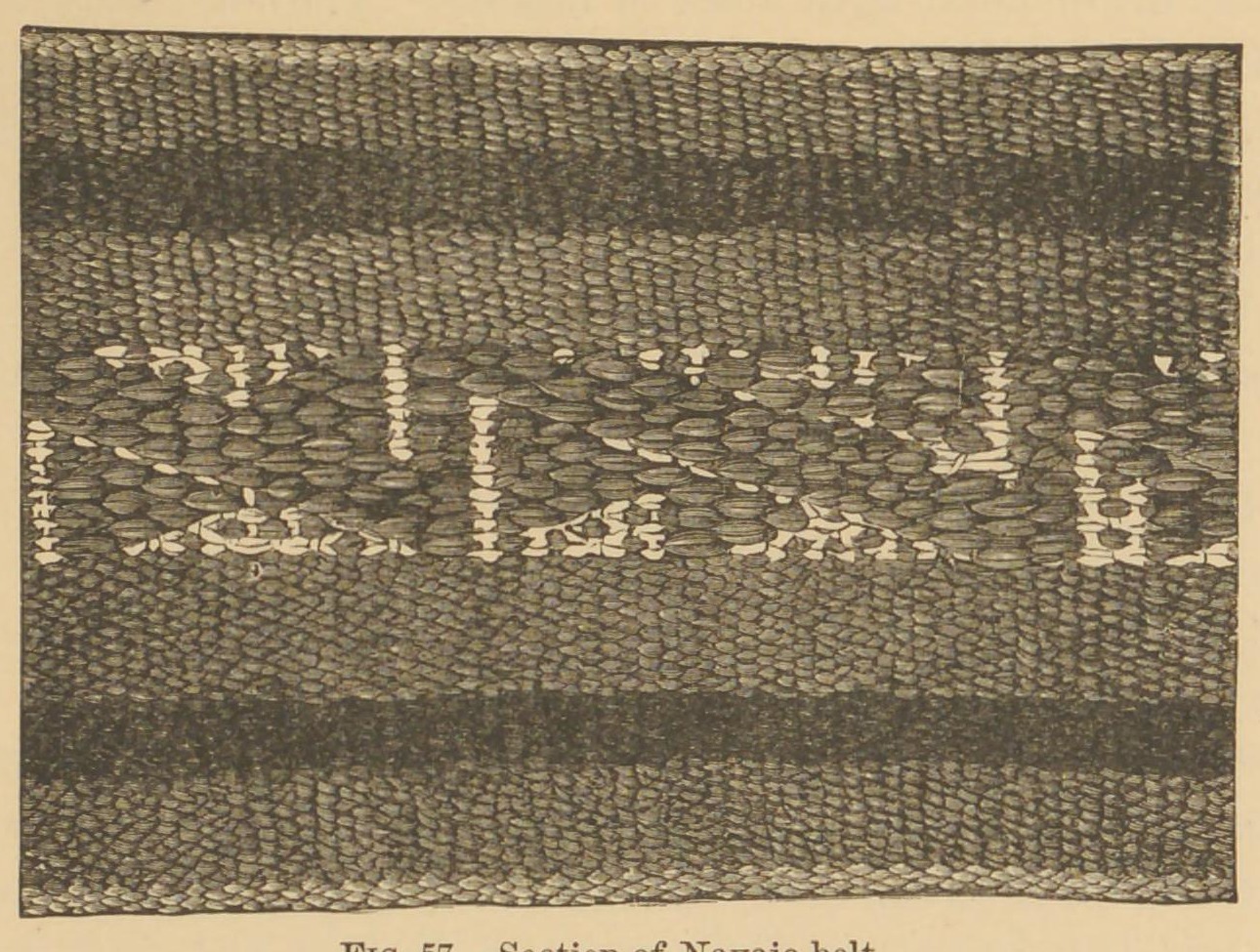


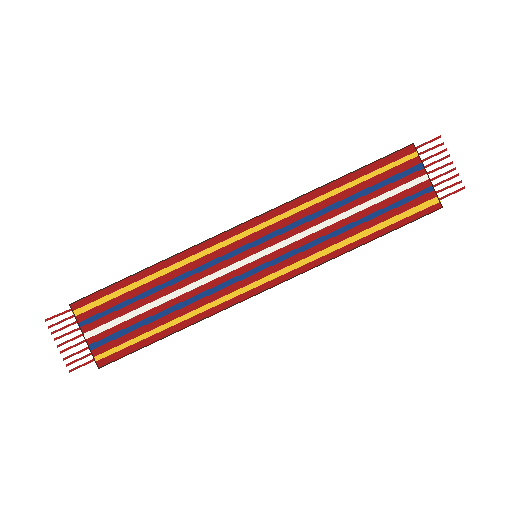
Navajo Sash or Belt: Warp Wound on Four Stakes, Endless on Two Beams, Tensioned by the Weaver's Weight, Raised Figures Picked Up (Matthews, 1884)
How Navajo (Diné) women wove sashes, belts, garters and hair-bands, as Washington Matthews recorded: warp wound in a figure-8 round four stakes to make both sheds, slid onto two beams so it stays endless, one beam tied high and the other looped under the weaver's thighs for tension, raised figures picked up with a slender stick, and the last foot of warp cut for fringes.
Intermédiaire
A few hours
Consignes
1
1
His figures
His figures
Chargement du notebook Jupyter…
2
2
Read Matthews
Read Matthews
"While still on the loom the belt is endless."
3
3
Wind the warp
Wind the warp
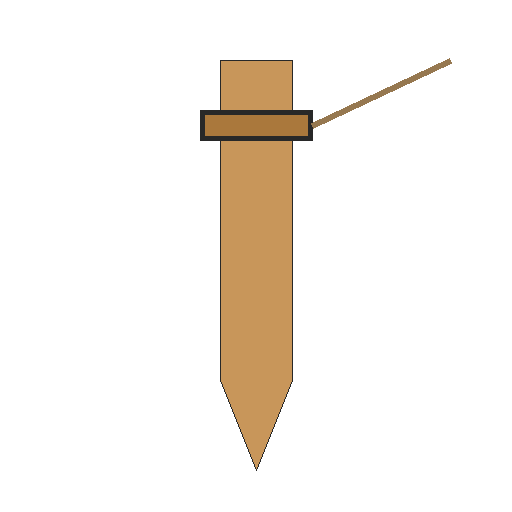
Drive four sticks into the ground: a and b at the ends, c and d between them (Fig. 56). Wind the warp from below upward so every turn passes over a and b but alternate turns over c and d; that makes the two sheds. Usually three colours of thread are used. Tie a string round the crossing of the sheds to keep them apart. (Ours: space a and b about the finished length of the sash.)
Matériaux pour cette étape :
 Fil de laine teint1 pièce
Outils nécessaires :
 Sardine de tente
 Maillet en bois
4
4
Mount it
Mount it
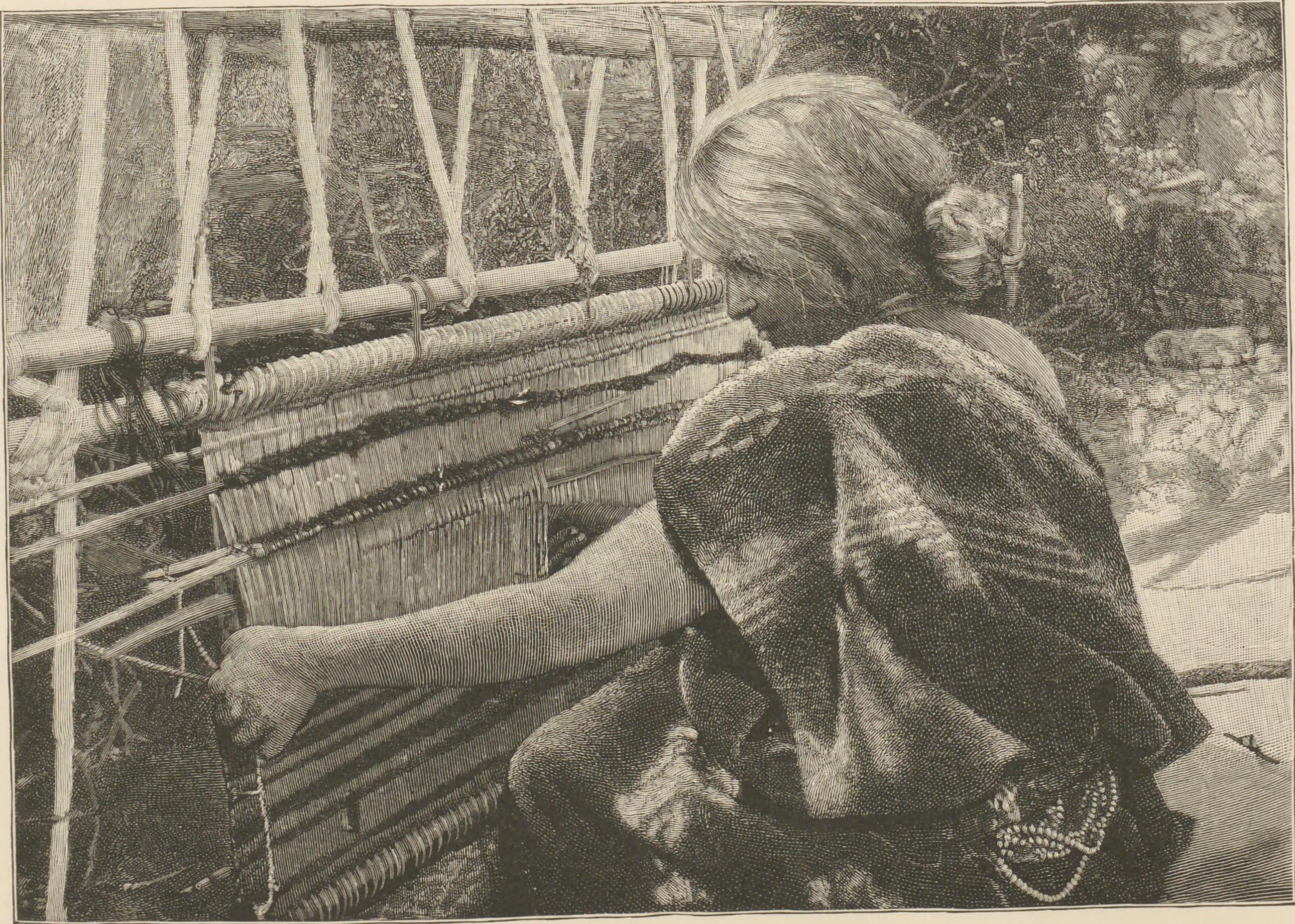
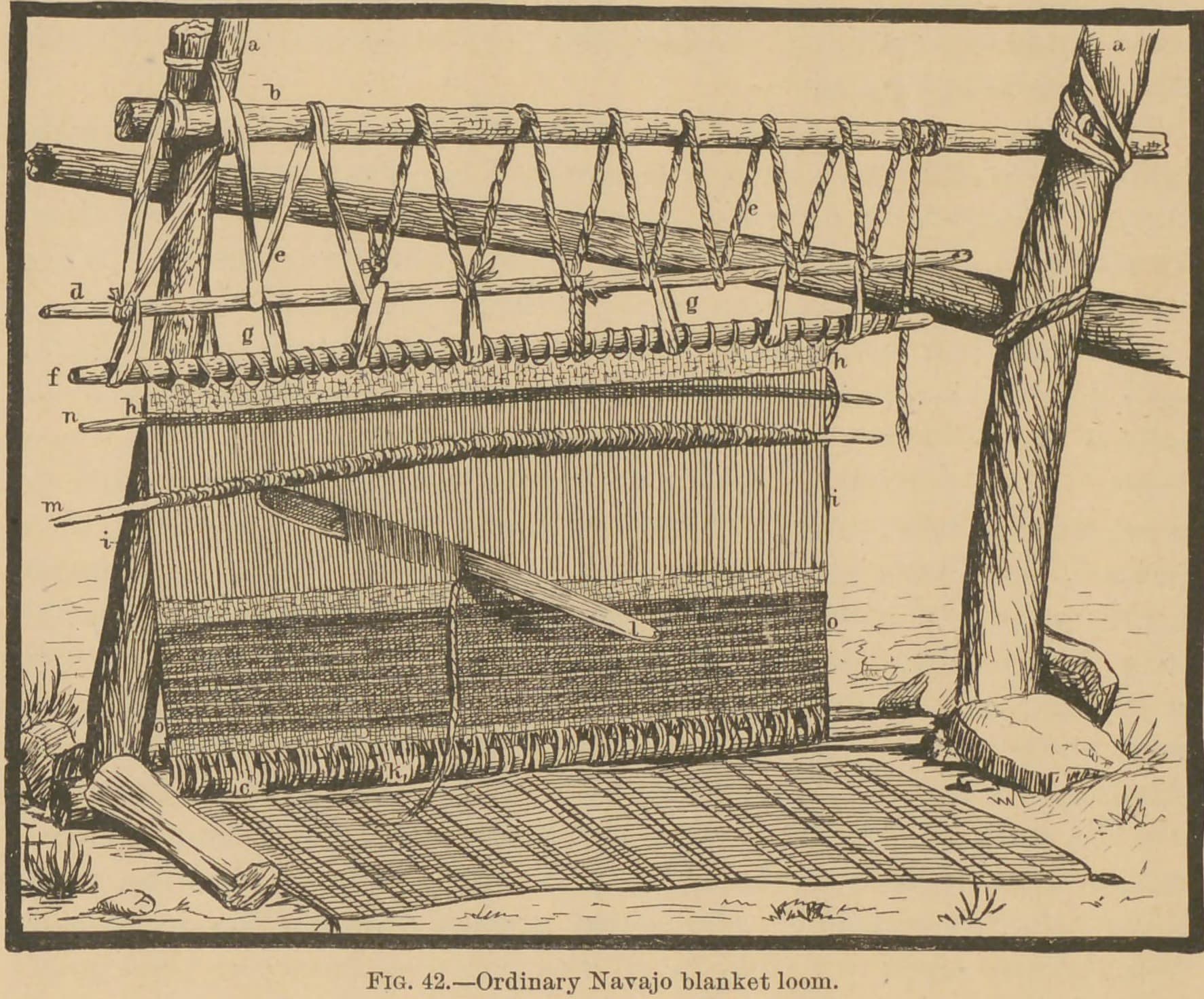
Put the upper beam in place of stick b and the lower beam in place of a. Tie the upper beam to a rafter, post or tree; tie a loop of rope to the lower beam and pass it under your thighs, so your weight pulls the warp tight. Put a shed-rod in the upper shed, string healds on the lower shed, and add a round stick with one loop of each thread round it to keep them in order.
Matériaux pour cette étape :
 Goujon en bois1 pièce
 Corde1 pièce
 Cordage1 pièce
Outils nécessaires :
 Couteau
5
5
Weave
Weave
Weave with a short batten (much shorter than a blanket batten), the reed-fork rarely needed. For raised figures, slip a slender stick under chosen warp threads and pass the weft twice or more beneath them: the back shows a different figure. A skilled weaver made 25-30 cm an hour.
Matériaux pour cette étape :
Fil de laine teint1 pièce Planche de chêne blanc1 pièce
Outils nécessaires :
 PlaneCouteau
6
6
Move the warp and finish
Move the warp and finish
When you can't reach, pull the front layer of warp down toward you: it slides round the beams. When all but about a foot (30 cm) of warp is filled, cut the unwoven warp in the middle: it becomes the fringes.
Outils nécessaires :
Couteau7
7
Troubleshooting
Troubleshooting
Sash troubleshooting.
Flow
Loading...
8
8
History and honest limits
History and honest limits
From Washington Matthews, "Navajo Weavers", **3rd Annual Report of the Bureau of Ethnology** (1884), pp. 388-390, Figs. 56-57 and Plate XXXVI (checked on the archive.org scan 101714660.nlm.nih.gov). He saw about a dozen raised-figure patterns, woven from memory. Zuni women set up their belt warps differently, tied to a rafter and to their own belt, with wooden healds. Sash length, width and stake spacing are ours.
Matériaux
5- 2 piècesEspace réservé
- 1 pièceEspace réservé
- 1 pièceEspace réservé
- 1 pièceEspace réservé
- 1 pièceEspace réservé
Ce plan fabrique
Blueprints liés
Ces blueprints partagent des connaissances — techniques, matériaux ou principes

CC0 Domaine public
Ce blueprint est publié sous CC0. Vous êtes libre de copier, modifier, distribuer et utiliser ce travail pour tout usage, sans demander la permission.
Soutenez le Maker en achetant des produits via son Blueprint où il perçoit une Commission Maker définie par les Vendeurs, ou créez une nouvelle itération de ce Blueprint et incluez-le comme connexion dans votre propre Blueprint pour partager les revenus.