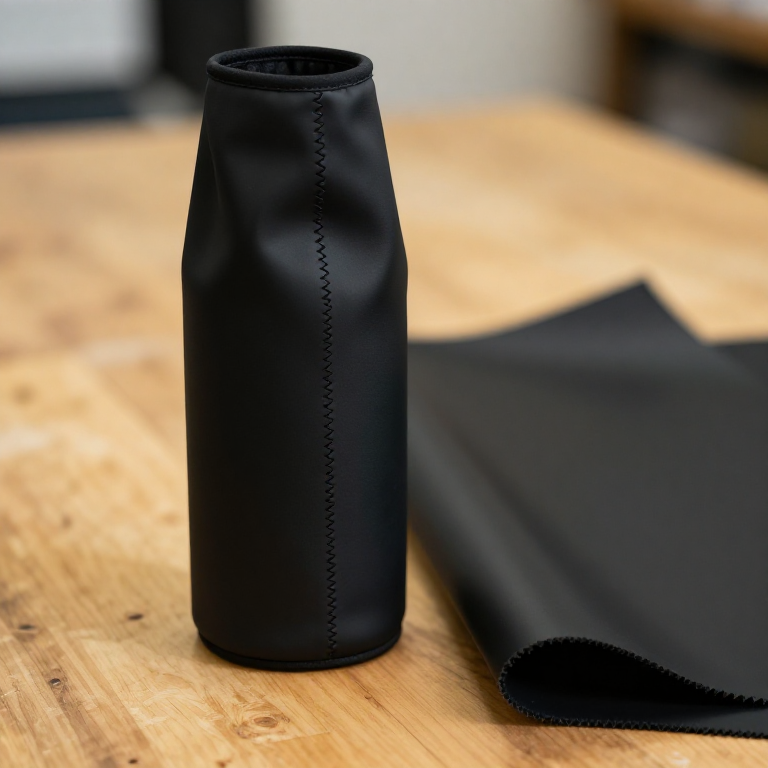


Neoprene
Consignes
Size the sleeve
Size the sleeve
Outils nécessaires :
 Pied à coulisse numérique 6 pouces
 Règle en acier
Mark the pieces
Mark the pieces
Matériaux pour cette étape :
 Tissu néoprène1 feuille
Outils nécessaires :
 Craie de tailleurRègle en acier
Cut
Cut
Outils nécessaires :
 Jeu cutter rotatif et tapis de coupe
 Ciseaux de couturière
Cement the edges
Cement the edges
Matériaux pour cette étape :
 Colle contact10 ml
Outils nécessaires :
 Chronomètre
Butt the seam
Butt the seam
Outils nécessaires :
 Grandes pinces à dessin
Stitch across the seam
Stitch across the seam
Matériaux pour cette étape :
 Fil de polyester5 mètres
Outils nécessaires :
 Machine à coudre
Close the base
Close the base
Matériaux pour cette étape :
Colle contact5 mlFil de polyester2 mètresOutils nécessaires :
 Aiguilles à coudre à la main
Set up the swell test
Set up the swell test
Matériaux pour cette étape :
 Huile de paraffine alimentaire100 ml
 Élastiques1 paquet
Outils nécessaires :
 Bocal en verrePied à coulisse numérique 6 pouces
Measure again
Measure again
Outils nécessaires :
Pied à coulisse numérique 6 poucesChlorine, swell and sizing
Chlorine, swell and sizing
History & Context
History & Context
Matériaux
5- 1 feuilleEspace réservé
- Colle contact10 % de commission15 mlEspace réservé
- 7 mètresEspace réservé
- Espace réservé
- 1 paquetEspace réservé
Outils requis
10- Espace réservé
- Espace réservé
- Espace réservé
- Espace réservé
- Espace réservé
- Espace réservé
- Espace réservé
- Espace réservé
- Espace réservé
- Espace réservé
Blueprints liés
Ces blueprints partagent des connaissances — techniques, matériaux ou principes


CC0 Domaine public
Ce blueprint est publié sous CC0. Vous êtes libre de copier, modifier, distribuer et utiliser ce travail pour tout usage, sans demander la permission.
Soutenez le Maker en achetant des produits via son Blueprint où il perçoit une Commission Maker définie par les Vendeurs, ou créez une nouvelle itération de ce Blueprint et incluez-le comme connexion dans votre propre Blueprint pour partager les revenus.