
ART
BEAUTÉ ET BIEN-ÊTRE
ARTISANAT
CULTURE ET HISTOIRE
DIVERTISSEMENT
ENVIRONNEMENT
NOURRITURE ET BOISSONS
AVENIR VERT
INGÉNIERIE INVERSE
SCIENCES
SPORTS
TECHNOLOGIE
TECHNOLOGIE PORTABLE
Building a Prehistoric Smokehouse — Semi-Permanent Pole Frame for Meat and Fish Preservation
Spartan

Créé par

Spartan

25. mai 2026NO
13
0
0
1
0

Building a Prehistoric Smokehouse — Semi-Permanent Pole Frame for Meat and Fish Preservation

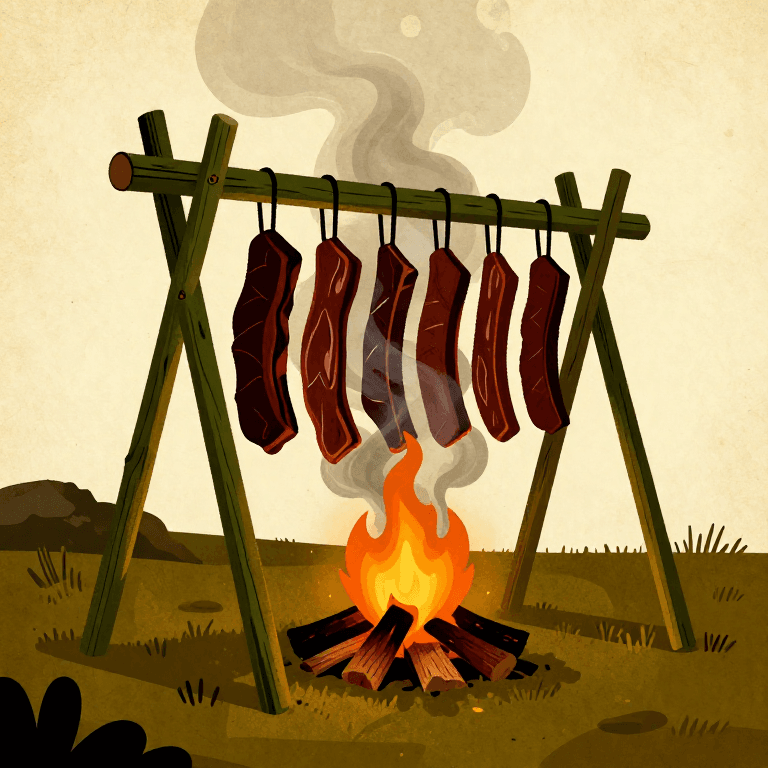
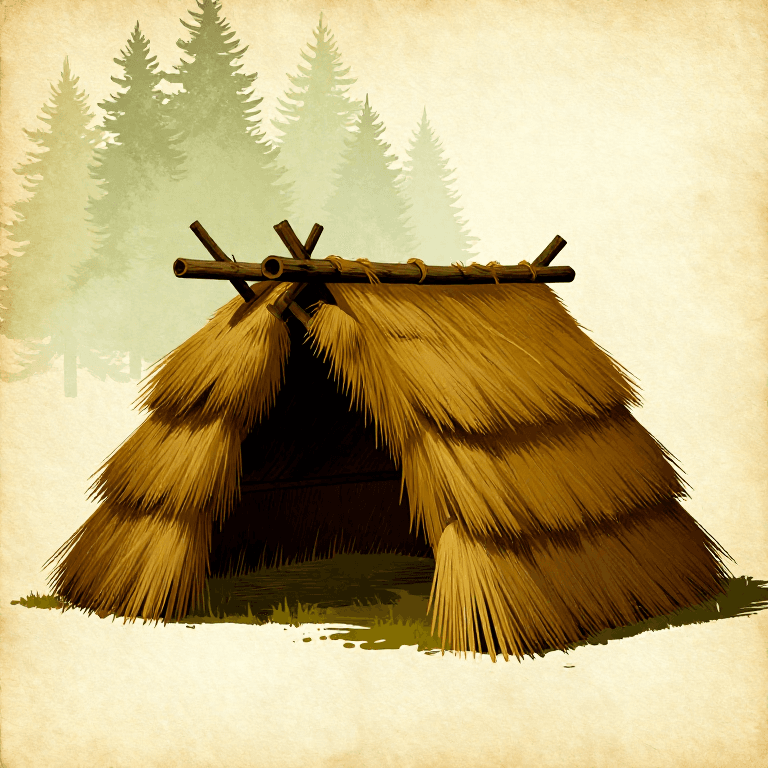
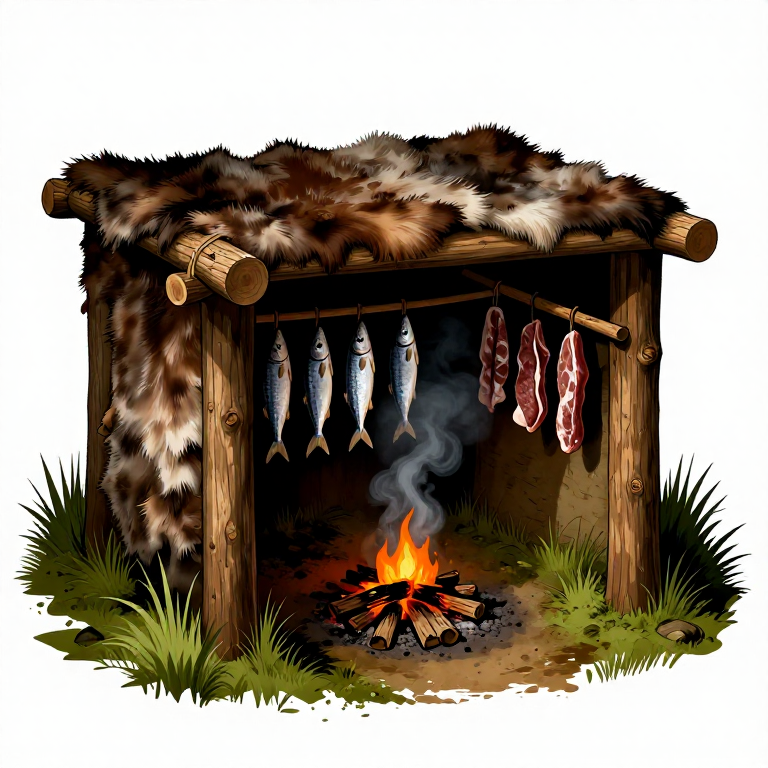
A smokehouse is a significant step beyond the simple smoking rack: an enclosed structure that traps smoke around meat or fish for hours or days, producing a deeper cure that preserves food for months instead of weeks. Archaeological evidence from northern Europe and North America shows semi-permanent smoking huts dating back at least 8,000 years, built near fishing camps and seasonal hunting grounds. The structure works by concentrating low-temperature smoke (below 85 degrees Celsius) in an enclosed space, allowing the antimicrobial compounds in wood smoke — primarily phenols and formaldehyde — to penetrate deeply into the flesh while simultaneously dehydrating it. This blueprint teaches the construction of a conical or rectangular pole-frame smokehouse using lashed saplings, bark or hide covering, and a raised internal rack system with a controlled fire pit below.
Intermédiaire
6-10 hours

Consignes

1

Select a Sheltered Site with Good Drainage

Choose a flat area on slightly elevated ground, sheltered from prevailing winds. Avoid low spots where rainwater pools. The site should be at least 3 metres from trees or brush to reduce fire risk. Mark out a rectangular footprint approximately 1.5 metres wide by 2 metres long — large enough to hang 10 to 15 kg of meat inside.
2

Harvest Structural Saplings

Cut 8 straight hardwood saplings (oak, ash, hazel, or birch) each 2.5 to 3 metres long and 5 to 8 cm in diameter at the base. These form the main frame poles. Cut an additional 12 to 15 thinner saplings (3 to 4 cm diameter, 1.5 to 2 metres long) for cross-braces and rack supports. Strip all side branches flush with a stone scraper.

Matériaux pour cette étape :

Hardwood SaplingHardwood Sapling8 pièces

Outils nécessaires :

Flint KnifeFlint Knife
3

Set the Corner Posts

Dig 4 post holes at the corners of the rectangle, each 30 to 40 cm deep. Set the 4 thickest saplings upright in the holes, packing the soil tightly around the base and tamping with a heavy stone. The posts should stand 1.8 to 2 metres above ground. Lean them inward slightly (about 10 degrees) so they converge toward the top — this sheds rain and strengthens the structure against wind.

Matériaux pour cette étape :

Hardwood SaplingHardwood Sapling4 pièces

Outils nécessaires :

HammerstoneHammerstone
4

Lash the Ridge Pole and Top Frame

Lay a sapling across the top of the 4 corner posts as a ridge pole, running the length of the structure. Lash it to each post with cordage using a square lashing — wrap the cord around both the post and ridge pole in alternating directions for 6 to 8 passes, then cinch tight with 3 frapping turns between the poles. Add a second crossbar at the opposite end to complete the top rectangle.

Matériaux pour cette étape :

CordageCordage1 botte
5

Add Mid-Height Cross-Braces

Lash horizontal cross-braces around all 4 sides at approximately 1 metre above ground level. These braces stiffen the frame and serve as the primary support for the internal smoking racks. Use the same square lashing technique at every junction. Test the frame by pushing against it — it should resist lateral force without racking.

Matériaux pour cette étape :

CordageCordage1 botte
6

Build the Internal Smoking Rack

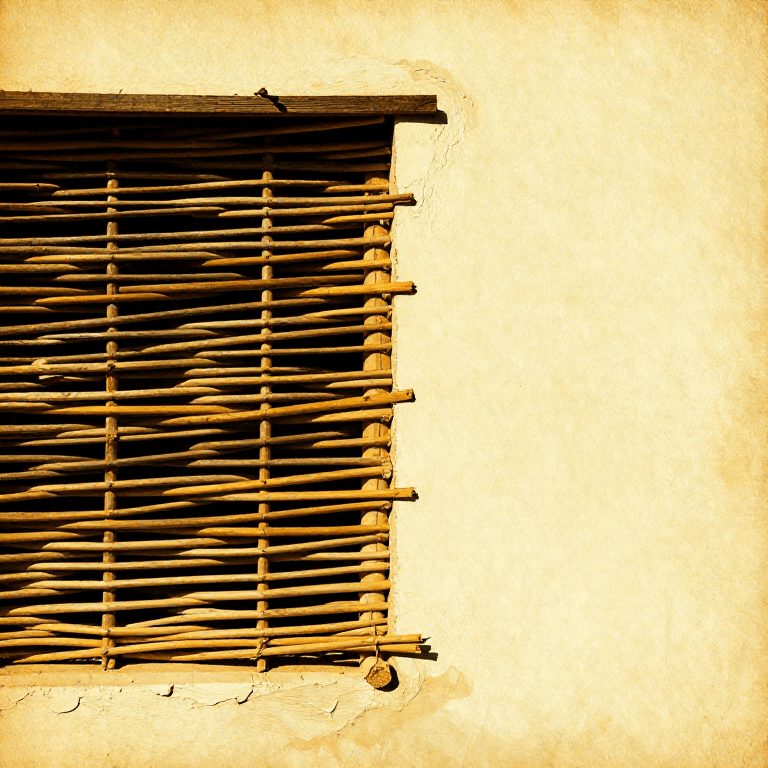
Lay 4 to 5 thin, straight green-wood poles across the mid-height cross-braces, spaced 15 to 20 cm apart. These form the grate on which meat or fish is placed, or from which it hangs. Use only green (freshly cut) wood — dry wood may catch fire from the heat and smoke below. Lash each rack pole to the cross-braces to prevent shifting. A second rack can be added 30 cm above the first for additional capacity.

Matériaux pour cette étape :

Hardwood SaplingHardwood Sapling5 pièces
7

Cover the Frame with Bark Sheets

Peel large sheets of bark (birch, elm, or poplar work best) from recently fallen or living trees during spring when the sap is flowing. Each sheet should be at least 40 by 60 cm. Lay the bark sheets over the frame from bottom to top like shingles, overlapping each row by 10 cm so rain runs off. Secure each sheet by pressing it against the frame poles and tying through with short lengths of cordage.

Matériaux pour cette étape :

Birch Bark SheetsBirch Bark Sheets10 pièces
CordageCordage1 botte
8

Leave a Smoke Vent at the Top

Do not fully seal the peak of the structure. Leave a gap of 15 to 20 cm at the ridge line to allow smoke to escape slowly. This vent creates a natural draft: cool air enters at the base, passes through the fire, rises through the meat, and exits at the top. Without this vent, smoke stagnates and the fire smothers from lack of oxygen. The vent can be partially covered with a loose bark flap to control airflow.
9

Create the Fire Pit

Dig a shallow pit (20 cm deep, 40 cm in diameter) in the centre of the smokehouse floor, directly below the smoking rack. Line the pit edges with flat stones to contain the coals and reflect heat upward. The pit must be small — the goal is smouldering coals producing maximum smoke, not a roaring fire. A large fire generates too much heat and cooks the meat instead of curing it.
10

Prepare the Smoking Fuel

Gather hardwood chips and chunks — oak, hickory, apple, alder, or beech produce the best smoking flavour and antimicrobial compounds. Avoid resinous softwoods (pine, spruce, cedar) which deposit bitter creosote on the meat. Break or chop the wood into pieces roughly 3 to 5 cm across. Soak half the wood in water for 30 minutes — wet wood smoulders slowly and produces dense smoke rather than flame.

Matériaux pour cette étape :

CharcoalCharcoal2 kg
11

Start the Smouldering Fire

Start a small fire in the pit using dry tinder and a few pieces of charcoal. Once the coals are glowing steadily, pile the damp hardwood chips on top. The coals should ignite the chips slowly, producing thick white or blue-grey smoke. If flames appear, sprinkle more damp chips on top to smother them. The temperature at rack height should stay between 25 and 40 degrees Celsius for cold smoking, or 50 to 85 degrees Celsius for hot smoking.
12

Maintain the Smoke for 12 to 48 Hours

Cold-smoking fish or thin-cut meat requires 12 to 24 hours of continuous smoke. Thicker cuts or whole joints need 24 to 48 hours. Check the fire every 2 to 3 hours and add more damp wood chips as needed. The smoke should be constant but not billowing — a thin, steady stream exiting the top vent indicates correct airflow. Rotate the meat on the racks every 6 to 8 hours so all surfaces receive equal smoke exposure. The finished product should be dry to the touch, dark amber in colour, and firm when pressed.

Matériaux

4

Outils requis

2

Matériaux des Blueprints connectés

CC0 Domaine public

Ce blueprint est publié sous CC0. Vous êtes libre de copier, modifier, distribuer et utiliser ce travail pour tout usage, sans demander la permission.

Soutenez le Maker en achetant des produits via son Blueprint où il perçoit une Commission Maker définie par les Vendeurs, ou créez une nouvelle itération de ce Blueprint et incluez-le comme connexion dans votre propre Blueprint pour partager les revenus.

Commentaires

(0)

Se connecter pour participer à la discussion

Chargement des commentaires...