ART
BEAUTÉ ET BIEN-ÊTRE
ARTISANAT
CULTURE ET HISTOIRE
DIVERTISSEMENT
ENVIRONNEMENT
NOURRITURE ET BOISSONS
INGÉNIERIE INVERSE
SCIENCES
SPORTS
TECHNOLOGIE
TECHNOLOGIE PORTABLE
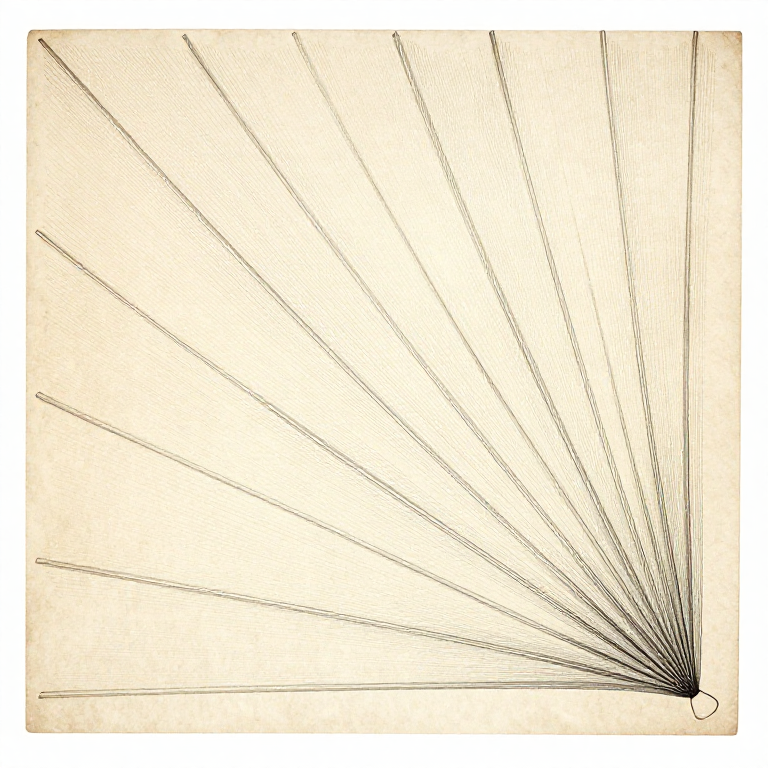


Fitting: Read the Wrinkles, Because They Point at the Problem
A badly fitting garment is not randomly wrong. The wrinkles in it are the cloth reporting where it has too much material and where it has too little, and they point almost literally at the cause.
The rule: **wrinkles point at the problem.** Diagonal drag lines radiating from a spot mean the cloth is being pulled toward that spot because there is not enough of it there. Horizontal folds mean there is too much length; vertical folds mean too much width.
Once that is read rather than guessed at, fitting stops being a matter of taste and becomes a diagnosis — which is the same move the machine-listening and glaze-fault rungs make in their own workshops.
Avancé
4 hours
Consignes
1
1
Check the grain first, before any wrinkle
Check the grain first, before any wrinkle
Put the toile on and look at where the grain is sitting, not at where the wrinkles are. The lengthwise grain should hang straight down from shoulder to hem; the crosswise grain should run level across the bust and the hip.
If the grain is off, nothing else read from the garment is reliable, because every fold is a consequence of the whole thing hanging crooked. Correct the hanging first — usually at the shoulder — and look again.
Mark the grain lines on the toile in pen before trying it on. A bold line down the centre front, centre back and across the bust makes what would otherwise be a subjective judgement completely obvious.
Matériaux pour cette étape :
 Mousseline de coton1 metre
Outils nécessaires :
 Craie de tailleur
 Mètre ruban
 Épingles de couture
2
2
What each kind of fold means
What each kind of fold means
DIAGONAL lines radiating from a point: the cloth is short in that direction and is being dragged. Lines pointing at the bust mean it needs more room there; lines from the shoulder to the underarm mean the armhole or the shoulder is wrong.
HORIZONTAL folds sitting in a band: too much LENGTH above them. A band of folds under the seat means the back rise is too long; a fold across the upper back means the back is too long between neck and shoulder blade.
VERTICAL folds: too much WIDTH. Loose vertical ripples down the back mean the back is wider than the body needs. Both kinds can appear at once, and the length problem is corrected first, because correcting length moves where the width is measured.
Matériaux pour cette étape :
Mousseline de coton1 metreOutils nécessaires :
Épingles de coutureCraie de tailleur3
3
Pin the correction on, then measure it off
Pin the correction on, then measure it off
Pin out the excess where it is, on the body, with the pins running along the line the new seam should take. That is a direct physical answer to the question rather than an estimate.
Then take the garment off and MEASURE what was pinned, and transfer that measurement to the paper pattern. The pinned toile is evidence; the pattern is the record, and only the pattern can be used again.
Correct both sides unless the body is genuinely asymmetric — and many are. Where it is, fit each side separately and mark the pattern pieces left and right, because from that point they are no longer mirror images.
Matériaux pour cette étape :
Mousseline de coton1 metre Papier1 pièce
Outils nécessaires :
Épingles de coutureMètre ruban Règle
Règle4
4
Fit in a fixed order, and keep the pattern
Fit in a fixed order, and keep the pattern
Shoulders and neckline first, because the whole garment hangs from them and every other measurement moves when they do. Then bust and back width, then waist, then hip, then sleeves, then length last.
That order is not tradition; it follows from what depends on what. Hemming before the shoulders are right means hemming twice, and the second hem is always shallower than you wanted.
Then keep the corrected pattern, labelled, dated, with a note of what was changed and why. A pattern fitted once is a template for everything afterwards, and that — rather than any single garment — is what an afternoon of fitting actually buys.
Matériaux pour cette étape :
Papier1 pièceOutils nécessaires :
Mètre rubanBlueprints liés
Ces blueprints partagent des connaissances — techniques, matériaux ou principes

CC0 Domaine public
Ce blueprint est publié sous CC0. Vous êtes libre de copier, modifier, distribuer et utiliser ce travail pour tout usage, sans demander la permission.
Soutenez le Maker en achetant des produits via son Blueprint où il perçoit une Commission Maker définie par les Vendeurs, ou créez une nouvelle itération de ce Blueprint et incluez-le comme connexion dans votre propre Blueprint pour partager les revenus.