ART
BEAUTÉ ET BIEN-ÊTRE
ARTISANAT
CULTURE ET HISTOIRE
DIVERTISSEMENT
ENVIRONNEMENT
NOURRITURE ET BOISSONS
INGÉNIERIE INVERSE
SCIENCES
SPORTS
TECHNOLOGIE
TECHNOLOGIE PORTABLE
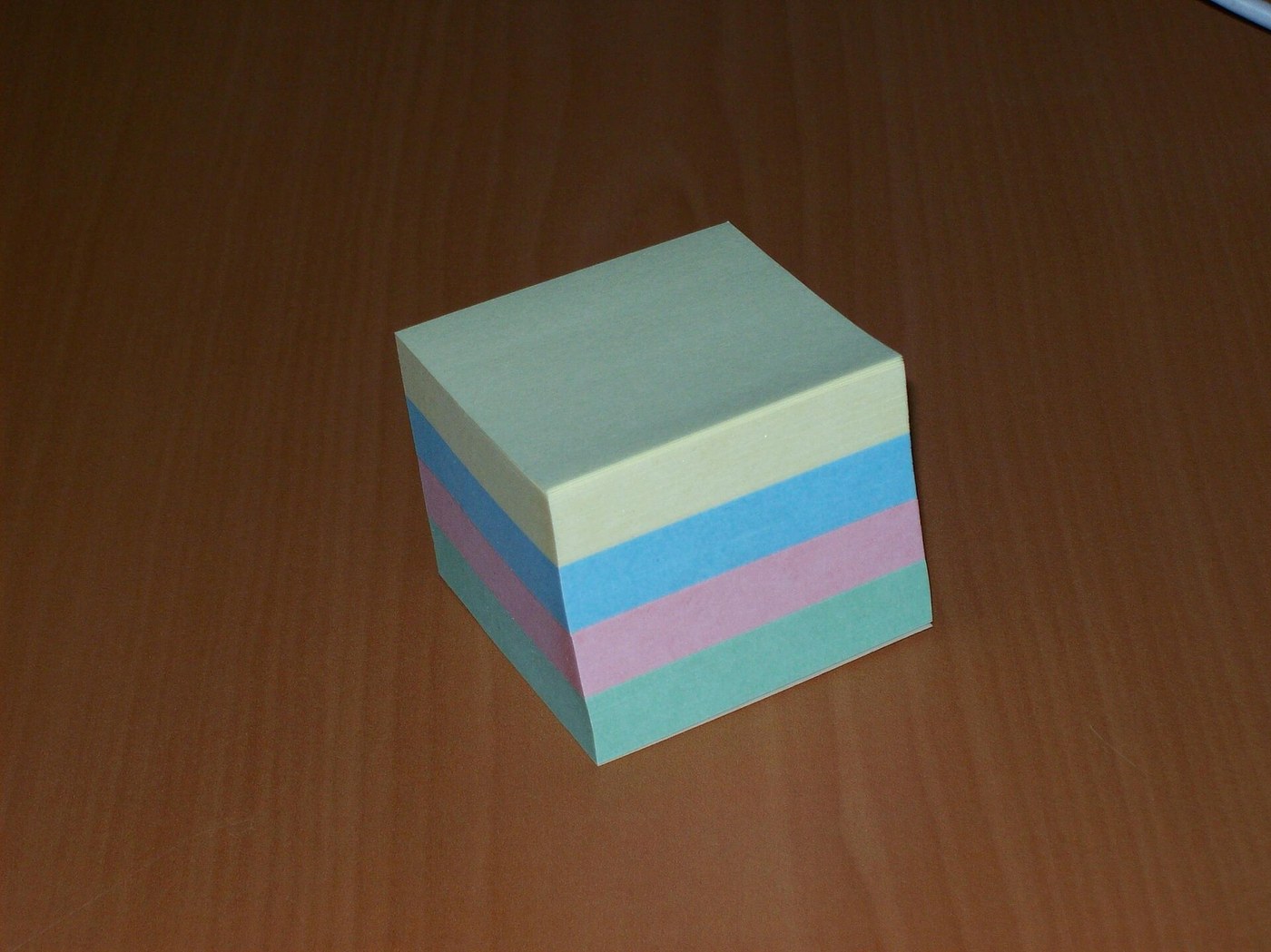


Repositionable Microsphere Adhesive
In 1968 Spencer Silver at 3M, trying to make a very strong adhesive, made the opposite: an acrylate that formed tiny tacky spheres and held only lightly. For years it had no product. In 1974 his colleague Art Fry coated it on bookmarks for his church hymnal so they would stay put without tearing the pages; the sticky note reached shops in 1980.
**US 3,691,140**, "Acrylate copolymer microspheres", Silver, filed 9. March 1970, granted 12. September 1972: "inherently tacky", elastomeric microspheres of an acrylate ester such as iso-octyl acrylate with a small share of an ionic monomer.
**You measure what makes it different from tape**: the peel force over twenty re-sticks, side by side with masking tape, and the spheres themselves under a microscope.
Débutant
1 hour
Consignes
1
1
Look at the stripe
Look at the stripe
Put a sticky note's adhesive stripe under the digital microscope at high magnification. Beside it, a strip of masking tape. Capture both; measure the bead size and spacing on the note.
Matériaux pour cette étape :
 Notes adhésives repositionnables1 pad
 Ruban de masquage1 rouleau
Outils nécessaires :
 Microscope numérique
2
2
Clean the glass
Clean the glass
Wipe a glass sheet with isopropyl alcohol and let it dry. Cut the masking tape to the same 25 mm width and 75 mm length as the note's sticky area.
Matériaux pour cette étape :
 Alcool isopropylique à 99 %10 ml
 Essuie-tout1 feuille
Outils nécessaires :
 Feuille de verre
 Ciseaux
 Règle
Règle3
3
Peel at 90 degrees
Peel at 90 degrees
Press the note and the tape onto the glass with one firm thumb stroke each. Clip a paper clip to each free end, hook the spring scale, and peel straight up, slowly. Record the steady force.
Matériaux pour cette étape :
 Trombones2 pièces
Outils nécessaires :
 Dynamomètre (peson à ressort)
4
4
Re-stick and repeat
Re-stick and repeat
Stick the same pieces down again in the same place and peel again. Record peel 1, 2, 5, 10 and 20.
Outils nécessaires :
Dynamomètre (peson à ressort)5
5
Peel ladder and contact area
Peel ladder and contact area
Chargement du notebook Jupyter…
6
6
History & Context
History & Context
**What the patent specifies:** inherently tacky, elastomeric, solvent-insoluble acrylate copolymer microspheres made by suspension polymerisation with an ionic comonomer. **Modern build (derived):** a commercial sticky-note pad, tested.
The same idea now holds repositionable labels, wall graphics and removable flags. Its limits: a weak grip by design, fading tack as dust and fibre collect on the spheres, and poor hold on rough or damp surfaces.
Matériaux
5- Espace réservé
- 1 rouleauEspace réservé
- Espace réservé
- 1 feuilleEspace réservé
- 2 piècesEspace réservé
Blueprints liés
Ces blueprints partagent des connaissances — techniques, matériaux ou principes


CC0 Domaine public
Ce blueprint est publié sous CC0. Vous êtes libre de copier, modifier, distribuer et utiliser ce travail pour tout usage, sans demander la permission.
Soutenez le Maker en achetant des produits via son Blueprint où il perçoit une Commission Maker définie par les Vendeurs, ou créez une nouvelle itération de ce Blueprint et incluez-le comme connexion dans votre propre Blueprint pour partager les revenus.