ART
BEAUTÉ ET BIEN-ÊTRE
ARTISANAT
CULTURE ET HISTOIRE
DIVERTISSEMENT
ENVIRONNEMENT
NOURRITURE ET BOISSONS
INGÉNIERIE INVERSE
SCIENCES
SPORTS
TECHNOLOGIE
TECHNOLOGIE PORTABLE
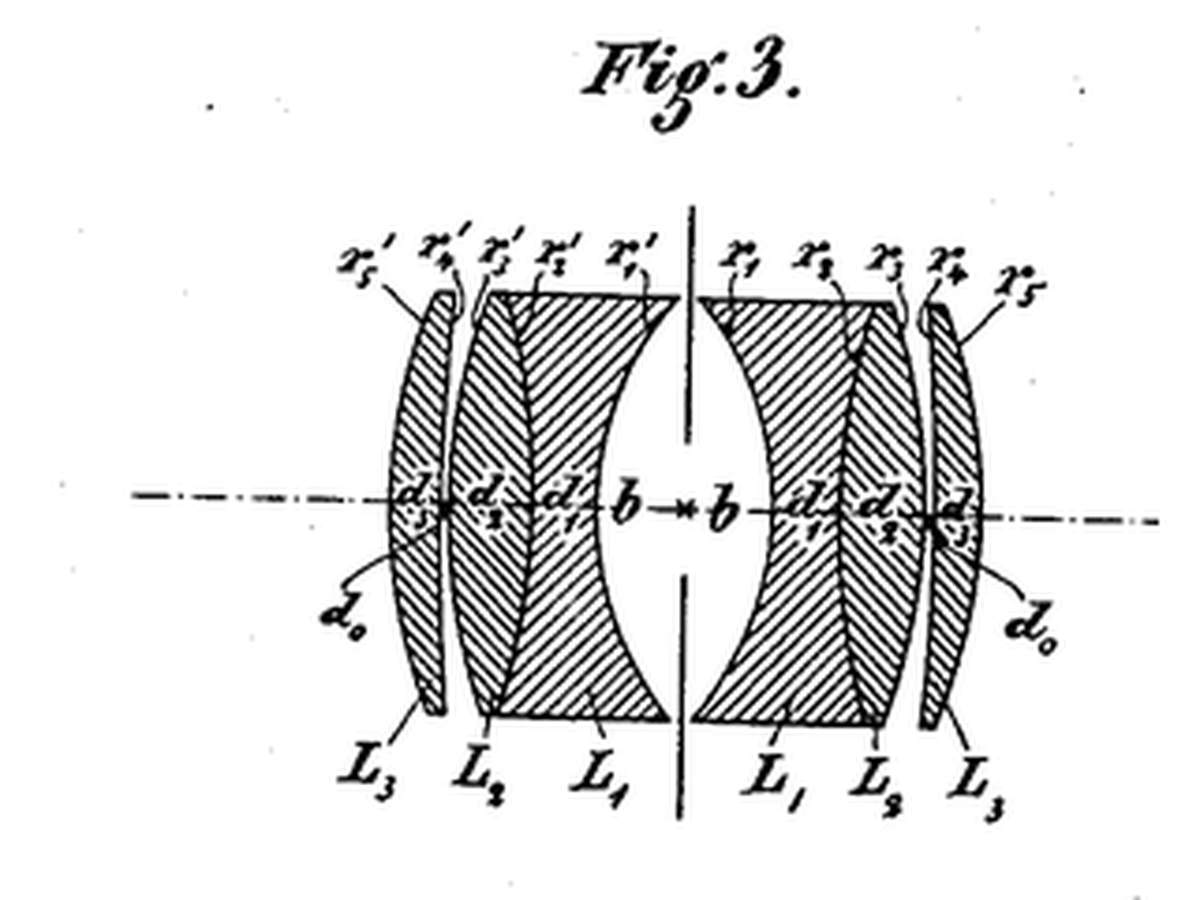


Planar (Double-Gauss) Lens
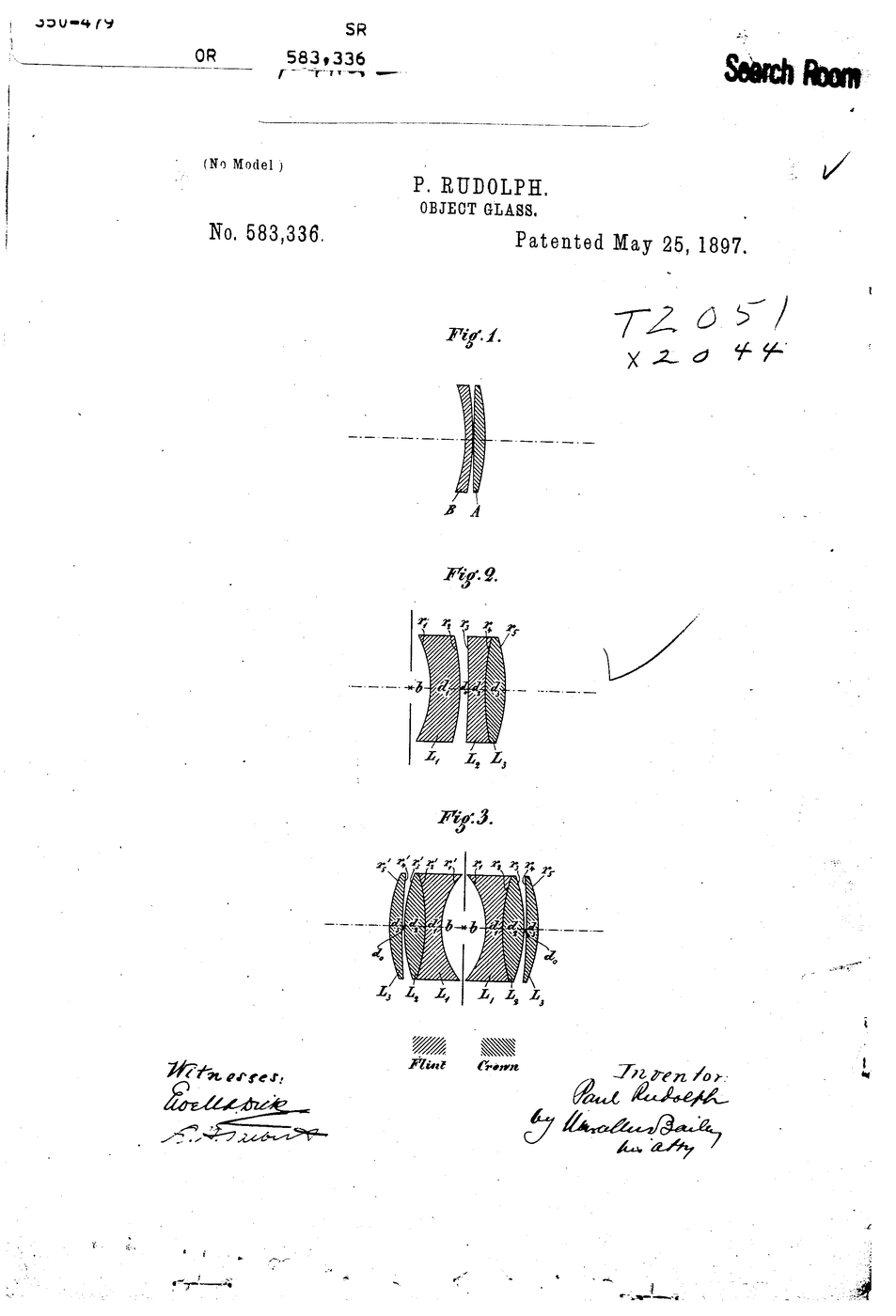
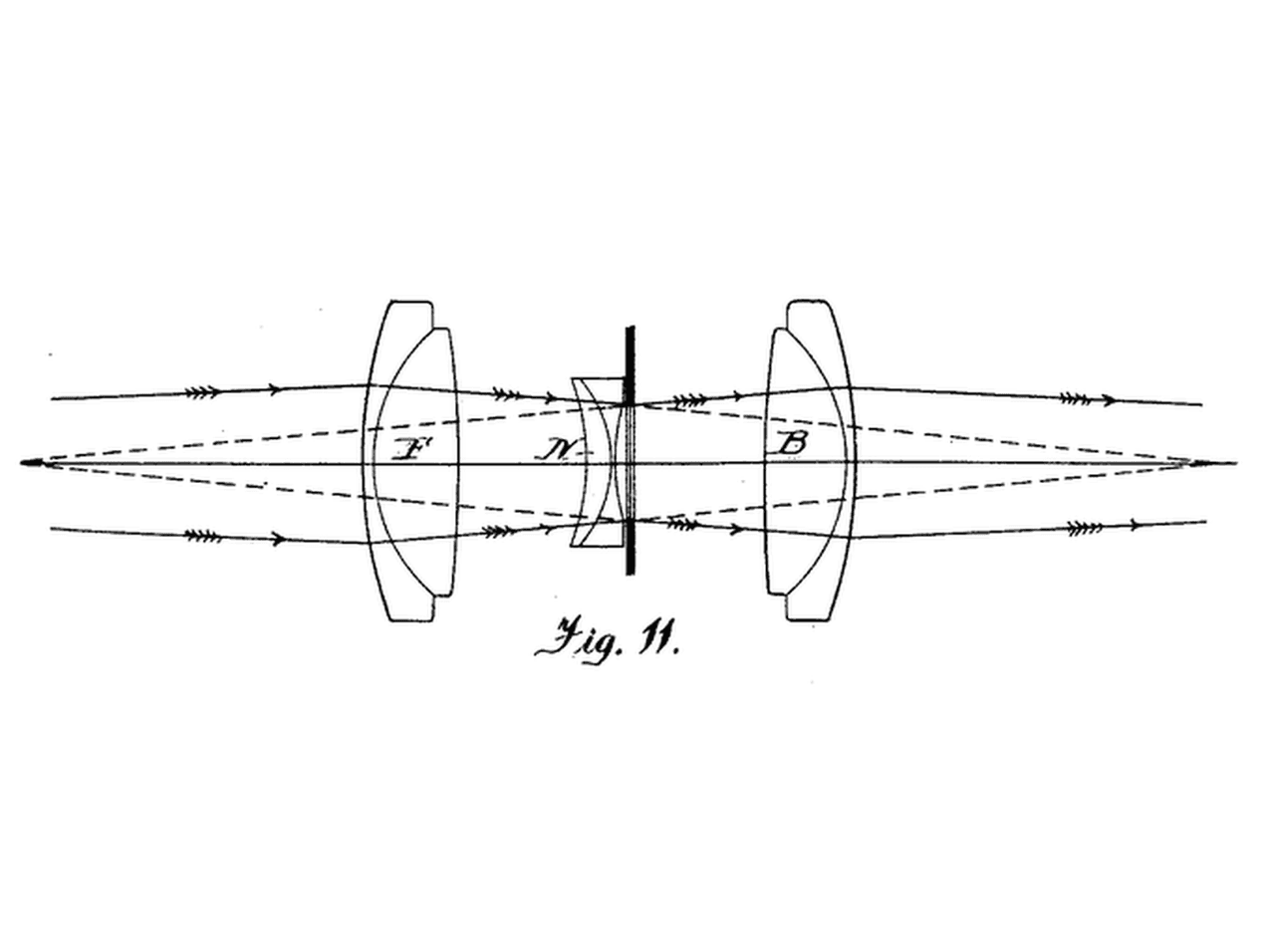
Carl Friedrich Gauss had designed a telescope objective of two air-spaced lenses - a crown meniscus and a flint lens with differently curved facing surfaces - that corrected spherical aberration for two colours at once. Paul Rudolph at Zeiss turned it into a camera lens: two such groups placed symmetrically either side of the stop, each group achromatised with a cemented pair of glasses of nearly the same refractive index but different dispersion.
**US 583,336**, "Object-glass", Rudolph, assigned to Carl Zeiss, filed 1. February 1897, granted 25. May 1897. Descendants of this double-Gauss layout became the standard fast normal lens for most of the twentieth century.
**You test what the symmetry buys**: a grid imaged through a single lens with the stop in front, with it behind, and through a symmetric pair with the stop in the middle.
Intermédiaire
2 hours
Consignes
1
1
Make a stop
Make a stop
Cut a 60 mm disc of black card with a 6 mm round hole in its centre. Mount it in a lens holder.
Matériaux pour cette étape :
 Carton noir1 feuille
Outils nécessaires :
 Cutter de précision
 Jeu de porte-lentilles
2
2
Light a grid
Light a grid
Tape graph paper over a torch or a bright window 1 m from the bench. Tracing paper on a holder is the screen.
Matériaux pour cette étape :
 Papier millimétré1 feuille
 Rouleau de papier calque à patrons1 feuille
 Ruban de masquage1 rouleau
Outils nécessaires :
 Lampe d'inspection à LED
 Banc et rail d'optique
3
3
Stop in front, then behind
Stop in front, then behind
One 100 mm convex lens with the stop 25 mm in front of it: focus the grid and measure the width of the middle row and the top row across the same squares. Move the stop 25 mm behind the lens and measure again.
Matériaux pour cette étape :
 Jeu de lentilles convergentes1 jeu
Outils nécessaires :
 Règle en acier
4
4
Make it symmetric
Make it symmetric
Add a second identical lens so the stop sits exactly midway between them, 25 mm each side. Refocus and measure the same two widths.
Outils nécessaires :
Règle en acier Mètre ruban
5
5
Distortion from your widths
Distortion from your widths
Chargement du notebook Jupyter…
6
6
History & Context
History & Context
**What the patent specifies:** Gauss-type objectives made anastigmatic and achromatised by cemented components of nearly equal refractive index but different dispersion, used as a doublet about a central stop. **Modern build (derived):** two identical stock lenses about a card stop.
The Planar was too prone to flare with uncoated glass; once anti-reflection coatings arrived, double-Gauss lenses became the classic 50 mm f/2 and faster. Its limits: many air-glass surfaces, and a design that needs careful glass choice to go wide.
Matériaux
5- 1 feuilleEspace réservé
- 1 feuilleEspace réservé
- 1 feuilleEspace réservé
- 1 rouleauEspace réservé
- Espace réservé
Outils requis
6- Espace réservé
- Jeu de porte-lentilles10 % de commissionEspace réservé
- Espace réservé
- Banc et rail d'optique10 % de commissionEspace réservé
- Espace réservé
- 1 vendor sell this, none ship to you yetEspace réservé
Blueprints liés
Ces blueprints partagent des connaissances — techniques, matériaux ou principes

CC0 Domaine public
Ce blueprint est publié sous CC0. Vous êtes libre de copier, modifier, distribuer et utiliser ce travail pour tout usage, sans demander la permission.
Soutenez le Maker en achetant des produits via son Blueprint où il perçoit une Commission Maker définie par les Vendeurs, ou créez une nouvelle itération de ce Blueprint et incluez-le comme connexion dans votre propre Blueprint pour partager les revenus.