ART
BEAUTÉ ET BIEN-ÊTRE
ARTISANAT
CULTURE ET HISTOIRE
DIVERTISSEMENT
ENVIRONNEMENT
NOURRITURE ET BOISSONS
INGÉNIERIE INVERSE
SCIENCES
SPORTS
TECHNOLOGIE
TECHNOLOGIE PORTABLE
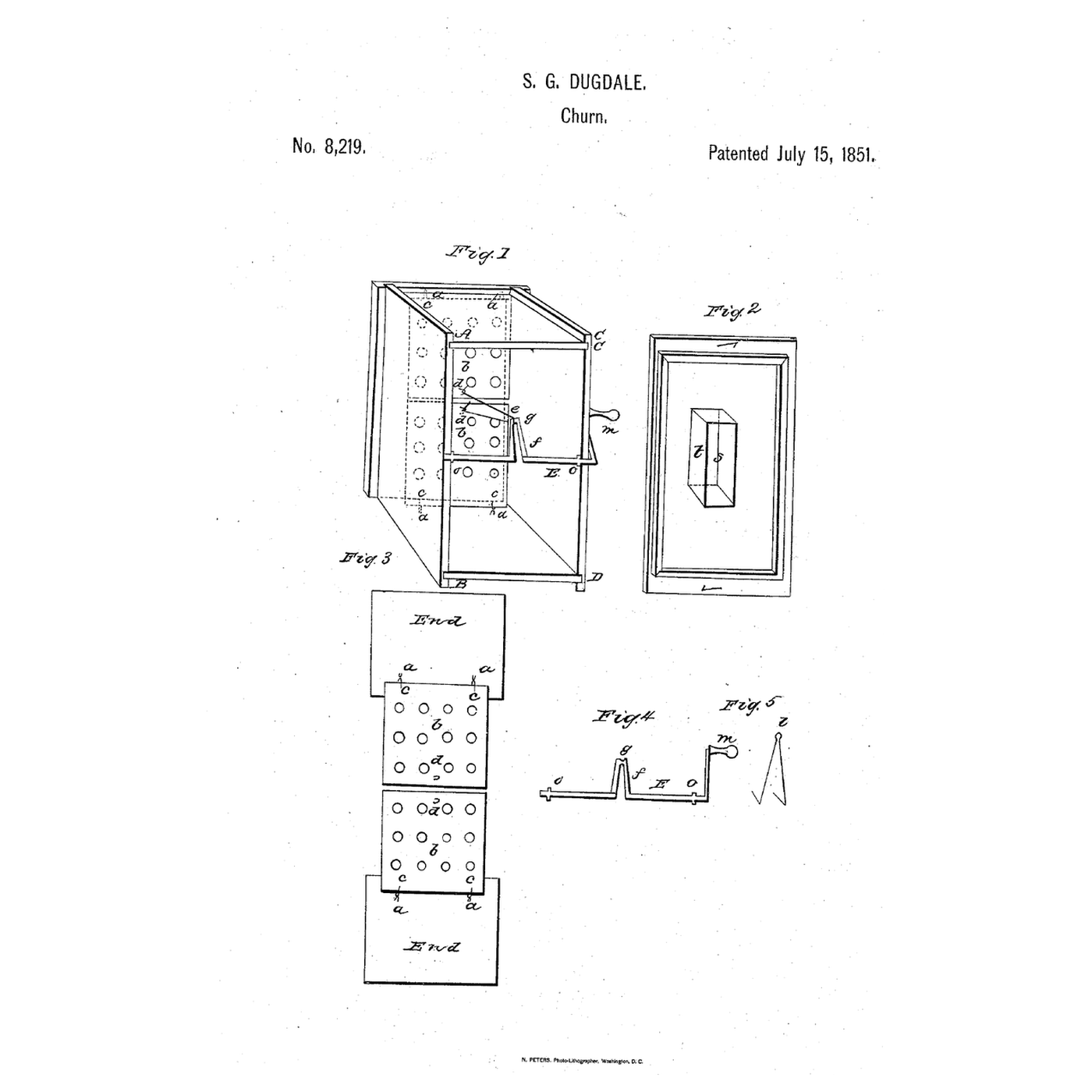


Spring-Wire Twin Dash Churn: Two Hinged Dashes Rocked by a Sprung Wire on a Crank
Dugdale made the link between crank and dashes a spring.
Samuel G. Dugdale of Richmond, Indiana, received US 8,219, dated 15 July 1851, for a churn: a water-tight box 16 inches long, nine wide and twelve deep, with two perforated dashes seven by six inches hung by hooks on staples three inches above the bottom at each end. A shaft with a three-inch crank turns in grooves in the box's edges, held down by the lid; an elastic wire bent round the crank, closed into an eye, has its ends hooked into staples on the dashes, "in such a manner that it will accommodate itself to the opening and closing of the same."
This rung works out the dashes' swing, then prints the two dashes and shaft bearings, bends the spring wire, and makes butter.
Débutant
About 2 hours, plus printing
Consignes
1
1
The dashes' swing
The dashes' swing
Chargement du notebook Jupyter…
2
2
Two dashers worked from one motion before it
Two dashers worked from one motion before it
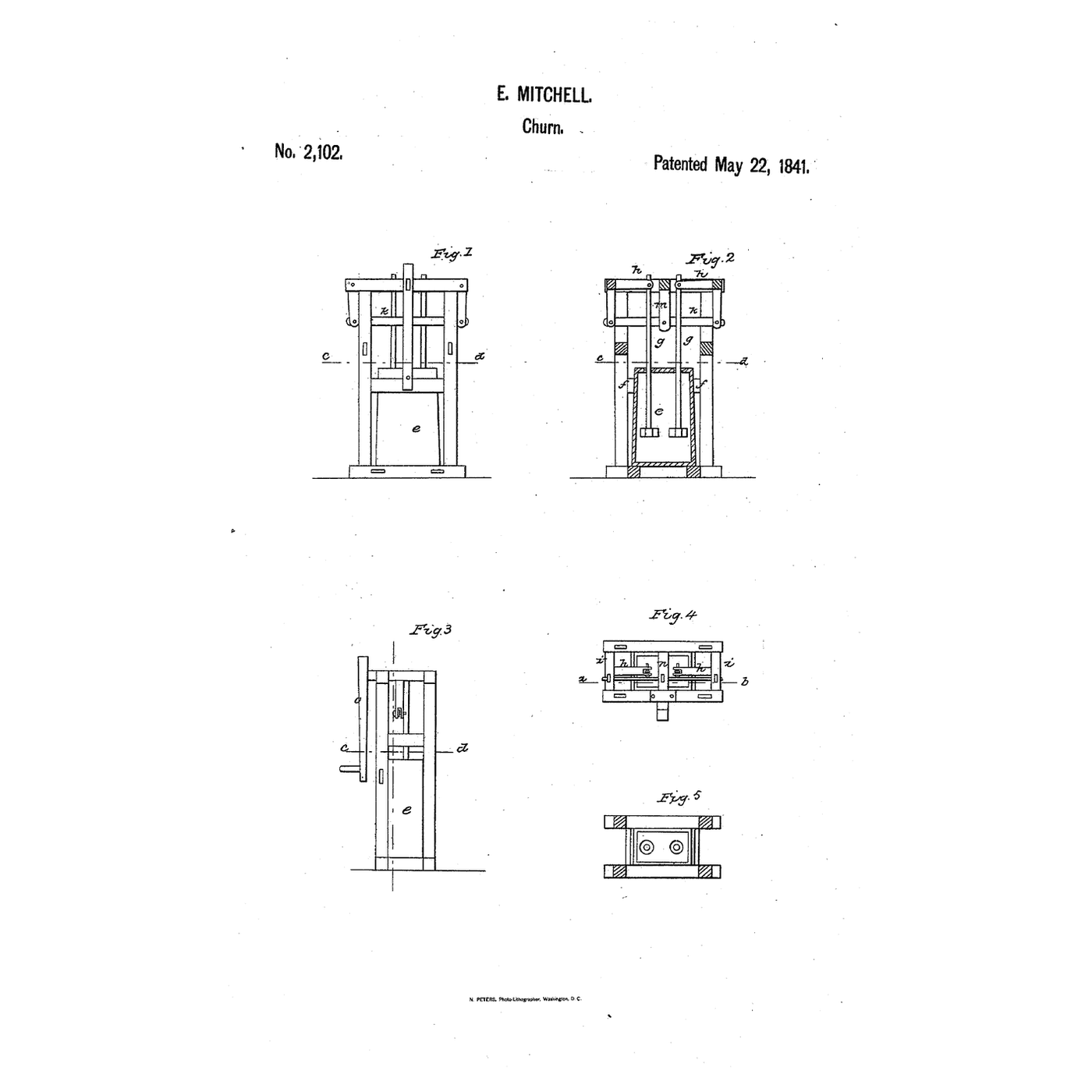
The embedded blueprint links two dashers with levers. Dugdale links his two hinged dashes to one crank with a single sprung wire.
3
3
Read US 8,219
Read US 8,219
"It will be noticed, also, that when the handle is raised perpendicular, the crank to which the wire is attached will be parallel to it, and the ends of the wire attached to the dashers, will be extended, and as the handle is turned from you the springs act upon the dashers tending to force them down, thereby facilitating the operation."
4
4
Print the parts
Print the parts
Print two perforated dashes with their hooks and staple (/uploads/blueprints/spring-wire-twin-dash-churn-dash.stl) and two shaft bearings (/uploads/blueprints/spring-wire-twin-dash-churn-shaft-bearing.stl). Print in PETG at 0.2 mm layers, 30 % infill, 4 walls; wash before first use.
Matériaux pour cette étape :
 Filament PETG1 pièce
Outils nécessaires :
 Imprimante 3D à filament (FDM)
5
5
Box and staples
Box and staples
Take a food-safe box about 240 × 135 × 180 mm, about three fifths of his. Screw a stainless screw-eye into each end 30 mm above the bottom as the staples, and hang a dash on each by its hooks, holes toward the middle. Screw the bearings to the box's long edges at the middle.
Matériaux pour cette étape :
 Contenant de stockage de qualité alimentaire1 pièce
 Vis à bois #8 x 1"1 pièce
Outils nécessaires :
 Perceuse sans fil
 Jeu de forets
 Jeu de tournevis
6
6
Crank and spring wire
Crank and spring wire
Bend a 6 mm steel rod into a shaft with a 45 mm crank in the middle and a handle at one end, and lay it in the bearings. Bend spring-steel wire once round the crank pin into an eye and hook its two ends into the dashes' staples, so the wire is a little stretched with the crank up.
Matériaux pour cette étape :
 Rond en acier doux1 pièce
 Fil d'acier à ressort1 pièce
Outils nécessaires :
 Clé à molette
 Scie à métaux
7
7
The build in 3D
The build in 3D
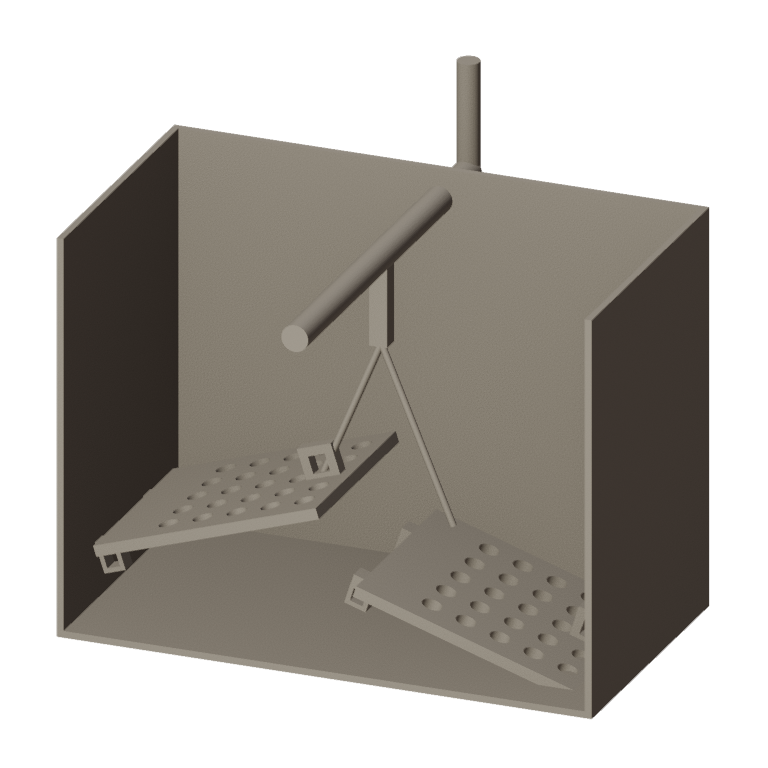
FreeCAD model of this build, not of the patent: the box with one side off to show the two perforated dashes hooked to the ends, the spring wire from the crank to their inner ends, and the shaft.
8
8
Crank and make butter
Crank and make butter
Let the heavy cream stand until it reaches about 15 °C, checked with the thermometer. Pour in 2 litres, enough to cover the dashes. Fit the lid over the shaft and turn the handle steadily; time until the butter comes. Pour off the buttermilk, add cold water, churn a little and pour off again until it runs clear; work in a pinch of salt and weigh the butter.
Matériaux pour cette étape :
 Crème liquide entière2000 ml
 Gros sel marin1 pièce
 Eau1 pièce
Outils nécessaires :
 Thermomètre à sonde à demeure
 Chronomètre
 Balance de cuisine numérique
 Grand cul-de-poule en acier inoxydable
9
9
Dashes that jump off, a wire that kinks
Dashes that jump off, a wire that kinks
Spring-wire twin dash troubleshooting.
Flow
Loading...
10
10
History and honest limits
History and honest limits
**Samuel G. Dugdale** of Richmond, Wayne County, Indiana, received US 8,219, dated 15 July 1851. His dashes were half an inch thick with holes leaving 2½ inches plain at the hung ends; collars kept the shaft from slipping; it could be turned by a handle or a pinion on a driving wheel. He claimed "the application of the spring wire ... which connects the crank with the dashers."
**Honest limits.** A food-safe box at about three-fifths scale and printed dashes stand in for his. FDM prints hold food in their layer lines, so wash well and replace when worn. Your times and weights are the result.
Matériaux
8- 1 pièceEspace réservé
- Espace réservé
- 1 pièceEspace réservé
- 1 pièceEspace réservé
- 1 pièceEspace réservé
- 2000 mlEspace réservé
- 1 pièceEspace réservé
- 1 pièceEspace réservé
Outils requis
10- Espace réservé
- 1 vendor sell this, none ship to you yetEspace réservé
- Espace réservé
- Espace réservé
- Espace réservé
- Espace réservé
- Espace réservé
- Espace réservé
- Espace réservé
- Espace réservé
Fichiers de conception
1Blueprints liés
Ces blueprints partagent des connaissances — techniques, matériaux ou principes
Double-Dasher Lever Churn: Swing One Lever, One Dasher Rises as the Other Falls
par Woody
Menuiserie
7
0
0
0
0
0
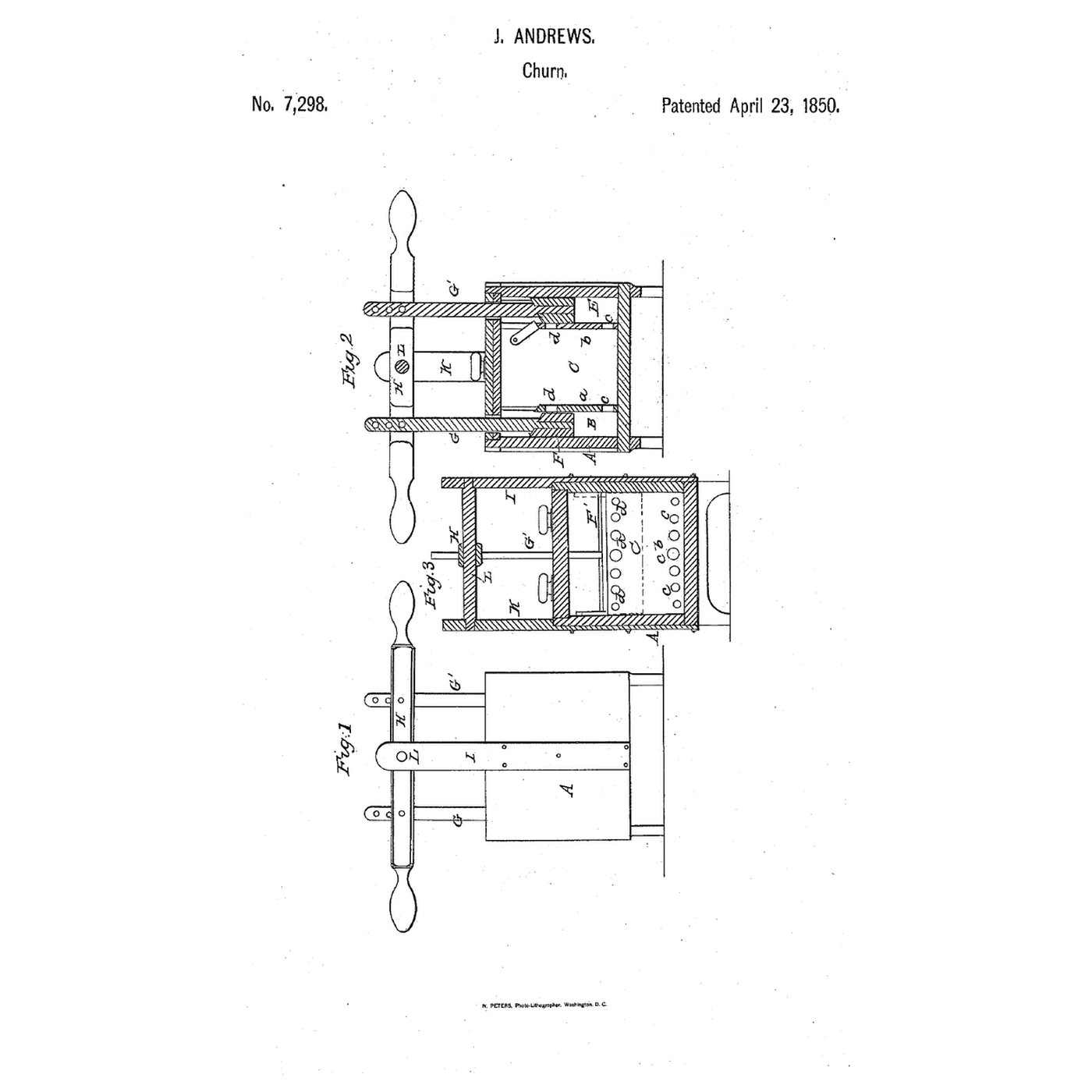
Twin-Plunger Air-Chamber Churn: Two Plungers Throw the Cream Through a Middle Chamber
par Emma
NOURRITURE ET BOISSONS
1
0
0
0
0
0

Churning Butter from Cream — The 5,000-Year-Old Fat Separation
par TheChef
ARTISANAT
47
0
0
0
0
0
CC0 Domaine public
Ce blueprint est publié sous CC0. Vous êtes libre de copier, modifier, distribuer et utiliser ce travail pour tout usage, sans demander la permission.
Soutenez le Maker en achetant des produits via son Blueprint où il perçoit une Commission Maker définie par les Vendeurs, ou créez une nouvelle itération de ce Blueprint et incluez-le comme connexion dans votre propre Blueprint pour partager les revenus.