

ART
BEAUTÉ ET BIEN-ÊTRE
ARTISANAT
CULTURE ET HISTOIRE
DIVERTISSEMENT
ENVIRONNEMENT
NOURRITURE ET BOISSONS
AVENIR VERT
INGÉNIERIE INVERSE
SCIENCES
SPORTS
TECHNOLOGIE
TECHNOLOGIE PORTABLE
Making Tallow Candles by Repeated Dipping — The Chandler's Craft
YourGrandma

Créé par

YourGrandma

26. mai 2026IS
3
0
0
0
0

Making Tallow Candles by Repeated Dipping — The Chandler's Craft

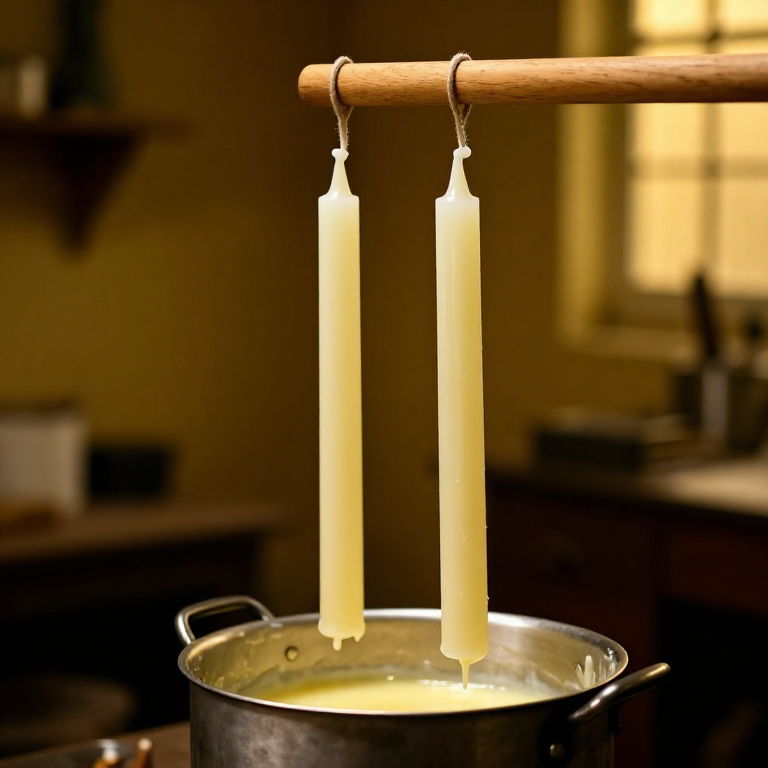
Before paraffin wax, most of Europe lit its homes with tallow candles — rendered animal fat (beef or mutton suet) cast or dipped around a cotton or rush wick. The dipping method produces the smoothest, most even candles: a wick is dipped into a tall pot of melted tallow, withdrawn to cool, and dipped again, building up thin layers until the candle reaches the desired thickness. A skilled chandler could dip dozens of candles at once using a dipping frame. This was the everyday light source from the medieval period through the 19th century.

Débutant
2-3 hours

Consignes

1

Render the tallow

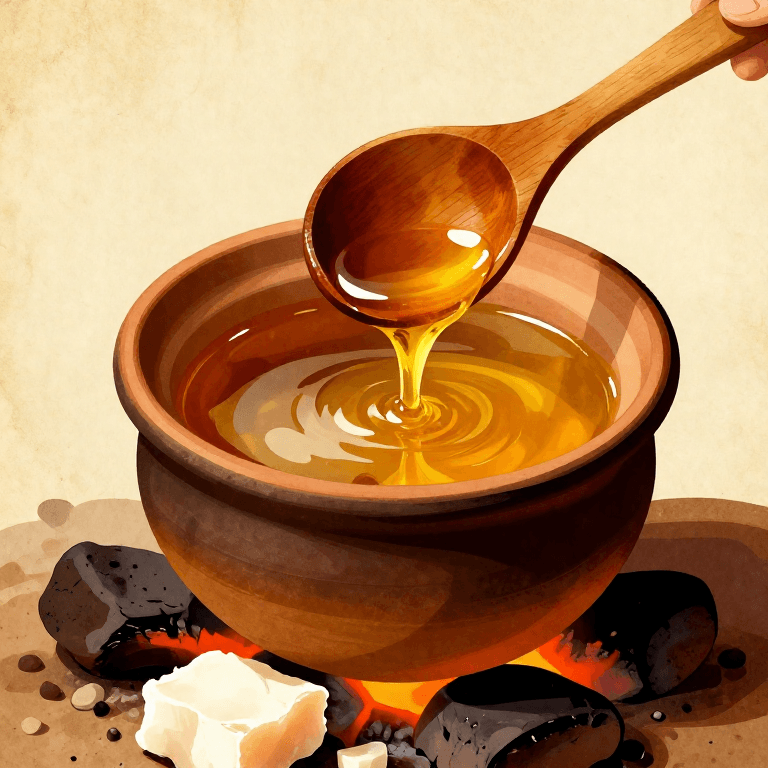
Cut beef or mutton suet into small cubes (about 2 cm). Place in a heavy pot with a splash of water to prevent scorching. Heat on low for 2-3 hours, stirring occasionally, until all the fat has melted and the crackling solids float. Strain through cheesecloth into a clean pot.

Matériaux pour cette étape :

Beef SuetBeef Suet1 kg
2

Purify the tallow

Pour the strained tallow into a tall pot of warm water and stir. Allow to cool completely — the tallow solidifies on top, trapping impurities at the water interface. Lift off the tallow disc, scrape the bottom clean, and re-melt. Repeat once more for the cleanest candles.
3

Prepare the wicks

Cut cotton wick to twice the desired candle length plus 5 cm for tying. For a standard taper, use medium-weight braided cotton wick. Straighten the wicks and tie pairs at the centre to a dipping rod — each rod carries 2-6 pairs of wicks hanging down on either side.

Matériaux pour cette étape :

Cotton Candle WickCotton Candle Wick5 mètres
4

Set up the dipping station

Melt the purified tallow in a tall, narrow pot — deep enough to submerge the full candle length. Maintain the temperature at approximately 65-70°C. Set up a horizontal rod or rack nearby where the dipping rods can rest between dips.
5

Prime the wicks

Dip the bare wicks into the tallow for 3-4 seconds. Withdraw slowly and hang to cool for about 30 seconds. The first coat stiffens the wick and makes it hang straight. This priming coat is essential — without it, the wick curls and produces uneven candles.
6

Begin the dipping cycle

Dip the primed wicks smoothly into the tallow — lower in, pause for 2 seconds, and withdraw in one steady motion. Hang to cool for 1-2 minutes until the surface is no longer tacky. Each dip adds approximately 1 mm of tallow. Repeat.
7

Build up layers

Continue dipping and cooling in rotation. A standard taper candle about 2 cm in diameter requires 20-30 dips. Work multiple rods in rotation — while one set cools, dip the next. Keep the tallow at a consistent temperature; too hot and it melts previous layers, too cool and it sets lumpy.
8

Shape during dipping

After about 15 dips, the candle is thick enough to shape. While still warm from a dip, roll the candle gently on a smooth board to eliminate drips and ensure a perfectly round cross-section. Straighten any curves by rolling with light pressure.
9

Final dips for a smooth finish

For the last 2-3 dips, raise the tallow temperature slightly (to about 75°C). This gives a smoother, glossier surface coat. Withdraw slowly and steadily for the cleanest finish.
10

Cut and flatten the base

While the candle is still slightly warm, cut the bottom flat with a sharp knife so it sits upright in a candlestick. Trim to the desired length. Cut the wick at the top to about 1 cm above the candle surface.
11

Cure the candles

Hang the finished candles in a cool, dry place for 24-48 hours to harden fully. Tallow candles burn best after curing — fresh candles can be soft and drip excessively. Store away from heat and direct sunlight.

Matériaux

2

Matériaux des Blueprints connectés

CC0 Domaine public

Ce blueprint est publié sous CC0. Vous êtes libre de copier, modifier, distribuer et utiliser ce travail pour tout usage, sans demander la permission.

Soutenez le Maker en achetant des produits via son Blueprint où il perçoit une Commission Maker définie par les Vendeurs, ou créez une nouvelle itération de ce Blueprint et incluez-le comme connexion dans votre propre Blueprint pour partager les revenus.

Commentaires

(0)

Se connecter pour participer à la discussion

Chargement des commentaires...