ART
BEAUTÉ ET BIEN-ÊTRE
ARTISANAT
CULTURE ET HISTOIRE
DIVERTISSEMENT
ENVIRONNEMENT
NOURRITURE ET BOISSONS
INGÉNIERIE INVERSE
SCIENCES
SPORTS
TECHNOLOGIE
TECHNOLOGIE PORTABLE

The Flashlight: Dry Cells, a Small Lamp and a Thumb Ring
A lantern must be lit and burns until it is put out. A light you can switch on for a second, point at something, and put in a pocket needed small batteries and a small lamp.
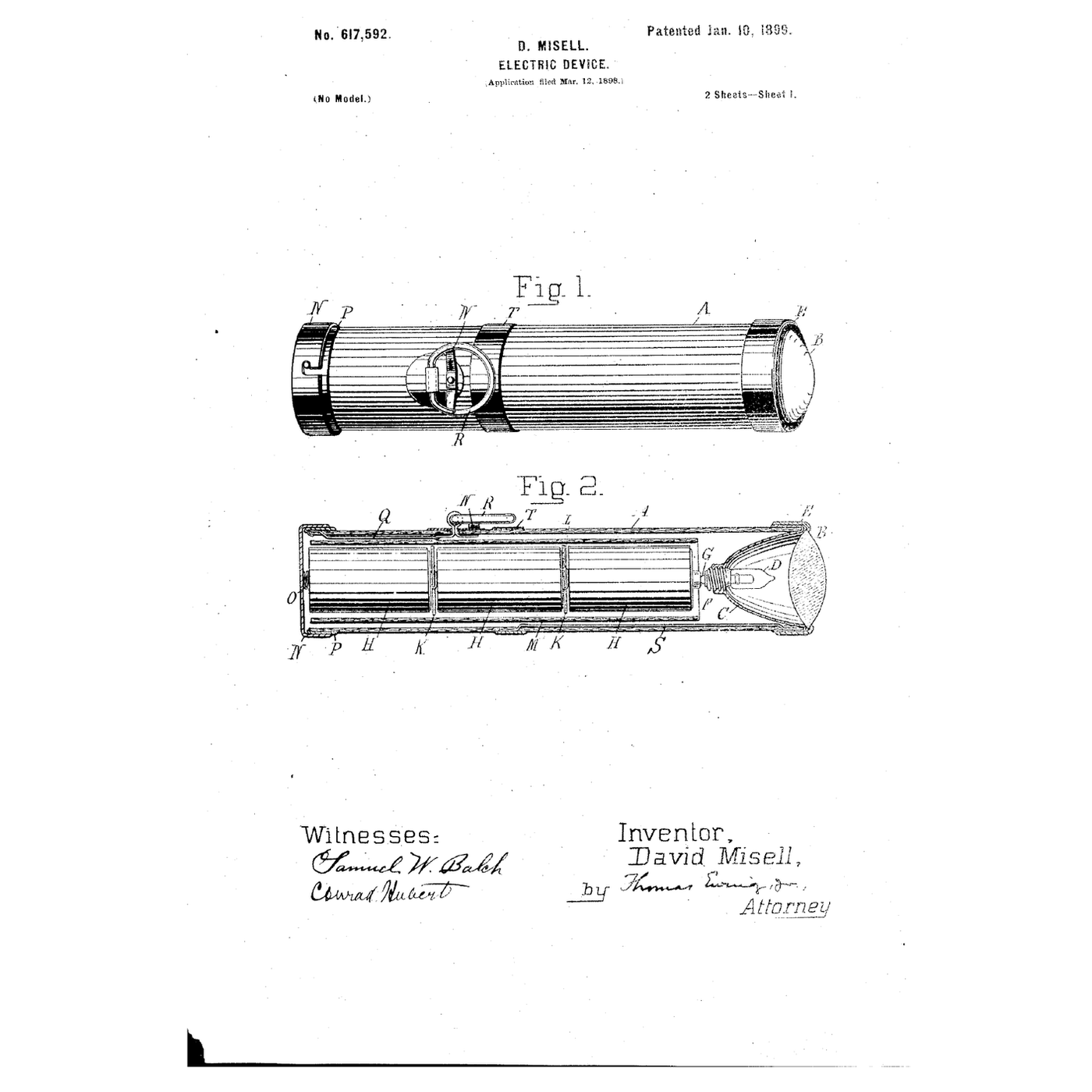
David Misell of New York, assignor to The American Electrical Novelty and Manufacturing Company, filed US 617,592 on 12 March 1898; it is dated 10 January 1899, as an "Electric Device". A pasteboard tube "shaped somewhat like a policeman's club" holds dry cells end to end; at the front a small incandescent lamp sits in a parabolic reflector behind a lens; a ring held off by a spring closes the circuit when pressed with the thumb. "The circuit is always open except when the light is actually needed."
This rung works out voltage, run time and beam width, and builds a flashlight.
Débutant
About 2 hours
Consignes
1
1
Voltage, run time and beam
Voltage, run time and beam
Chargement du notebook Jupyter…
2
2
The cell that made dry batteries possible
The cell that made dry batteries possible
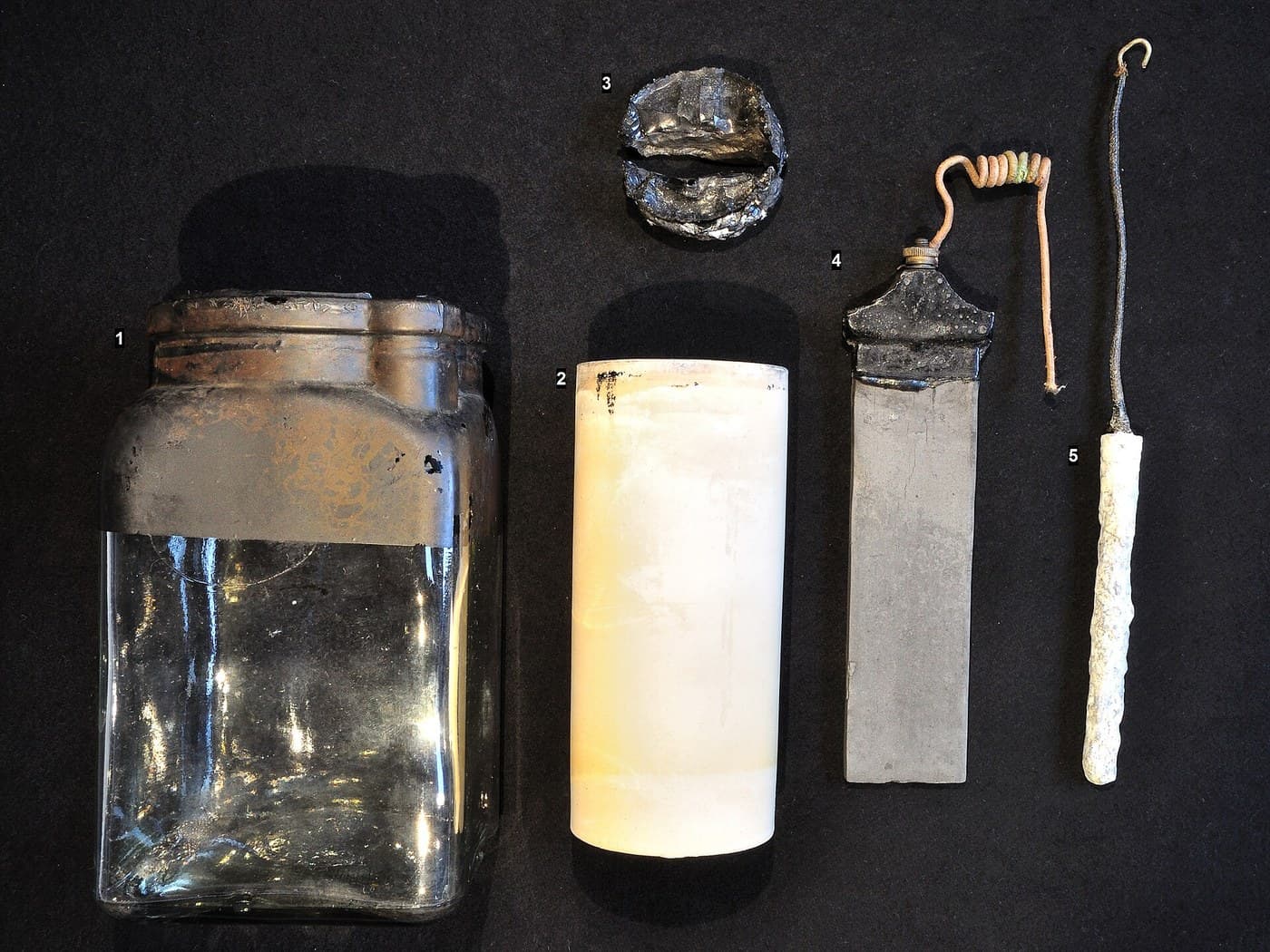
The Leclanché cell is the ancestor of the dry cells in Misell's tube. The embedded blueprint makes one.
3
3
Read US 617,592
Read US 617,592
"The invention consists in the way of assembling the parts and in the manner of making the electrical connections". The casing A "is a cylindrical tube, being shaped somewhat like a policeman's club, and is shown as formed of pasteboard." At one end is a bull's-eye: a lens B and a parabolic reflector C, "the lamp D being screwed into the base of the reflector." The lamp is "a small incandescent lamp of ordinary construction", one end of the filament joined to the threaded band F and the other to a button G.
"A dry battery is used, composed of cells H, placed end to end", inside a pasteboard tube M. One pole meets the lamp's button; the other a metal rear cover N with a contact spring O. The circuit runs by a wire Q to a metal ring R, which "is normally held out of contact with the band T by means of a spring N' and must be pressed in contact against the force of this spring. The ring is a convenient thumb-contact."
"The circuit is always open except when the light is actually needed." Pushing on the cover presses both poles of the battery firmly home, "insuring good contacts at both poles and preventing shaking of the battery-cells." A second figure fits the same handle with a glowing platinum wire as a gas-lighter.
4
4
Build a flashlight
Build a flashlight
Roll a tube from card around two AA cells and tape it. Fit a battery holder with a switch, a small torch bulb in a socket at one end, and a reflector cut from the inside of a drinks can or a spoon polished bright, with the bulb at its focus. Put a disc of clear acrylic over the front.
Shine it at a wall 2 m away, measure the bright spot's diameter, and work out the beam angle; slide the bulb forward and back to find the narrowest beam. Time how long it runs on fresh cells with the multimeter watching the voltage.
Matériaux pour cette étape :
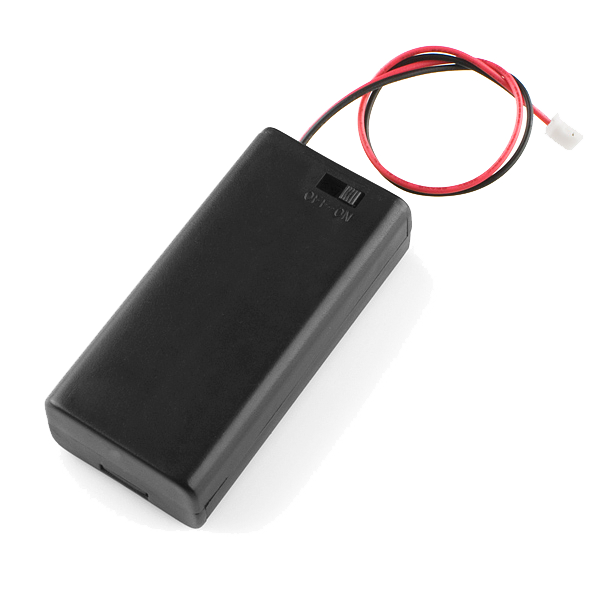 Battery Holder 2xAA with Cover and Switch - JST Connector1 pièce
 Papier cartonné1 pièce
 Plaque acrylique1 pièce
 Lampe de poche1 pièce
Outils nécessaires :
 Multimètre
 Mètre ruban
 Chronomètre
 Cutter de précision
5
5
A flashlight that will not light
A flashlight that will not light
Flashlight troubleshooting.
Flow
Loading...
6
6
History and honest limits
History and honest limits
**David Misell** of New York, a British subject, assignor to **The American Electrical Novelty and Manufacturing Company**, filed US 617,592 on 12 March 1898; it is dated 10 January 1899.
**Honest limits.** Cell capacity, lamp current, focal lengths and filament sizes in the notebook are examples; dry cells of the 1890s held much less than modern ones.
Matériaux
4- Battery Holder 2xAA with Cover and Switch - JST Connector10 % de commission1 pièce€1.93
- 1 pièceEspace réservé
- 1 pièceEspace réservé
- 1 pièceEspace réservé
Outils requis
4- Espace réservé
- 1 vendor sell this, none ship to you yetEspace réservé
- Espace réservé
- Espace réservé
Total estimé
Ce que le maker a acheté. Les matériaux sans prix se trouvent là où vous les achetez.
Blueprints liés
Ces blueprints partagent des connaissances — techniques, matériaux ou principes



CC0 Domaine public
Ce blueprint est publié sous CC0. Vous êtes libre de copier, modifier, distribuer et utiliser ce travail pour tout usage, sans demander la permission.
Soutenez le Maker en achetant des produits via son Blueprint où il perçoit une Commission Maker définie par les Vendeurs, ou créez une nouvelle itération de ce Blueprint et incluez-le comme connexion dans votre propre Blueprint pour partager les revenus.