ART
BEAUTÉ ET BIEN-ÊTRE
ARTISANAT
CULTURE ET HISTOIRE
DIVERTISSEMENT
ENVIRONNEMENT
NOURRITURE ET BOISSONS
INGÉNIERIE INVERSE
SCIENCES
SPORTS
TECHNOLOGIE
TECHNOLOGIE PORTABLE
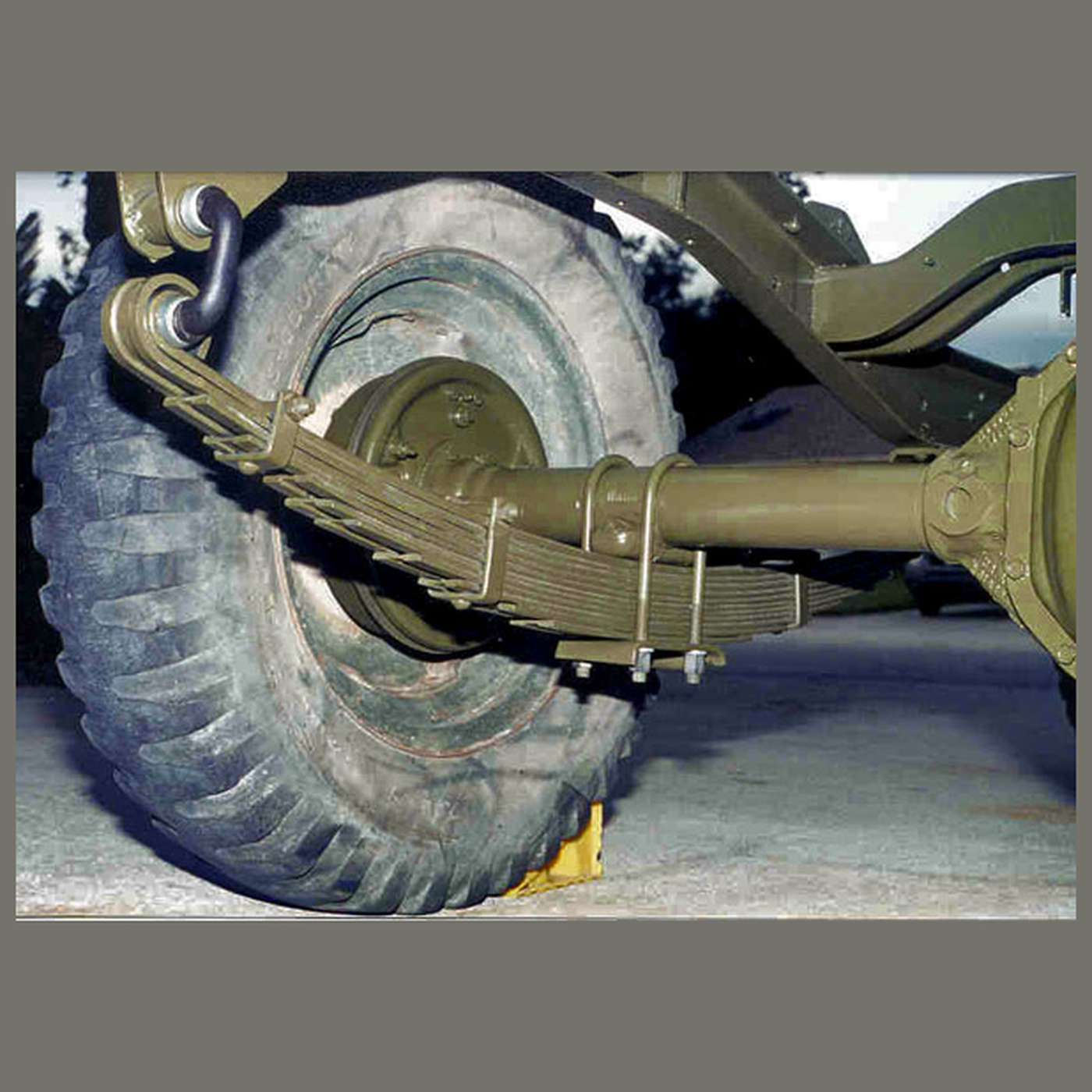

The Leaf Spring: A Beam That Carries the Load and Locates the Axle
Stack strips of spring steel, longest on top and each shorter one below, clamp them at the middle to an axle and hang the ends from the body: that is the leaf spring. It is the carriage spring of the early 1800s — Obadiah Elliott's elliptic spring of 1804 let coaches do away with the heavy perch that held the axles together — and it is still under most lorries and many pick-ups.
It does three jobs at once: it carries the load, it locates the axle so no other links are needed, and the leaves rubbing on each other damp the motion a little.
This rung works out a leaf spring's rate and the ride frequency it gives, and builds one from spring-steel strip to measure.
Débutant
About 3 hours
Consignes
1
1
Rate and ride frequency
Rate and ride frequency
Chargement du notebook Jupyter…
2
2
Build a small leaf spring and measure it
Build a small leaf spring and measure it
Cut four strips of spring-steel strip: 300, 240, 180 and 120 mm long. Stack them centred, longest on top, and clamp them together at the middle with a bolt through a small hole (or a clamp). Bend a small eye at each end of the top leaf, or hook it over two dowels set 300 mm apart on a board.
Hang weights from the centre in steps and measure the sag with the steel rule. The slope of load against sag is the rate. Compare with the notebook's formula for your strip's width and thickness (measure them with calipers).
Now remove the two shortest leaves and repeat: the rate falls — and the top leaf now bends into a sharper curve at the centre, where it would crack first.
Matériaux pour cette étape :
 Feuillard d'acier à ressort1 jeu
 Vis à métaux2 pièces
 Goujons de bois dur1 jeu
 Panneau de contreplaqué1 feuille
Outils nécessaires :
 Étau d'établi
 Pied à coulisse numérique 6 pouces
 Règle
Règle Dynamomètre (peson à ressort)
 Gants de travail en cuir
3
3
History and context
History and context
Laminated carriage springs developed through the eighteenth century; **Obadiah Elliott's elliptic spring of 1804** (a British patent) let coaches be built without the perch, and the semi-elliptic form went on to railway wagons and motor vehicles. No patent number is asserted here.
**Honest limits.** A leaf spring is heavy for the energy it stores. The friction between leaves damps small bumps poorly and large ones harshly, and changes as the leaves rust. And because the spring also locates the axle, the axle can wind up under hard acceleration and braking.
Matériaux
4- Espace réservé
- 2 piècesEspace réservé
- 1 jeuEspace réservé
- 1 feuilleEspace réservé
Outils requis
5- Espace réservé
- Espace réservé
- Espace réservé
- Espace réservé
- Espace réservé
Blueprints liés
Ces blueprints partagent des connaissances — techniques, matériaux ou principes
Spring Rate: The One Number a Spring Is
par Emma
Mécanique
13
0
0
0
0
0

Spring Fatigue: It Is the Swing That Breaks It
par Emma
Travail des Métaux
9
0
0
0
0
0
Balance: A Tiny Eccentricity Becomes an Enormous Force
par Martin
Ingénierie
16
0
0
0
0
0
Building a Wooden Cart Wheel — Hub, Spokes, and Felloes
par Woody
Menuiserie
72
0
0
0
2
0
Ackermann Steering: The Inner Wheel Turns Further
par Martin
Mécanique
9
0
0
0
0
0
CC0 Domaine public
Ce blueprint est publié sous CC0. Vous êtes libre de copier, modifier, distribuer et utiliser ce travail pour tout usage, sans demander la permission.
Soutenez le Maker en achetant des produits via son Blueprint où il perçoit une Commission Maker définie par les Vendeurs, ou créez une nouvelle itération de ce Blueprint et incluez-le comme connexion dans votre propre Blueprint pour partager les revenus.