ART
BEAUTÉ ET BIEN-ÊTRE
ARTISANAT
CULTURE ET HISTOIRE
DIVERTISSEMENT
ENVIRONNEMENT
NOURRITURE ET BOISSONS
INGÉNIERIE INVERSE
SCIENCES
SPORTS
TECHNOLOGIE
TECHNOLOGIE PORTABLE
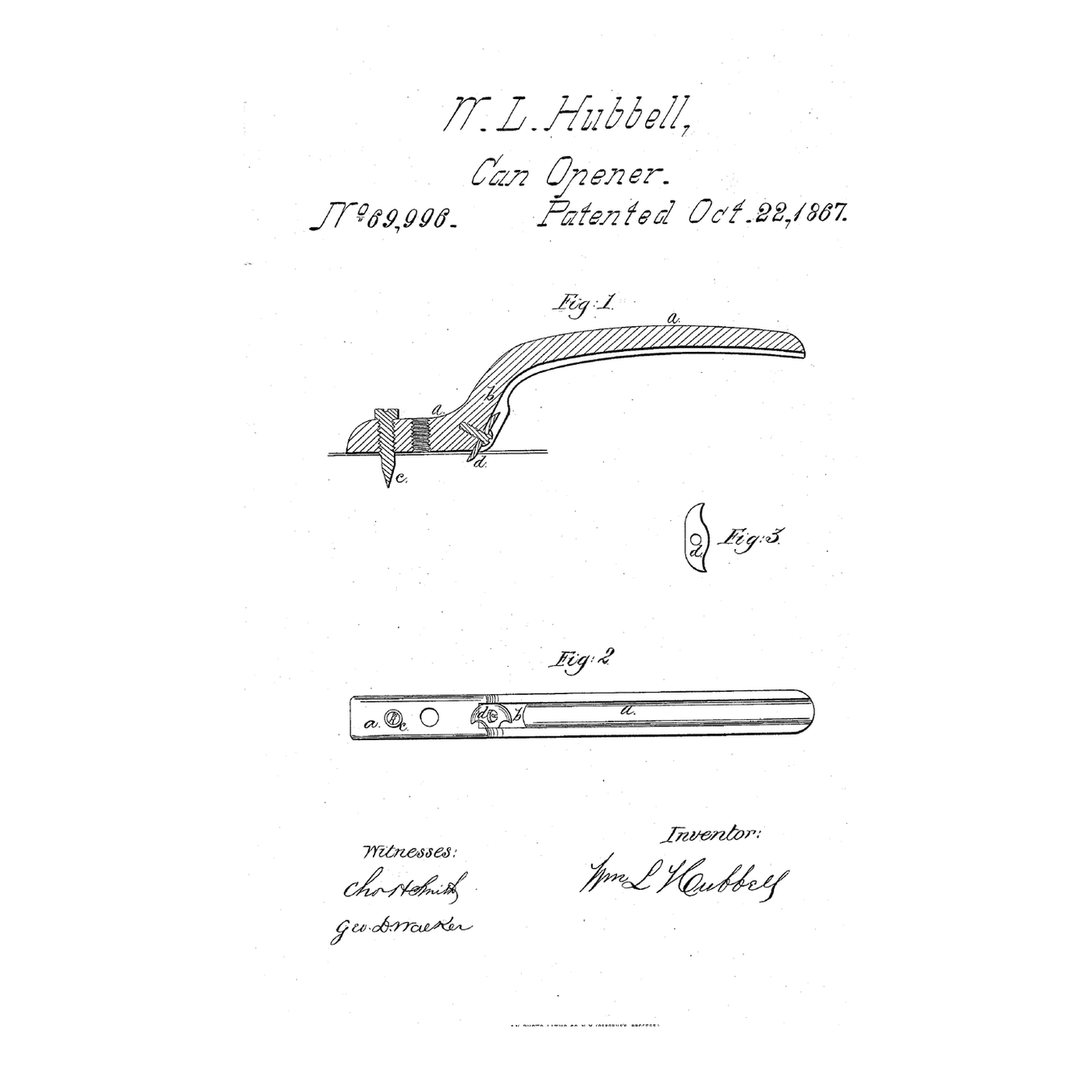


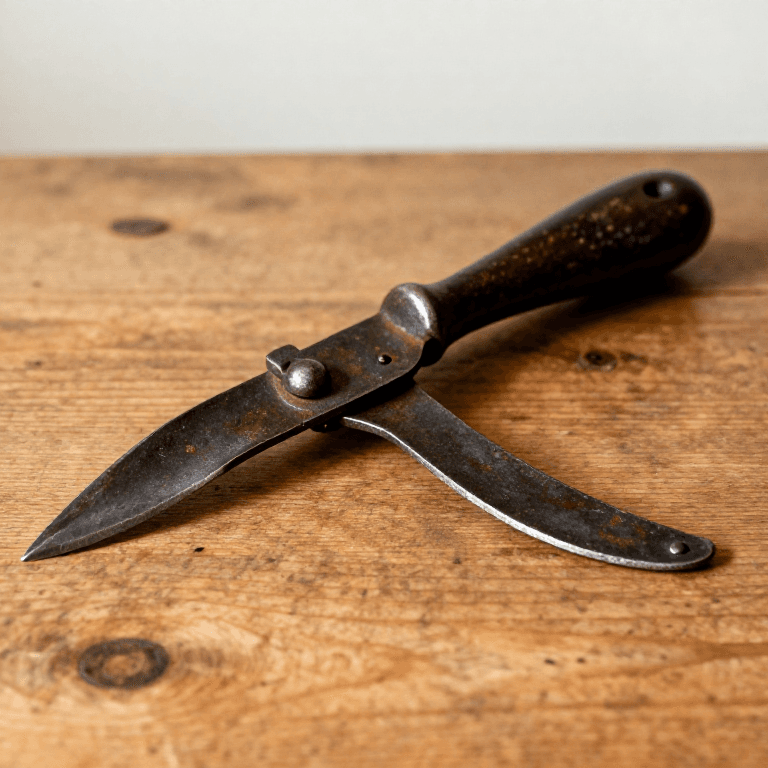
The Lifting-Cutter Can Opener: A Diagonal Blade Cuts Under and Holds the Disk
A can opener's knife can slip out of its cut, and the cut disk drops into the can.
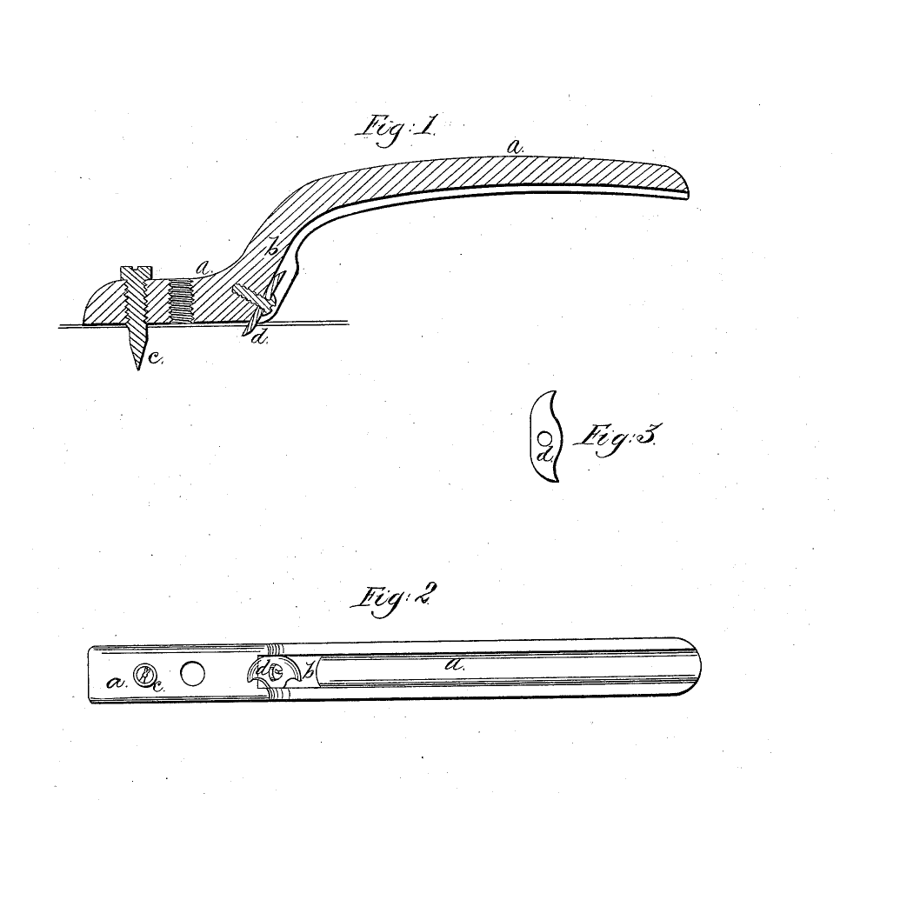
William L. Hubbell of Brooklyn, New York, received US 69,996, dated 22 October 1867, for a can opener made of a lever with a screw spike that fits any of several holes, to vary the size of the disk, and a cutter set diagonally "so as to cut under and lift up the said disk, and prevent the knife slipping out while in use," holding the disk until it is taken from the can.
This rung works out which hole suits which can, then builds the lever, spike and diagonal cutter and opens a can.
Intermédiaire
About 3 hours
Consignes
1
1
Spike hole against can size
Spike hole against can size
Chargement du notebook Jupyter…
2
2
A turning cutter before it
A turning cutter before it
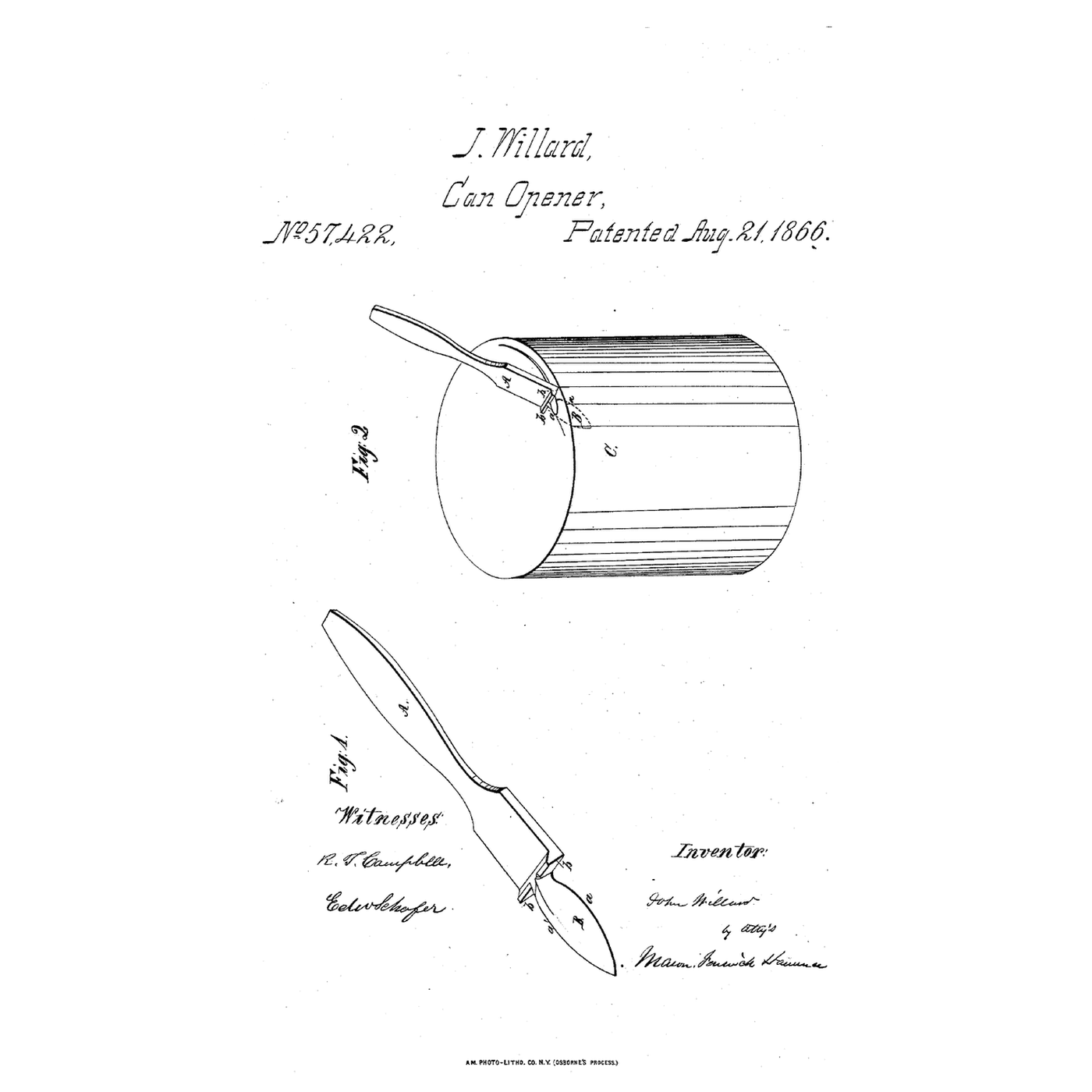
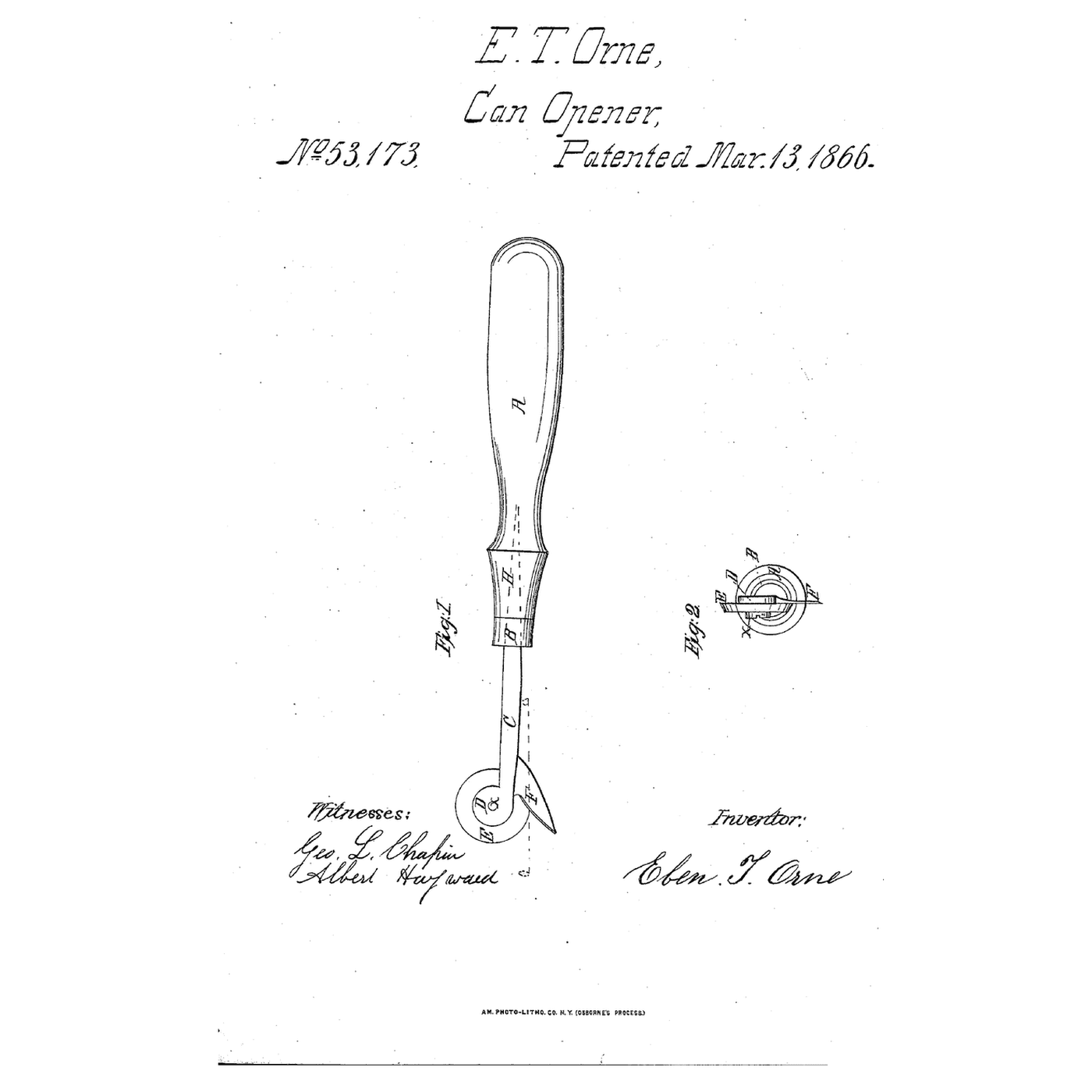
The embedded blueprint cuts round a can with a wheel and a fixed cutter. Hubbell turns a lever round a spike and inclines the cutter so it lifts what it cuts.
3
3
Read US 69,996
Read US 69,996
"The cutter d is set into a recess, formed by grooves, on the edges of the lever a, at the curved part b, so that one edge of the cutter projects below the under side of the lever at an inclination, as shown, so that the cutter is prevented from rising by its being below, and inclining inwards under the edge of the disk that is being cut out by revolving either the can or the opener."
4
4
Make the lever
Make the lever
Cut 180 mm of 25 × 3 mm flat bar and bend the last 20 mm down at about 40° in the vice. Drill and tap three M5 holes 25, 30 and 35 mm from the bend's foot.
Matériaux pour cette étape :
 Plat en acier doux1 pièce
Outils nécessaires :
 Scie à métaux
 Étau d'établi
 Marteau
 Pointeau
 Perceuse sans fil
 Jeu de forets
 Jeu de tarauds et filières
 Règle
Règle5
5
Slot the bent end
Slot the bent end
Saw a slot 1 mm wide and 12 mm deep across the bent end at 25° to the bar with the hacksaw.
Outils nécessaires :
Scie à métauxÉtau d'établi Jeu de limes aiguilles
6
6
Make and set the cutter
Make and set the cutter
Cut a 16 × 18 mm cutter from 1 mm steel sheet and file both short ends to rounded cutting edges. Set it in the slot with epoxy so one end projects 5 mm below the bar, inclined inward.
Matériaux pour cette étape :
 Tôle d'acier doux1 pièce
 Époxy à deux composants1 pièce
Outils nécessaires :
 Cisaille à tôle
 Limes (lime à main)
 Pierre à aiguiser
 Lunettes de sécurité transparentes
7
7
Make the spike
Make the spike
File the end of an M5 screw to a long taper point. Screw it into the hole that suits the can.
Matériaux pour cette étape :
 Vis à métaux1 pièce
Outils nécessaires :
Étau d'établiLimes (lime à main)8
8
The patent drawing
The patent drawing
US 69,996 drawing sheet, public domain (expired patent).
9
9
Open a can and lift the disk
Open a can and lift the disk
Stand a sealed can on the kitchen scale. Thrust the spike into the top's centre, press the cutter through and turn the lever round; read the peak load and time it. Lift the opener and see whether the disk comes with it.
Matériaux pour cette étape :
 Boîte de conserve1 pièce
Outils nécessaires :
 Balance de cuisine numérique
 Chronomètre
 Pied à coulisse numérique 6 pouces
 Gants de travail en cuir
10
10
A cutter that rides up, slips or drops the disk
A cutter that rides up, slips or drops the disk
Lifting-cutter can opener troubleshooting.
Flow
Loading...
11
11
History and honest limits
History and honest limits
**William L. Hubbell** of Brooklyn, New York, signed his specification on 16 August 1867; US 69,996 is dated 22 October 1867. He wrote that earlier openers with semicircular knives, or tools to perforate and raise the edges, were costly and some were liable to slip. The cutter's edge is rounded outwardly so as not to draw the spike out, and both ends are shaped alike so it can be changed end for end.
**Honest limits.** Epoxy in a sawn slot stands in for his grooved recess, and the cutter is unhardened. Your loads and times are the result.
Matériaux
5- 1 pièceEspace réservé
- 1 pièceEspace réservé
- 1 pièceEspace réservé
- 1 pièceEspace réservé
- 1 pièceEspace réservé
Outils requis
17- Espace réservé
- Espace réservé
- Espace réservé
- Espace réservé
- 1 vendor sell this, none ship to you yetEspace réservé
- Espace réservé
- Espace réservé
- Espace réservé
- Espace réservé
- Espace réservé
- Espace réservé
- Espace réservé
- Espace réservé
- Espace réservé
- Espace réservé
- Espace réservé
- Espace réservé
Blueprints liés
Ces blueprints partagent des connaissances — techniques, matériaux ou principes
CC0 Domaine public
Ce blueprint est publié sous CC0. Vous êtes libre de copier, modifier, distribuer et utiliser ce travail pour tout usage, sans demander la permission.
Soutenez le Maker en achetant des produits via son Blueprint où il perçoit une Commission Maker définie par les Vendeurs, ou créez une nouvelle itération de ce Blueprint et incluez-le comme connexion dans votre propre Blueprint pour partager les revenus.