ART
BEAUTÉ ET BIEN-ÊTRE
ARTISANAT
CULTURE ET HISTOIRE
DIVERTISSEMENT
ENVIRONNEMENT
NOURRITURE ET BOISSONS
INGÉNIERIE INVERSE
SCIENCES
SPORTS
TECHNOLOGIE
TECHNOLOGIE PORTABLE
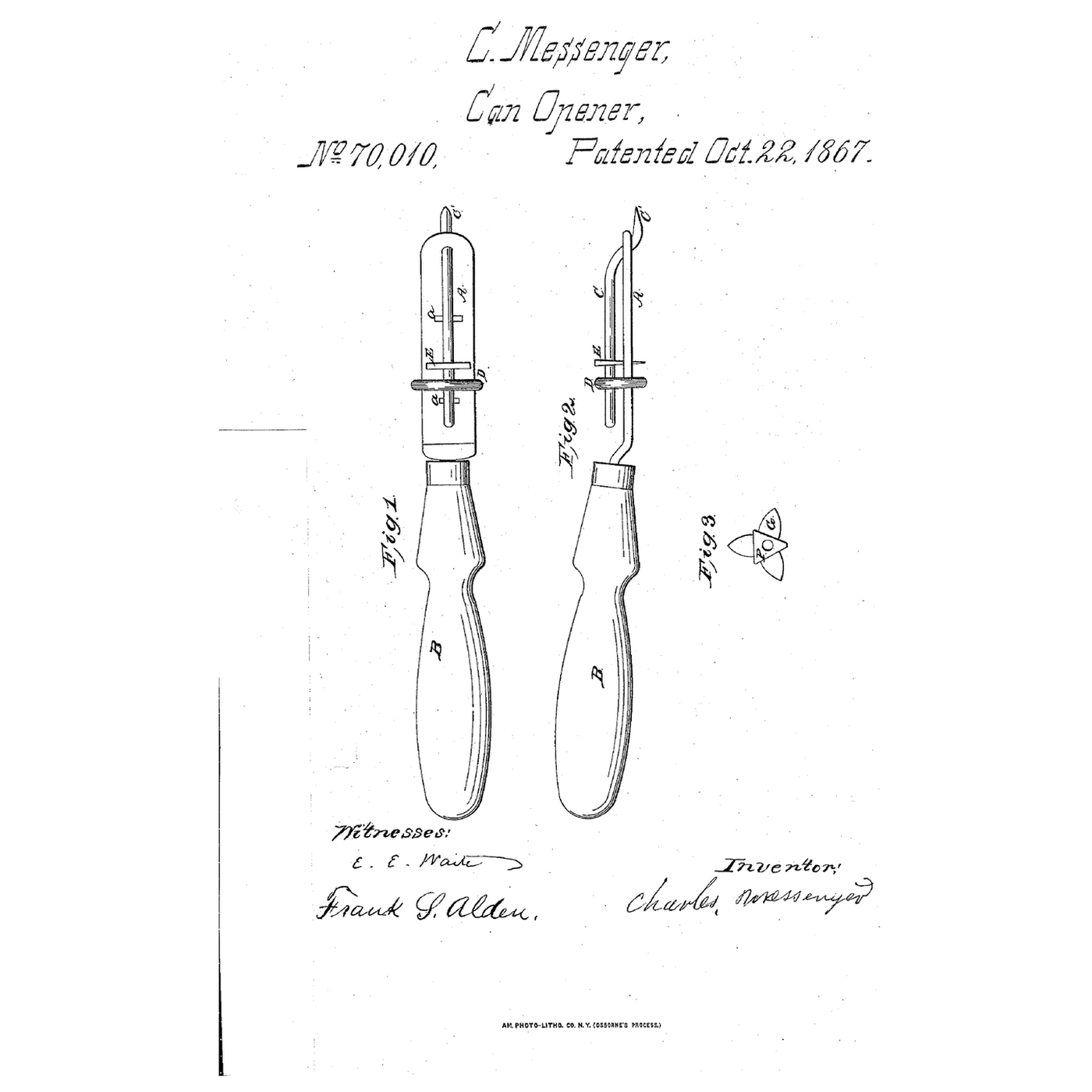


The Pivot-Point Can Opener: A Spike at the Centre, a Blade Set to the Size
A knife driven round a can top wanders, and leaves a ragged hole of no particular size.
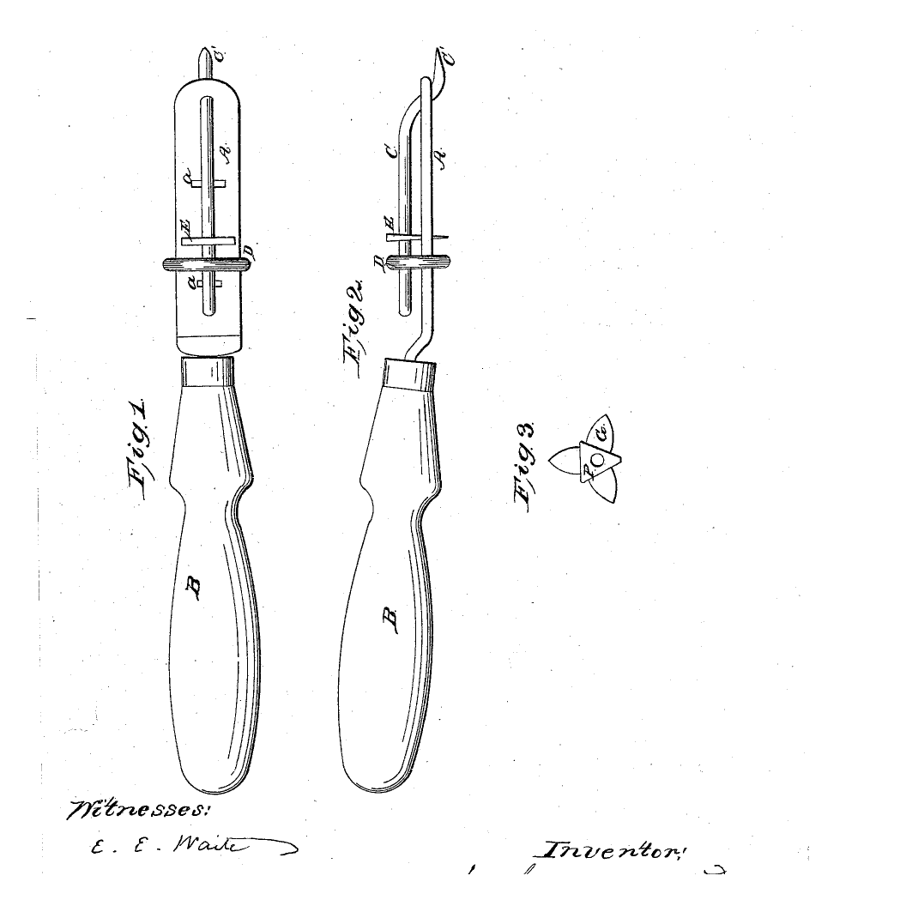
Charles Messenger of Cleveland, Ohio, received US 70,010, dated 22 October 1867, for a tool for opening sheet-metal cans: a plate fixed in a handle, a pointed rod at its end thrust through the centre of the top as a pivot, and a blade slipped on the rod through one of several holes in the plate, held by a ring; turning the handle round cuts a round hole, small or large.
This rung works out the hand force for each hole size, then builds the plate, pivot and blade from steel and opens a can.
Intermédiaire
About 3 hours
Consignes
1
1
Hole size and hand force
Hole size and hand force
Chargement du notebook Jupyter…
2
2
A turning cutter before it
A turning cutter before it
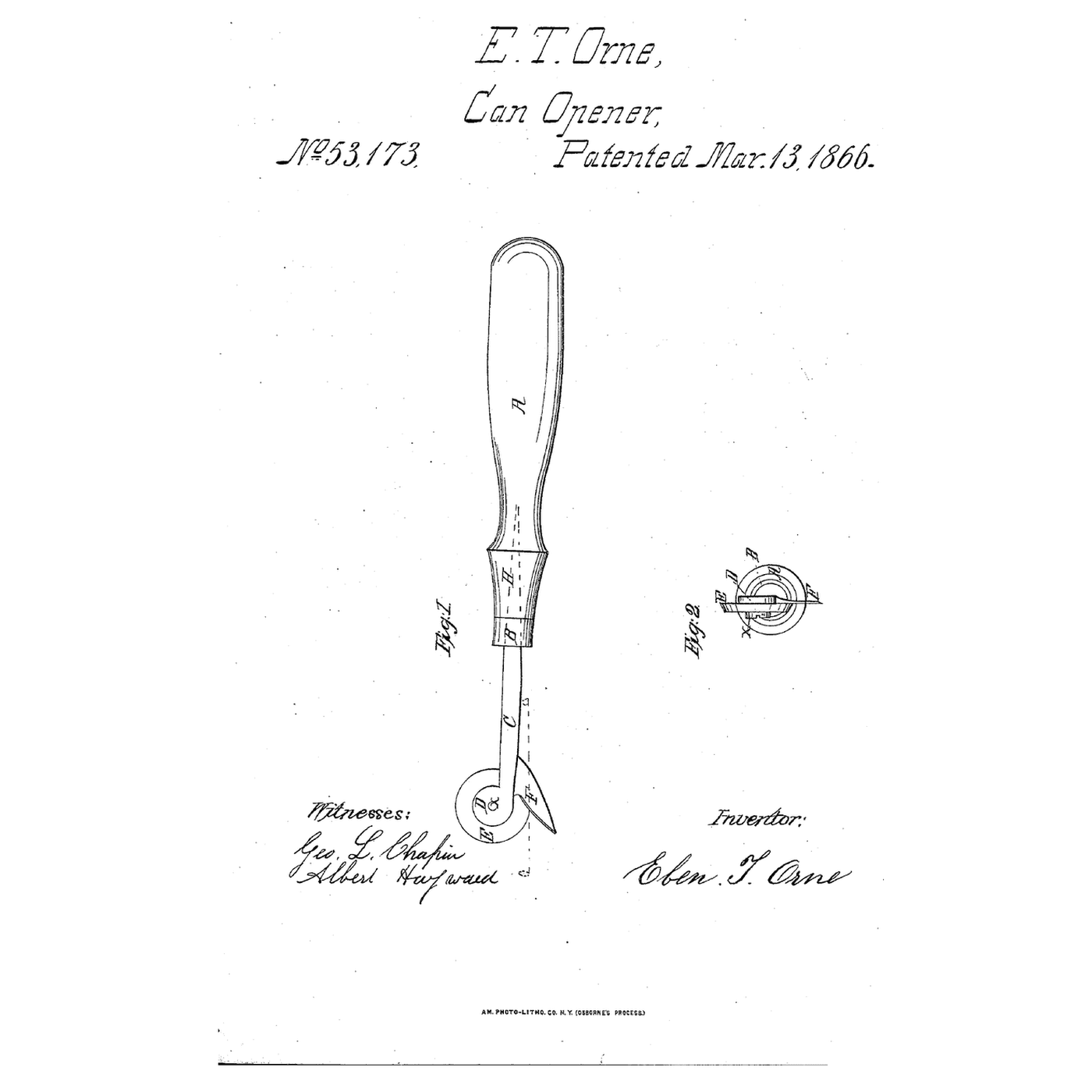
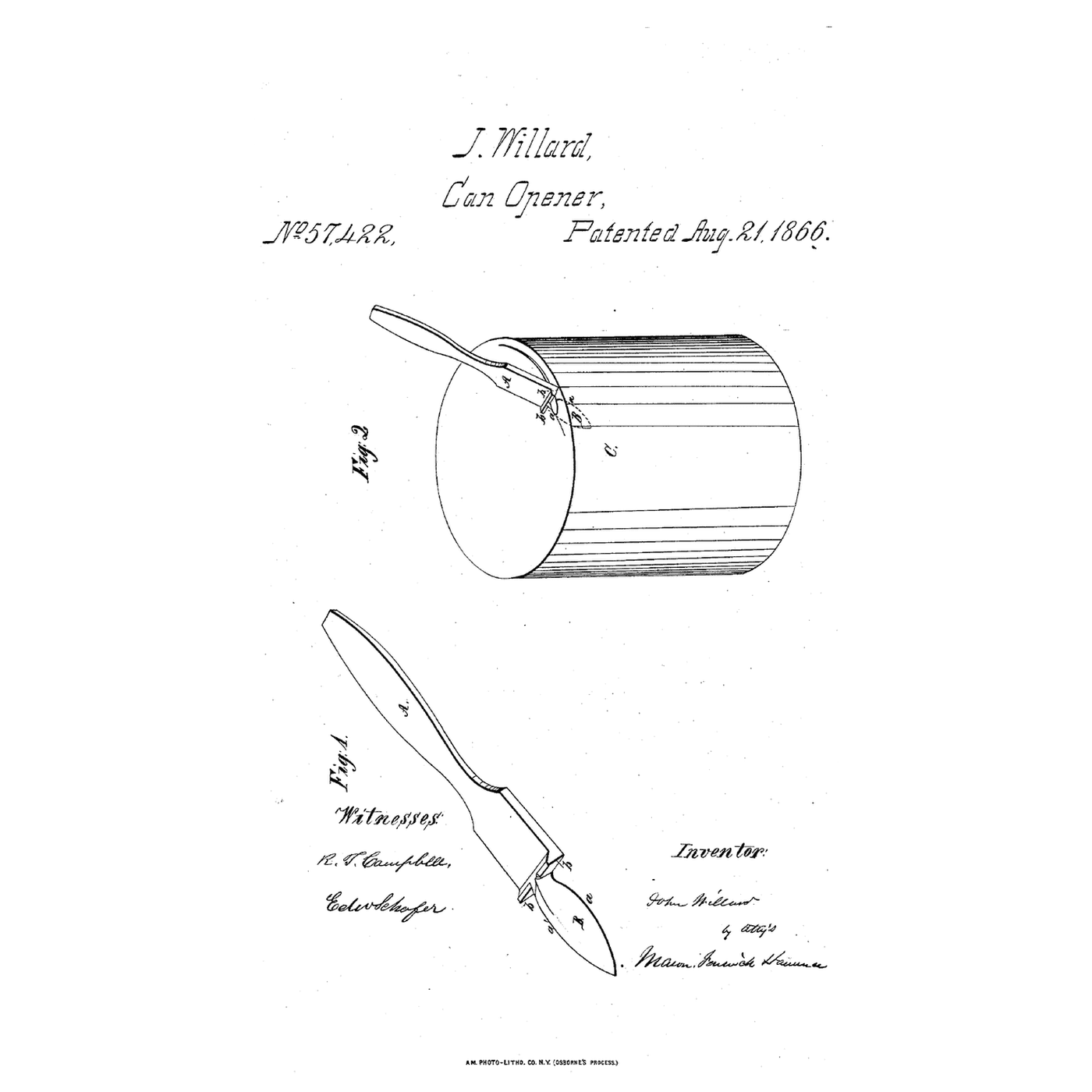
The embedded blueprint cuts tin with a turning wheel against a fixed cutter. Messenger turns the whole tool round a centre spike.
3
3
Read US 70,010
Read US 70,010
"The apparatus is held in the right hand, and the point C' thrust through the centre of the top of the can. The handle is then brought down so as to cause the blade to penetrate the cover; the instrument is turned around the circumference of the top, the point acting as a pivot, and the handle as a lever; the blade, as the instrument turns, will cut out a round hole through which the contents of the can may be emptied."
4
4
Make the plate
Make the plate
Cut 90 mm of 25 × 3 mm flat bar. Drill a 5 mm hole 6 mm from one end for the rod, and three 4 × 8 mm slots at 30, 45 and 60 mm from it for the blade. File the slots square.
Matériaux pour cette étape :
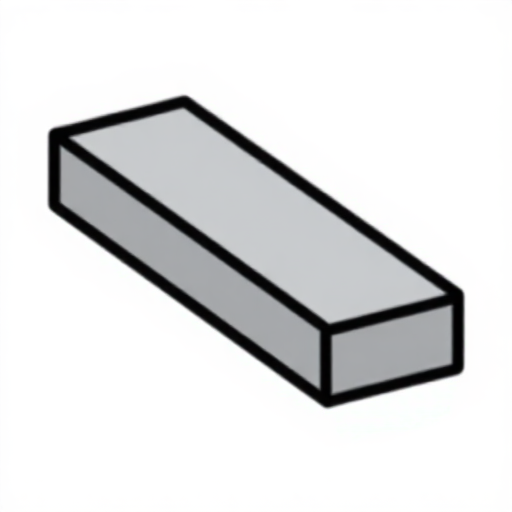 Plat en acier doux1 pièce
Outils nécessaires :
 Scie à métaux
 Étau d'établi
 Pointeau
 Perceuse sans fil
 Jeu de forets
 Jeu de limes aiguilles
5
5
Make the rod and blade
Make the rod and blade
Cut 100 mm of 5 mm steel rod, file one end to a sharp point, and thread the other M5. Cut the blade from flat bar, drill it for the rod, and file its lower end to a cutting edge.
Matériaux pour cette étape :
 Rond en acier doux1 piècePlat en acier doux1 pièce
Outils nécessaires :
Scie à métaux Limes (lime à main)
 Jeu de tarauds et filièresPerceuse sans filJeu de forets
 Pierre à aiguiser
6
6
Assemble
Assemble
Push the rod through the plate's end hole so the point stands 12 mm below. Slip the blade on the rod and down through a slot; hold both with a nut on the rod's thread. Fit the plate into a hardwood handle with epoxy.
Matériaux pour cette étape :
 Écrou hexagonal1 pièce
 Goujons de bois dur1 pièce
 Époxy à deux composants1 pièce
Outils nécessaires :
Perceuse sans filJeu de forets Pince plate
7
7
The patent drawing
The patent drawing
US 70,010 drawing sheet, public domain (expired patent).
8
8
Open a can at two sizes
Open a can at two sizes
Stand a sealed can on the kitchen scale. Thrust the point into the centre, bring the handle down and turn it round; read the peak load and time a full circle. Move the blade to another slot and repeat.
Matériaux pour cette étape :
 Boîte de conserve1 pièce
Outils nécessaires :
 Balance de cuisine numérique
 Chronomètre
 Gants de travail en cuir
9
9
A cutter that wanders, tears or slips
A cutter that wanders, tears or slips
Pivot-point can opener troubleshooting.
Flow
Loading...
10
10
History and honest limits
History and honest limits
**Charles Messenger** of Cleveland, Ohio, received US 70,010, dated 22 October 1867, for opening oyster, paint and fruit cans. The ring slides on the rod and can be removed to change the blade; a knife with radial arms, each with two sharp edges, gives a spare edge when one is dull. His claim covers the rod, blade and ring in combination with the plate.
**Honest limits.** A nut stands in for his sliding ring, and an unhardened blade for a steel one. Your loads and times are the result.
Matériaux
6- 1 pièceEspace réservé
- 1 pièceEspace réservé
- 1 pièceEspace réservé
- 1 pièceEspace réservé
- 1 pièceEspace réservé
- 1 pièceEspace réservé
Outils requis
13- Espace réservé
- Espace réservé
- Espace réservé
- 1 vendor sell this, none ship to you yetEspace réservé
- Espace réservé
- Espace réservé
- Espace réservé
- Espace réservé
- Espace réservé
- Espace réservé
- Espace réservé
- Espace réservé
- Espace réservé
Blueprints liés
Ces blueprints partagent des connaissances — techniques, matériaux ou principes
CC0 Domaine public
Ce blueprint est publié sous CC0. Vous êtes libre de copier, modifier, distribuer et utiliser ce travail pour tout usage, sans demander la permission.
Soutenez le Maker en achetant des produits via son Blueprint où il perçoit une Commission Maker définie par les Vendeurs, ou créez une nouvelle itération de ce Blueprint et incluez-le comme connexion dans votre propre Blueprint pour partager les revenus.