ART
BEAUTÉ ET BIEN-ÊTRE
ARTISANAT
CULTURE ET HISTOIRE
DIVERTISSEMENT
ENVIRONNEMENT
NOURRITURE ET BOISSONS
INGÉNIERIE INVERSE
SCIENCES
SPORTS
TECHNOLOGIE
TECHNOLOGIE PORTABLE
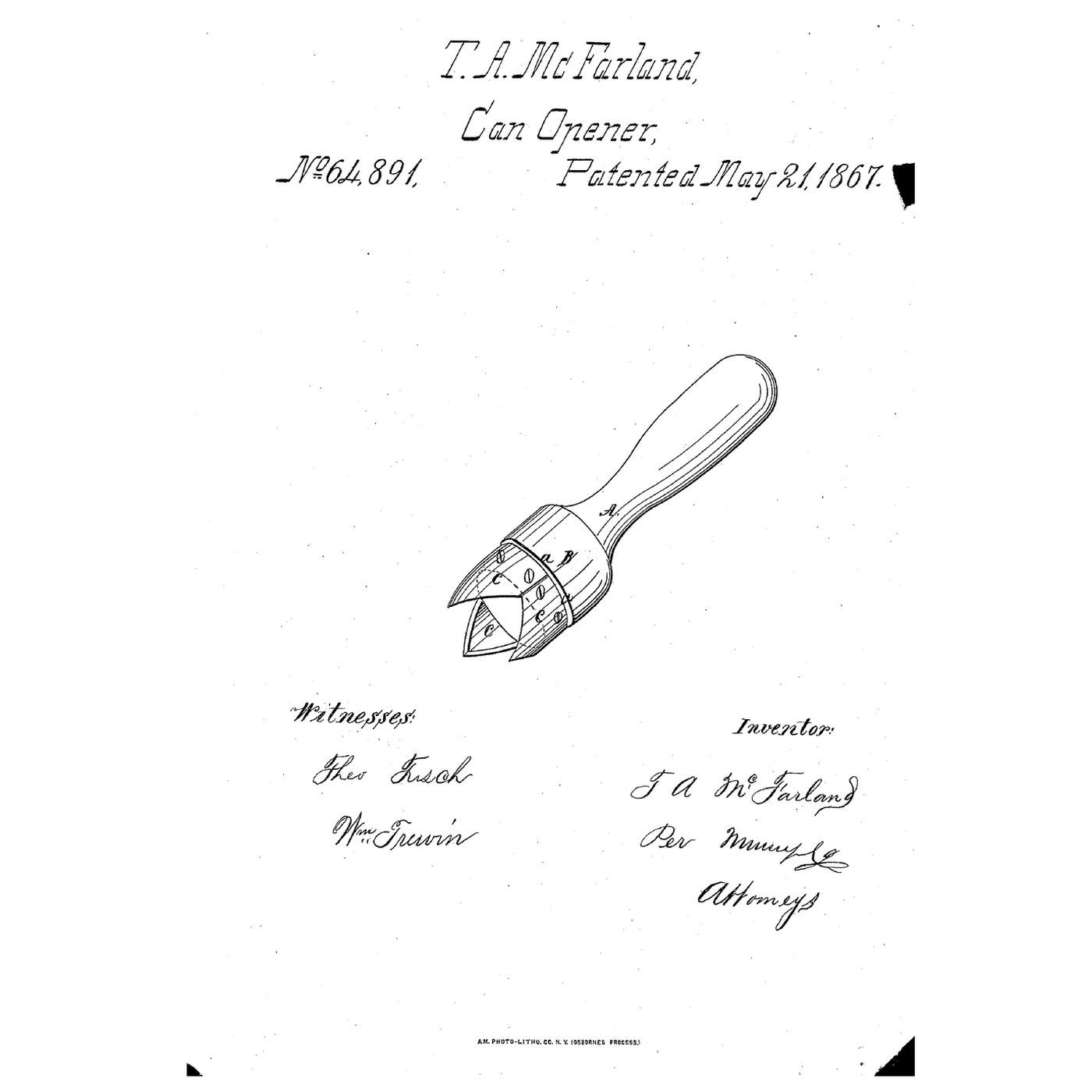


The Single-Blow Can Opener: A Ring of Pointed Teeth Punches the Hole
Cutting into a can with a single blade takes several cuts or blows.
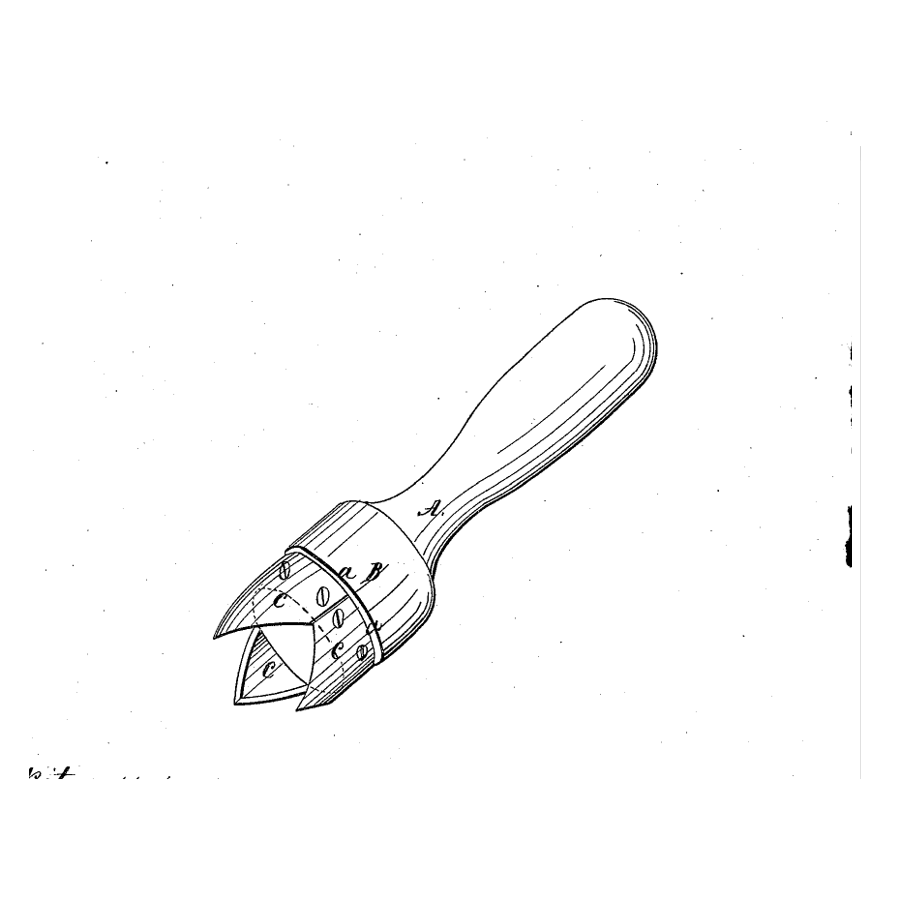
Thomas A. McFarland of Meadville, Pennsylvania, received US 64,891, dated 21 May 1867, for "a cheap, simple, and effective implement for cutting an opening in a can by a single blow": a ring of curved pointed teeth on a handle's head, bevelled inside, whose points enter first and whose edges widen until they meet, punching out a plug that stays inside the cutter.
This rung works out why pointed teeth need so little force, then files the teeth on a steel tube and punches a can top with one blow.
Intermédiaire
About 3 hours
Consignes
1
1
Peak force and work
Peak force and work
Chargement du notebook Jupyter…
2
2
A single blade before it
A single blade before it
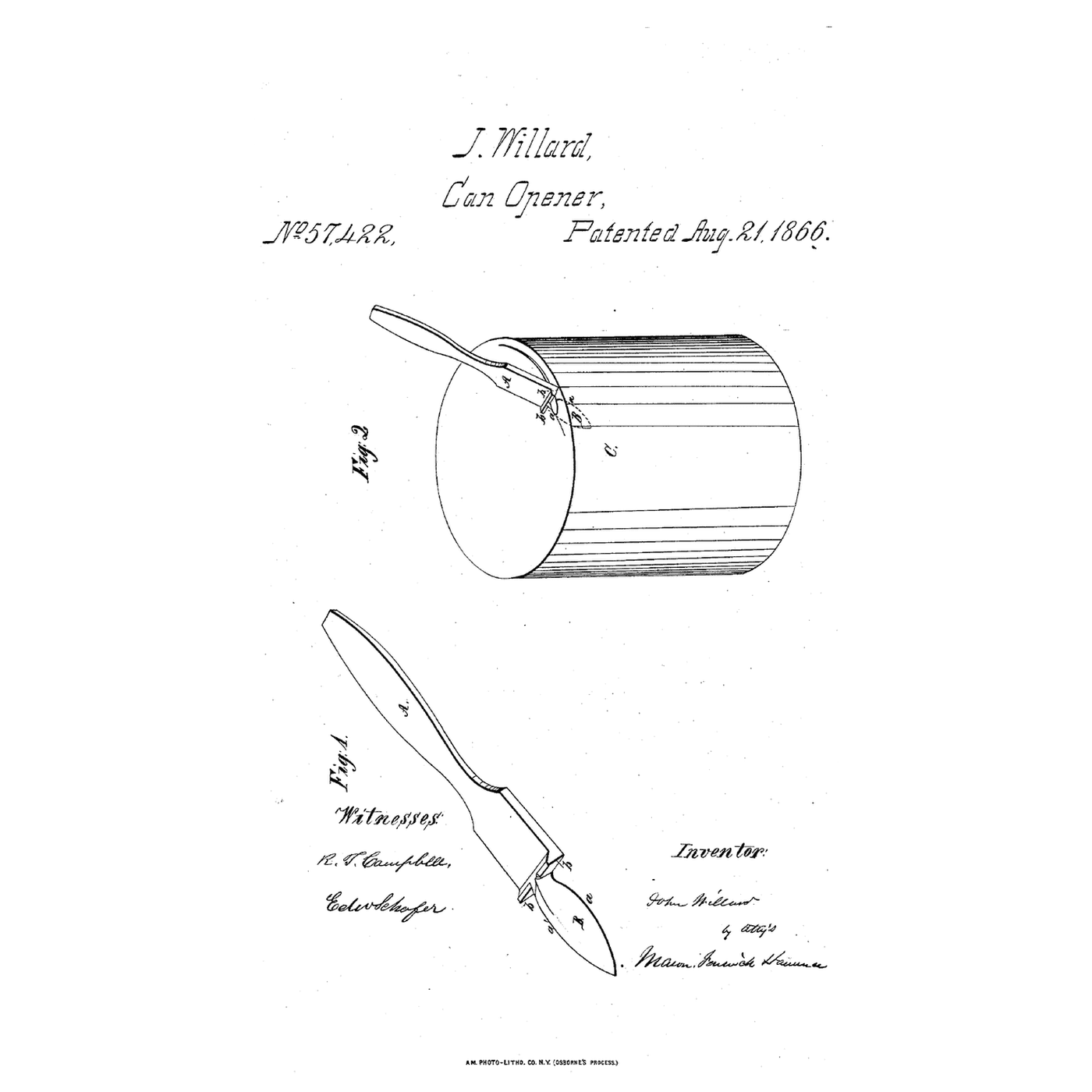
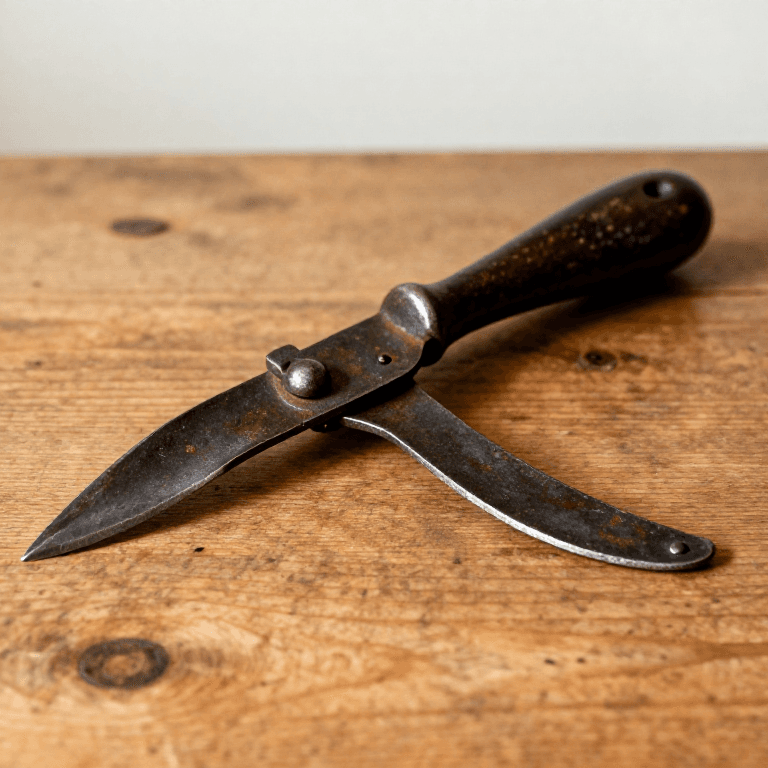
The embedded blueprint cuts a can top a slit at a time with one blade. McFarland rings the blade round into teeth so one blow cuts the whole opening.
3
3
Read US 64,891
Read US 64,891
"In operation the tool is placed on the head of the can, and the points of the teeth driven in by a smart blow, and the cutters forced down until their forks or bases have cut through the can, when a piece will have been cut out of the form of the cutters."
"The teeth being bevelled on the inside tend to compress the plug removed, and cause it to remain inside the cutter, thus facilitating its removal from the can."
4
4
Cut and mark the tube
Cut and mark the tube
Cut 40 mm of 25 mm steel tube. Mark six teeth round one end, 12 mm tall, their bases touching.
Matériaux pour cette étape :
 Tube d'acier1 pièce
Outils nécessaires :
 Scie à métaux
 Étau d'établi
 Marqueur permanent
 Règle
Règle5
5
File the teeth
File the teeth
Saw a V between each pair of marks and file the teeth to points. Bevel each tooth's inside edge with a round needle file; leave the outside flush.
Outils nécessaires :
Scie à métaux Limes (lime à main)
 Jeu de limes aiguillesÉtau d'établi
 Lunettes de sécurité transparentes
6
6
Fit the handle
Fit the handle
Sand a hardwood dowel to fit the tube's other end, glue 20 mm of it in with epoxy, and leave 100 mm as the handle.
Matériaux pour cette étape :
 Goujons de bois dur1 pièce
 Époxy à deux composants1 pièce
Outils nécessaires :
 Papier abrasif
 Pied à coulisse numérique 6 pouces
7
7
The build in 3D
The build in 3D
FreeCAD model of this build, not of the patent: a 25 mm steel tube with six 12 mm pointed teeth bevelled inside, on a hardwood handle.
8
8
Punch a can top
Punch a can top
Stand a sealed can on a hardwood block. Set the teeth on its top and strike the handle once with the mallet; count the blows needed, and measure the plug with the caliper.
Matériaux pour cette étape :
 Boîte de conserve1 pièce
 Bloc de bois dur1 pièce
Outils nécessaires :
 Maillet en caoutchoucPied à coulisse numérique 6 pouces
 Gants de travail en cuirLunettes de sécurité transparentes
9
9
Teeth that bend, skid or leave the plug
Teeth that bend, skid or leave the plug
Single-blow can opener troubleshooting.
Flow
Loading...
10
10
History and honest limits
History and honest limits
**Thomas A. McFarland** of Meadville, Pennsylvania, received US 64,891, dated 21 May 1867, for opening oyster, fruit and other cans. The cutters are curved to fit a shoulder on the handle's head and fastened by screws; they may be one piece or sections. He disclaimed cutting an opening broadly, single shear-like cutters, and cork borers with spring handles, and claimed the handle and cutters cutting a plug at a single blow.
**Honest limits.** Mild steel tube is not hardened; the notebook's shear figures are estimates. Your blow counts are the result.
Matériaux
5- 1 pièceEspace réservé
- 1 pièceEspace réservé
- 1 pièceEspace réservé
- 1 pièceEspace réservé
- 1 pièceEspace réservé
Outils requis
11- Espace réservé
- Espace réservé
- Espace réservé
- Espace réservé
- Espace réservé
- Espace réservé
- Espace réservé
- Espace réservé
- Espace réservé
- Espace réservé
- Espace réservé
Fichiers de conception
1Blueprints liés
Ces blueprints partagent des connaissances — techniques, matériaux ou principes


CC0 Domaine public
Ce blueprint est publié sous CC0. Vous êtes libre de copier, modifier, distribuer et utiliser ce travail pour tout usage, sans demander la permission.
Soutenez le Maker en achetant des produits via son Blueprint où il perçoit une Commission Maker définie par les Vendeurs, ou créez une nouvelle itération de ce Blueprint et incluez-le comme connexion dans votre propre Blueprint pour partager les revenus.