ART
BEAUTÉ ET BIEN-ÊTRE
ARTISANAT
CULTURE ET HISTOIRE
DIVERTISSEMENT
ENVIRONNEMENT
NOURRITURE ET BOISSONS
INGÉNIERIE INVERSE
SCIENCES
SPORTS
TECHNOLOGIE
TECHNOLOGIE PORTABLE
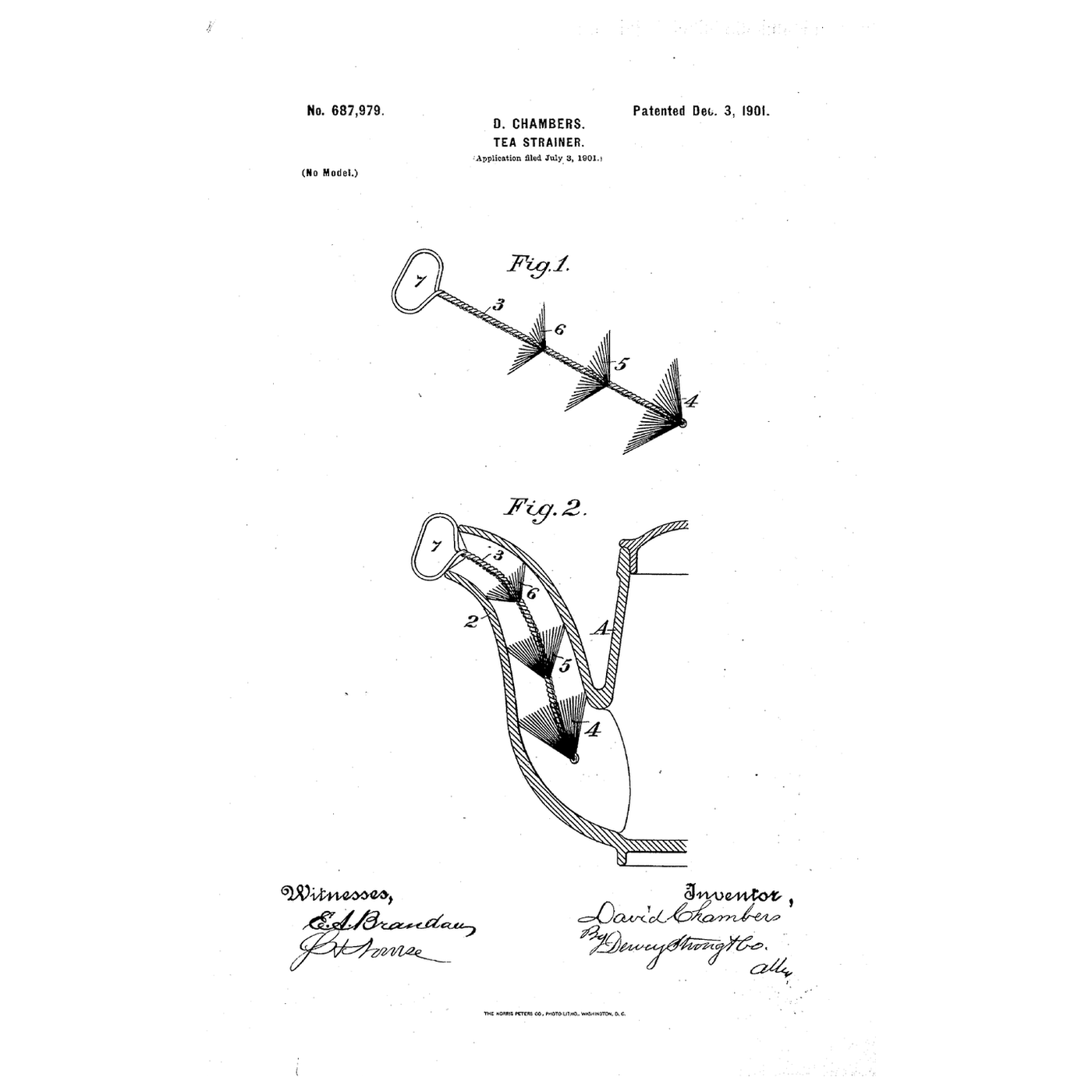


The Spout Strainer: Tufts of Bristle That Open Like an Umbrella
Loose tea poured from a pot brings leaves and grit into the cup.
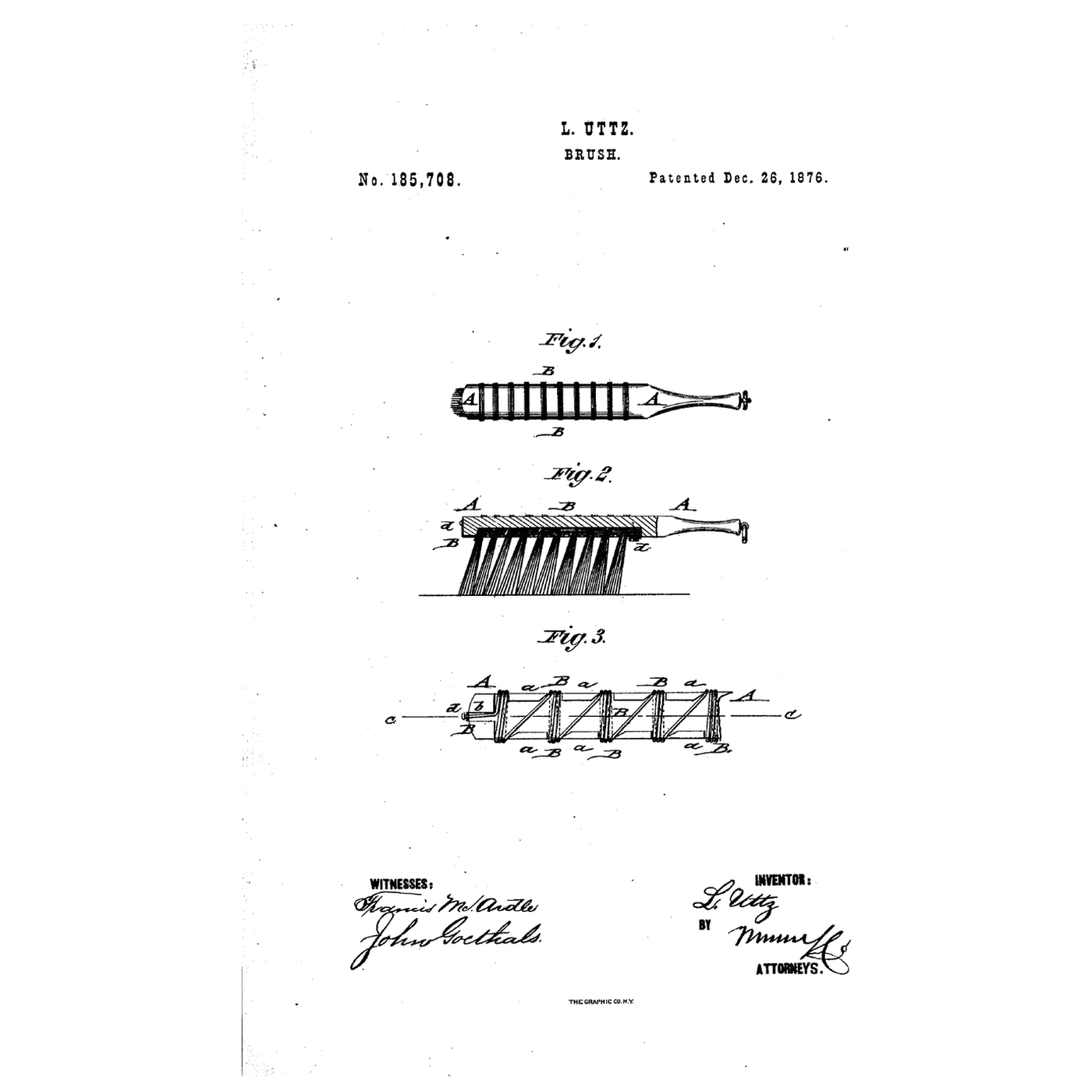
David Chambers of San Jose, California, received US 687,979, dated 3 December 1901, for a strainer that sits inside the teapot's spout: tufts of fine elastic wire or bristle twisted into a flexible wire centre at intervals, each sized to the spout where it sits, with a loop at the outer end as a stop.
This rung works out how fine a ring of bristles strains, then twists a spout strainer from stainless wire and boar bristles and pours tea through it.
Débutant
About 1 hour
Consignes
1
1
Gaps between the bristles
Gaps between the bristles
Chargement du notebook Jupyter…
2
2
Keeping leaves out of the cup
Keeping leaves out of the cup
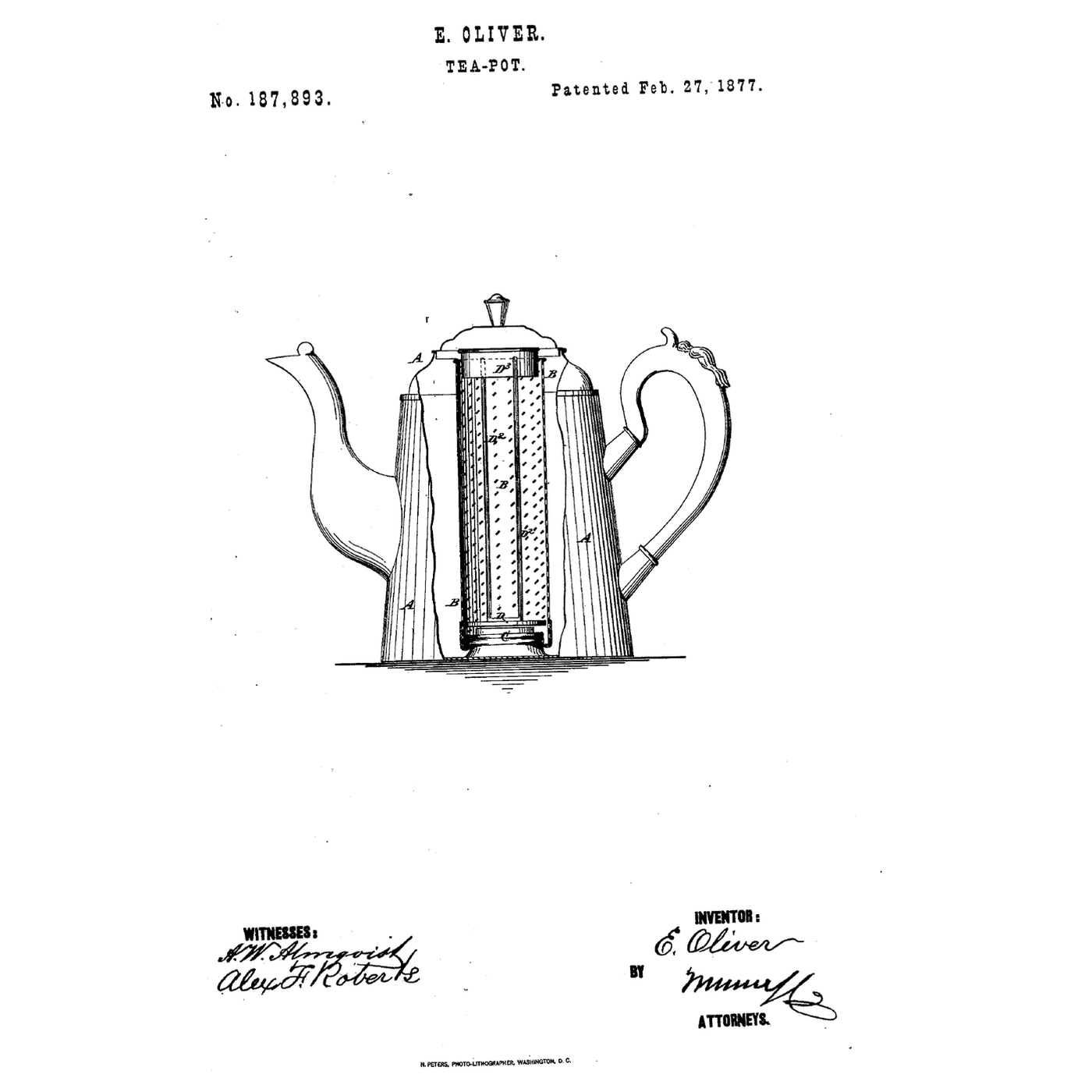
The embedded blueprint lifts the leaves out of the pot. Chambers leaves them in the pot and stops them in the spout.
3
3
Read US 687,979
Read US 687,979
"My invention relates to a device and attachment for the nozzles of teapots and the like for the purpose of preventing the escape of tea-leaves and sediment, so that the liquid will pass out of the spout in a clear condition."
"These radial groups or strainers are like the ribs of an umbrella, so that the device can easily be introduced into the nozzle or spout by pushing it in from the outer end".
It can be drawn out at any time, "because the spout being smooth the wires will yield and slip within it for this purpose, so that it can be readily cleansed at any time."
4
4
Twist a strainer and pour through it
Twist a strainer and pour through it
Measure how far the spout runs and how wide it is at the base, the middle and the tip. Cut two lengths of stainless steel wire a little longer than the spout.
Lay a small bunch of bristles across the two wires near one end and twist the wires tightly over it, so the bristles are caught and fan out all round. Twist in two more bunches further along. Trim each tuft round: the first to the spout's base width, the next to its middle width, the last to its tip width. Bend the other end of the wires into a loop too big to pass the spout's mouth.
Brew loose black tea in the pot and pour one cup with the strainer and one without. Count the leaves in each cup, and pull the strainer out to rinse it.
Matériaux pour cette étape :
 Fil d'acier inoxydable1 pièce
 Soies de sanglier1 pièce
 Thé noir5 g
 Eau500 ml
Outils nécessaires :
 Passoire à thé
 Théière
 Pince à becs longs
 Pince coupante
 Ciseaux
 Règle
Règle Bouilloire électrique en verre
5
5
A strainer that leaks leaves, blocks or will not come out
A strainer that leaks leaves, blocks or will not come out
Spout strainer troubleshooting.
Flow
Loading...
6
6
History and honest limits
History and honest limits
**David Chambers** of San Jose, California, a citizen of England, filed US 687,979 on 3 July 1901; it was patented 3 December 1901. He made the innermost tuft the largest, because spouts narrow from the base to the tip.
**Honest limits.** The notebook counts only gaps at the wall; bristles bend and bunch, and leaves pack against them. Counts and sizes are examples. Your leaf counts are the measurement.
Matériaux
4- 1 pièceEspace réservé
- 1 pièceEspace réservé
- 5 gEspace réservé
- 500 mlEspace réservé
Blueprints liés
Ces blueprints partagent des connaissances — techniques, matériaux ou principes



CC0 Domaine public
Ce blueprint est publié sous CC0. Vous êtes libre de copier, modifier, distribuer et utiliser ce travail pour tout usage, sans demander la permission.
Soutenez le Maker en achetant des produits via son Blueprint où il perçoit une Commission Maker définie par les Vendeurs, ou créez une nouvelle itération de ce Blueprint et incluez-le comme connexion dans votre propre Blueprint pour partager les revenus.