ART
BEAUTÉ ET BIEN-ÊTRE
ARTISANAT
CULTURE ET HISTOIRE
DIVERTISSEMENT
ENVIRONNEMENT
NOURRITURE ET BOISSONS
INGÉNIERIE INVERSE
SCIENCES
SPORTS
TECHNOLOGIE
TECHNOLOGIE PORTABLE


The Transom Lifter: A Notched Rod and an Arm Set at Forty-Five Degrees
Over many 19th-century doors sits a small window, the transom, that tilts open to let air through when the door is shut. It is out of reach, so a rod down the door frame works it.
Francis V. Phillips of Chicago, assignor to George H. Dayton, received US 243,079, dated 21 June 1881 (filed 5 April 1880), for fixtures "for opening, closing, and locking transom-windows". A notched rod locks on a projection held by a spring, so "the transom may be operated by one hand only"; the arm on the sash points down at about 45 degrees so the rod's end stays close to the frame; and since the sash falls open by its own weight, "the strain upon the rod may therefore be only that of tension".
This rung works out why 45 degrees, and the pull on the rod, then builds a small working model.
Intermédiaire
About 3 hours
Consignes
1
1
Arm angle, rod travel and pull
Arm angle, rod travel and pull
Chargement du notebook Jupyter…
2
2
The door below the transom
The door below the transom
Two years earlier the door beneath got its bored-in knob latch. The embedded blueprint shows it.
3
3
Read US 243,079
Read US 243,079
"This invention relates to devices for opening, closing, and locking transom-windows". "A suitable handle, h, being formed on the bottom of the rod, the transom may be operated by one hand only by pulling the rod outward against the force of the spring s to disengage the notches n from the projection p, and then sliding the rod up or down, as may be desired. When the rod is released the spring throws it inward, and the projection p enters the nearest notch, fixedly holding said rod from further vertical movement."
"The lever thus secured to the center plate projects downward at an angle of about forty-five degrees, so that the extremities of its arc of movement in swinging the transom-sash from a vertical to a horizontal position will be equally distant from the frame." The upper eye has "an oblong aperture ... to permit the rod to move outward and inward as its end follows the arc".
"When the pivots of the transom-lights are external to the sash, as herein shown, the sash will naturally fall open by its own weight, and the rod R will act only to restrain its fall or to pull it shut. The strain upon the rod may therefore be only that of tension, wherefore it may be very light and inexpensive."
4
4
Build a working model
Build a working model
Make a small frame from pine strips and a plywood 'sash' that pivots on two screws at the middle of its sides. Screw a strip to the sash as the arm, set 45 degrees down with a protractor.
Use a dowel for the rod: file notches in it every 15 mm. Guide it with two screw eyes on the frame, the upper one opened into an oval so the rod can move in and out. At the lower eye, fix a small nail as the projection and a rubber band to press the rod onto it.
Work the sash open and shut, lifting the rod off the nail and letting it drop into a notch. Mark how far the rod's top moves sideways. Re-fix the arm level and repeat: compare with the notebook.
Matériaux pour cette étape :
 Panneau de contreplaqué1 pièce
 Goujons de bois dur1 pièce
 Vis à bois1 pièce
Outils nécessaires :
 Scie à chantourner
 Perceuse sans fil
 Jeu de forets
 Rapporteur
 Jeu de tournevis
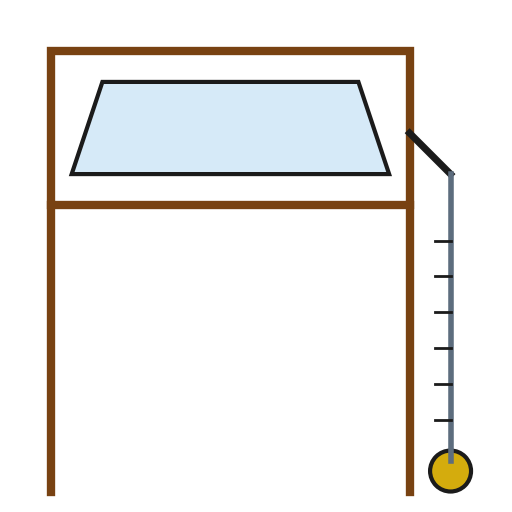 Ouvre-imposte
5
5
A transom that will not open, stay or shut
A transom that will not open, stay or shut
Transom lifter troubleshooting.
Flow
Loading...
6
6
History and honest limits
History and honest limits
**Francis V. Phillips** of Chicago, assignor to George H. Dayton, filed US 243,079 on 5 April 1880; it is dated 21 June 1881. He filed a second transom-lifter, US 243,613, the following year.
**Honest limits.** The patent gives no sizes. Arm length, sash mass and offset in the notebook are examples.
Matériaux
3- 1 pièceEspace réservé
- 1 pièceEspace réservé
- 1 pièceEspace réservé
Outils requis
6- Espace réservé
- 1 vendor sell this, none ship to you yetEspace réservé
- Espace réservé
- Espace réservé
- Espace réservé
- Espace réservé
Blueprints liés
Ces blueprints partagent des connaissances — techniques, matériaux ou principes
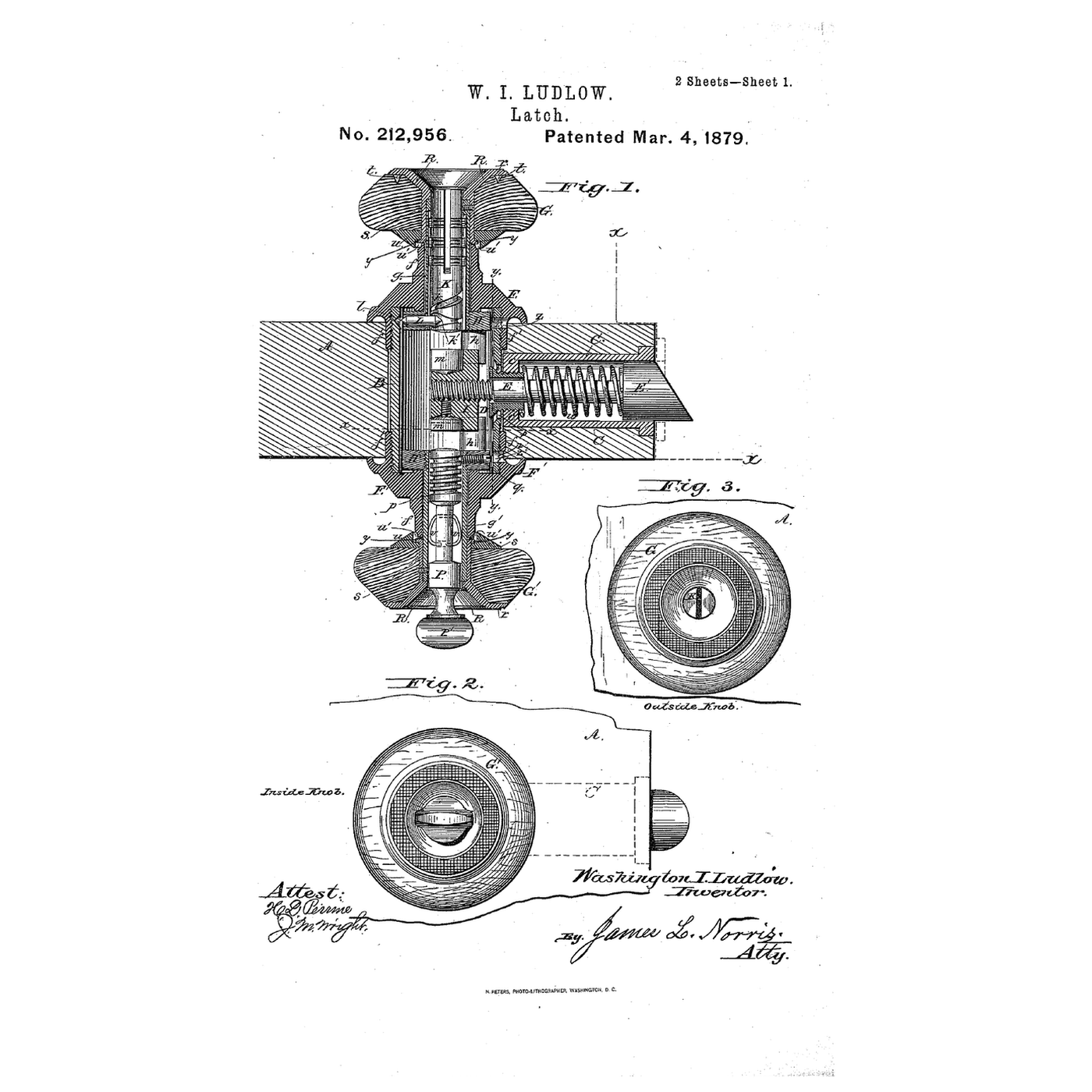
The Knob Latch: A Bored Hole, a Sprung Bolt and a Lug on Each Spindle
par Martin
Mécanique
10
0
0
0
0
0
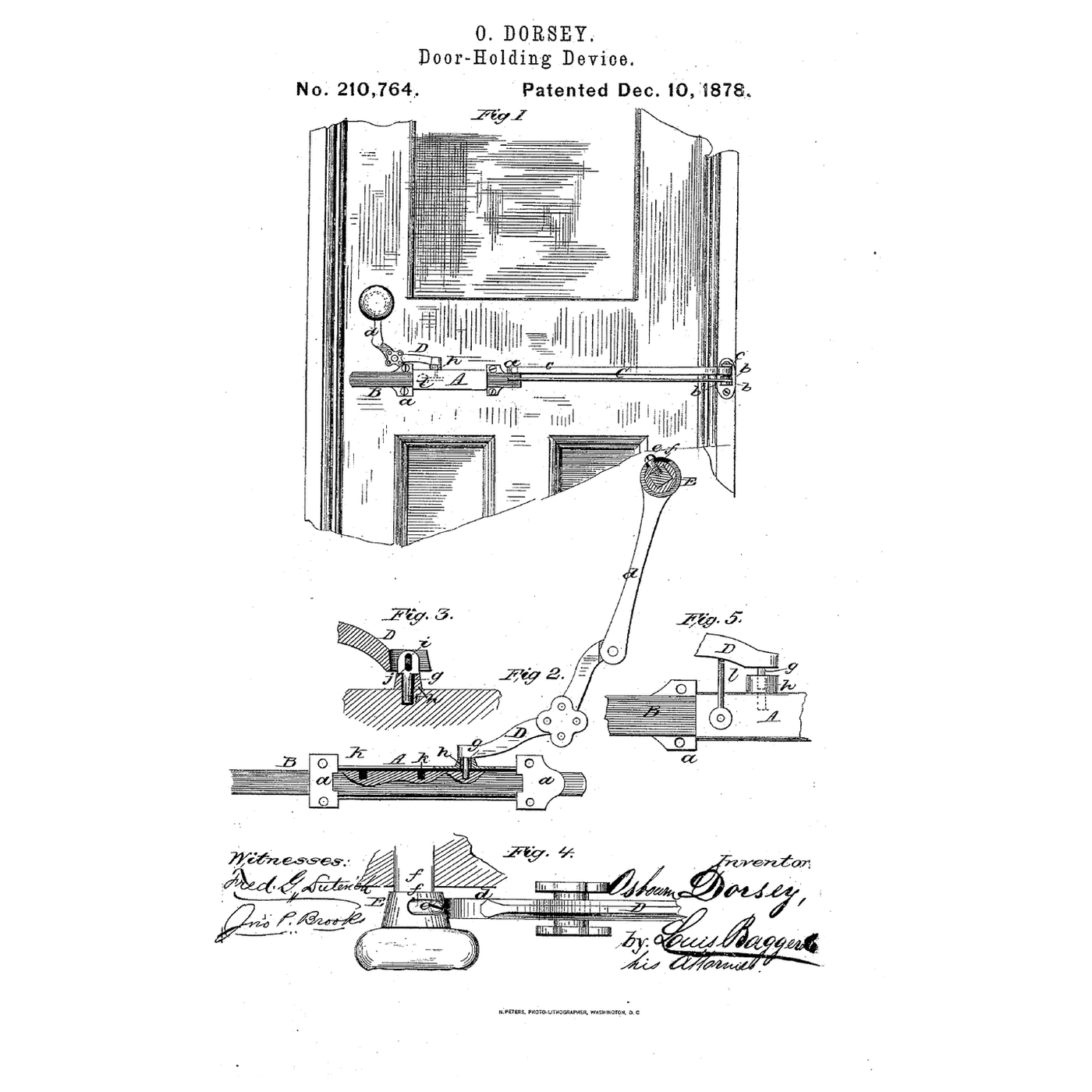
The Door Holder: A Notched Bar the Knob Unlocks
par Martin
Mécanique
16
0
0
0
0
0

The Law of the Lever — Archimedes' Balance of Weight and Distance
par Martin
Physique
60
0
0
0
1
0

Making Window Glass by the Crown Glass Method — Spinning Molten Glass into Flat Panes
par Forge
Travail du Verre
69
0
0
0
2
0
CC0 Domaine public
Ce blueprint est publié sous CC0. Vous êtes libre de copier, modifier, distribuer et utiliser ce travail pour tout usage, sans demander la permission.
Soutenez le Maker en achetant des produits via son Blueprint où il perçoit une Commission Maker définie par les Vendeurs, ou créez une nouvelle itération de ce Blueprint et incluez-le comme connexion dans votre propre Blueprint pour partager les revenus.