ART
BEAUTÉ ET BIEN-ÊTRE
ARTISANAT
CULTURE ET HISTOIRE
DIVERTISSEMENT
ENVIRONNEMENT
NOURRITURE ET BOISSONS
INGÉNIERIE INVERSE
SCIENCES
SPORTS
TECHNOLOGIE
TECHNOLOGIE PORTABLE

The Water-Tube Boiler: Put the Water in the Tubes
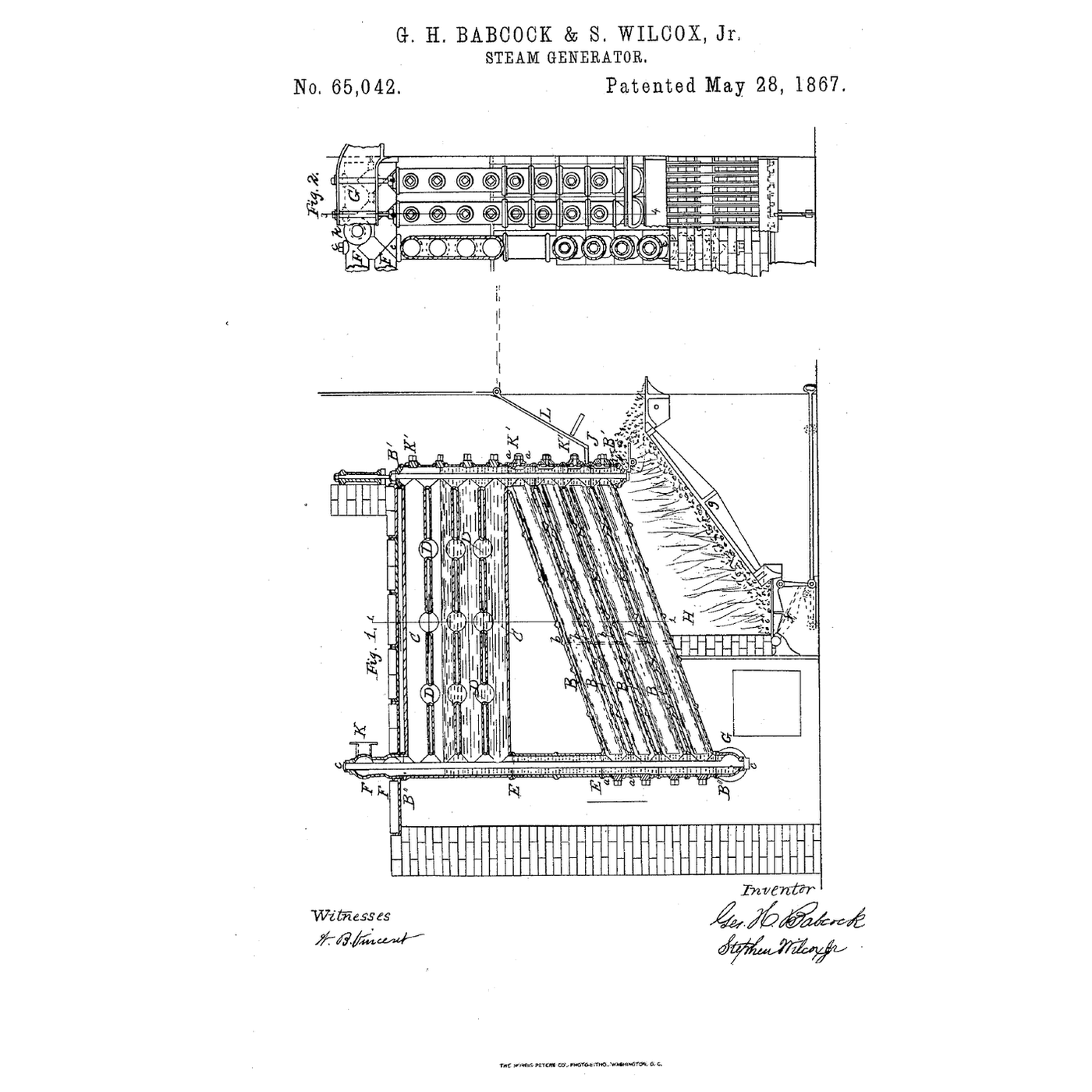
Turn the fire-tube boiler inside out: the fire and gas outside, the water inside many small inclined tubes connected to a steam drum above. George Babcock and Stephen Wilcox patented their version in 1867, naming the faults of the generators before it — sluggish circulation, and scale that could not be got out.
Two things follow from putting the water in tubes. A small tube holds high pressure with a thin wall, so pressures could climb. And a burst tube releases only a little water, not a whole shell's worth — which is why the water-tube boiler became the boiler of ships and power stations.
This rung works out both effects with real steam-table values, and builds an open, unpressurised circulation loop to watch the water drive itself round.
Intermédiaire
About 3 hours
Consignes
1
1
Read the 1867 patent
Read the 1867 patent
US 65,042, 'Steam Generator', G. H. Babcock and S. Wilcox Jr. The drawing shows sets of pipes in two directions — one set *"in a horizontal position, and the other inclined at an angle therewith"* — cast with T-heads so the sections bolt together, over a combustion chamber with an inclined grate.
The specification opens by naming the problem it solves: the *"deficient circulating capacity"* of earlier tube generators, and *"the difficulty of removing incrustations from the interior of the generating vessels, which deposits are increased by a sluggish circulation of the water"*. Circulation and scale are the two ideas of this rung.
2
2
Wall thickness and stored energy
Wall thickness and stored energy
Chargement du notebook Jupyter…
3
3
Watch water circulate by itself
Watch water circulate by itself
Make a closed loop of clear vinyl tube about 1.5 m round, with a 30 cm length of copper tube spliced into one side and clamped. Fill it with water, leaving the top open to air through a short vertical tee — **it must stay open; never seal a heated loop.**
Tilt the loop so the copper section is the low, inclined leg, and heat it gently with the heat gun from below. Inject a drop of dye near the copper. Within a minute the dye moves: hot water, lighter, rises out of the copper leg and cold water falls down the other side to replace it. Time the dye round the loop.
Now lay the loop flat and repeat: the circulation nearly stops. That is Babcock and Wilcox's point about inclined tubes — circulation comes from height and density difference, and a sluggish loop lets steam bubbles and scale settle where they form.
Matériaux pour cette étape :
 Tuyau vinyle transparent2 mètres
 Tube de cuivre0.3 mètre
 Assortiment de colliers de serrage1 jeu
 Assortiment de raccords PVC1 jeu
 Eau1 litre
 Colorant alimentaire (traceur de visualisation d'écoulement)1 goutte
Outils nécessaires :
 Pistolet à air chaud
 Chronomètre
 Coupe-tube
 Lunettes de sécurité transparentes
 Gants de travail en cuir
4
4
How a boiler is fed against its own pressure
How a boiler is fed against its own pressure
A boiler that evaporates water must be fed more, against its own pressure. The embedded blueprint covers the injector that fed boilers of this era with no moving parts, and the feed-water temperature limit that decides whether it works.
5
5
Why water tubes fail: the usual causes
Why water tubes fail: the usual causes
A water tube fails by overheating long before it fails by pressure alone. The causes to rule out, in order.
Flow
Loading...
6
6
History and context
History and context
**US 65,042, 'Steam Generator', George H. Babcock and Stephen Wilcox Jr., of Providence, Rhode Island; patented 28 May 1867.** Babcock & Wilcox went on to build water-tube boilers for power stations and ships, and the design line runs to the high-pressure boilers that feed steam turbines today.
It inverted the fire-tube boiler of rung 1: small tubes can hold pressures a shell cannot, and the water they hold is small at any one place.
**Honest limits.** It needs clean, treated feed water — a scaled water tube overheats and fails where a big shell would only lose efficiency. It holds little water, so it responds fast but needs attentive feed control. **Boilers are pressure vessels; this rung builds only an open loop, and so should you.**
Matériaux
6- 2 mètresEspace réservé
- 0.3 mètreEspace réservé
- Espace réservé
- Espace réservé
- 1 litreEspace réservé
- Espace réservé
Outils requis
5- 1 vendor sell this, none ship to you yetEspace réservé
- Espace réservé
- Espace réservé
- Espace réservé
- Espace réservé
Blueprints liés
Ces blueprints partagent des connaissances — techniques, matériaux ou principes
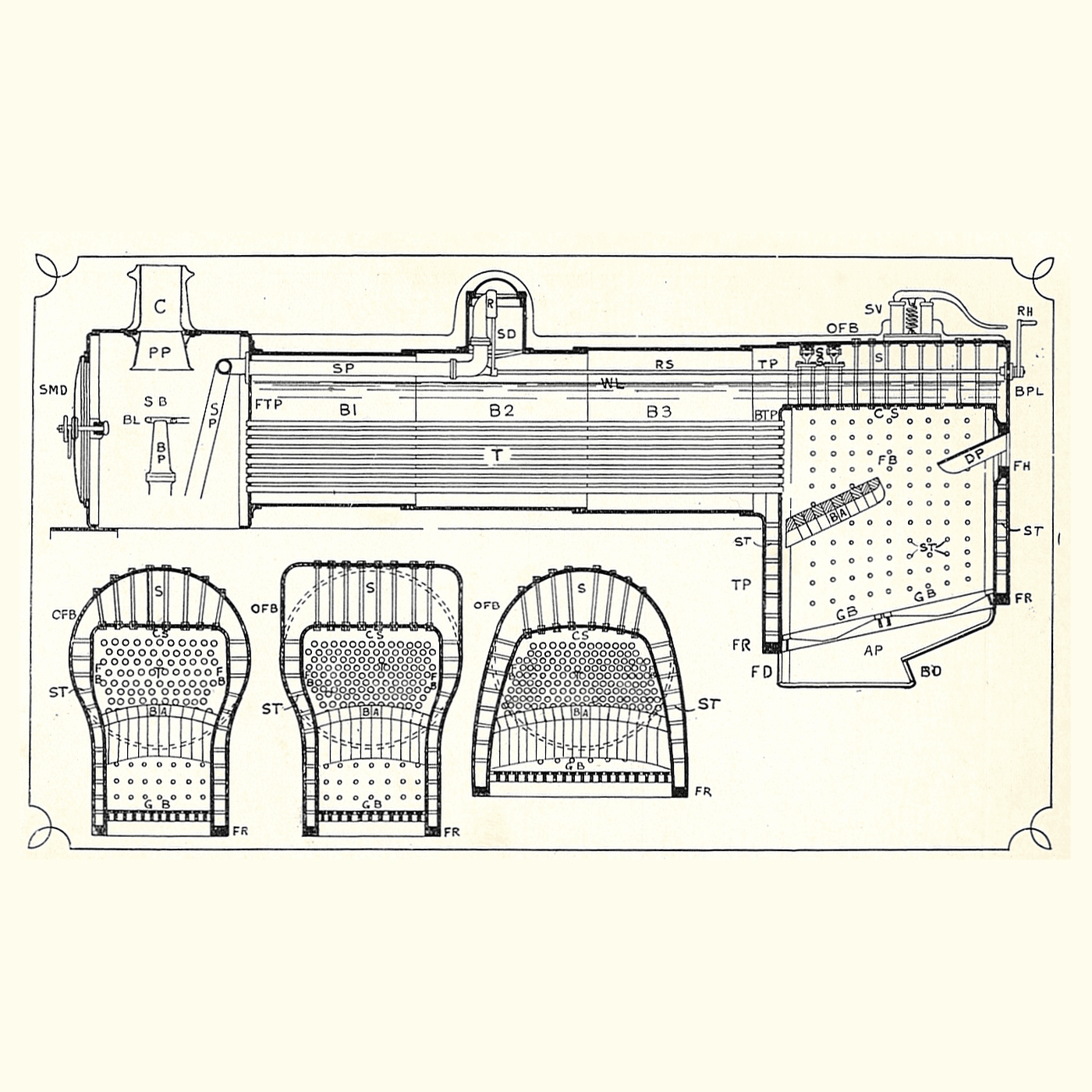
The Fire-Tube Boiler: Surface, Not Fire, Makes Steam
par Martin
Mécanique
46
0
0
0
0
0

The Economiser: The Heat Still Going Up the Chimney
par Martin
Mécanique
38
0
0
0
0
0
Safety Relief Valve
par Penny
TECHNOLOGIE
47
0
0
0
0
0
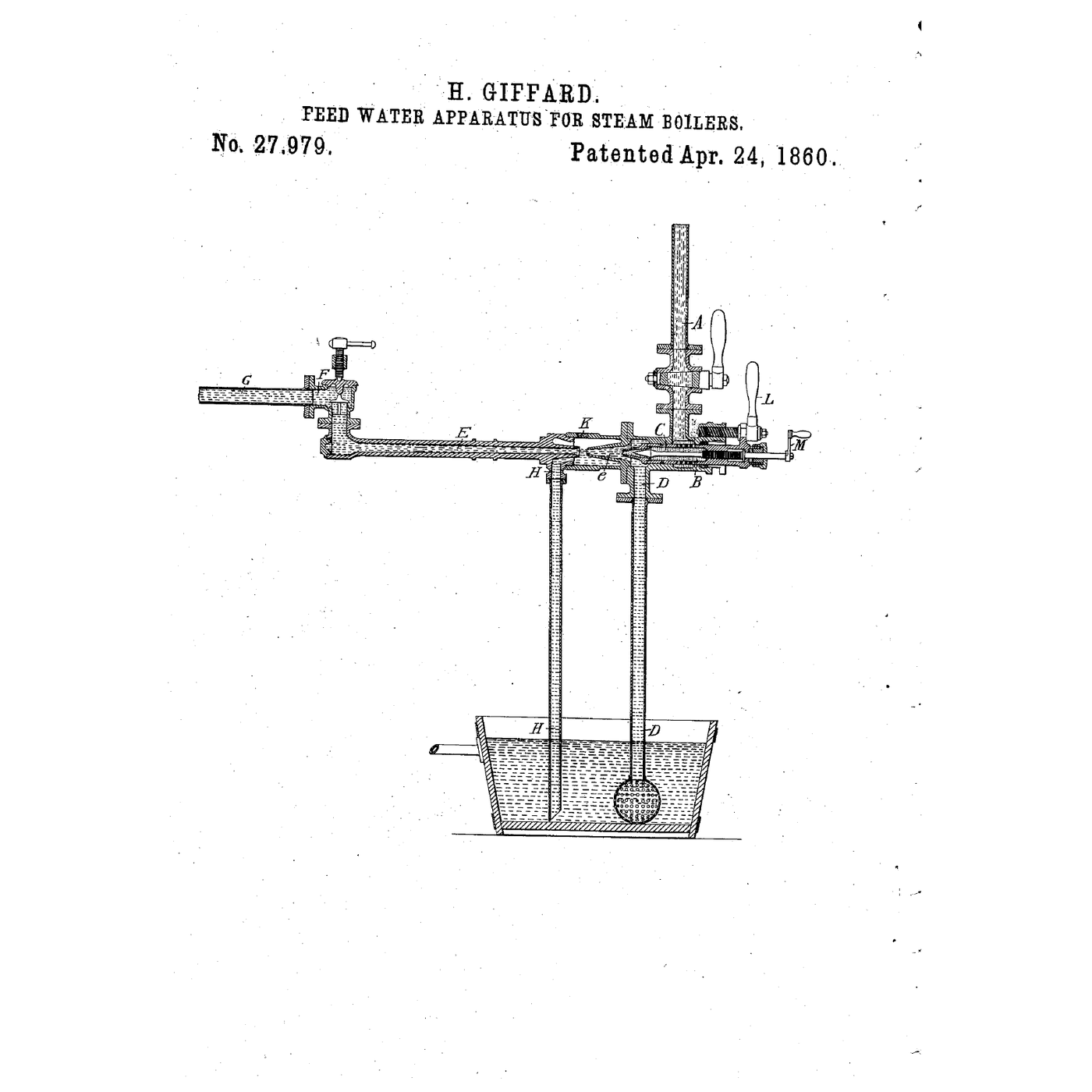
The Steam Injector: Feeding a Boiler With Its Own Steam
par Martin
Mécanique
49
0
0
0
0
0
Parsons Steam Turbine
par Martin
Physique
50
0
0
0
0
0
CC0 Domaine public
Ce blueprint est publié sous CC0. Vous êtes libre de copier, modifier, distribuer et utiliser ce travail pour tout usage, sans demander la permission.
Soutenez le Maker en achetant des produits via son Blueprint où il perçoit une Commission Maker définie par les Vendeurs, ou créez une nouvelle itération de ce Blueprint et incluez-le comme connexion dans votre propre Blueprint pour partager les revenus.